Loading...
Moctezuma II vs Stephen of Blois
Moctezuma II leads by 28.8 pts · 2 figures compared
…
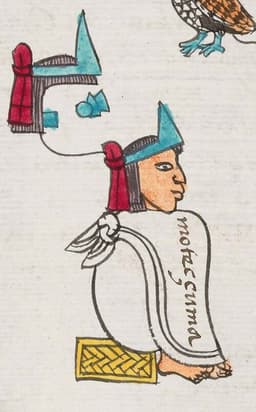
Moctezuma II
Emperor · Medieval
70.7Total
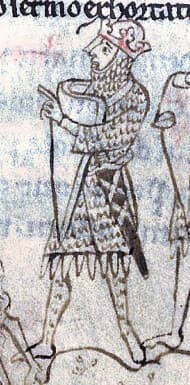
Stephen of Blois
Emperor · Medieval
41.9Total
Basic Information
Born
1466
1096
Died
1520
1154
Era
Medieval
Medieval
Nationality
Aztec Empire
England
Occupation
Emperor
Emperor
Civilization
Other
Western
Score Comparison
Military (10%)
65.0
50.0
Political (20%)
68.0
26.4
Influence (20%)
82.0
51.0
Legacy (20%)
72.0
41.7
Leadership (15%)
65.0
41.5
Strategy (15%)
57.5
35.7
TOTAL
70.7
41.9
Moctezuma II — Complete Timeline
1502 AD
Expansion of the Aztec Empire under Moctezuma IIWar◆ Major
Moctezuma II launched military campaigns that expanded the Aztec Empire to its greatest territorial extent, extending control over regions from the Gulf of Mexico to the Pacific. He also centralized power by reducing the autonomy of conquered provinces and increasing tribute demands.
ConquestTerritorial ExpansionAztec Empire
Impact: regional
1519 AD
First Meeting with Hernán CortésPolitical Action
Moctezuma II received Hern
EncounterSpanish ConquestAztec Empire
Impact: global
1520 AD
Capture and Death of Moctezuma IIPolitical Action◆ Major
Moctezuma was taken hostage by Cort
HostageDeathSpanish Conquest
Impact: globaltragic
Stephen of Blois — Complete Timeline
1135 AD
Coronation of StephenPolitical Action◆ Major
Stephen was crowned king of England on December 22, 1135, after the death of Henry I. He seized the throne despite Henry's designation of his daughter Matilda as heir.
CoronationUsurpationSuccession Crisis
Impact: national
1141 AD
Battle of LincolnWar◆ Major
Stephen was captured by forces loyal to Matilda at the Battle of Lincoln on February 2, 1141. He was imprisoned, and Matilda briefly ruled as Lady of the English.
BattleCaptureCivil War
Impact: nationaldestructive
Release and RestorationPolitical Action◆ Major
Stephen was released in exchange for Matilda's half-brother Robert of Gloucester, who had been captured. Stephen was restored as king, and the civil war continued.
ReleaseRestorationCivil War
Impact: national
1153 AD
Treaty of WallingfordPolitical Action◆ Major
Stephen and Matilda's son Henry Plantagenet signed the Treaty of Wallingford. Stephen recognized Henry as his heir, ending the Anarchy civil war.
TreatyPeaceSuccession
Impact: nationalconstructive
1154 AD
Death of StephenPolitical Action◆ Major
Stephen died on October 25, 1154, at Dover. His death allowed Henry Plantagenet to become king as Henry II, founding the Plantagenet dynasty.
DeathEnd of AnarchyPlantagenet
Impact: nationaltragic
Expert Analysis
Origins
Moctezuma II was born in 1466 into the Aztec royal family, son of Emperor Axayacatl. He was educated as a priest and warrior, trained in the elite Calmecac school. His upbringing instilled a deep reverence for Aztec religion and the prophecy of Quetzalcoatl's return. Stephen of Blois was born in 1096 in Blois, France, to Stephen II, Count of Blois, and Adela of Normandy, daughter of William the Conqueror. He was raised in the French court and inherited the County of Boulogne through marriage. His lineage gave him claims to the English throne via his mother.
Rise to Power
Moctezuma II ascended to the throne in 1502 after his uncle Ahuitzotl died. He consolidated power by purging rival nobles and reforming the bureaucracy, centralizing authority. His early campaigns extended the empire to its greatest territorial extent, incorporating regions from the Gulf of Mexico to the Pacific. Stephen of Blois rose to prominence after the death of King Henry I in 1135. Despite Henry's oath that his daughter Matilda would succeed, Stephen rushed to London, secured the crown with support from the Church and barons, and was crowned on December 22, 1135. His seizure of power was swift but illegal, leading to immediate opposition.
Leadership & Governance
Moctezuma II ruled as an absolute monarch, enforcing strict sumptuary laws and expanding the tribute system. He centralized power by reducing the authority of the nobility and increasing the role of bureaucrats. His governance was efficient but relied on fear and ritual sacrifice. Stephen of Blois governed during a period of civil war known as the Anarchy (1135–1154). His leadership was marked by indecisiveness and a failure to control his barons. He made concessions to secure support, such as granting extensive lands to his brother Henry of Blois, but this weakened royal authority. Unlike Moctezuma's centralized control, Stephen's reign saw fragmentation.
Triumph & Tragedy
Moctezuma II's greatest triumph was expanding the Aztec Empire to its peak, with a population of millions and a capital, Tenochtitlan, that amazed Spanish conquistadors. His tragedy was his catastrophic encounter with Hernán Cortés in 1519. Believing Cortés might be the god Quetzalcoatl, he hesitated and allowed the Spanish into the city. He was taken hostage, used as a puppet, and killed in 1520—either stoned by his own people or assassinated by the Spanish. The empire fell soon after. Stephen of Blois's triumph was his coronation and maintaining the throne despite Matilda's challenges. He scored 50.0 in military and 41.5 in leadership. However, his tragedy was the Battle of Lincoln on February 2, 1141, where he was captured and imprisoned, leading to Matilda's brief rule. Though he was later restored, the Anarchy devastated England with widespread destruction and lawlessness.
Character & Destiny
Moctezuma II was cautious, religious, and indecisive in crisis. His fatalism regarding prophecy led him to make strategic errors, such as allowing the Spanish into Tenochtitlan. His character—inflexible and superstitious—sealed his fate. Stephen of Blois was brave but impulsive and poor at long-term planning. He frequently alienated allies and made concessions that weakened his position. His capture at Lincoln reflected his reckless leadership in battle. Both leaders' personalities contributed to their downfalls, but Moctezuma's decisions had far greater consequences, leading to the collapse of a civilization.
Legacy
Moctezuma II is remembered as the Aztec emperor who lost an empire. His legacy is complex: a capable administrator who expanded the empire but whose actions facilitated Spanish conquest. His total score of 70.7 reflects high influence (82.0) but lower strategy (57.5). Stephen of Blois's legacy is the Anarchy, a period of civil war that ended with the Treaty of Wallingford in 1153, where he recognized Matilda's son Henry as his heir. His total score of 41.9 reflects poor political skill (26.4) and strategy (35.7). The Anarchy led to the rise of the Plantagenet dynasty under Henry II, who restored order. Stephen is often seen as a weak king who failed to secure his dynasty.
Conclusion
Moctezuma II had a greater impact on world history. His empire was a major civilization whose destruction reshaped the Americas. Stephen's reign, while chaotic, was a temporary interruption in English history. Moctezuma's scores in influence (82.0 vs 51.0) and legacy (72.0 vs 41.7) highlight his larger role. Though Stephen's Anarchy had lasting constitutional implications, Moctezuma's decisions led to the fall of an entire world. Therefore, Moctezuma II is the more significant historical figure.
Rankings
🥇
Moctezuma IILeader
Mil: 65.0Pol: 68.0Inf: 82.0
70.7
🥈
Stephen of Blois
Mil: 50.0Pol: 26.4Inf: 51.0
41.9
+28.8 behind
How This Comparison Works
Algorithm
Each figure is scored on 6 dimensions (0—100 scale) based on structured historical data: Military (10%), Political (20%), Influence (20%), Legacy (20%), Leadership (15%), Strategy (15%). The weighted total produces the final ranking.
Data Sources
Scores are computed from structured sub-indicators in the database. Scale factors adjust for era (Ancient ×0.85, Modern ×1.0) and civilization size (Eastern ×1.05, Other ×0.80) to account for differences in population and military scale.
Maximum 3 Figures
Comparisons are limited to 2—3 figures to ensure readability and statistical meaningfulness.
Error Margins
±5 points per dimension — Sub-scores are derived from historical records with inherent uncertainty. Two figures within 5 points on a dimension should be considered roughly equivalent in that area.
Total Score Accuracy
±3 points overall — The weighted combination of 6 dimensions produces a total score with approximately ±3 points of uncertainty. Differences of less than 3 points are not statistically significant— the figures are effectively tied.
Known Limitations
- Historical records are incomplete and uneven across civilizations
- Figures from oral-tradition societies may be underrepresented
- Occupation labels can misclassify multi-role figures
- Scores measure capability and impact, not moral character
- Quantitative scoring is a comparison tool, not absolute truth
Capability Radar
Military (10%) — Battles & Warfare
Battles
65
30
Win Rate
60
25
Expansion
70
10
Political (20%) — Governance & Reform
Reform
55
20
Diplomacy
30
25
Economy
65
15
Influence (20%) — Cultural & Global Reach
Cultural
75
20
Global
65
15
Legacy (20%) — Historical Impact
Historical
80
30
Longevity
70
20
Leadership (15%) — Power & Stability
Tenure
60
40
Stability
40
10
Strategy (15%) — Tactics & Innovation
Strategy
50
15
Tactics
55
20
Reform
40
10
Similar Comparisons
Comments & Discussion
No comments yet. Be the first to share your thoughts!