Loading...
Ly Thai To vs Moctezuma II
Moctezuma II leads by 16.1 pts · 2 figures compared
…
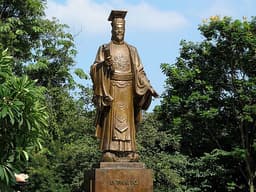
Ly Thai To
Emperor · Medieval
54.6Total
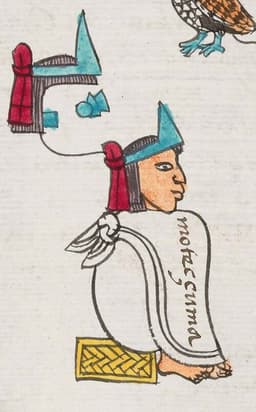
Moctezuma II
Emperor · Medieval
70.7Total
Basic Information
Born
974
1466
Died
1028
1520
Era
Medieval
Medieval
Nationality
Vietnam
Aztec Empire
Occupation
Emperor
Emperor
Civilization
Eastern
Other
Score Comparison
Military (10%)
45.0
65.0
Political (20%)
68.0
68.0
Influence (20%)
61.0
82.0
Legacy (20%)
58.0
72.0
Leadership (15%)
40.0
65.0
Strategy (15%)
41.7
57.5
TOTAL
54.6
70.7
Ly Thai To — Complete Timeline
1009 AD
Foundation of the Ly DynastyPolitical Action
Ly Cong Uan, later known as Ly Thai To, was proclaimed emperor after the death of the last Le dynasty ruler. He founded the Ly dynasty, which would rule Vietnam for over 200 years. His accession was supported by Buddhist monks and the court.
Dynasty FoundingLy DynastyBuddhist Influence
Impact: nationalconstructive
1010 AD
Move of the Capital to Thang Long (Hanoi)Political Action
Ly Thai To moved the capital from Hoa Lu to Dai La, renaming it Thang Long (Rising Dragon), now Hanoi. The move was intended to centralize power and promote economic development. Thang Long became the political and cultural center of Vietnam for centuries.
Capital MoveThang LongHanoi
Impact: nationalconstructive
Promotion of Buddhism and EducationCultural◆ Major
Ly Thai To promoted Buddhism as the state religion and built many pagodas and temples. He also established the first Vietnamese university, the Quoc Tu Giam, to educate scholars in Confucian classics. These policies laid the foundation for Vietnamese culture and governance.
BuddhismEducationCultural Development
Impact: nationalconstructive
Moctezuma II — Complete Timeline
1502 AD
Expansion of the Aztec Empire under Moctezuma IIWar◆ Major
Moctezuma II launched military campaigns that expanded the Aztec Empire to its greatest territorial extent, extending control over regions from the Gulf of Mexico to the Pacific. He also centralized power by reducing the autonomy of conquered provinces and increasing tribute demands.
ConquestTerritorial ExpansionAztec Empire
Impact: regional
1519 AD
First Meeting with Hernán CortésPolitical Action
Moctezuma II received Hern
EncounterSpanish ConquestAztec Empire
Impact: global
1520 AD
Capture and Death of Moctezuma IIPolitical Action◆ Major
Moctezuma was taken hostage by Cort
HostageDeathSpanish Conquest
Impact: globaltragic
Expert Analysis
Origins
Ly Thai To was born as Ly Cong Uan in 974 in Co Phap village (now Bac Ninh province, Vietnam). He was raised in a Buddhist temple under the tutelage of monk Ly Van Hanh after his parents died early. His humble origins and monastic education shaped his later policies favoring Buddhism and education. Moctezuma II, born in 1466 in Tenochtitlan, was the son of Axayacatl, the previous Aztec emperor. He received elite military and priestly training, becoming a high priest before ascending to the throne. His upbringing in the warrior aristocracy of the Aztec Empire instilled a rigid hierarchical worldview and deep religious devotion.
Rise to Power
Ly Thai To's rise began as a commander in the royal guard under the Le Dynasty. When Emperor Le Ngoa Trieu died in 1009, the court was factionalized. Ly Cong Uan, with support from the Buddhist clergy and his mentor Ly Van Hanh, was proclaimed emperor in 1010, founding the Ly Dynasty. His accession was peaceful, a contrast to Moctezuma II's path. Moctezuma II became tlatoani in 1502 after the death of his uncle Ahuitzotl, succeeding through a council of nobles. He quickly consolidated power by purging rivals from the previous administration, including many high-ranking officials. His rise was marked by ruthless centralization.
Leadership & Governance
Ly Thai To's governance focused on stability and cultural development. He moved the capital from Hoa Lu to Dai La in 1010, renaming it Thang Long (Hanoi), a site chosen for its central location and economic potential. He promoted Buddhism as the state religion, building hundreds of pagodas, and established the Quoc Tu Giam (Temple of Literature) in 1076, Vietnam's first university, to train Confucian scholars. His land reforms redistributed land to peasants and reduced tax burdens. Moctezuma II ruled through a rigid tribute system, demanding labor and goods from conquered provinces. He expanded the empire to its greatest extent, extending control to modern-day Oaxaca and Guerrero. However, his governance was brittle: he relied heavily on religious prophecy and omens, which later paralyzed him when Cortés arrived. Ly Thai To's political score of 68.0 matches Moctezuma II's 68.0, but Ly's leadership score of 40.0 is lower than Moctezuma's 65.0, reflecting Moctezuma's more aggressive centralization.
Triumph & Tragedy
Ly Thai To's greatest triumph was founding a dynasty that lasted 216 years and establishing a stable capital that remains Vietnam's heart. His greatest failure was his inability to fully control the southern Champa kingdom, which remained independent and raided Ly territories. Moctezuma II's triumph was expanding the Aztec Empire to its peak territorial size, with a population of 5–6 million under his rule. However, his tragedy was catastrophic: his indecision and superstitious awe of Cortés led to his capture, hostage-taking, and death in 1520, precipitating the fall of the Aztec Empire. Moctezuma's military score of 65.0 is higher than Ly Thai To's 45.0, but his strategic score of 57.5 is only slightly above Ly's 41.7, indicating poor strategic choices in the face of the Spanish threat.
Character & Destiny
Ly Thai To was pragmatic and visionary: he avoided costly wars, focused on internal development, and built institutions that outlasted him. His Buddhist beliefs promoted tolerance and learning. Moctezuma II was rigid and fatalistic: he believed himself a living god but was also deeply superstitious, interpreting Cortés's arrival as the return of Quetzalcoatl. This belief paralyzed him, causing him to vacillate between appeasement and resistance. Historians often note that Moctezuma's character—arrogant yet indecisive—directly contributed to his downfall. Ly Thai To's character, by contrast, ensured his dynasty's longevity.
Legacy
Ly Thai To's legacy is foundational for Vietnam: the Ly Dynasty established centralized rule, Confucian education, and a cultural identity that persists. The Temple of Literature in Hanoi remains a symbol of Vietnamese scholarship. Moctezuma II's legacy is more complex: he is remembered as the last emperor of a glorious empire, but also as the ruler who lost it. The Aztec Empire fell within two years of his death, and its culture was suppressed by Spanish colonizers. However, Moctezuma's name remains iconic, and his influence score of 82.0 reflects his global recognition. Ly Thai To's influence score of 61.0 is lower, but his legacy score of 58.0 versus Moctezuma's 72.0 shows that Moctezuma's impact is more widely discussed, though often as a cautionary tale.
Conclusion
While Moctezuma II scored higher overall (70.7 vs. 54.6), his impact was primarily destructive—his reign ended in the collapse of his civilization. Ly Thai To, despite lower scores, built enduring institutions that shaped Vietnam for centuries. Moctezuma's territorial expansion was impressive but unsustainable; Ly Thai To's capital and university continue to thrive. In terms of lasting positive impact on national development, Ly Thai To was more effective. Moctezuma II's story is dramatic but ultimately one of failure. Therefore, Ly Thai To had greater impact on his nation's trajectory.
Rankings
🥇
Moctezuma IILeader
Mil: 65.0Pol: 68.0Inf: 82.0
70.7
🥈
Ly Thai To
Mil: 45.0Pol: 68.0Inf: 61.0
54.6
+16.1 behind
How This Comparison Works
Algorithm
Each figure is scored on 6 dimensions (0—100 scale) based on structured historical data: Military (10%), Political (20%), Influence (20%), Legacy (20%), Leadership (15%), Strategy (15%). The weighted total produces the final ranking.
Data Sources
Scores are computed from structured sub-indicators in the database. Scale factors adjust for era (Ancient ×0.85, Modern ×1.0) and civilization size (Eastern ×1.05, Other ×0.80) to account for differences in population and military scale.
Maximum 3 Figures
Comparisons are limited to 2—3 figures to ensure readability and statistical meaningfulness.
Error Margins
±5 points per dimension — Sub-scores are derived from historical records with inherent uncertainty. Two figures within 5 points on a dimension should be considered roughly equivalent in that area.
Total Score Accuracy
±3 points overall — The weighted combination of 6 dimensions produces a total score with approximately ±3 points of uncertainty. Differences of less than 3 points are not statistically significant— the figures are effectively tied.
Known Limitations
- Historical records are incomplete and uneven across civilizations
- Figures from oral-tradition societies may be underrepresented
- Occupation labels can misclassify multi-role figures
- Scores measure capability and impact, not moral character
- Quantitative scoring is a comparison tool, not absolute truth
Capability Radar
Military (10%) — Battles & Warfare
Battles
20
65
Win Rate
25
60
Expansion
30
70
Political (20%) — Governance & Reform
Reform
60
55
Diplomacy
50
30
Economy
55
65
Influence (20%) — Cultural & Global Reach
Cultural
55
75
Global
30
65
Legacy (20%) — Historical Impact
Historical
60
80
Longevity
55
70
Leadership (15%) — Power & Stability
Tenure
55
60
Stability
60
40
Strategy (15%) — Tactics & Innovation
Strategy
25
50
Tactics
20
55
Reform
30
40
Similar Comparisons
Comments & Discussion
No comments yet. Be the first to share your thoughts!