Loading...
This comparison has not been analyzed yet.
One-time AI generation (~1 minute). Scores and timeline are already available below.
Adan Abdullah Osman Daar vs Henry St John
Henry St John leads by 10.7 pts · 2 figures compared
…

Adan Abdullah Osman Daar
Politician · Modern
46.9Total
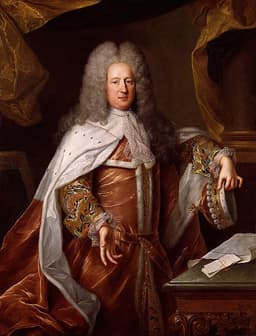
Henry St John
Politician · Modern
57.6Total
Basic Information
Born
1908
1678
Died
2007
1751
Era
Modern
Modern
Nationality
Somalia
England
Occupation
Politician
Politician
Civilization
Other
Western
Score Comparison
Military (10%)
39.4
50.0
Political (20%)
39.4
68.0
Influence (20%)
51.0
58.0
Legacy (20%)
41.7
50.0
Leadership (15%)
64.0
74.0
Strategy (15%)
42.4
42.9
TOTAL
46.9
57.6
Adan Abdullah Osman Daar — Complete Timeline
1960 AD
Became First President of Independent SomaliaPolitical Action
Adan Abdullah Osman Daar was elected as the first President of the Somali Republic following the independence and unification of British Somaliland and Italian Somaliland. His presidency marked the beginning of Somalia's post-colonial statehood.
IndependenceSomaliaPresidency
Impact: nationalconstructive
Advocated for Pan-SomalismPolitical Action
As president, Osman Daar supported the concept of Greater Somalia, advocating for the unification of Somali-inhabited territories in Ethiopia, Kenya, and Djibouti. This policy contributed to regional tensions and border conflicts.
Pan-SomalismForeign PolicySomalia
Impact: regional
1967 AD
Peaceful Transfer of PowerPolitical Action◆ Major
Adan Abdullah Osman Daar voluntarily stepped down after losing the 1967 presidential election to Abdirashid Ali Shermarke. This peaceful transfer of power was a rare democratic achievement in post-independence Africa.
DemocracyElectionSomalia
Impact: nationalconstructive
Henry St John — Complete Timeline
1710 AD
Appointed Secretary of State and created Viscount BolingbrokePolitical Action◆ Major
Queen Anne appointed Henry St John as Secretary of State for the Northern Department and created him Viscount Bolingbroke. He became a leading Tory minister, responsible for foreign policy and the negotiation of the Treaty of Utrecht.
Secretary of StateToryQueen Anne
Impact: nationalconstructive
1715 AD
Fled to France and joined the Jacobite courtPolitical Action◆ Major
Fearing impeachment by the new Whig government, Bolingbroke fled to France. He became Secretary of State to the Jacobite pretender James Francis Edward Stuart, serving the exiled court and plotting the restoration of the Stuart monarchy.
ExileJacobiteStuart
Impact: nationaldestructive
1723 AD
Returned to England and pardonedPolitical Action
Bolingbroke was allowed to return to England after receiving a pardon from George I. He was barred from sitting in the House of Lords but remained politically active as a writer and pamphleteer, influencing the opposition to Walpole.
ReturnPardonPolitical writer
Impact: national
This comparison has not been analyzed yet.
One-time AI generation (~1 minute). Scores and timeline are already available below.
Rankings
🥇
Henry St JohnLeader
Mil: 50.0Pol: 68.0Inf: 58.0
57.6
🥈
Adan Abdullah Osman Daar
Mil: 39.4Pol: 39.4Inf: 51.0
46.9
+10.7 behind
How This Comparison Works
Algorithm
Each figure is scored on 6 dimensions (0—100 scale) based on structured historical data: Military (10%), Political (20%), Influence (20%), Legacy (20%), Leadership (15%), Strategy (15%). The weighted total produces the final ranking.
Data Sources
Scores are computed from structured sub-indicators in the database. Scale factors adjust for era (Ancient ×0.85, Modern ×1.0) and civilization size (Eastern ×1.05, Other ×0.80) to account for differences in population and military scale.
Maximum 3 Figures
Comparisons are limited to 2—3 figures to ensure readability and statistical meaningfulness.
Error Margins
±5 points per dimension — Sub-scores are derived from historical records with inherent uncertainty. Two figures within 5 points on a dimension should be considered roughly equivalent in that area.
Total Score Accuracy
±3 points overall — The weighted combination of 6 dimensions produces a total score with approximately ±3 points of uncertainty. Differences of less than 3 points are not statistically significant— the figures are effectively tied.
Known Limitations
- Historical records are incomplete and uneven across civilizations
- Figures from oral-tradition societies may be underrepresented
- Occupation labels can misclassify multi-role figures
- Scores measure capability and impact, not moral character
- Quantitative scoring is a comparison tool, not absolute truth
Capability Radar
Military (10%) — Battles & Warfare
Battles
22
30
Win Rate
24
33
Expansion
27
32
Political (20%) — Governance & Reform
Reform
30
55
Diplomacy
40
65
Economy
20
40
Influence (20%) — Cultural & Global Reach
Cultural
25
50
Global
20
30
Legacy (20%) — Historical Impact
Historical
30
55
Longevity
20
40
Leadership (15%) — Power & Stability
Tenure
60
60
Stability
15
30
Strategy (15%) — Tactics & Innovation
Strategy
33
40
Tactics
32
43
Reform
36
41
Similar Comparisons
Comments & Discussion
No comments yet. Be the first to share your thoughts!