Loading...
This comparison has not been analyzed yet.
One-time AI generation (~1 minute). Scores and timeline are already available below.
Aditya I vs Albert III of Austria
Albert III of Austria leads by 4.7 pts · 2 figures compared
…
Aditya I
Emperor · Medieval
48.7Total

Albert III of Austria
Emperor · Medieval
53.4Total
Basic Information
Born
871
1349
Died
907
1395
Era
Medieval
Medieval
Nationality
India
Austria
Occupation
Emperor
Emperor
Civilization
Indian
Western
Score Comparison
Military (10%)
30.0
50.0
Political (20%)
40.8
54.7
Influence (20%)
51.0
53.3
Legacy (20%)
43.3
44.2
Leadership (15%)
67.0
80.0
Strategy (15%)
60.0
38.6
TOTAL
48.7
53.4
Aditya I — Complete Timeline
880 AD
Conquest of Kongu NaduWar
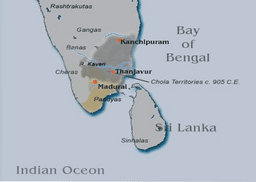
Aditya I conquered the Kongu region (western Tamil Nadu) from the Pandya and Pallava control. This expansion gave the Cholas control over important trade routes and fertile lands, boosting the kingdom's economic base.
Territorial ExpansionKongu NaduChola Conquest
Impact: regionalconstructive
890 AD
Alliance with the Chera KingdomPolitical Action◆ Major
Aditya I formed a marital and military alliance with the Chera kingdom of Kerala, strengthening the Chola position against the Pandya and Rashtrakuta kingdoms. This alliance helped secure the western frontier and facilitated trade.
AllianceChera KingdomDiplomacy
Impact: regionalconstructive
897 AD
Defeat of Aparajita Varman and End of Pallava RuleWar◆ Major
Aditya I defeated and killed the Pallava king Aparajita Varman at the Battle of Tirupati, ending the Pallava dynasty. He annexed the entire Pallava kingdom into the Chola domain, making the Cholas the dominant power in Tamil Nadu.
Pallava ConquestChola ExpansionDynastic Change
Impact: regionaldestructive
Albert III of Austria — Complete Timeline
1379 AD
Founded the Albertinian Line of the HabsburgsPolitical Action◆ Major
Albert III, along with his brother Leopold III, divided the Habsburg territories in the Treaty of Neuberg. Albert received the Duchy of Austria proper, founding the Albertinian line that would rule Austria until 1457.
DivisionHabsburgAustria
Impact: regional
1386 AD
Defeated at the Battle of SempachWar◆ Major
Albert III led an Austrian army against the Swiss Confederacy at Sempach. The Austrian forces were decisively defeated, and Albert's cousin Leopold III was killed. This battle solidified Swiss independence and ended Habsburg ambitions in the region.
BattleSwiss ConfederacyDefeat
Impact: regionaltragic
This comparison has not been analyzed yet.
One-time AI generation (~1 minute). Scores and timeline are already available below.
Rankings
🥇
Albert III of AustriaLeader
Mil: 50.0Pol: 54.7Inf: 53.3
53.4
🥈
Aditya I
Mil: 30.0Pol: 40.8Inf: 51.0
48.7
+4.7 behind
How This Comparison Works
Algorithm
Each figure is scored on 6 dimensions (0—100 scale) based on structured historical data: Military (10%), Political (20%), Influence (20%), Legacy (20%), Leadership (15%), Strategy (15%). The weighted total produces the final ranking.
Data Sources
Scores are computed from structured sub-indicators in the database. Scale factors adjust for era (Ancient ×0.85, Modern ×1.0) and civilization size (Eastern ×1.05, Other ×0.80) to account for differences in population and military scale.
Maximum 3 Figures
Comparisons are limited to 2—3 figures to ensure readability and statistical meaningfulness.
Error Margins
±5 points per dimension — Sub-scores are derived from historical records with inherent uncertainty. Two figures within 5 points on a dimension should be considered roughly equivalent in that area.
Total Score Accuracy
±3 points overall — The weighted combination of 6 dimensions produces a total score with approximately ±3 points of uncertainty. Differences of less than 3 points are not statistically significant— the figures are effectively tied.
Known Limitations
- Historical records are incomplete and uneven across civilizations
- Figures from oral-tradition societies may be underrepresented
- Occupation labels can misclassify multi-role figures
- Scores measure capability and impact, not moral character
- Quantitative scoring is a comparison tool, not absolute truth
Capability Radar
Military (10%) — Battles & Warfare
Battles
40
20
Win Rate
45
25
Expansion
45
20
Political (20%) — Governance & Reform
Reform
30
40
Diplomacy
45
45
Economy
35
40
Influence (20%) — Cultural & Global Reach
Cultural
30
30
Global
15
20
Legacy (20%) — Historical Impact
Historical
35
35
Longevity
25
30
Leadership (15%) — Power & Stability
Tenure
50
60
Stability
40
35
Strategy (15%) — Tactics & Innovation
Strategy
40
25
Tactics
35
20
Reform
20
15
Similar Comparisons
Comments & Discussion
No comments yet. Be the first to share your thoughts!