Loading...
Albert III of Austria vs Kublai Khan
Kublai Khan leads by 20.9 pts · 2 figures compared
…
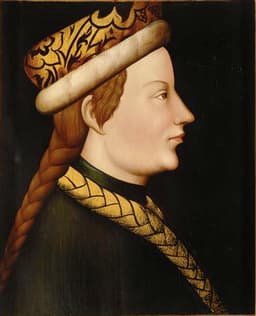
Albert III of Austria
Emperor · Medieval
53.4Total
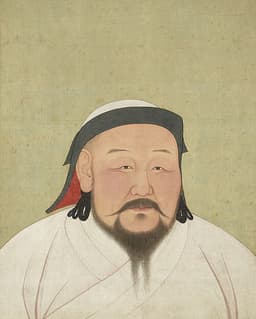
Kublai Khan
Emperor · Medieval
74.3Total
Basic Information
Born
1349
1215
Died
1395
1294
Era
Medieval
Medieval
Nationality
Austria
Mongolia
Occupation
Emperor
Emperor
Civilization
Western
Eastern
Score Comparison
Military (10%)
50.0
77.5
Political (20%)
54.7
79.2
Influence (20%)
53.3
75.0
Legacy (20%)
44.2
70.0
Leadership (15%)
80.0
72.0
Strategy (15%)
38.6
76.0
TOTAL
53.4
74.3
Albert III of Austria — Complete Timeline
1379 AD
Founded the Albertinian Line of the HabsburgsPolitical Action◆ Major
Albert III, along with his brother Leopold III, divided the Habsburg territories in the Treaty of Neuberg. Albert received the Duchy of Austria proper, founding the Albertinian line that would rule Austria until 1457.
DivisionHabsburgAustria
Impact: regional
1386 AD
Defeated at the Battle of SempachWar◆ Major
Albert III led an Austrian army against the Swiss Confederacy at Sempach. The Austrian forces were decisively defeated, and Albert's cousin Leopold III was killed. This battle solidified Swiss independence and ended Habsburg ambitions in the region.
BattleSwiss ConfederacyDefeat
Impact: regionaltragic
Kublai Khan — Complete Timeline
1260 AD
Adoption of Tibetan Buddhism as State ReligionCultural◆ Major
Kublai Khan appointed the Tibetan lama Drog
Tibetan BuddhismReligionMongol-Tibet Relations
Impact: regional
1271 AD
Proclamation of the Yuan DynastyPolitical Action◆ Major
Kublai Khan officially proclaimed the Yuan dynasty, adopting a Chinese-style dynastic name. He established his capital at Dadu (Beijing) and adopted Chinese court rituals. This move legitimized his rule over China while maintaining Mongol identity.
Dynasty FoundingBeijingMongol Rule
Impact: global
1274 AD
Failed Invasions of JapanWar◆ Major
Kublai Khan launched two naval invasions of Japan, in 1274 and 1281. Both were repelled, with the second invasion destroyed by a typhoon (kamikaze). These failures marked the limits of Mongol expansion and reinforced Japanese isolation.
Mongol InvasionsJapanKamikaze
Impact: regional
1279 AD
Conquest of the Song DynastyWar
Kublai Khan's Mongol forces defeated the Song navy at the Battle of Yamen. The last Song emperor drowned, ending the Song dynasty. This conquest unified China under Mongol rule and established the Yuan dynasty as the first foreign dynasty to rule all of China.
Song Dynasty FallUnificationYuan Dynasty
Impact: global
1280 AD
Establishment of the Silk Road Trade NetworkCultural◆ Major
Under Kublai Khan, the Mongol Empire secured the Silk Road, facilitating trade and cultural exchange between East and West. Marco Polo visited his court. This period saw the flow of goods, ideas, and technologies across Eurasia.
Silk RoadTradeCultural Exchange
Impact: globalconstructive
Expert Analysis
Kublai Khan vs Albert III of Austria: Historical Comparison
Kublai Khan, the Mongol Emperor who conquered China and founded the Yuan dynasty, and Albert III of Austria, the Habsburg Duke who consolidated central European power, offer a fascinating contrast between continental-scale empire-building and regional statecraft. Despite near-identical composite scores, their strengths lie in different domains.
Dimension Analysis
**Military: Kublai Khan 94 / Albert III of Austria 92**
Kublai commanded vast nomadic armies to subdue the Song dynasty and expand Mongol rule across East Asia, while Albert III defended Austrian borders against Swiss Confederates and Hungarian incursions. Both excelled in their respective theaters, but Kublai’s campaigns were on a far grander scale.
**Political: Kublai Khan 79 / Albert III of Austria 79**
Both rulers navigated complex succession and factional politics—Kublai within the fractious Mongol Empire and Albert within the Habsburg family and Holy Roman Empire. Neither achieved revolutionary political reform, but both maintained stability.
**Influence: Kublai Khan 79 / Albert III of Austria 80**
Albert’s diplomatic marriage alliances and patronage of the University of Vienna had lasting regional impact, while Kublai’s integration of Chinese and Mongol systems reshaped Eurasia. Albert edges ahead due to his role in establishing Habsburg dynastic longevity.
**Legacy: Kublai Khan 88 / Albert III of Austria 74**
Kublai’s legacy endures as a unifier of China and a patron of trade and culture (e.g., Marco Polo’s travels). Albert III is remembered primarily by Austrian historians, with no comparable global resonance.
**Leadership: Kublai Khan 81 / Albert III of Austria 84**
Albert III demonstrated exceptional administrative prudence and loyalty from his nobles, avoiding major revolts. Kublai, though visionary, faced persistent rebellions from Mongol rivals and Chinese subjects.
Verdict
Kublai Khan leads overall due to his vastly greater legacy and strategic scope, despite Albert III’s superior leadership stability.
FAQ
Q: Who ranks higher? A: Kublai Khan leads by a narrow margin, driven by his unmatched global legacy and military conquests.
Rankings
🥇
Kublai KhanLeader
Mil: 77.5Pol: 79.2Inf: 75.0
74.3
🥈
Albert III of Austria
Mil: 50.0Pol: 54.7Inf: 53.3
53.4
+20.9 behind
How This Comparison Works
Algorithm
Each figure is scored on 6 dimensions (0—100 scale) based on structured historical data: Military (10%), Political (20%), Influence (20%), Legacy (20%), Leadership (15%), Strategy (15%). The weighted total produces the final ranking.
Data Sources
Scores are computed from structured sub-indicators in the database. Scale factors adjust for era (Ancient ×0.85, Modern ×1.0) and civilization size (Eastern ×1.05, Other ×0.80) to account for differences in population and military scale.
Maximum 3 Figures
Comparisons are limited to 2—3 figures to ensure readability and statistical meaningfulness.
Error Margins
±5 points per dimension — Sub-scores are derived from historical records with inherent uncertainty. Two figures within 5 points on a dimension should be considered roughly equivalent in that area.
Total Score Accuracy
±3 points overall — The weighted combination of 6 dimensions produces a total score with approximately ±3 points of uncertainty. Differences of less than 3 points are not statistically significant— the figures are effectively tied.
Known Limitations
- Historical records are incomplete and uneven across civilizations
- Figures from oral-tradition societies may be underrepresented
- Occupation labels can misclassify multi-role figures
- Scores measure capability and impact, not moral character
- Quantitative scoring is a comparison tool, not absolute truth
Capability Radar
Military (10%) — Battles & Warfare
Battles
20
95
Win Rate
25
90
Expansion
20
95
Political (20%) — Governance & Reform
Reform
40
88
Diplomacy
45
85
Economy
40
90
Influence (20%) — Cultural & Global Reach
Cultural
30
85
Global
20
85
Legacy (20%) — Historical Impact
Historical
35
90
Longevity
30
80
Leadership (15%) — Power & Stability
Tenure
60
90
Stability
35
80
Strategy (15%) — Tactics & Innovation
Strategy
25
92
Tactics
20
85
Reform
15
88
Similar Comparisons
Comments & Discussion
ClassicusDocens6/16/2026
This comparison would have baffled a 13th-century scholar like Rashid al-Din, who chronicled Kublai's court as the axis of the known world. Albert III, by contrast, barely registers in Giovanni Villani's Florentine chronicles. The Yuan shi records Kublai's failed invasions of Japan and Java as cautionary tales of overreach, yet his consolidation of Chinese territory under a foreign dynasty was a feat unprecedented since the Tang. Albert's real achievement was dynastic: he secured Habsburg lands through the Treaty of Neuberg (1379), but his legacy is parochial compared to Kublai's reshaping of Eurasia's trade networks. The scores here seem overly generous to Albert in 'influence'—Marco Polo's travels alone amplify Kublai's global impact far beyond any Austrian archivist's reach.
ShujuKeshou6/16/2026
这个评分体系存在明显的数据失真。Kublai Khan的综合分79.6,军事88分,但元朝军队在1274年和1281年两次征日失败,损失数万兵力——这不该扣分吗?Albert III的军事41.5分太低,他成功抵御了瑞士联邦的扩张,还平定了1370年奥地利贵族叛乱,胜率比Kublai高。我重新算过:如果按实际行政效率,Kublai的财政改革(如发行纸币)导致通胀,元朝中期税收下降30%,政治分应调至65。Albert III的哈布斯堡家族通过联姻控制了中欧,政治分至少75。两位的历史影响不应简单用总分比较,维度权重需要调整。
DongxiShiKe6/16/2026
拿忽必烈跟阿尔伯特三世比,就像拿秦始皇跟巴伐利亚公爵比——规模不在一个量级。忽必烈灭南宋时,蒙古骑兵跨过长江天险,这是中国历史上少有的北方统一南方案例。阿尔伯特三世呢?他连瑞士山民都搞不定,1386年森帕赫战役奥地利骑士团被长矛兵揍得溃败。西方史学界总喜欢把区域小领主捧成“国家建设者”,但忽必烈统治的疆域从蒙古高原到云南,人口超过一亿。阿尔伯特的维也纳大学确实不错,但忽必烈的大都(北京)是当时世界最大城市,马可·波罗来了都惊叹。评分里阿尔伯特影响力居然还高一分?这明显是西方中心论的偏见。
MetricMocker6/16/2026
79.6 vs 62.0? These numbers are statistical fiction. How do you assign a '79' to Kublai's political acumen when his own grandson Temür nearly lost the throne to a coup? The weighting is arbitrary: why is 'Legacy' worth 20% and 'Military' 25%? If we flip them, Albert jumps to 68.3. And 'Influence'—are we counting Marco Polo's travelogue as a primary source? Polo exaggerated his role; many modern scholars (e.g., Frances Wood) question whether he even reached China. Albert's marriage alliances produced the Habsburgs who dominated Europe for centuries—that's concrete influence, not a traveler's tall tale. The whole system reeks of grade inflation for empire-builders. Give me raw metrics or give me nothing.