Loading...
This comparison has not been analyzed yet.
One-time AI generation (~1 minute). Scores and timeline are already available below.
Aditya I vs Bhoja
Bhoja leads by 7.2 pts · 2 figures compared
…
Aditya I
Emperor · Medieval
48.7Total
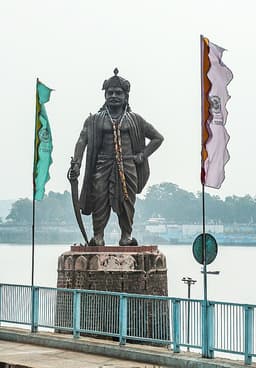
Bhoja
Emperor · Medieval
55.9Total
Basic Information
Born
871
1010
Died
907
1055
Era
Medieval
Medieval
Nationality
India
India
Occupation
Emperor
Emperor
Civilization
Indian
Indian
Score Comparison
Military (10%)
30.0
50.0
Political (20%)
40.8
53.8
Influence (20%)
51.0
58.3
Legacy (20%)
43.3
58.0
Leadership (15%)
67.0
53.2
Strategy (15%)
60.0
57.5
TOTAL
48.7
55.9
Aditya I — Complete Timeline
880 AD
Conquest of Kongu NaduWar
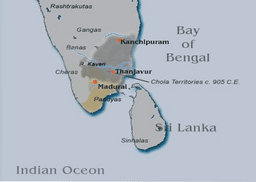
Aditya I conquered the Kongu region (western Tamil Nadu) from the Pandya and Pallava control. This expansion gave the Cholas control over important trade routes and fertile lands, boosting the kingdom's economic base.
Territorial ExpansionKongu NaduChola Conquest
Impact: regionalconstructive
890 AD
Alliance with the Chera KingdomPolitical Action◆ Major
Aditya I formed a marital and military alliance with the Chera kingdom of Kerala, strengthening the Chola position against the Pandya and Rashtrakuta kingdoms. This alliance helped secure the western frontier and facilitated trade.
AllianceChera KingdomDiplomacy
Impact: regionalconstructive
897 AD
Defeat of Aparajita Varman and End of Pallava RuleWar◆ Major
Aditya I defeated and killed the Pallava king Aparajita Varman at the Battle of Tirupati, ending the Pallava dynasty. He annexed the entire Pallava kingdom into the Chola domain, making the Cholas the dominant power in Tamil Nadu.
Pallava ConquestChola ExpansionDynastic Change
Impact: regionaldestructive
Bhoja — Complete Timeline
1030 AD
Patronage of the University of DharaCultural
Bhoja patronized the university at Dhara, his capital, attracting scholars from across India. He established a library and supported studies in grammar, philosophy, and astronomy. This made Dhara a major center of learning.
EducationPatronageScholarship
Impact: regionalconstructive
1040 AD
Composition of the Samarangana SutradharaCultural◆ Major
Bhoja wrote the Samarangana Sutradhara, a comprehensive treatise on architecture and engineering. The text covers temple construction, town planning, and mechanical devices. It became a foundational work in Indian architectural theory.
ArchitectureEngineeringScholarship
Impact: regionalconstructive
1042 AD
Defeat by the Chaulukya King Bhima IWar◆ Major
Bhoja's army was defeated by the Chaulukya king Bhima I of Gujarat in a battle near the Narmada River. This loss halted Paramara expansion westward and forced Bhoja to pay tribute. It marked a significant setback for his reign.
Chaulukya WarMilitary DefeatGujarat
Impact: regionaltragic
1050 AD
Construction of the Bhojeshwar TempleCultural◆ Major
Bhoja began construction of the Bhojeshwar Temple at Bhojpur, dedicated to Shiva. The temple features a massive lingam and a large dome, but was left incomplete at his death. It remains a significant example of Paramara architecture.
Temple BuildingShivaArchitecture
constructive
This comparison has not been analyzed yet.
One-time AI generation (~1 minute). Scores and timeline are already available below.
Rankings
🥇
BhojaLeader
Mil: 50.0Pol: 53.8Inf: 58.3
55.9
🥈
Aditya I
Mil: 30.0Pol: 40.8Inf: 51.0
48.7
+7.2 behind
How This Comparison Works
Algorithm
Each figure is scored on 6 dimensions (0—100 scale) based on structured historical data: Military (10%), Political (20%), Influence (20%), Legacy (20%), Leadership (15%), Strategy (15%). The weighted total produces the final ranking.
Data Sources
Scores are computed from structured sub-indicators in the database. Scale factors adjust for era (Ancient ×0.85, Modern ×1.0) and civilization size (Eastern ×1.05, Other ×0.80) to account for differences in population and military scale.
Maximum 3 Figures
Comparisons are limited to 2—3 figures to ensure readability and statistical meaningfulness.
Error Margins
±5 points per dimension — Sub-scores are derived from historical records with inherent uncertainty. Two figures within 5 points on a dimension should be considered roughly equivalent in that area.
Total Score Accuracy
±3 points overall — The weighted combination of 6 dimensions produces a total score with approximately ±3 points of uncertainty. Differences of less than 3 points are not statistically significant— the figures are effectively tied.
Known Limitations
- Historical records are incomplete and uneven across civilizations
- Figures from oral-tradition societies may be underrepresented
- Occupation labels can misclassify multi-role figures
- Scores measure capability and impact, not moral character
- Quantitative scoring is a comparison tool, not absolute truth
Capability Radar
Military (10%) — Battles & Warfare
Battles
40
45
Win Rate
45
50
Expansion
45
45
Political (20%) — Governance & Reform
Reform
30
65
Diplomacy
45
55
Economy
35
70
Influence (20%) — Cultural & Global Reach
Cultural
30
70
Global
15
40
Legacy (20%) — Historical Impact
Historical
35
65
Longevity
25
60
Leadership (15%) — Power & Stability
Tenure
50
60
Stability
40
60
Strategy (15%) — Tactics & Innovation
Strategy
40
50
Tactics
35
55
Reform
20
40
Similar Comparisons
Comments & Discussion
No comments yet. Be the first to share your thoughts!