Loading...
Bhoja vs Napoleon Bonaparte
Napoleon Bonaparte leads by 15.0 pts · 2 figures compared
…
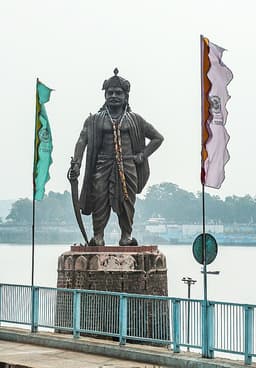
Bhoja
Emperor · Medieval
55.9Total

Napoleon Bonaparte
General · Modern
70.9Total
Basic Information
Born
1010
1769
Died
1055
1821
Era
Medieval
Modern
Nationality
India
France
Occupation
Emperor
General
Civilization
Indian
Western
Score Comparison
Military (10%)
50.0
94.0
Political (20%)
53.8
72.0
Influence (20%)
58.3
40.0
Legacy (20%)
58.0
80.0
Leadership (15%)
53.2
78.0
Strategy (15%)
57.5
90.0
TOTAL
55.9
70.9
Bhoja — Complete Timeline
1030 AD
Patronage of the University of DharaCultural
Bhoja patronized the university at Dhara, his capital, attracting scholars from across India. He established a library and supported studies in grammar, philosophy, and astronomy. This made Dhara a major center of learning.
EducationPatronageScholarship
Impact: regionalconstructive
1040 AD
Composition of the Samarangana SutradharaCultural◆ Major
Bhoja wrote the Samarangana Sutradhara, a comprehensive treatise on architecture and engineering. The text covers temple construction, town planning, and mechanical devices. It became a foundational work in Indian architectural theory.
ArchitectureEngineeringScholarship
Impact: regionalconstructive
1042 AD
Defeat by the Chaulukya King Bhima IWar◆ Major
Bhoja's army was defeated by the Chaulukya king Bhima I of Gujarat in a battle near the Narmada River. This loss halted Paramara expansion westward and forced Bhoja to pay tribute. It marked a significant setback for his reign.
Chaulukya WarMilitary DefeatGujarat
Impact: regionaltragic
1050 AD
Construction of the Bhojeshwar TempleCultural◆ Major
Bhoja began construction of the Bhojeshwar Temple at Bhojpur, dedicated to Shiva. The temple features a massive lingam and a large dome, but was left incomplete at his death. It remains a significant example of Paramara architecture.
Temple BuildingShivaArchitecture
constructive
Napoleon Bonaparte — Complete Timeline
1799 AD
Coup of 18 BrumaireOther◆ Major
Napoleon Bonaparte, with support from his brother Lucien and key political figures, overthrew the Directory in a bloodless coup. He established the Consulate with himself as First Consul, effectively becoming the ruler of France. This event ended the French Revolution's most unstable period.
French RevolutionCoupRise to Power
Impact: regional
1804 AD
Promulgation of the Napoleonic CodeOther◆ Major
Napoleon enacted the Civil Code of the French, known as the Napoleonic Code, a comprehensive set of laws that replaced the fragmented feudal legal systems. The code established legal equality, protected property rights, and secularized law. It became the basis for legal systems in many European and world countries.
Legal ReformNapoleonic CodeCivil Law
Impact: globalconstructive
1805 AD
Battle of AusterlitzWar◆ Major
Napoleon's Grande Arm
Napoleonic WarsBattleDecisive Victory
Impact: global
1812 AD
Invasion of RussiaWar◆ Major
Napoleon led the Grande Arm
Napoleonic WarsInvasionDisaster
Impact: globaldestructive
1815 AD
Battle of WaterlooWar◆ Major
Napoleon's French army was defeated by the combined forces of the Duke of Wellington's Anglo-Allied army and Gebhard Leberecht von Bl
Napoleonic WarsBattleFinal Defeat
Impact: globaldestructive
Expert Analysis
bhoja-vs-napoleon-bonaparte
# The Emperor and the Scholar-King
On a spring morning in 1815, Napoleon Bonaparte stood before his army at Waterloo, a man who had reshaped the map of Europe with the force of his ambition. Seven centuries earlier and half a world away, another ruler—Bhoja of the Paramara dynasty—sat in his palace at Dhara, composing a treatise on architecture while his kingdom faced the slow erosion of its power. One conquered continents, the other built temples. One died in exile on a remote island, the other faded into legend as a philosopher-king. What drove these two men, both born to rule, toward such radically different destinies?
Origins
Napoleon entered the world in 1769 on the Mediterranean island of Corsica, a place only recently annexed by France. His family belonged to the minor nobility, but they were not wealthy, and young Napoleon grew up with a chip on his shoulder—a fierce pride mixed with the insecurity of an outsider. The French Revolution, which erupted when he was twenty, shattered the old order and opened doors that would have remained locked under the monarchy. For a brilliant, ambitious young man of modest birth, the chaos of revolution was not a tragedy but an opportunity.
Bhoja, by contrast, was born around 1010 into a dynasty that had ruled central India for generations. The Paramara kings traced their lineage to the legendary king Vikramaditya, and Bhoja inherited not only a throne but a tradition of learning and patronage. Where Napoleon’s world was one of upheaval and violence, Bhoja’s was one of stability—at least, as stable as any medieval kingdom could be. The difference in their upbringings was not merely geographical; it was cosmic. Napoleon’s era was defined by the clash of empires and the birth of modern nationalism. Bhoja’s was defined by the rhythms of dynasty, religion, and scholarship.
Rise to Power
Napoleon’s ascent was meteoric, a story of raw talent seizing the moment. At twenty-four, he crushed a royalist uprising in Paris with a “whiff of grapeshot,” earning the attention of the revolutionary government. By twenty-six, he was commanding the Army of Italy, leading ragged soldiers to stunning victories against the Austrians. His campaign in Egypt, though militarily questionable, made him a legend back home. When he returned to France in 1799, the country was weary of corruption and instability. In a coup d’état, Napoleon made himself First Consul, then Emperor in 1804. He had risen from Corsican outsider to master of Europe in less than a decade.
Bhoja’s path was slower, more deliberate. He inherited the throne of Malwa around 1010, but his early reign was marked by consolidation rather than conquest. Unlike Napoleon, who seized power through force and charisma, Bhoja was a legitimate heir who had to prove himself through wisdom and governance. His rise was not a dramatic upheaval but a gradual accumulation of authority—built on patronage, scholarship, and the careful management of alliances. Where Napoleon burned with ambition, Bhoja glowed with erudition.
Leadership & Governance
As a ruler, Napoleon was a paradox. He was a military genius whose campaigns are still studied in war colleges—his strategy at Austerlitz in 1805 remains a masterpiece of deception and speed. Yet his political wisdom was erratic. The Napoleonic Code, which he introduced in 1804, was a landmark of legal reform, establishing principles of equality before the law, secular governance, and property rights that influenced legal systems across Europe and beyond. But his governance was also autocratic; he suppressed dissent, censored the press, and crowned himself emperor in a ceremony where he took the crown from the pope and placed it on his own head.
Bhoja’s leadership took a different form. His military score of 41.3 reflects a ruler who fought defensive wars rather than aggressive conquests. In 1042, his army was defeated by the Chaulukya king Bhima I near the Narmada River, a loss that halted his expansion. But Bhoja’s genius lay elsewhere. He was a patron of the University of Dhara, which he established around 1030, attracting scholars from across India and creating a library that became a center of learning. He wrote the *Samarangana Sutradhara* in 1040, a comprehensive treatise on architecture and engineering that covered temple construction, town planning, and even mechanical devices. And in 1050, he began construction of the Bhojeshwar Temple at Bhojpur, a massive shrine to Shiva featuring a lingam of extraordinary size—a monument that was never completed, but whose ambition still inspires awe.
Triumph & Tragedy
Napoleon’s greatest triumph was also the seed of his tragedy. After defeating Prussia, Austria, and Russia, he dominated Europe from Spain to Poland. He installed his brothers on thrones, redrew borders, and spread the ideals of the French Revolution—at the point of a bayonet. But his invasion of Russia in 1812 was a catastrophe. The vast distances, the brutal winter, and the Russian scorched-earth tactics destroyed his Grand Army of nearly 600,000 men. He never recovered. Exiled to Elba in 1814, he escaped and ruled for a hundred days before Waterloo in 1815 ended his ambitions forever. He died in 1821 on the remote island of Saint Helena, a prisoner of the British.
Bhoja’s tragedy was quieter but no less profound. His kingdom, Malwa, was under constant pressure from neighboring powers—the Chaulukyas, the Chalukyas, and later the Delhi Sultanate. His defeat in 1042 marked the beginning of a slow decline. The Bhojeshwar Temple, his greatest architectural project, was never finished. After his death around 1055, the Paramara dynasty gradually faded, and Malwa fell to more aggressive rivals. Bhoja’s tragedy was not a single dramatic fall but a gentle fading—a kingdom that could not sustain the vision of its scholar-king.
Character & Destiny
Napoleon and Bhoja were products of their civilizations, but their personalities drove their fates. Napoleon was restless, driven, and supremely confident. “Impossible is a word to be found only in the dictionary of fools,” he once said. He believed he could shape history through sheer will, and for a time, he did. But his ambition had no limits, and that lack of restraint led to his downfall. He could not stop conquering, could not accept compromise, could not share power.
Bhoja, by contrast, was a man of contemplation. His identity as a scholar-king shaped his decisions. He built universities, wrote treatises, and patronized the arts—not because he was weak, but because he believed that a ruler’s highest duty was to cultivate knowledge and beauty. His military caution was not cowardice but wisdom. He understood that empires built on conquest crumble, while empires built on culture endure—even if only in memory.
Legacy
Napoleon’s legacy is written in the laws, borders, and institutions of modern Europe. The Napoleonic Code remains the foundation of civil law in many countries. His military innovations changed warfare forever. And his myth—the brilliant, tragic hero—has inspired countless books, films, and political movements. He is remembered as both a liberator and a tyrant, a genius and a despot.
Bhoja’s legacy is quieter but no less real. The *Samarangana Sutradhara* is still studied by historians of architecture. The Bhojeshwar Temple, though unfinished, is a pilgrimage site and a monument to medieval Indian engineering. And Bhoja himself is remembered in Indian tradition as a philosopher-king, a ruler who valued learning over conquest. His total score of 64.6 reflects a different kind of greatness—not the thunder of battles, but the light of scholarship.
Conclusion
Standing at Waterloo, Napoleon saw the end of his empire in the smoke and mud. Standing at Bhojpur, Bhoja saw the beginning of a temple that would outlast his kingdom. One man tried to conquer the world and lost everything. The other tried to understand the world and left a legacy that still inspires. Their stories ask a question that haunts every age: What does it mean to rule well? Is it the will to power, or the wisdom to build? Perhaps the answer lies not in choosing one over the other, but in recognizing that both Napoleon and Bhoja, in their own ways, were trying to shape a world that would remember them. And in that, at least, they succeeded.
Rankings
🥇
Napoleon BonaparteLeader
Mil: 94.0Pol: 72.0Inf: 40.0
70.9
🥈
Bhoja
Mil: 50.0Pol: 53.8Inf: 58.3
55.9
+15.0 behind
How This Comparison Works
Algorithm
Each figure is scored on 6 dimensions (0—100 scale) based on structured historical data: Military (10%), Political (20%), Influence (20%), Legacy (20%), Leadership (15%), Strategy (15%). The weighted total produces the final ranking.
Data Sources
Scores are computed from structured sub-indicators in the database. Scale factors adjust for era (Ancient ×0.85, Modern ×1.0) and civilization size (Eastern ×1.05, Other ×0.80) to account for differences in population and military scale.
Maximum 3 Figures
Comparisons are limited to 2—3 figures to ensure readability and statistical meaningfulness.
Error Margins
±5 points per dimension — Sub-scores are derived from historical records with inherent uncertainty. Two figures within 5 points on a dimension should be considered roughly equivalent in that area.
Total Score Accuracy
±3 points overall — The weighted combination of 6 dimensions produces a total score with approximately ±3 points of uncertainty. Differences of less than 3 points are not statistically significant— the figures are effectively tied.
Known Limitations
- Historical records are incomplete and uneven across civilizations
- Figures from oral-tradition societies may be underrepresented
- Occupation labels can misclassify multi-role figures
- Scores measure capability and impact, not moral character
- Quantitative scoring is a comparison tool, not absolute truth
Capability Radar
Military (10%) — Battles & Warfare
Battles
45
95
Win Rate
50
90
Expansion
45
95
Political (20%) — Governance & Reform
Reform
65
95
Diplomacy
55
80
Economy
70
85
Influence (20%) — Cultural & Global Reach
Cultural
70
85
Global
40
90
Legacy (20%) — Historical Impact
Historical
65
95
Longevity
60
90
Leadership (15%) — Power & Stability
Tenure
60
85
Stability
60
70
Strategy (15%) — Tactics & Innovation
Strategy
50
95
Tactics
55
98
Reform
40
92
Similar Comparisons
Comments & Discussion
No comments yet. Be the first to share your thoughts!