Loading...
Andronikos II Palaiologos vs Henry III of England
Henry III of England leads by 8.6 pts · 2 figures compared
…
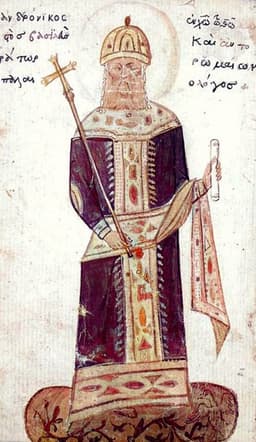
Andronikos II Palaiologos
Emperor · Medieval
42.7Total
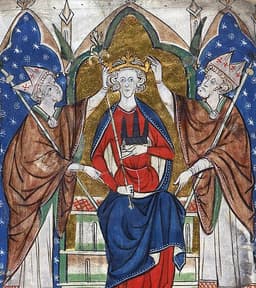
Henry III of England
Emperor · Medieval
51.3Total
Basic Information
Born
1259
1207
Died
1332
1272
Era
Medieval
Medieval
Nationality
Byzantine Empire
England
Occupation
Emperor
Emperor
Civilization
Western
Western
Score Comparison
Military (10%)
21.2
50.0
Political (20%)
26.4
37.9
Influence (20%)
51.8
56.4
Legacy (20%)
42.5
47.5
Leadership (15%)
62.2
74.0
Strategy (15%)
36.8
35.7
TOTAL
42.7
51.3
Andronikos II Palaiologos — Complete Timeline
1282 AD
Coronation as co-emperor and beginning of the Palaiologan dynastyPolitical Action◆ Major
Andronikos II was crowned co-emperor alongside his father Michael VIII, and became sole ruler after Michael's death later that year. His reign began the long Palaiologan dynasty, but the empire was already weakened by financial and military decline.
CoronationDynastic SuccessionPalaiologoi
Impact: national
1283 AD
Rejection of the Union of the ChurchesPolitical Action◆ Major
Andronikos II repudiated the Union of the Churches agreed to by his father at the Second Council of Lyon. He restored Orthodox independence from the Papacy, which pleased the clergy and populace but further isolated Byzantium from the West.
Church PolicyOrthodoxyPapal Relations
Impact: nationalconstructive
1285 AD
Disbandment of the Byzantine navyReform◆ Major
Andronikos II disbanded the Byzantine navy to cut costs, relying instead on Genoese and Venetian mercenaries. This decision left the empire vulnerable to naval attacks and piracy, and contributed to the loss of control over the Aegean islands and trade routes.
Naval PolicyMilitary DeclineMercenaries
Impact: regionaldestructive
1300 AD
Loss of Anatolian territories to the Ottoman TurksWar◆ Major
During Andronikos II's reign, the Ottoman Turks captured numerous Byzantine cities in Anatolia, including Bursa in 1326. The empire's inability to defend its Asian provinces led to the permanent loss of most of Anatolia, reducing Byzantium to a small state around Constantinople.
Ottoman ConquestTerritorial LossAnatolia
Impact: regionaltragic
1321 AD
Civil war with Andronikos III PalaiologosWar◆ Major
Andronikos II faced a civil war against his grandson Andronikos III, who sought to seize the throne. The conflict lasted until 1328, when Andronikos II was forced to abdicate. The civil war drained the empire's resources and allowed the Ottoman Turks to expand in Anatolia.
Civil WarDynastic ConflictOttoman Expansion
Impact: nationaldestructive
Henry III of England — Complete Timeline
1245 AD
Rebuilding of Westminster AbbeyCultural◆ Major
Henry III began the rebuilding of Westminster Abbey in the Gothic style, dedicating it to Edward the Confessor. This project became a major architectural achievement and a symbol of royal piety and power.
ArchitectureReligionWestminster
Impact: nationalconstructive
1258 AD
Provisions of OxfordPolitical Action◆ Major
Under baronial pressure, Henry III agreed to the Provisions of Oxford, which established a council of barons to oversee royal governance. This reform limited royal power and created a precedent for parliamentary oversight.
ReformBaronial CouncilParliament
Impact: nationalconstructive
1264 AD
Second Barons' WarWar◆ Major
Henry III faced the Second Barons' War led by Simon de Montfort. He was captured at the Battle of Lewes, but later restored after the royalist victory at the Battle of Evesham, where de Montfort was killed.
Civil WarSimon de MontfortBattle
Impact: nationaldestructive
1265 AD
Battle of EveshamWar◆ Major
Royalist forces under Prince Edward defeated Simon de Montfort's army at the Battle of Evesham. De Montfort was killed, ending the baronial rebellion and restoring Henry III's full authority.
BattleBaronial RevoltRoyalist Victory
Impact: national
1266 AD
Dictum of KenilworthPolitical Action
Henry III issued the Dictum of Kenilworth, a compromise that allowed rebel barons to reclaim their lands by paying fines. This helped reconcile the kingdom after the Second Barons' War.
ReconciliationCompromise
Impact: nationalconstructive
Expert Analysis
Origins
Andronikos II Palaiologos was born in 1259 to Michael VIII Palaiologos, the founder of the Palaiologan dynasty that restored Byzantine rule in Constantinople in 1261. He received a traditional Byzantine education in theology and statecraft, shaped by the precarious position of the restored empire. Henry III of England was born in 1207 to King John and Isabella of Angoulême. His childhood was marked by the aftermath of his father's disastrous reign and the Magna Carta crisis. He was raised under the regency of William Marshal, learning the arts of kingship amid a turbulent nobility.
Rise to Power
Andronikos II was crowned co-emperor in 1272 and became sole ruler upon his father's death in 1282. His early reign focused on reversing Michael VIII's pro-Union policies, repudiating the Union of the Churches agreed at Lyon in 1274. This move gained him popularity among Orthodox clergy but alienated the West. Henry III became king at age nine in 1216, during the First Barons' War. His minority was managed by regents who reissued Magna Carta. He assumed personal rule in 1227, but his reliance on foreign favorites and expensive papal commitments sparked baronial discontent.
Leadership & Governance
Andronikos II's governance was marked by fiscal austerity that weakened the state. He disbanded the Byzantine navy in 1285 to cut costs, scoring 21.2 in military effectiveness. Instead, he relied on Genoese and Venetian mercenaries, leaving the empire unable to defend its coasts and islands. He also debased the currency, causing inflation. His political score of 26.4 reflects his inability to manage internal factions or the rising Ottoman threat. Henry III's leadership score is 74.0, driven by his cultural patronage and legal reforms. He rebuilt Westminster Abbey, a project that cost over £45,000, and supported the arts. However, his political score of 37.9 shows his weakness in governance: he favored Poitevin relatives, ignored baronial counsel, and agreed to the Provisions of Oxford in 1258, which placed power in a baronial council. This concession was a direct result of his poor financial management and failed foreign policies, such as the Sicilian affair.
Triumph & Tragedy
Andronikos II's greatest triumph was the restoration of Orthodox independence by rejecting the Union of Churches, which solidified his legitimacy in the eyes of his subjects. His greatest tragedy was the loss of Anatolia to the Ottoman Turks, including the fall of Bursa in 1326. He also faced a civil war with his grandson Andronikos III from 1321 to 1328, ending in his forced abdication. Henry III's triumph was the completion of Westminster Abbey, a masterpiece of Gothic architecture that remains a symbol of English monarchy. His tragedy was the Second Barons' War (1264-1267), during which he was captured at the Battle of Lewes. His son Prince Edward's victory at Evesham in 1265 restored royal power, but Henry's reign ended with the realm weakened by conflict. Unlike Andronikos, Henry was able to pass the throne to his son, ensuring dynastic continuity.
Character & Destiny
Andronikos II was pious and conservative, prioritizing religious orthodoxy over military preparedness. His decision to disband the navy scored 36.8 in strategy, reflecting a short-sighted approach. He was also indecisive, failing to modernize the army or forge alliances. Henry III was deeply religious, devoted to Edward the Confessor, and generous to the Church. His patronage of Westminster Abbey earned him a legacy score of 47.5, but his inability to manage finances and favoritism led to baronial revolts. Both rulers were overshadowed by more capable successors: Andronikos III and Edward I.
Legacy
Andronikos II's legacy is one of decline: the Byzantine Empire lost its naval power, Anatolian territories, and internal cohesion. His reign set the stage for the eventual fall of Constantinople in 1453. Total score: 42.7. Henry III's legacy is more positive: Westminster Abbey stands as a testament to his cultural impact, and the Provisions of Oxford laid groundwork for parliamentary governance. His reign also saw the strengthening of the common law. Total score: 51.3.
Conclusion
While Andronikos II scored 42.7 overall, Henry III scored 51.3, a gap of 8.6 points. Henry's greater impact stems from his cultural contributions and the constitutional developments that outlasted his reign. Andronikos's failures were more catastrophic, accelerating the empire's collapse. Henry III, despite his flaws, left institutions and monuments that shaped England's future. Thus, Henry III had a more significant and lasting impact.
Rankings
🥇
Henry III of EnglandLeader
Mil: 50.0Pol: 37.9Inf: 56.4
51.3
🥈
Andronikos II Palaiologos
Mil: 21.2Pol: 26.4Inf: 51.8
42.7
+8.6 behind
How This Comparison Works
Algorithm
Each figure is scored on 6 dimensions (0—100 scale) based on structured historical data: Military (10%), Political (20%), Influence (20%), Legacy (20%), Leadership (15%), Strategy (15%). The weighted total produces the final ranking.
Data Sources
Scores are computed from structured sub-indicators in the database. Scale factors adjust for era (Ancient ×0.85, Modern ×1.0) and civilization size (Eastern ×1.05, Other ×0.80) to account for differences in population and military scale.
Maximum 3 Figures
Comparisons are limited to 2—3 figures to ensure readability and statistical meaningfulness.
Error Margins
±5 points per dimension — Sub-scores are derived from historical records with inherent uncertainty. Two figures within 5 points on a dimension should be considered roughly equivalent in that area.
Total Score Accuracy
±3 points overall — The weighted combination of 6 dimensions produces a total score with approximately ±3 points of uncertainty. Differences of less than 3 points are not statistically significant— the figures are effectively tied.
Known Limitations
- Historical records are incomplete and uneven across civilizations
- Figures from oral-tradition societies may be underrepresented
- Occupation labels can misclassify multi-role figures
- Scores measure capability and impact, not moral character
- Quantitative scoring is a comparison tool, not absolute truth
Capability Radar
Military (10%) — Battles & Warfare
Battles
15
25
Win Rate
10
20
Expansion
5
10
Political (20%) — Governance & Reform
Reform
20
40
Diplomacy
25
30
Economy
15
30
Influence (20%) — Cultural & Global Reach
Cultural
30
50
Global
20
30
Legacy (20%) — Historical Impact
Historical
35
45
Longevity
20
40
Leadership (15%) — Power & Stability
Tenure
70
80
Stability
10
25
Strategy (15%) — Tactics & Innovation
Strategy
15
20
Tactics
10
15
Reform
5
10
Similar Comparisons
Comments & Discussion
No comments yet. Be the first to share your thoughts!