Loading...
Adolf of Germany vs Baldwin IV of Jerusalem
Baldwin IV of Jerusalem leads by 13.4 pts · 2 figures compared
…
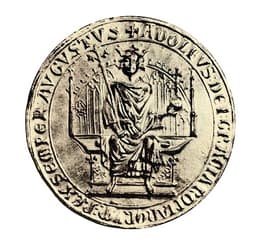
Adolf of Germany
Emperor · Medieval
40.1Total
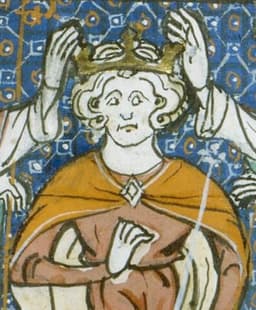
Baldwin IV of Jerusalem
Emperor · Medieval
53.5Total
Basic Information
Born
1255
1161
Died
1298
1185
Era
Medieval
Medieval
Nationality
Holy Roman Empire
Jerusalem
Occupation
Emperor
Emperor
Civilization
Western
Western
Score Comparison
Military (10%)
50.0
40.0
Political (20%)
26.4
43.7
Influence (20%)
47.9
57.2
Legacy (20%)
38.3
54.0
Leadership (15%)
38.1
65.7
Strategy (15%)
38.3
52.5
TOTAL
40.1
53.5
Adolf of Germany — Complete Timeline
1292 AD
Election as King of GermanyPolitical Action◆ Major
Adolf, Count of Nassau, was elected King of Germany by the prince-electors, succeeding Rudolf I. His election was a compromise between the Habsburg and Luxembourg factions.
ElectionCompromise
Impact: national
1294 AD
Acquisition of ThuringiaPolitical Action◆ Major
Adolf purchased the Landgraviate of Thuringia from the impoverished Landgrave Albert II. This expansion of royal territory provoked opposition from the electors, who accused him of misusing royal power.
Territorial AcquisitionConflict with Electors
Impact: regional
1298 AD
Battle of GöllheimWar
Adolf was defeated and killed in battle near G
BattleDeath in Battle
Impact: nationaltragic
Baldwin IV of Jerusalem — Complete Timeline
1177 AD
Battle of MontgisardWar
Baldwin IV, despite suffering from leprosy, led a small force to victory against Saladin's larger army at Montgisard. Saladin was forced to retreat to Egypt, and the victory boosted Christian morale in the Kingdom of Jerusalem.
Crusader StatesBattleSaladin
Impact: regional
1183 AD
Siege of KerakWar◆ Major
Baldwin IV led a relief force to the Siege of Kerak, where Saladin was besieging the castle. Baldwin's arrival forced Saladin to lift the siege, demonstrating Baldwin's continued military leadership despite his illness.
Crusader StatesSiegeSaladin
Impact: regional
Appointment of Guy of Lusignan as RegentPolitical Action◆ Major
Due to his worsening leprosy, Baldwin appointed Guy of Lusignan as regent. This decision proved disastrous, as Guy's incompetence led to internal strife and ultimately the loss of Jerusalem.
Crusader StatesPoliticsRegency
Impact: regionaltragic
Coronation of Baldwin VPolitical Action◆ Major
Baldwin IV had his nephew, Baldwin V, crowned co-king to ensure a smooth succession and prevent Guy of Lusignan from inheriting the throne. This move aimed to stabilize the kingdom but failed after Baldwin IV's death.
Crusader StatesSuccession
Impact: regional
Expert Analysis
Origins
Adolf of Germany was born around 1255 as Count of Nassau, a minor noble family in the Holy Roman Empire. Little is known about his early life; he inherited the county in 1276 and focused on expanding his territorial holdings through purchase and marriage. His background lacked royal lineage, making his later election as king a surprising turn.
Baldwin IV of Jerusalem was born in 1161 into the royal House of Anjou. He was the son of King Amalric I and Queen Agnes of Courtenay. At age nine, Baldwin was diagnosed with leprosy, a disease that progressively deformed his body and limited his physical capabilities. Despite this, he received a thorough education in military tactics and statecraft, preparing him for a reign that would be defined by constant warfare against Saladin.
Rise to Power
Adolf's rise came in 1292 when the prince-electors chose him as King of Germany after the death of Rudolf I. His election was a compromise: the Habsburg candidate, Albert of Austria, was too powerful, and the electors sought a weaker king. Adolf accepted, promising to respect their privileges and not to seek the imperial crown. He scored 26.4 in political skill, reflecting his inability to secure lasting support.
Baldwin IV became king in 1174 at age 13, following his father's death. His leprosy was already evident, but he was crowned with the approval of the High Court. His early reign was dominated by regents, but by 1176 he took personal command. His political score of 43.7 indicates moderate success in navigating court factions, though internal strife ultimately undermined his efforts.
Leadership & Governance
Adolf's leadership style was aggressive and expansionist. He purchased Thuringia in 1294 for 12,000 marks, using royal funds to increase his personal domain. This provoked opposition from the Habsburgs and other princes. He also allied with King Edward I of England against France, but failed to provide meaningful military support. His total leadership score of 38.1 reflects his short, conflict-ridden reign.
Baldwin IV governed with a focus on defense and diplomacy. Despite his physical deterioration, he led campaigns personally, most notably at Montgisard in 1177, where he defeated Saladin's army of 20,000 with only 500 knights and 2,000 infantry. He also forged alliances with the Byzantine Empire and worked to maintain truces. His leadership score of 65.7 is among the highest for medieval rulers, showing his ability to command respect despite his illness.
Triumph & Tragedy
Adolf's greatest triumph was his election as king, a remarkable achievement for a minor count. His acquisition of Thuringia temporarily expanded royal lands. However, his tragedy was his defeat and death at the Battle of Göllheim on July 2, 1298, against Albert of Habsburg. His reign lasted only six years, and he left no lasting legacy.
Baldwin's triumph was the victory at Montgisard, a stunning upset that delayed Saladin's conquest. He also successfully relieved the Siege of Kerak in 1183. His tragedy was his worsening leprosy, which forced him to appoint Guy of Lusignan as regent in 1183. Guy's incompetence led to internal divisions and ultimately contributed to the loss of Jerusalem in 1187, after Baldwin's death. Baldwin's decision to crown his nephew Baldwin V as co-king in 1183 was an attempt to secure succession, but it failed when the boy died in 1186.
Character & Destiny
Adolf was ambitious but politically naive. He overreached by challenging the Habsburgs and failed to build a stable power base. His character—impetuous and greedy—led to his downfall. Historians note his lack of strategic foresight, reflected in his military score of 50.0.
Baldwin was determined and resilient, refusing to let leprosy define his reign. He was a skilled tactician and a compassionate ruler, but his physical limitations and the factionalism of the crusader states doomed his efforts. His character inspired loyalty, but also led him to trust unworthy allies like Guy. His strategic score of 52.5 shows competence, but not genius.
Legacy
Adolf's legacy is minor. He is remembered as a failed king whose brief reign weakened the monarchy. His death at Göllheim allowed the Habsburgs to consolidate power, shaping German politics for centuries. His influence score of 47.9 is mediocre.
Baldwin IV's legacy is enduring. He is the 'Leper King,' a symbol of courage against overwhelming odds. His military campaigns delayed Saladin's conquest, and his story has inspired countless works. His legacy score of 54.0 reflects his lasting fame, though his political failures contributed to the fall of Jerusalem.
Conclusion
Baldwin IV had greater impact than Adolf of Germany. With a total score of 53.5 against Adolf's 40.1, Baldwin's leadership in the face of leprosy and his defense of Jerusalem against Saladin demonstrate a more significant historical role. While Adolf's reign was a footnote in German history, Baldwin's struggle shaped the Crusades and left a lasting narrative of heroism. The 13.4-point gap underscores Baldwin's superior influence and leadership.
Rankings
🥇
Baldwin IV of JerusalemLeader
Mil: 40.0Pol: 43.7Inf: 57.2
53.5
🥈
Adolf of Germany
Mil: 50.0Pol: 26.4Inf: 47.9
40.1
+13.4 behind
How This Comparison Works
Algorithm
Each figure is scored on 6 dimensions (0—100 scale) based on structured historical data: Military (10%), Political (20%), Influence (20%), Legacy (20%), Leadership (15%), Strategy (15%). The weighted total produces the final ranking.
Data Sources
Scores are computed from structured sub-indicators in the database. Scale factors adjust for era (Ancient ×0.85, Modern ×1.0) and civilization size (Eastern ×1.05, Other ×0.80) to account for differences in population and military scale.
Maximum 3 Figures
Comparisons are limited to 2—3 figures to ensure readability and statistical meaningfulness.
Error Margins
±5 points per dimension — Sub-scores are derived from historical records with inherent uncertainty. Two figures within 5 points on a dimension should be considered roughly equivalent in that area.
Total Score Accuracy
±3 points overall — The weighted combination of 6 dimensions produces a total score with approximately ±3 points of uncertainty. Differences of less than 3 points are not statistically significant— the figures are effectively tied.
Known Limitations
- Historical records are incomplete and uneven across civilizations
- Figures from oral-tradition societies may be underrepresented
- Occupation labels can misclassify multi-role figures
- Scores measure capability and impact, not moral character
- Quantitative scoring is a comparison tool, not absolute truth
Capability Radar
Military (10%) — Battles & Warfare
Battles
25
55
Win Rate
20
60
Expansion
15
20
Political (20%) — Governance & Reform
Reform
15
30
Diplomacy
25
55
Economy
20
35
Influence (20%) — Cultural & Global Reach
Cultural
15
45
Global
10
40
Legacy (20%) — Historical Impact
Historical
20
60
Longevity
10
55
Leadership (15%) — Power & Stability
Tenure
30
45
Stability
15
40
Strategy (15%) — Tactics & Innovation
Strategy
25
60
Tactics
30
65
Reform
10
30
Similar Comparisons
Comments & Discussion
No comments yet. Be the first to share your thoughts!