Loading...
Adolf of Germany vs Napoleon Bonaparte
Napoleon Bonaparte leads by 30.8 pts · 2 figures compared
…
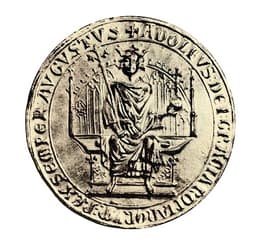
Adolf of Germany
Emperor · Medieval
40.1Total

Napoleon Bonaparte
General · Modern
70.9Total
Basic Information
Born
1255
1769
Died
1298
1821
Era
Medieval
Modern
Nationality
Holy Roman Empire
France
Occupation
Emperor
General
Civilization
Western
Western
Score Comparison
Military (10%)
50.0
94.0
Political (20%)
26.4
72.0
Influence (20%)
47.9
40.0
Legacy (20%)
38.3
80.0
Leadership (15%)
38.1
78.0
Strategy (15%)
38.3
90.0
TOTAL
40.1
70.9
Adolf of Germany — Complete Timeline
1292 AD
Election as King of GermanyPolitical Action◆ Major
Adolf, Count of Nassau, was elected King of Germany by the prince-electors, succeeding Rudolf I. His election was a compromise between the Habsburg and Luxembourg factions.
ElectionCompromise
Impact: national
1294 AD
Acquisition of ThuringiaPolitical Action◆ Major
Adolf purchased the Landgraviate of Thuringia from the impoverished Landgrave Albert II. This expansion of royal territory provoked opposition from the electors, who accused him of misusing royal power.
Territorial AcquisitionConflict with Electors
Impact: regional
1298 AD
Battle of GöllheimWar
Adolf was defeated and killed in battle near G
BattleDeath in Battle
Impact: nationaltragic
Napoleon Bonaparte — Complete Timeline
1799 AD
Coup of 18 BrumaireOther◆ Major
Napoleon Bonaparte, with support from his brother Lucien and key political figures, overthrew the Directory in a bloodless coup. He established the Consulate with himself as First Consul, effectively becoming the ruler of France. This event ended the French Revolution's most unstable period.
French RevolutionCoupRise to Power
Impact: regional
1804 AD
Promulgation of the Napoleonic CodeOther◆ Major
Napoleon enacted the Civil Code of the French, known as the Napoleonic Code, a comprehensive set of laws that replaced the fragmented feudal legal systems. The code established legal equality, protected property rights, and secularized law. It became the basis for legal systems in many European and world countries.
Legal ReformNapoleonic CodeCivil Law
Impact: globalconstructive
1805 AD
Battle of AusterlitzWar◆ Major
Napoleon's Grande Arm
Napoleonic WarsBattleDecisive Victory
Impact: global
1812 AD
Invasion of RussiaWar◆ Major
Napoleon led the Grande Arm
Napoleonic WarsInvasionDisaster
Impact: globaldestructive
1815 AD
Battle of WaterlooWar◆ Major
Napoleon's French army was defeated by the combined forces of the Duke of Wellington's Anglo-Allied army and Gebhard Leberecht von Bl
Napoleonic WarsBattleFinal Defeat
Impact: globaldestructive
Expert Analysis
adolf-of-germany-vs-napoleon-bonaparte
# The Emperor and the Count
On a June morning in 1815, Napoleon Bonaparte watched from a ridge as his Imperial Guard marched toward the British lines at Waterloo. Thirty miles away, in a museum that would not exist for another century, a medieval crown sat in darkness. These two moments—one of world-historical drama, the other of obscurity—belong to men who shared a title but little else. How did a Corsican artillery officer become the master of Europe, while a German count, elected to the same imperial dignity, vanished into a footnote?
Origins
Napoleon was born in 1769 on the island of Corsica, a place that had become French only months before his birth. His family belonged to the minor nobility, but they were poor, and their language was Italian. He spoke French with a thick accent all his life. This outsider status gave him something precious: the hunger of a man who has everything to prove. He attended military school in France, where classmates mocked his accent, and he responded by devouring books on artillery and history.
Adolf of Nassau, born in 1255, came from the opposite world. His family had ruled the small County of Nassau for generations. He was a prince by blood, comfortable in his skin, secure in his place. The Holy Roman Empire in the late thirteenth century was a patchwork of hundreds of territories, and Adolf’s ambition was not to conquer the world but to hold his own among the electors. The difference is fundamental: Napoleon wanted to remake the world; Adolf wanted to survive it.
Rise to Power
Napoleon’s ascent was a masterpiece of speed and opportunism. At age twenty-four, he drove the British out of Toulon. At twenty-six, he crushed a royalist uprising in Paris with a “whiff of grapeshot.” By thirty, he had conquered Italy and Egypt. The French Revolution had shattered the old order, and Napoleon rode the chaos like a wave. He was elected First Consul in 1799, crowned Emperor in 1804. Every step was a gamble, and every gamble paid off.
Adolf’s rise was quieter. In 1292, the prince-electors of the Holy Roman Empire met to choose a new king after the death of Rudolf I of Habsburg. They wanted a weak ruler, someone who would not threaten their power. Adolf of Nassau was perfect: a minor count with modest resources. They elected him on the understanding that he would be manageable. Where Napoleon seized power, Adolf was given it—and given it, in a sense, to fail.
Leadership & Governance
Napoleon governed with a vision that still shapes the world. His Napoleonic Code standardized French law, abolished feudal privileges, and established principles of meritocracy. He built roads, founded banks, reformed education. He also placed his brothers on thrones across Europe and fought twelve years of war that left a million dead. His military genius was undeniable: he won sixty battles, from Austerlitz in 1805 to Borodino in 1812. He understood that war was about morale, speed, and the decisive blow.
Adolf governed a kingdom that barely existed. The Holy Roman Empire was a loose confederation, and its king had limited authority. Adolf tried to expand his power by purchasing Thuringia in 1294 from the impoverished Landgrave Albert II. It was a shrewd move—acquiring territory without war—but it angered the Habsburgs, who saw the king as a rival. Adolf had no standing army, no bureaucracy, no code of laws. His “governance” consisted of diplomacy, marriage alliances, and the occasional skirmish. His military score of 37.7 reflects a man who fought only one significant battle—and lost it.
Triumph & Tragedy
Napoleon’s greatest triumph was the Empire at its height in 1811, when he controlled most of Europe from Spain to Poland. His greatest tragedy was the invasion of Russia in 1812, where he lost half a million men to winter, starvation, and guerrilla attacks. He was exiled to Elba, escaped, ruled for a Hundred Days, and was finally defeated at Waterloo. The tragedy was not just military but personal: a man of boundless ambition destroyed by his own hubris.
Adolf’s greatest moment was his election as king in 1292—a triumph of mediocrity. His tragedy came six years later, in 1298, when his rival Albert of Habsburg raised an army and marched against him. At the Battle of Göllheim, Adolf was defeated and killed. He had reigned for six years, accomplished little, and died in a field. His legacy score of 50.5 is the statistical equivalent of being forgotten.
Character & Destiny
Napoleon was restless, brilliant, and ruthless. He slept four hours a night, dictated letters to multiple secretaries simultaneously, and believed that “impossible is a word to be found only in the dictionary of fools.” His character drove his destiny: he could not stop, could not compromise, could not accept limits. That same character destroyed him.
Adolf was cautious, conventional, and reactive. He did not seize opportunities; he accepted them. He did not create events; he responded to them. His character made him a safe choice for the electors—and a forgotten one for history. The difference in their total scores—82.4 for Napoleon, 50.2 for Adolf—is not just a number. It is the measure of two different relationships with fate.
Legacy
Napoleon’s legacy is everywhere. The Napoleonic Code influences civil law in Europe, Latin America, and parts of Asia. He reorganized the German states, paving the way for unification. His campaigns are studied at every military academy. He is remembered as both a liberator and a tyrant, a genius and a monster. His tomb at Les Invalides draws millions of visitors.
Adolf of Germany is remembered by specialists. His name appears in lists of medieval kings, often with the note “deposed and killed.” The castle of Nassau still stands, but few tourists know who once lived there. He left no code, no reforms, no lasting impact. His legacy is a cautionary tale about the limits of power when you have no vision to wield it.
Conclusion
The contrast between Napoleon and Adolf is not just about talent or luck. It is about the shape of history itself. Napoleon lived in an age of revolution, when a man could rise from nothing to rule a continent. Adolf lived in an age of tradition, when power belonged to birth and consensus. Napoleon broke every rule; Adolf followed them. One became a legend; the other became a name in a textbook.
And yet, there is a strange irony. Napoleon ended his life a prisoner on a remote island, abandoned by his allies, his empire in ruins. Adolf ended his life on a battlefield, fighting for a crown that had never truly been his. Both men died alone, far from the thrones they had occupied. Perhaps the real difference is not in how they lived, but in how they are remembered—and that, as Napoleon himself once said, depends on who writes the history.
Rankings
🥇
Napoleon BonaparteLeader
Mil: 94.0Pol: 72.0Inf: 40.0
70.9
🥈
Adolf of Germany
Mil: 50.0Pol: 26.4Inf: 47.9
40.1
+30.8 behind
How This Comparison Works
Algorithm
Each figure is scored on 6 dimensions (0—100 scale) based on structured historical data: Military (10%), Political (20%), Influence (20%), Legacy (20%), Leadership (15%), Strategy (15%). The weighted total produces the final ranking.
Data Sources
Scores are computed from structured sub-indicators in the database. Scale factors adjust for era (Ancient ×0.85, Modern ×1.0) and civilization size (Eastern ×1.05, Other ×0.80) to account for differences in population and military scale.
Maximum 3 Figures
Comparisons are limited to 2—3 figures to ensure readability and statistical meaningfulness.
Error Margins
±5 points per dimension — Sub-scores are derived from historical records with inherent uncertainty. Two figures within 5 points on a dimension should be considered roughly equivalent in that area.
Total Score Accuracy
±3 points overall — The weighted combination of 6 dimensions produces a total score with approximately ±3 points of uncertainty. Differences of less than 3 points are not statistically significant— the figures are effectively tied.
Known Limitations
- Historical records are incomplete and uneven across civilizations
- Figures from oral-tradition societies may be underrepresented
- Occupation labels can misclassify multi-role figures
- Scores measure capability and impact, not moral character
- Quantitative scoring is a comparison tool, not absolute truth
Capability Radar
Military (10%) — Battles & Warfare
Battles
25
95
Win Rate
20
90
Expansion
15
95
Political (20%) — Governance & Reform
Reform
15
95
Diplomacy
25
80
Economy
20
85
Influence (20%) — Cultural & Global Reach
Cultural
15
85
Global
10
90
Legacy (20%) — Historical Impact
Historical
20
95
Longevity
10
90
Leadership (15%) — Power & Stability
Tenure
30
85
Stability
15
70
Strategy (15%) — Tactics & Innovation
Strategy
25
95
Tactics
30
98
Reform
10
92
Similar Comparisons
Comments & Discussion
Napoleon'sWrath6/17/2026
Waterloo wasn't just a defeat—it was the end of a tactical genius who revolutionized warfare with mass conscription and the corps system. Comparing him to Adolf of Nassau is absurd. One reshaped Europe’s military and legal order; the other was a footnote who failed to unite the German princes. Napoleon lost at Waterloo due to Grouchy's absence, not his own incompetence. This analysis glosses over that.
数据武器6/17/2026
比数据?拿破仑征服了欧洲多数领土,控制人口超7000万;拿骚的阿道夫统治的也就是莱茵河畔一个小伯爵领,影响力局限于神圣罗马帝国内部。拿破仑有明确的战略目标:建立大陆体系,而阿道夫选上皇帝后却跟教皇闹翻,连自己的地盘都没守住。这不是同一量级的对决,拿历史类比来模糊事实,根本站不住脚。
CorrectionsOfficer6/17/2026
This comparison reeks of false equivalence. Napoleon was a military and administrative reformer who codified civil law and dismantled feudalism across Europe. Adolf of Nassau? He got himself elected Holy Roman Emperor in 1292 precisely because the electors wanted a weak ruler they could control. He ended up excommunicated and killed in battle against his own successor. One man changed history; the other is a trivia question for medievalists.
古典视野6/17/2026
从古典标准看,拿破仑更像亚历山大大帝或凯撒——毁灭旧秩序、创建新帝国。阿道夫却连皇帝尊严都保不住:他在位期间没能压制日益强大的诸侯,反而被哈布斯堡的阿尔布雷希特一世击败并杀死。拿破仑的滑铁卢是英雄史诗的悲剧收场,阿道夫的死亡却是帝国衰落的注脚。这两者根本不配放在天平两端,这是把皇帝和伯爵混为一谈。