Loading...
Baldwin IV of Jerusalem vs Napoleon Bonaparte
Napoleon Bonaparte leads by 17.4 pts · 2 figures compared
…
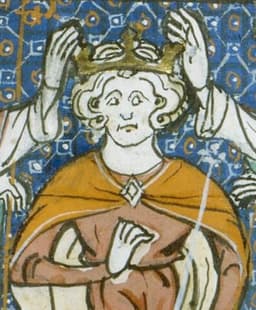
Baldwin IV of Jerusalem
Emperor · Medieval
53.5Total

Napoleon Bonaparte
General · Modern
70.9Total
Basic Information
Born
1161
1769
Died
1185
1821
Era
Medieval
Modern
Nationality
Jerusalem
France
Occupation
Emperor
General
Civilization
Western
Western
Score Comparison
Military (10%)
40.0
94.0
Political (20%)
43.7
72.0
Influence (20%)
57.2
40.0
Legacy (20%)
54.0
80.0
Leadership (15%)
65.7
78.0
Strategy (15%)
52.5
90.0
TOTAL
53.5
70.9
Baldwin IV of Jerusalem — Complete Timeline
1177 AD
Battle of MontgisardWar
Baldwin IV, despite suffering from leprosy, led a small force to victory against Saladin's larger army at Montgisard. Saladin was forced to retreat to Egypt, and the victory boosted Christian morale in the Kingdom of Jerusalem.
Crusader StatesBattleSaladin
Impact: regional
1183 AD
Siege of KerakWar◆ Major
Baldwin IV led a relief force to the Siege of Kerak, where Saladin was besieging the castle. Baldwin's arrival forced Saladin to lift the siege, demonstrating Baldwin's continued military leadership despite his illness.
Crusader StatesSiegeSaladin
Impact: regional
Appointment of Guy of Lusignan as RegentPolitical Action◆ Major
Due to his worsening leprosy, Baldwin appointed Guy of Lusignan as regent. This decision proved disastrous, as Guy's incompetence led to internal strife and ultimately the loss of Jerusalem.
Crusader StatesPoliticsRegency
Impact: regionaltragic
Coronation of Baldwin VPolitical Action◆ Major
Baldwin IV had his nephew, Baldwin V, crowned co-king to ensure a smooth succession and prevent Guy of Lusignan from inheriting the throne. This move aimed to stabilize the kingdom but failed after Baldwin IV's death.
Crusader StatesSuccession
Impact: regional
Napoleon Bonaparte — Complete Timeline
1799 AD
Coup of 18 BrumaireOther◆ Major
Napoleon Bonaparte, with support from his brother Lucien and key political figures, overthrew the Directory in a bloodless coup. He established the Consulate with himself as First Consul, effectively becoming the ruler of France. This event ended the French Revolution's most unstable period.
French RevolutionCoupRise to Power
Impact: regional
1804 AD
Promulgation of the Napoleonic CodeOther◆ Major
Napoleon enacted the Civil Code of the French, known as the Napoleonic Code, a comprehensive set of laws that replaced the fragmented feudal legal systems. The code established legal equality, protected property rights, and secularized law. It became the basis for legal systems in many European and world countries.
Legal ReformNapoleonic CodeCivil Law
Impact: globalconstructive
1805 AD
Battle of AusterlitzWar◆ Major
Napoleon's Grande Arm
Napoleonic WarsBattleDecisive Victory
Impact: global
1812 AD
Invasion of RussiaWar◆ Major
Napoleon led the Grande Arm
Napoleonic WarsInvasionDisaster
Impact: globaldestructive
1815 AD
Battle of WaterlooWar◆ Major
Napoleon's French army was defeated by the combined forces of the Duke of Wellington's Anglo-Allied army and Gebhard Leberecht von Bl
Napoleonic WarsBattleFinal Defeat
Impact: globaldestructive
Expert Analysis
baldwin-iv-of-jerusalem-vs-napoleon-bonaparte
# The Leper King and the Corsican Emperor: Two Paths to Glory and Ruin
On a November morning in 1177, a sixteen-year-old king led a desperate charge against Saladin’s army of 26,000 men near the village of Montgisard. The young monarch could barely hold his sword—his hands were already ravaged by leprosy, his flesh rotting beneath chainmail. Yet against all odds, he shattered the Muslim forces and saved his kingdom. Six hundred miles away and six hundred years later, another young commander, just twenty-four years old, stood before the crumbling walls of Toulon in 1793, directing artillery fire with such precision that he forced the British fleet to flee. One would die at twenty-four, remembered as a saintly failure. The other would conquer Europe, only to die alone on a remote Atlantic island. What separates a brief, brilliant flame from a roaring fire that consumes everything in its path?
Origins
Napoleon Bonaparte was born in 1769 on Corsica, an island only recently annexed by France. His family was minor nobility, poor but proud. Sent to military school at nine, he was mocked by French aristocrats for his accent and small stature. He devoured books on military strategy and history, absorbing the lessons of Alexander and Caesar. The French Revolution had shattered the old order, creating opportunities for men of talent regardless of birth. Napoleon was a product of this chaos—ambitious, calculating, utterly modern.
Baldwin IV of Jerusalem was born into a world already dying. The Crusader Kingdom of Jerusalem, established in 1099, was a fragile European outpost surrounded by a resurgent Islamic world. Baldwin was the son of King Amalric and a Byzantine princess, raised in a court where Latin, French, Greek, and Arabic mingled. At nine, his tutor noticed he felt no pain in his right arm—the first sign of leprosy. In medieval Christendom, leprosy was seen as divine punishment, a living death. Yet Baldwin was crowned king at thirteen, his disease hidden beneath ceremonial robes. He inherited a kingdom that needed a warrior; he was given a body that was slowly dissolving.
Rise to Power
Napoleon’s ascent was a masterpiece of opportunism. In 1795, he saved the revolutionary government from a royalist mob with a “whiff of grapeshot”—cannon fire into the streets of Paris. He was rewarded with command of the Army of Italy. At twenty-six, he led starving, unpaid soldiers across the Alps and crushed the Austrian Empire in a series of lightning campaigns. Each victory was a stepping stone. By 1799, he had seized power in a coup, becoming First Consul of France. His rise was ruthless, brilliant, and driven by a hunger that could never be satisfied.
Baldwin’s rise was forced upon him by biology. By 1177, his leprosy was visible—his face disfigured, his fingers curling into claws. Yet he refused to abdicate. His authority came not from ambition but from duty. He was the anointed king, and in the feudal world of Outremer, only a crowned monarch could hold the fractious barons together. His greatest victory, Montgisard, was an act of desperate courage. Saladin had invaded with overwhelming force; Baldwin rode out with just 375 knights and a few thousand infantry. The Leper King led the charge himself, his disease-ridden body somehow enduring the shock of battle. It was a miracle, and everyone knew it.
Leadership & Governance
Napoleon governed like a force of nature. He centralized the French state, created the Napoleonic Code (which enshrined equality before the law), and reformed education and finance. He appointed men based on merit, not birth—“careers open to talent” became his motto. But he also demanded absolute loyalty. His marshals were brilliant commanders, but they were terrified of him. He micromanaged everything, from army logistics to the design of Parisian sewers. His genius was organizational: he could coordinate hundreds of thousands of men across a continent, supply them, and strike with devastating speed. Yet he never learned to delegate, to trust, or to stop.
Baldwin governed through weakness. His leprosy made him dependent on regents and advisers—men like Raymond of Tripoli, who was competent but ambitious, and Guy of Lusignan, who was charming but catastrophically incompetent. Baldwin tried to manage these factions, playing them against each other, but his disease was always the hidden hand. In 1183, as his sight failed and his limbs decayed, he appointed Guy as regent. It was a decision born of exhaustion. Guy promptly alienated the barons and provoked Saladin. Baldwin reversed the appointment, but the damage was done. He then crowned his five-year-old nephew, Baldwin V, as co-king, hoping to secure the succession. It was a desperate act—a dying man trying to hold back the tide.
Triumph & Tragedy
Napoleon’s greatest moment came in 1805 at Austerlitz. He lured the combined armies of Russia and Austria into a trap, then crushed them as the sun rose over the frozen battlefield. It was a perfect battle, the apex of his genius. He had remade Europe: kings knelt to him, his brothers sat on thrones from Spain to Naples. But the tragedy was already encoded in his triumph. He could not stop. In 1812, he invaded Russia with 600,000 men; less than 100,000 returned. The disaster broke his aura of invincibility. Exiled to Elba in 1814, he escaped and raised another army, only to be defeated at Waterloo in 1815 by Wellington and Blücher. He spent his final six years on Saint Helena, dictating his memoirs, still unable to accept that his ambition had consumed him.
Baldwin’s triumph was Montgisard. At seventeen, he had done what no one thought possible—defeated Saladin in open battle. The kingdom was saved, and for a moment, the Leper King seemed blessed by God. But the tragedy was already written in his flesh. By 1183, he was blind, unable to ride a horse, carried to council meetings on a litter. He watched helplessly as Saladin captured Jerusalem in 1187, two years after his death at twenty-four. The kingdom he had sacrificed his body to defend fell because of the very weakness he had tried to overcome. His greatest failure was not a battle lost, but a succession mismanaged—the appointment of Guy of Lusignan, who led the Crusader army to annihilation at Hattin.
Character & Destiny
Napoleon’s character was a paradox: a genius who could not see his own limits. He was fearless in battle, yet terrified of boredom. He worked eighteen-hour days, dictated letters to multiple secretaries simultaneously, and slept only four hours. But he was also vain, petty, and incapable of genuine friendship. He divorced Josephine because she could not bear him an heir. He exiled his own brothers when they failed him. His destiny was shaped by the French Revolution—the chaos that made his rise possible also made his fall inevitable. He was a man of the modern age, but he tried to revive the imperial glories of Rome. The contradiction destroyed him.
Baldwin’s character was shaped by suffering. He was pious, patient, and courageous, but also fatalistic. He knew he was dying; every day was borrowed time. This gave him a strange clarity—he fought not for glory, but for duty. He did not dream of empire, only of survival. His destiny was medieval: a king whose body mirrored the decay of his kingdom. The leprosy was not just a disease; it was a metaphor. The Kingdom of Jerusalem was a leprous thing—beautiful on the surface, rotting within. Baldwin could not save it because he could not save himself.
Legacy
Napoleon’s legacy is monumental. The Napoleonic Code shapes the legal systems of much of Europe and Latin America. He redefined warfare, politics, and nationalism. He is remembered as both a liberator and a tyrant, a genius and a cautionary tale. His name is synonymous with ambition—the man who tried to conquer the world and nearly succeeded.
Baldwin’s legacy is quieter but more poignant. He is remembered as the Leper King, a figure of tragic nobility. His story has inspired novels, films, and historians who see in him a symbol of courage in the face of impossible odds. He did not change the world; he could not even save his kingdom. But he showed that a man can face the worst that fate can throw at him and still fight, still lead, still believe.
Conclusion
Standing at the end of their stories, we see two men who faced the same question: what do you do when the world is against you? Napoleon answered with conquest—he would remake the world in his image. Baldwin answered with endurance—he would hold the line as long as his body allowed. One burned across Europe like a comet, the other flickered in the dark like a candle. Napoleon changed history; Baldwin became a legend. Both were consumed by what they loved. Perhaps the deepest difference lies not in their achievements, but in their acceptance of limits. Napoleon could never say “enough.” Baldwin knew from the start that his time was borrowed. One died screaming against his fate; the other died in peace, having made his peace with God. Which is the greater tragedy—to have everything and lose it, or to have nothing and still fight?
Rankings
🥇
Napoleon BonaparteLeader
Mil: 94.0Pol: 72.0Inf: 40.0
70.9
🥈
Baldwin IV of Jerusalem
Mil: 40.0Pol: 43.7Inf: 57.2
53.5
+17.4 behind
How This Comparison Works
Algorithm
Each figure is scored on 6 dimensions (0—100 scale) based on structured historical data: Military (10%), Political (20%), Influence (20%), Legacy (20%), Leadership (15%), Strategy (15%). The weighted total produces the final ranking.
Data Sources
Scores are computed from structured sub-indicators in the database. Scale factors adjust for era (Ancient ×0.85, Modern ×1.0) and civilization size (Eastern ×1.05, Other ×0.80) to account for differences in population and military scale.
Maximum 3 Figures
Comparisons are limited to 2—3 figures to ensure readability and statistical meaningfulness.
Error Margins
±5 points per dimension — Sub-scores are derived from historical records with inherent uncertainty. Two figures within 5 points on a dimension should be considered roughly equivalent in that area.
Total Score Accuracy
±3 points overall — The weighted combination of 6 dimensions produces a total score with approximately ±3 points of uncertainty. Differences of less than 3 points are not statistically significant— the figures are effectively tied.
Known Limitations
- Historical records are incomplete and uneven across civilizations
- Figures from oral-tradition societies may be underrepresented
- Occupation labels can misclassify multi-role figures
- Scores measure capability and impact, not moral character
- Quantitative scoring is a comparison tool, not absolute truth
Capability Radar
Military (10%) — Battles & Warfare
Battles
55
95
Win Rate
60
90
Expansion
20
95
Political (20%) — Governance & Reform
Reform
30
95
Diplomacy
55
80
Economy
35
85
Influence (20%) — Cultural & Global Reach
Cultural
45
85
Global
40
90
Legacy (20%) — Historical Impact
Historical
60
95
Longevity
55
90
Leadership (15%) — Power & Stability
Tenure
45
85
Stability
40
70
Strategy (15%) — Tactics & Innovation
Strategy
60
95
Tactics
65
98
Reform
30
92
Similar Comparisons
Comments & Discussion
LeperKingLancer6/17/2026
You revisionists love romanticizing Baldwin as a saintly martyr, but let's get real—he was a military disaster who inherited a doomed crusader state. Montgisard was a tactical fluke against an overconfident Saladin; Baldwin's leprosy meant he couldn't campaign effectively, relying on Raynald of Châtillon's brutality to hold things together. Napoleon at least conquered Italy, Egypt, and most of Europe before hubris got him. Baldwin's "glory" is just a medieval sob story. Give me the Corsican who
银影骑手6/17/2026
拿破仑连莫斯科都拿不下,还搞什么欧洲征服?他烧了克里姆林宫,冻死在撤退路上。鲍德温四世在蒙吉萨之战后还活了好几年,保护耶路撒冷免于陷落。拿破仑的自大毁了他,鲍德温面对绝望却能坚持。看看1799年的阿卡,拿破仑被彻底击败,而鲍德温连麻风病都撑过去了。一个真正的战士知道如何在逆境中战斗。
ArtillerySkeptic6/17/2026
Okay, Montgisard is impressive on paper, but Baldwin's Kingdom of Jerusalem was a paper tiger with barely 600 knights. Napoleon faced down the entire Holy Roman Empire at Austerlitz in 1805—a battle that reshaped Europe for a century. Baldwin couldn't even stop Saladin from uniting Syria; his reign just delayed the inevitable. Napoleon was the ultimate strategist who rewrote the rulebook on warfare. Give me someone who won real campaigns, not a lucky charge against a half-hearted siege.
铁血史官6/17/2026
比较没有意义。鲍德温四世二十五岁死于麻风,拿破仑六十二岁死在圣赫勒拿。鲍德温一辈子没离开过黎凡特,拿破仑则征服了埃及、意大利、德意志。鲍德温的成就只是延缓十字军陷落,拿破仑却摧毁了旧欧洲秩序。一个象征性的英雄和一个真正的征服者不在同一级别。历史不是童话,不要美化失败者。
GladiusAndGunpowder6/17/2026
Both men faced impossible odds, but Napoleon's fall was self-inflicted—his ego in Russia and Waterloo were his own fault. Baldwin's decline was biological, a cruel twist of fate. Montgisard was a miracle, sure, but Napoleon's 1796 Italian campaign was a masterpiece of speed and deception. Different scales, different eras. I respect Baldwin's resilience against leprosy, but give me the man who marched on Cairo and built a legal code that still shapes our world. The Leper King is tragic; the Emper