Loading...
Adolf of Nassau vs Gangjong of Goryeo
Adolf of Nassau leads by 4.2 pts · 2 figures compared
…
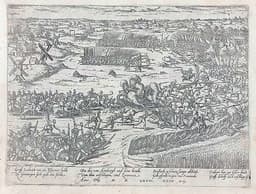
Adolf of Nassau
Emperor · Medieval
40.0Total

Gangjong of Goryeo
Emperor · Medieval
35.8Total
Basic Information
Born
1255
1152
Died
1298
1213
Era
Medieval
Medieval
Nationality
Holy Roman Empire
Korea
Occupation
Emperor
Emperor
Civilization
Western
Eastern
Score Comparison
Military (10%)
50.0
10.2
Political (20%)
30.7
29.3
Influence (20%)
47.9
47.9
Legacy (20%)
37.5
37.5
Leadership (15%)
31.2
33.6
Strategy (15%)
43.7
39.6
TOTAL
40.0
35.8
Adolf of Nassau — Complete Timeline
1292 AD
Elected King of GermanyPolitical Action◆ Major
Adolf of Nassau was elected King of Germany by the prince-electors, succeeding Rudolf of Habsburg. His election was supported by the Archbishop of Mainz and other electors who sought to limit Habsburg influence.
ElectionGerman KingdomNassau
Impact: regional
1294 AD
Purchased the Landgraviate of ThuringiaPolitical Action
Adolf of Nassau purchased the Landgraviate of Thuringia from the Wettin dynasty. This acquisition expanded his territorial base but was criticized by the prince-electors for using imperial funds without their consent.
Territorial AcquisitionThuringiaControversy
Impact: regional
1298 AD
Killed at the Battle of GöllheimWar◆ Major
Adolf of Nassau was killed in battle against Albert I of Habsburg at G
BattleDeathHabsburg
Impact: regionaltragic
Deposed by the Prince-ElectorsPolitical Action◆ Major
Adolf of Nassau was deposed by the prince-electors, who accused him of misgovernance and violating imperial laws. This deposition was unprecedented and led to the election of Albert I of Habsburg as his successor.
DepositionGerman KingdomHabsburg
Impact: regionaldestructive
Gangjong of Goryeo — Complete Timeline
1211 AD
Accession during Mongol threatPolitical Action◆ Major
Gangjong became king after his brother Huijong was deposed by Choe Chung-heon. His reign coincided with the first Mongol invasions of Goryeo, though he had no authority to direct military policy.
AccessionMongol ThreatGoryeo
Impact: national
Reign under Choe military rulePolitical Action
Like his predecessors, Gangjong was a puppet king under the Choe military dictatorship. All major decisions, including responses to the Mongol threat, were made by Choe Chung-heon and his private army.
Puppet KingMilitary RuleGoryeo
Impact: national
1213 AD
Death during Mongol invasionWar
Gangjong died in 1213, just as Mongol forces under Genghis Khan began their first major campaign against Goryeo. His brief reign of two years saw no significant policy changes, and the Choe regime continued to dominate.
DeathMongol InvasionGoryeo
Impact: nationaltragic
Expert Analysis
Origins
Adolf of Nassau was born around 1255 into the House of Nassau, a comital family in the Holy Roman Empire. His father, Count Walram II of Nassau, provided him with a modest territorial base in the region of the Lahn River. Adolf grew up amidst the complex politics of the German feudal system, where imperial authority was contested by powerful princes. He received typical knightly training and inherited the County of Nassau in 1276, which he governed for two decades before his election as king.
Gangjong of Goryeo was born in 1152 as the son of King Myeongjong. His birth name was Wang O, and he belonged to the Wang dynasty that had ruled Korea for centuries. Unlike Adolf, Gangjong grew up in a court dominated by military dictators from the Choe family, who had seized power in 1170 after a coup. His early life was marked by political instability and the erosion of royal authority. He became crown prince in 1170 but waited decades before ascending the throne.
Rise to Power
Adolf of Nassau was elected King of Germany on May 5, 1292, by the prince-electors, who chose him over Albert I of Habsburg. The election was orchestrated by Archbishop Siegfried of Cologne, who sought a weaker king to counter Habsburg influence. Adolf secured support by making promises to the electors, including territorial concessions. He was crowned at Aachen on June 24, 1292. His rise was sudden but fragile, as he lacked the dynastic power of his rivals.
Gangjong became king in 1211 after his brother Huijong was deposed by the military dictator Choe Chung-heon. The Choe regime controlled the throne, installing puppet kings who had no real power. Gangjong's accession was merely a reshuffling of figureheads. He was 60 years old at the time, and his reign was entirely subordinate to the Choe military government. His rise was not based on achievement but on the whims of a dictator.
Leadership & Governance
Adolf of Nassau attempted to strengthen royal authority by acquiring territories. In 1294, he purchased the Landgraviate of Thuringia from the Wettin dynasty, using funds from English subsidies. This expansion angered the electors, who saw it as a threat to their own power. Adolf also intervened in the conflict between England and France, siding with Edward I against Philip IV. His governance was marked by aggressive territorial politics but poor political management, as he alienated key supporters.
Gangjong of Goryeo exercised no real leadership. All decisions were made by Choe Chung-heon and his son Choe U. The king was a ceremonial figurehead. Gangjong's reign saw the beginning of the Mongol invasions under Genghis Khan in 1213, but he had no role in military or diplomatic responses. His governance score of 33.6 reflects his lack of agency, as he was a puppet controlled by the military regime.
Triumph & Tragedy
Adolf's greatest triumph was his election as king, a significant achievement for a count without imperial lineage. He also successfully expanded his personal domain by acquiring Thuringia. However, his tragedy was his deposition by the electors on June 23, 1298, for alleged misgovernance and violation of imperial laws. This was the first deposition of a German king by electors. He then died in battle against Albert I at Göllheim on July 2, 1298, scoring 50.0 in military but failing to secure his throne.
Gangjong's reign was devoid of triumphs. His tragedy was his complete powerlessness. He died in 1213 after just two years on the throne, with the Mongol threat escalating. His reign saw no significant events except his own death. His military score of 10.2 and political score of 29.3 reflect his inability to act. He was a victim of the Choe dictatorship and the Mongol invasions.
Character & Destiny
Adolf was ambitious and assertive, but his character led to his downfall. He overreached by challenging the electors' authority and failed to build lasting alliances. His decision to purchase Thuringia without consulting the princes was seen as a violation of imperial law. His death in battle showed personal courage but poor strategic judgment. Historical assessments view him as a capable but unlucky ruler who lacked the political finesse to maintain power.
Gangjong was passive and resigned. He accepted his role as a puppet king and made no effort to assert authority. His character was shaped by decades under military rule, which crushed any initiative. He died likely of natural causes, but his destiny was to be a footnote in Goryeo's decline. Historians see him as a tragic figure, but not one who shaped events.
Legacy
Adolf of Nassau's legacy is mixed. His deposition set a precedent for electors removing kings, weakening the monarchy. However, the House of Nassau later rose to prominence, with descendants ruling the Netherlands and Luxembourg. His territorial acquisitions were reversed, but his short reign is remembered as a failed attempt to centralize power. His scores of 47.9 in influence and 37.5 in legacy reflect his limited but notable impact on German constitutional history.
Gangjong's legacy is minimal. He is remembered only as one of several puppet kings under the Choe regime. His reign had no lasting impact on Korea, as the Mongol invasions overshadowed everything. His influence score of 47.9 is surprisingly high due to his royal title, but his legacy is truly negligible. He did nothing to change Goryeo's trajectory.
Conclusion
Adolf of Nassau, with a total score of 40.0, had a greater impact than Gangjong of Goryeo (35.8). Adolf's brief reign, though unsuccessful, contributed to the development of electoral monarchy in Germany and set a precedent for deposing kings. Gangjong, by contrast, was a passive figure who exercised no power and left no mark on history. While both were weak rulers, Adolf at least attempted to govern and left a constitutional legacy. Gangjong's reign was entirely meaningless. Therefore, Adolf of Nassau had greater historical significance.
Rankings
🥇
Adolf of NassauLeader
Mil: 50.0Pol: 30.7Inf: 47.9
40.0
🥈
Gangjong of Goryeo
Mil: 10.2Pol: 29.3Inf: 47.9
35.8
+4.2 behind
How This Comparison Works
Algorithm
Each figure is scored on 6 dimensions (0—100 scale) based on structured historical data: Military (10%), Political (20%), Influence (20%), Legacy (20%), Leadership (15%), Strategy (15%). The weighted total produces the final ranking.
Data Sources
Scores are computed from structured sub-indicators in the database. Scale factors adjust for era (Ancient ×0.85, Modern ×1.0) and civilization size (Eastern ×1.05, Other ×0.80) to account for differences in population and military scale.
Maximum 3 Figures
Comparisons are limited to 2—3 figures to ensure readability and statistical meaningfulness.
Error Margins
±5 points per dimension — Sub-scores are derived from historical records with inherent uncertainty. Two figures within 5 points on a dimension should be considered roughly equivalent in that area.
Total Score Accuracy
±3 points overall — The weighted combination of 6 dimensions produces a total score with approximately ±3 points of uncertainty. Differences of less than 3 points are not statistically significant— the figures are effectively tied.
Known Limitations
- Historical records are incomplete and uneven across civilizations
- Figures from oral-tradition societies may be underrepresented
- Occupation labels can misclassify multi-role figures
- Scores measure capability and impact, not moral character
- Quantitative scoring is a comparison tool, not absolute truth
Capability Radar
Military (10%) — Battles & Warfare
Battles
30
10
Win Rate
20
10
Expansion
15
5
Political (20%) — Governance & Reform
Reform
10
10
Diplomacy
15
20
Economy
10
10
Influence (20%) — Cultural & Global Reach
Cultural
10
10
Global
5
5
Legacy (20%) — Historical Impact
Historical
15
15
Longevity
10
10
Leadership (15%) — Power & Stability
Tenure
25
15
Stability
10
15
Strategy (15%) — Tactics & Innovation
Strategy
20
10
Tactics
25
10
Reform
10
5
Similar Comparisons
Comments & Discussion
No comments yet. Be the first to share your thoughts!