Loading...
Adolf of Nassau vs Guy of Dampierre
Guy of Dampierre leads by 5.5 pts · 2 figures compared
…
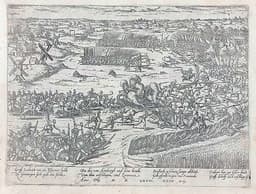
Adolf of Nassau
Emperor · Medieval
40.0Total

Guy of Dampierre
Emperor · Medieval
45.5Total
Basic Information
Born
1255
1226
Died
1298
1305
Era
Medieval
Medieval
Nationality
Holy Roman Empire
Flanders
Occupation
Emperor
Emperor
Civilization
Western
Western
Score Comparison
Military (10%)
50.0
50.0
Political (20%)
30.7
36.5
Influence (20%)
47.9
51.8
Legacy (20%)
37.5
41.7
Leadership (15%)
31.2
48.4
Strategy (15%)
43.7
43.7
TOTAL
40.0
45.5
Adolf of Nassau — Complete Timeline
1292 AD
Elected King of GermanyPolitical Action◆ Major
Adolf of Nassau was elected King of Germany by the prince-electors, succeeding Rudolf of Habsburg. His election was supported by the Archbishop of Mainz and other electors who sought to limit Habsburg influence.
ElectionGerman KingdomNassau
Impact: regional
1294 AD
Purchased the Landgraviate of ThuringiaPolitical Action
Adolf of Nassau purchased the Landgraviate of Thuringia from the Wettin dynasty. This acquisition expanded his territorial base but was criticized by the prince-electors for using imperial funds without their consent.
Territorial AcquisitionThuringiaControversy
Impact: regional
1298 AD
Killed at the Battle of GöllheimWar◆ Major
Adolf of Nassau was killed in battle against Albert I of Habsburg at G
BattleDeathHabsburg
Impact: regionaltragic
Deposed by the Prince-ElectorsPolitical Action◆ Major
Adolf of Nassau was deposed by the prince-electors, who accused him of misgovernance and violating imperial laws. This deposition was unprecedented and led to the election of Albert I of Habsburg as his successor.
DepositionGerman KingdomHabsburg
Impact: regionaldestructive
Guy of Dampierre — Complete Timeline
1251 AD
Became Count of FlandersPolitical Action◆ Major
Guy of Dampierre inherited the County of Flanders after the death of his mother, Margaret II. He ruled Flanders during a period of conflict with France.
InheritanceCountyFlanders
Impact: regional
1294 AD
Allied with England Against FrancePolitical Action◆ Major
Guy allied with King Edward I of England against King Philip IV of France. This alliance was part of the larger conflict between England and France over Gascony.
AllianceEnglandFrance
Impact: regional
1300 AD
Imprisoned by Philip IV of FrancePolitical Action◆ Major
After a French invasion, Guy was captured and imprisoned by King Philip IV of France. He was held in captivity in Paris, and Flanders was placed under direct French rule.
ImprisonmentFrench InvasionLoss of Power
Impact: regionaltragic
1305 AD
Died in CaptivityPolitical Action◆ Major
Guy of Dampierre died while still a prisoner of Philip IV in France. His death occurred before the Treaty of Athis-sur-Orge that ended the Franco-Flemish war.
Death in CaptivityEnd of ReignFranco-Flemish War
Impact: regionaltragic
Expert Analysis
Origins
Adolf of Nassau was born around 1255 into the House of Nassau, a comital family in the Holy Roman Empire. His father, Walram II, Count of Nassau, provided him with a modest territorial base in the region of the Lahn River. Little is known of Adolf's early education, but he likely received knightly training typical for a noble of his rank. He inherited the County of Nassau in 1276 upon his father's death.
Guy of Dampierre was born around 1226 as the second son of William II of Dampierre and Margaret II, Countess of Flanders. His mother was the ruling countess, and Guy inherited the County of Flanders after her death in 1278, though he had been acting as regent since 1251. His upbringing was steeped in the complex politics of Flanders, caught between France and England.
Rise to Power
Adolf's rise was meteoric and unexpected. In 1292, after the death of King Rudolf of Habsburg, the prince-electors sought a king who would not threaten their power. Adolf, a relatively minor count, was elected King of Germany on May 5, 1292, with the support of the Archbishop of Mainz. His election was a compromise candidate to avoid a Habsburg succession. However, Adolf lacked a strong power base and was heavily dependent on the electors.
Guy of Dampierre became Count of Flanders in 1278 after decades of conflict with the Avesnes family over the inheritance of Hainaut and Flanders. He secured his position by allying with the French crown initially, but as Philip IV centralized power, Guy resisted. By the 1290s, he sought alliances with England, culminating in a formal treaty with Edward I in 1294. This marked Flanders as a key player in the Franco-English rivalry.
Leadership & Governance
Adolf's kingship was marked by attempts to expand his territory and assert royal authority, but he faced constant opposition from the electors. He purchased the Landgraviate of Thuringia in 1294 from the Wettin dynasty, a move that alienated many princes who saw it as overreach. His governance score of 31.2 reflects his inability to build consensus. He relied on military force and territorial acquisitions rather than diplomacy.
Guy ruled Flanders with a focus on maintaining independence from France. He fostered urban economies and relied on the support of Flemish cities like Ghent and Bruges. His leadership score of 48.4 indicates a more effective governance style, though he was ultimately outmaneuvered by Philip IV. Guy's alliance with England was a strategic move to counter French pressure, but it led to French invasion and his capture in 1300.
Triumph & Tragedy
Adolf's greatest success was his election as king, a remarkable achievement for a minor count. He also briefly expanded his territory through the Thuringian purchase. However, his deposition in 1298 was a profound failure: the electors declared him unfit and elected Albert of Habsburg. Adolf's refusal to accept this led to the Battle of Göllheim in 1298, where he was killed, ending his reign in disaster.
Guy's triumph was his long tenure as count from 1278 to 1305, during which he maintained Flemish autonomy against French encroachment for decades. He also secured the alliance with England. His tragedy was his capture and imprisonment in 1300 after the French invasion of Flanders. He died in captivity in 1305, just before the Treaty of Athis-sur-Orge that ended the war, never seeing his homeland liberated.
Character & Destiny
Adolf was ambitious but politically inept. His character score of 31.2 reflects a king who overreached without building alliances. His decision to purchase Thuringia alienated key electors, and his reliance on military force led to his downfall. His destiny was sealed by his inability to compromise, a trait that led to his deposition and violent death.
Guy was stubborn and principled, resisting French domination even when outmatched. His political score of 36.5 shows a leader who was better at diplomacy than Adolf but still failed against Philip IV's superior resources. His alliance with England was a calculated risk that ultimately failed when English support was insufficient. His captivity and death symbolize the tragedy of a count who fought for independence but lost.
Legacy
Adolf's legacy is minimal. He is remembered as one of the few German kings to be deposed and killed in battle. His reign of six years had little lasting impact on the empire. His territorial acquisitions were reversed by Albert I, and the House of Nassau would not produce another king until the 18th century. His legacy score of 37.5 reflects his obscurity.
Guy's legacy is more significant. His resistance against France laid the groundwork for Flemish identity and the eventual formation of the Burgundian Netherlands. The Franco-Flemish conflict continued after his death, but his defiance inspired later generations. His legacy score of 41.7 is higher, reflecting his role in Flemish history, though he is not a major European figure.
Conclusion
When comparing Adolf of Nassau and Guy of Dampierre, Guy emerges as the more impactful figure. His total score of 45.5 significantly surpasses Adolf's 40.0. Guy's leadership score of 48.4 far exceeds Adolf's 31.2, and his influence score of 51.8 versus 47.9 shows broader impact. While both failed in their ultimate goals, Guy's resistance shaped Flemish history, whereas Adolf's reign was a brief and unsuccessful episode in German history. The clear position is that Guy of Dampierre had greater impact, despite his imprisonment, because his actions resonated longer in the struggle between France and Flanders.
Rankings
🥇
Guy of DampierreLeader
Mil: 50.0Pol: 36.5Inf: 51.8
45.5
🥈
Adolf of Nassau
Mil: 50.0Pol: 30.7Inf: 47.9
40.0
+5.5 behind
How This Comparison Works
Algorithm
Each figure is scored on 6 dimensions (0—100 scale) based on structured historical data: Military (10%), Political (20%), Influence (20%), Legacy (20%), Leadership (15%), Strategy (15%). The weighted total produces the final ranking.
Data Sources
Scores are computed from structured sub-indicators in the database. Scale factors adjust for era (Ancient ×0.85, Modern ×1.0) and civilization size (Eastern ×1.05, Other ×0.80) to account for differences in population and military scale.
Maximum 3 Figures
Comparisons are limited to 2—3 figures to ensure readability and statistical meaningfulness.
Error Margins
±5 points per dimension — Sub-scores are derived from historical records with inherent uncertainty. Two figures within 5 points on a dimension should be considered roughly equivalent in that area.
Total Score Accuracy
±3 points overall — The weighted combination of 6 dimensions produces a total score with approximately ±3 points of uncertainty. Differences of less than 3 points are not statistically significant— the figures are effectively tied.
Known Limitations
- Historical records are incomplete and uneven across civilizations
- Figures from oral-tradition societies may be underrepresented
- Occupation labels can misclassify multi-role figures
- Scores measure capability and impact, not moral character
- Quantitative scoring is a comparison tool, not absolute truth
Capability Radar
Military (10%) — Battles & Warfare
Battles
30
20
Win Rate
20
15
Expansion
15
10
Political (20%) — Governance & Reform
Reform
10
30
Diplomacy
15
35
Economy
10
30
Influence (20%) — Cultural & Global Reach
Cultural
10
25
Global
5
15
Legacy (20%) — Historical Impact
Historical
15
30
Longevity
10
20
Leadership (15%) — Power & Stability
Tenure
25
40
Stability
10
20
Strategy (15%) — Tactics & Innovation
Strategy
20
25
Tactics
25
20
Reform
10
10
Similar Comparisons
Comments & Discussion
No comments yet. Be the first to share your thoughts!