Loading...
Aeneas vs Qin Shi Huang
Qin Shi Huang leads by 32.8 pts · 2 figures compared
…

Aeneas
General · Ancient
52.4Total
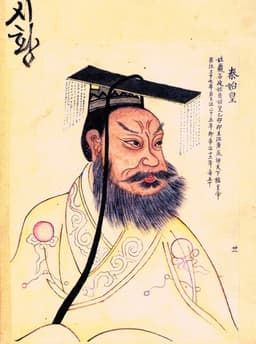
Qin Shi Huang
Emperor · Ancient
85.2Total
Basic Information
Born
-1210
-259
Died
-1170
-210
Era
Ancient
Ancient
Nationality
Troy
China
Occupation
General
Emperor
Civilization
Western
Eastern
Score Comparison
Military (10%)
46.7
80.0
Political (20%)
35.0
90.0
Influence (20%)
40.0
85.0
Legacy (20%)
75.0
90.0
Leadership (15%)
62.6
78.0
Strategy (15%)
43.3
82.0
TOTAL
52.4
85.2
Aeneas — Complete Timeline
1180 BC
Fled burning Troy with his father and sonWar
As Troy fell, Aeneas carried his elderly father Anchises on his back and led his young son Ascanius by the hand out of the burning city. His wife Creusa was lost in the chaos.
Trojan WarEscapeFamily
Impact: regionaltragic
1170 BC
Defeated Turnus in single combatWar◆ Major
Aeneas fought Turnus, king of the Rutuli, in single combat to decide the fate of the Trojans in Italy. Aeneas killed Turnus, securing the Trojans' right to settle in Latium and marry Lavinia.
WarCombatSettlement
Impact: regionaldestructive
Led the surviving Trojans to ItalyPolitical Action
After years of wandering the Mediterranean, Aeneas led the surviving Trojans to the shores of Italy. He made alliances with local tribes and established a settlement that would eventually lead to the founding of Rome.
MigrationFoundingItaly
Impact: globalconstructive
Visited the underworld to see his fatherCultural◆ Major
Guided by the Sibyl of Cumae, Aeneas descended into the underworld. There he met the spirit of his father Anchises, who showed him the future heroes of Rome, including Romulus and Augustus.
MythologyProphecyRome
Impact: regional
Qin Shi Huang — Complete Timeline
246 BC
Construction of the Mausoleum and Terracotta ArmyOther◆ Major
Qin Shi Huang commissioned a vast mausoleum complex near Xi'an, guarded by thousands of life-sized terracotta soldiers, horses, and chariots. The project employed hundreds of thousands of workers and reflected his obsession with immortality and imperial power.
Impact: global
230 BC
Conquest of the Six Warring StatesWar
From 230 to 221 BCE, Ying Zheng led the Qin state in a series of campaigns that conquered the Han, Zhao, Wei, Chu, Yan, and Qi states. This unified China under a single ruler for the first time, ending the Warring States period.
Impact: global
221 BC
Standardization of Writing, Currency, and MeasurementsReform◆ Major
Qin Shi Huang ordered the standardization of Chinese script, currency, and weights and measures across the unified empire. This facilitated administration, trade, and cultural integration, laying a foundation for future dynasties.
Impact: globalconstructive
Proclamation of the Qin DynastyPolitical Action
After conquering the last independent state, Ying Zheng declared himself Shi Huangdi (First Emperor), founding the Qin Dynasty. He adopted a new title to signify his supreme authority and initiated centralized imperial rule.
Impact: global
214 BC
Initiation of the Great Wall ConstructionOther◆ Major
Qin Shi Huang ordered the connection and extension of existing northern fortifications to create a unified defensive wall against nomadic Xiongnu raids. This project involved massive conscripted labor and became the precursor to the later Great Wall.
Impact: regional
213 BC
Burning of Books and Burying of ScholarsPolitical Action◆ Major
On the advice of Li Si, Qin Shi Huang ordered the burning of historical records and philosophical texts not aligned with Legalist doctrine. He also had 460 Confucian scholars buried alive to suppress dissent and consolidate ideological control.
Impact: nationaldestructive
Expert Analysis
aeneas-vs-qin-shi-huang
# The First Emperor and the Wandering Prince: Two Foundations of Civilization
On a spring morning in 210 BC, the most powerful man in the world lay dying. Qin Shi Huang, the First Emperor of a unified China, had spent his final months searching for an elixir of immortality, sending expeditions to islands in the Eastern Sea, consulting alchemists and sorcerers. He died alone, in a carriage on a dusty road, his body already beginning to rot before his courtiers dared announce his passing. More than a thousand years earlier, another man had walked out of a burning city with his father on his back and his son’s hand in his own. Aeneas of Troy carried no empire, no standardized currency, no written law. He carried only family and fate. Yet both men would shape the world for millennia to come—one through the iron grip of absolute power, the other through the stubborn persistence of a story.
Origins
Qin Shi Huang was born in 259 BC into a world of chaos. The Warring States period had torn China apart for centuries, seven kingdoms locked in endless conflict. His father was a prince of Qin, a western state considered semi-barbaric by the more cultured kingdoms of the east. Ying Zheng—his birth name—grew up in a court rife with intrigue, his mother involved in scandal, his regent a eunuch who may have plotted against him. He learned early that trust was a weakness and power the only truth.
Aeneas belonged to a different kind of world entirely—one of gods and heroes, of fate woven by divine hands. Born around 1210 BC, he was the son of the mortal Anchises and the goddess Aphrodite. Troy was the jewel of the Aegean, wealthy and proud, but already doomed. Aeneas was not its greatest warrior—that was Hector—nor its most cunning—that was Odysseus. He was something rarer: a survivor marked by destiny. Where Qin Shi Huang’s world demanded conquest, Aeneas’s demanded endurance.
Rise to Power
Ying Zheng became king of Qin at thirteen. For years he was a figurehead, but at twenty-two he seized control, exiling his mother’s lover and executing his regent. Then he began the work that would define him. From 230 to 221 BC, he unleashed his armies in methodical campaigns, swallowing the Han, Zhao, Wei, Chu, Yan, and Qi states one by one. Each conquest was a masterpiece of strategy and brutality. When he finally stood alone, he did not merely call himself king. He invented a new title: Shi Huangdi—First Emperor.
Aeneas never conquered anything. His rise was not a seizure but a flight. When Troy fell in 1180 BC, he gathered his father, his son, and a band of survivors, and he fled through the flames. For years he wandered the Mediterranean, losing ships to storms, lovers to fate, comrades to monsters. He stopped at Carthage, where Queen Dido fell in love with him—and when the gods ordered him onward, she cursed him and burned herself. Aeneas did not choose his path; he obeyed it. His power came not from ambition but from submission to destiny.
Leadership & Governance
Qin Shi Huang governed as he conquered: absolutely. He abolished the feudal system, divided his empire into thirty-six commanderies, and appointed officials based on merit rather than birth. He standardized writing, currency, and measurements across his realm, so that a man in the south could read the same edict as a man in the north. He connected the northern fortifications into what would become the Great Wall. But his vision had a terrible shadow. In 213 BC, on the advice of his chancellor Li Si, he ordered the burning of all books not dealing with practical subjects—history, philosophy, poetry—and the burying alive of scholars who resisted. He sought to erase the past and control the future.
Aeneas governed through alliance and example. When he finally reached Italy, he did not conquer the native tribes; he negotiated with them, formed coalitions, married a local princess. His leadership was personal, not bureaucratic. He fought Turnus in single combat not to crush a kingdom but to decide the fate of his people in a single, honorable contest. Where Qin Shi Huang built walls of stone and law, Aeneas built bonds of blood and story.
Triumph & Tragedy
Qin Shi Huang’s greatest triumph was also his greatest tragedy. He unified China—an achievement that would echo through history—but at a cost so immense it is hard to grasp. His mausoleum, commissioned in 246 BC, is a city of the dead: thousands of life-sized terracotta soldiers, each with a unique face, standing in battle formation for eternity. He spent the last years of his life obsessed with immortality, consuming mercury pills that likely killed him. He died believing he would live forever, and instead left a dynasty that collapsed within three years of his death.
Aeneas’s triumph was survival itself. He reached Italy, founded a settlement, and killed Turnus in single combat around 1170 BC. But before that, he visited the underworld, guided by the Sibyl of Cumae. There he met his father’s spirit, who showed him the future: the rise of Rome, the glory of Augustus, the destiny of a people who would rule the world. Aeneas saw what he would never live to witness. His tragedy was that he was only a beginning, a bridge between a lost world and one yet to be born.
Character & Destiny
Qin Shi Huang was paranoid, brilliant, and ruthless. He feared assassination so deeply that he slept in a different palace each night and never revealed his location. He believed in law, order, and the supremacy of the state over the individual. His personality shaped every decision: the standardization, the book burnings, the quest for immortality. He was a man who could not accept limits—not even death.
Aeneas was pious, dutiful, and sorrowful. Virgil called him *pius Aeneas*—dutiful Aeneas—because his defining trait was not strength or cleverness but devotion to the gods, his family, and his fate. He left Dido not because he wanted to but because he had to. He carried his father not because it was practical but because it was right. His destiny was not to conquer but to endure, and through endurance, to found.
Legacy
Qin Shi Huang left a unified China, a standardized script, and a model of imperial rule that would last two thousand years. His name is synonymous with both greatness and tyranny. The Terracotta Army still guards his tomb, discovered in 1974, a silent witness to his ambition. He is remembered as the man who made China one.
Aeneas left no tomb, no army, no law code. He left a story. Virgil’s *Aeneid* made him the mythical founder of Rome, the ancestor of Augustus, the symbol of Roman virtue. His legacy is not a dynasty but an idea: that from destruction can come creation, that duty can be a form of heroism, that the survivor can be as important as the conqueror.
Conclusion
One man built an empire with iron and fire. The other carried a family through the dark. One sought to control time itself; the other accepted his place in a story larger than himself. Qin Shi Huang and Aeneas stand at opposite ends of the human experience—the will to power and the will to endure. And yet both founded civilizations that would shape the world. Perhaps the deepest truth is this: every empire needs both the conqueror who builds the walls and the wanderer who carries the flame. The first emperor and the wandering prince were not so different after all. They were both fathers of worlds they would never live to see.
Rankings
🥇
Qin Shi HuangLeader
Mil: 80.0Pol: 90.0Inf: 85.0
85.2
🥈
Aeneas
Mil: 46.7Pol: 35.0Inf: 40.0
52.4
+32.8 behind
How This Comparison Works
Algorithm
Each figure is scored on 6 dimensions (0—100 scale) based on structured historical data: Military (10%), Political (20%), Influence (20%), Legacy (20%), Leadership (15%), Strategy (15%). The weighted total produces the final ranking.
Data Sources
Scores are computed from structured sub-indicators in the database. Scale factors adjust for era (Ancient ×0.85, Modern ×1.0) and civilization size (Eastern ×1.05, Other ×0.80) to account for differences in population and military scale.
Maximum 3 Figures
Comparisons are limited to 2—3 figures to ensure readability and statistical meaningfulness.
Error Margins
±5 points per dimension — Sub-scores are derived from historical records with inherent uncertainty. Two figures within 5 points on a dimension should be considered roughly equivalent in that area.
Total Score Accuracy
±3 points overall — The weighted combination of 6 dimensions produces a total score with approximately ±3 points of uncertainty. Differences of less than 3 points are not statistically significant— the figures are effectively tied.
Known Limitations
- Historical records are incomplete and uneven across civilizations
- Figures from oral-tradition societies may be underrepresented
- Occupation labels can misclassify multi-role figures
- Scores measure capability and impact, not moral character
- Quantitative scoring is a comparison tool, not absolute truth
Capability Radar
Military (10%) — Battles & Warfare
Battles
15
85
Win Rate
20
90
Expansion
10
90
Political (20%) — Governance & Reform
Reform
5
95
Diplomacy
20
75
Economy
5
90
Influence (20%) — Cultural & Global Reach
Cultural
85
95
Global
80
85
Legacy (20%) — Historical Impact
Historical
90
95
Longevity
95
95
Leadership (15%) — Power & Stability
Tenure
10
70
Stability
10
65
Strategy (15%) — Tactics & Innovation
Strategy
20
85
Tactics
25
80
Reform
5
95
Similar Comparisons
Comments & Discussion
OldWorldAnchor6/17/2026
You're comparing a man who *burned a city he was supposed to defend* to a ruler who unified warring states through ruthless efficiency. Aeneas is the ultimate symbol of *failure*—Troy fell because of his people's arrogance, and he fled like a survivor, not a founder. Qin Shi Huang built the Great Wall, standardized script, and forced order from chaos. Aeneas got a poem. Give me the emperor who actually governed over a mythical refugee any day.
史诗考据狂6/17/2026
「妇好啊,把特洛伊小王子跟祖龙放一块儿比?」严肃分析一下,埃涅阿斯绕了半天也就是个神话工具人,维吉尔写他纯粹是为了给奥古斯都贴金。反观秦始皇,废分封、行郡县、车同轨、书同文,哪一件不是硬核历史实锤?你要说神话影响力,行;但论文明奠基,一个虚构的流亡王子别来碰瓷真实存在的千古一帝。神神叨叨的史诗敌不过青铜箭镞和竹简法律。