Loading...
Agathocles of Syracuse vs Du Yu
Agathocles of Syracuse leads by 0.2 pts · 2 figures compared
…

Agathocles of Syracuse
General · Ancient
57.0Total
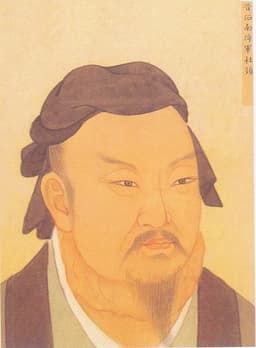
Du Yu
General · Ancient
56.8Total
Basic Information
Born
-361
222
Died
-289
285
Era
Ancient
Ancient
Nationality
Sicily
China
Occupation
General
General
Civilization
Western
Eastern
Score Comparison
Military (10%)
78.5
77.5
Political (20%)
43.7
43.7
Influence (20%)
56.4
53.3
Legacy (20%)
47.5
47.5
Leadership (15%)
61.1
65.0
Strategy (15%)
75.0
75.0
TOTAL
57.0
56.8
Agathocles of Syracuse — Complete Timeline
317 BC
Seized Power as Tyrant of SyracusePolitical Action
Agathocles returned from exile and, with a mercenary army, overthrew the oligarchic government of Syracuse. He massacred thousands of wealthy citizens and established himself as tyrant, ruling Syracuse for the next 28 years.
SyracuseTyrannyCivil War
Impact: regionaldestructive
310 BC
Invaded Carthage in North AfricaWar◆ Major
Agathocles launched a daring invasion of Carthage's North African homeland while Syracuse was besieged by a Carthaginian army. He burned his ships to motivate his troops and won several battles, forcing Carthage to recall forces from Sicily.
CarthageInvasionSicilian Wars
Impact: regional
307 BC
Defeated at the Battle of White TunisWar◆ Major
Agathocles suffered a decisive defeat at the Battle of White Tunis against a Carthaginian army led by Hamilcar. The loss forced him to abandon his African campaign and return to Sicily, ending his attempt to conquer Carthage.
CarthageBattleDefeat
Impact: regionaltragic
289 BC
Assassinated by PoisonOther◆ Major
Agathocles was poisoned by his grandson Archagathus, who feared being passed over for succession. His death led to the collapse of his empire in Sicily and southern Italy, as his generals and enemies quickly divided his territories.
AssassinationSuccessionSyracuse
Impact: regionaltragic
Du Yu — Complete Timeline
279 AD
Appointed as commander of the Jin invasion of WuPolitical Action◆ Major
Du Yu was appointed as the overall commander of the Jin forces for the invasion of Eastern Wu, following Yang Hu's recommendation. He was given command of the central army group.
Jin DynastyEastern WuMilitary Command
Impact: nationalconstructive
280 AD
Led the conquest of Eastern WuWar
Du Yu's forces captured key Wu cities, including Jiangling, and advanced toward the Wu capital Jianye. The campaign culminated in the surrender of Wu's emperor Sun Hao, ending the Three Kingdoms period.
Conquest of WuJin DynastyUnification
Impact: globalconstructive
Authored the 'Commentary on the Spring and Autumn Annals'Cultural◆ Major
Du Yu wrote a comprehensive commentary on the Confucian classic 'Spring and Autumn Annals', which became a standard reference for later scholars. His work influenced Chinese historiography.
ScholarshipConfucianismHistoriography
Impact: nationalconstructive
Expert Analysis
Origins
Agathocles was born in 361 BCE in Thermae, Sicily, to a potter father. His family was of humble origins, and he initially worked as a potter before joining the military. He gained citizenship in Syracuse and became a prominent general, but his early life was marked by ambition and ruthlessness. Du Yu was born in 222 CE in Jingzhao (modern Xi'an), China, into a scholarly family. His grandfather Du Ji served as a minister, and his father Du Shu was a high official. Du Yu was well-educated in Confucian classics and showed early talent in administration and military strategy.
Rise to Power
Agathocles rose to power through exile and mercenary armies. In 317 BCE, he returned to Syracuse with a force of mercenaries, overthrew the oligarchic government, and massacred thousands of wealthy citizens. He established himself as tyrant, consolidating power through terror and alliances. Du Yu's rise was more gradual. He served as a civil official under the Jin dynasty, gaining recognition for his administrative skills. In 279 CE, he was appointed as commander of the Jin invasion of Eastern Wu, following the recommendation of the general Yang Hu. He led a massive campaign that culminated in the conquest of Wu in 280 CE.
Leadership & Governance
Agathocles ruled Syracuse with an iron fist, using fear and violence to maintain control. He engaged in constant warfare, expanding his territory in Sicily and launching an audacious invasion of North Africa. His governance was marked by instability and brutality, leading to frequent revolts. Du Yu was a more methodical leader, combining military acumen with Confucian scholarship. He implemented effective logistics and coordinated a multi-pronged invasion. After the conquest, he promoted peace and reconstruction, earning respect from both Jin and former Wu officials.
Triumph & Tragedy
Agathocles' greatest triumph was his invasion of Carthage in 310 BCE. While Syracuse was besieged, he sailed to Africa with 14,000 men and burned his ships to motivate his troops. He won several battles and threatened Carthage itself. However, his defeat at the Battle of White Tunis in 307 BCE forced him to abandon the campaign. His greatest failure was his brutal rule, which led to his assassination by his grandson in 289 BCE. Du Yu's triumph was the conquest of Eastern Wu, unifying China under the Jin dynasty. He captured key cities and accepted the surrender of the Wu emperor. His tragedy was his death shortly after the campaign, possibly from illness or overwork. He did not live to see the full consolidation of Jin rule.
Character & Destiny
Agathocles was cunning, ruthless, and ambitious. His willingness to take extreme risks, such as burning his ships, showed his determination. However, his cruelty and paranoia alienated allies and family, leading to his downfall. Historians like Diodorus Siculus paint him as a tyrant who achieved temporary success through audacity. Du Yu was scholarly, disciplined, and strategic. He combined Confucian ethics with military pragmatism. His Commentary on the Spring and Autumn Annals became a standard text. His character earned him the trust of the Jin court and the loyalty of his troops.
Legacy
Agathocles is remembered as a classic tyrant and a daring military commander. His invasion of Carthage influenced later Hellenistic warfare, but his legacy is overshadowed by his brutality. His scores reflect this: Military 78.5, but Legacy 47.5. Du Yu's legacy is more enduring. His conquest helped unify China, and his scholarly work influenced Chinese historiography. He is remembered as a model of the scholar-general. His scores are similar: Military 77.5, Legacy 47.5. However, Du Yu's impact on Chinese history was more lasting.
Conclusion
While Agathocles scored slightly higher overall (57.0 vs 56.8), Du Yu had greater historical impact. Agathocles' achievements were dramatic but short-lived; his empire collapsed after his death. Du Yu's conquest of Wu contributed to the unification of China, and his scholarly work influenced generations. In terms of lasting legacy and strategic influence, Du Yu surpasses Agathocles. The score gap of 0.2 does not reflect the substantive difference in their contributions.
Rankings
🥇
Agathocles of SyracuseLeader
Mil: 78.5Pol: 43.7Inf: 56.4
57.0
🥈
Du Yu
Mil: 77.5Pol: 43.7Inf: 53.3
56.8
+0.2 behind
How This Comparison Works
Algorithm
Each figure is scored on 6 dimensions (0—100 scale) based on structured historical data: Military (10%), Political (20%), Influence (20%), Legacy (20%), Leadership (15%), Strategy (15%). The weighted total produces the final ranking.
Data Sources
Scores are computed from structured sub-indicators in the database. Scale factors adjust for era (Ancient ×0.85, Modern ×1.0) and civilization size (Eastern ×1.05, Other ×0.80) to account for differences in population and military scale.
Maximum 3 Figures
Comparisons are limited to 2—3 figures to ensure readability and statistical meaningfulness.
Error Margins
±5 points per dimension — Sub-scores are derived from historical records with inherent uncertainty. Two figures within 5 points on a dimension should be considered roughly equivalent in that area.
Total Score Accuracy
±3 points overall — The weighted combination of 6 dimensions produces a total score with approximately ±3 points of uncertainty. Differences of less than 3 points are not statistically significant— the figures are effectively tied.
Known Limitations
- Historical records are incomplete and uneven across civilizations
- Figures from oral-tradition societies may be underrepresented
- Occupation labels can misclassify multi-role figures
- Scores measure capability and impact, not moral character
- Quantitative scoring is a comparison tool, not absolute truth
Capability Radar
Military (10%) — Battles & Warfare
Battles
75
70
Win Rate
70
85
Expansion
70
75
Political (20%) — Governance & Reform
Reform
55
55
Diplomacy
60
60
Economy
50
50
Influence (20%) — Cultural & Global Reach
Cultural
45
40
Global
35
30
Legacy (20%) — Historical Impact
Historical
55
55
Longevity
40
40
Leadership (15%) — Power & Stability
Tenure
65
65
Stability
40
55
Strategy (15%) — Tactics & Innovation
Strategy
75
80
Tactics
80
75
Reform
60
60
Similar Comparisons
Comments & Discussion
No comments yet. Be the first to share your thoughts!