Loading...
Du Yu vs Qin Shi Huang
Qin Shi Huang leads by 28.4 pts · 2 figures compared
…
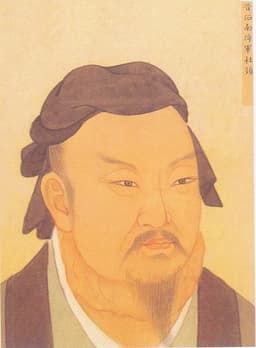
Du Yu
General · Ancient
56.8Total
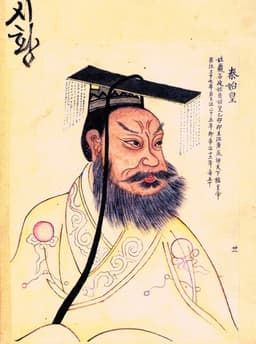
Qin Shi Huang
Emperor · Ancient
85.2Total
Basic Information
Born
222
-259
Died
285
-210
Era
Ancient
Ancient
Nationality
China
China
Occupation
General
Emperor
Civilization
Eastern
Eastern
Score Comparison
Military (10%)
77.5
80.0
Political (20%)
43.7
90.0
Influence (20%)
53.3
85.0
Legacy (20%)
47.5
90.0
Leadership (15%)
65.0
78.0
Strategy (15%)
75.0
82.0
TOTAL
56.8
85.2
Du Yu — Complete Timeline
279 AD
Appointed as commander of the Jin invasion of WuPolitical Action◆ Major
Du Yu was appointed as the overall commander of the Jin forces for the invasion of Eastern Wu, following Yang Hu's recommendation. He was given command of the central army group.
Jin DynastyEastern WuMilitary Command
Impact: nationalconstructive
280 AD
Led the conquest of Eastern WuWar
Du Yu's forces captured key Wu cities, including Jiangling, and advanced toward the Wu capital Jianye. The campaign culminated in the surrender of Wu's emperor Sun Hao, ending the Three Kingdoms period.
Conquest of WuJin DynastyUnification
Impact: globalconstructive
Authored the 'Commentary on the Spring and Autumn Annals'Cultural◆ Major
Du Yu wrote a comprehensive commentary on the Confucian classic 'Spring and Autumn Annals', which became a standard reference for later scholars. His work influenced Chinese historiography.
ScholarshipConfucianismHistoriography
Impact: nationalconstructive
Qin Shi Huang — Complete Timeline
246 BC
Construction of the Mausoleum and Terracotta ArmyOther◆ Major
Qin Shi Huang commissioned a vast mausoleum complex near Xi'an, guarded by thousands of life-sized terracotta soldiers, horses, and chariots. The project employed hundreds of thousands of workers and reflected his obsession with immortality and imperial power.
Impact: global
230 BC
Conquest of the Six Warring StatesWar
From 230 to 221 BCE, Ying Zheng led the Qin state in a series of campaigns that conquered the Han, Zhao, Wei, Chu, Yan, and Qi states. This unified China under a single ruler for the first time, ending the Warring States period.
Impact: global
221 BC
Standardization of Writing, Currency, and MeasurementsReform◆ Major
Qin Shi Huang ordered the standardization of Chinese script, currency, and weights and measures across the unified empire. This facilitated administration, trade, and cultural integration, laying a foundation for future dynasties.
Impact: globalconstructive
Proclamation of the Qin DynastyPolitical Action
After conquering the last independent state, Ying Zheng declared himself Shi Huangdi (First Emperor), founding the Qin Dynasty. He adopted a new title to signify his supreme authority and initiated centralized imperial rule.
Impact: global
214 BC
Initiation of the Great Wall ConstructionOther◆ Major
Qin Shi Huang ordered the connection and extension of existing northern fortifications to create a unified defensive wall against nomadic Xiongnu raids. This project involved massive conscripted labor and became the precursor to the later Great Wall.
Impact: regional
213 BC
Burning of Books and Burying of ScholarsPolitical Action◆ Major
On the advice of Li Si, Qin Shi Huang ordered the burning of historical records and philosophical texts not aligned with Legalist doctrine. He also had 460 Confucian scholars buried alive to suppress dissent and consolidate ideological control.
Impact: nationaldestructive
Expert Analysis
du-yu-vs-qin-shi-huang
### The Unifier and the Finisher
History often pairs men who accomplished similar feats on vastly different scales, leaving us to wonder at the chasm between their renown. One man built a world; the other, a kingdom. One is a name whispered with awe and dread across millennia; the other, a footnote for specialists. Consider the moment of triumph for each. In 221 BC, a king of twenty-eight, Ying Zheng, stood before the last of his rivals and declared himself *Shi Huangdi*—the First Emperor—a title meant to echo for ten thousand generations. A little over five centuries later, in 280 AD, a Jin general named Du Yu watched his armies capture Jiangling and then roll into the Wu capital of Jianye, completing a conquest that had seemed impossible just a decade earlier. Both men unified China after long periods of division. Yet their journeys, their natures, and their legacies could not be more different. The question is not just *what* they did, but *why* one became a god and the other a ghost.
### Origins
The boy who would be Qin Shi Huang was born in 259 BC, a prince of a hard, militaristic state on the western frontier of the Zhou world. His childhood was forged in the crucible of the Warring States period—a brutal, ceaseless conflict where survival meant ruthless efficiency. He inherited a state already honed by Legalist philosophy, a system that valued order and obedience above all. He learned to see the world as a machine to be mastered, a problem of control. Du Yu, born in 222 AD, came from a very different China. He was a scholar-official of the Jin dynasty, a man of letters in an age that revered Confucian learning. The Three Kingdoms period had just ended, but the wounds of that chaos were fresh. Du Yu’s world was one of court intrigue, military strategy, and the careful application of power, not the raw, world-shattering ambition of a conqueror. His era demanded a manager of victory, not its architect.
### Rise to Power
Qin Shi Huang’s path was one of relentless, personal conquest. From 230 to 221 BC, he did not merely command armies; he orchestrated a campaign of annihilation against six rival states. He was the driving will, the terrifying center of a storm that reshaped the map. Every victory was his, every humiliation of a rival king a personal vindication. Du Yu’s rise was more measured. He was a capable administrator and a known military thinker, but he was not the original architect of the Jin campaign against Wu. That was Yang Hu, the visionary general who prepared the strategy and the fleet. When Yang Hu died in 278 AD, he recommended Du Yu as his successor. Du Yu did not seize power; he inherited a mission. He was the finisher, the man chosen to execute a plan already laid.
### Leadership & Governance
Here the comparison becomes a study in opposites. Qin Shi Huang ruled as the absolute master of a newly invented empire. His governance was a hammer: he standardized writing, currency, and axle widths across a continent, creating the very skeleton of Chinese civilization. But he also burned books and buried scholars alive in 213 BC to silence dissent. He was a builder and a destroyer, a visionary who saw unity only through uniformity. His military genius was strategic and terrifying, but his political wisdom was cold, rigid, and ultimately brittle. Du Yu was a different kind of leader. He commanded the invasion of Wu in 279 AD with tactical brilliance, capturing key cities and advancing on the capital with a precision that minimized unnecessary bloodshed. After the conquest, he did not impose a draconian new order. He was praised for his fairness, his scholarship, and his ability to integrate the conquered Wu into the Jin empire. His governance was a scalpel, not a hammer.
### Triumph & Tragedy
Qin Shi Huang’s triumph was the creation of a unified China—a feat of such magnitude that it defined the very concept of China for two thousand years. His tragedy was his obsession with immortality. He sent expeditions for the elixir of life, built a vast mausoleum guarded by the Terracotta Army (a project begun in 246 BC), and died in 210 BC, poisoned by mercury pills meant to grant eternal life. His dynasty collapsed within four years of his death, undone by his own harshness. Du Yu’s triumph was completing the conquest of Eastern Wu in 280 AD, ending the Three Kingdoms era and reunifying China under the Jin. His tragedy was less dramatic: he died a few years later in 285 AD, a respected but not immortalized figure. His victory was absorbed into the Jin dynasty’s subsequent decline, his personal achievement overshadowed by the chaos that followed.
### Character & Destiny
The difference in their destinies is a difference in character. Qin Shi Huang was a man of terrifying, world-consuming ambition. He believed he was the Son of Heaven, the pivot of the cosmos. His personality demanded that he reshape reality to match his vision, and history bowed before his will. He was paranoid, brilliant, and cruel. Du Yu was a man of competence and modesty. He was a general who also wrote a commentary on the *Spring and Autumn Annals*, a scholar who understood that power must be tempered with wisdom. He did not seek to be a god; he sought to do his duty. His destiny was to be the instrument of a larger historical force, not its creator. One man’s personality shaped an entire civilization; the other’s shaped a successful campaign.
### Legacy
Qin Shi Huang’s legacy is everywhere. The name “China” is derived from “Qin.” The Great Wall (initiated in 214 BC), the standardized script, the bureaucratic system—all bear his stamp. He is remembered as the First Emperor, a figure of immense power and profound darkness. He is a symbol of unity and tyranny. Du Yu’s legacy is smaller but real. His *Commentary on the Spring and Autumn Annals* became a standard reference for centuries. He is remembered, when he is remembered at all, as the man who finished what Yang Hu started—a capable general and a good administrator. His name survives in historical records, but it does not echo in the popular imagination.
### Conclusion
We are left with a sobering reflection. Qin Shi Huang built an empire that crumbled but left a permanent mold. Du Yu built a victory that held but left no eternal monument. The difference is not merely in achievement but in scale of personality and historical moment. Qin Shi Huang lived in an age that demanded a world-breaker, and he became one. Du Yu lived in an age that demanded a world-builder, and he was a good one. One man’s ambition was so vast it created a civilization. The other’s competence was so measured it created a memory. Perhaps the lesson is this: history remembers the ones who break the world, not always the ones who mend it. But in the quiet archives of scholarship, in the careful lines of a commentary on an ancient text, a different kind of immortality endures.
Rankings
🥇
Qin Shi HuangLeader
Mil: 80.0Pol: 90.0Inf: 85.0
85.2
🥈
Du Yu
Mil: 77.5Pol: 43.7Inf: 53.3
56.8
+28.4 behind
How This Comparison Works
Algorithm
Each figure is scored on 6 dimensions (0—100 scale) based on structured historical data: Military (10%), Political (20%), Influence (20%), Legacy (20%), Leadership (15%), Strategy (15%). The weighted total produces the final ranking.
Data Sources
Scores are computed from structured sub-indicators in the database. Scale factors adjust for era (Ancient ×0.85, Modern ×1.0) and civilization size (Eastern ×1.05, Other ×0.80) to account for differences in population and military scale.
Maximum 3 Figures
Comparisons are limited to 2—3 figures to ensure readability and statistical meaningfulness.
Error Margins
±5 points per dimension — Sub-scores are derived from historical records with inherent uncertainty. Two figures within 5 points on a dimension should be considered roughly equivalent in that area.
Total Score Accuracy
±3 points overall — The weighted combination of 6 dimensions produces a total score with approximately ±3 points of uncertainty. Differences of less than 3 points are not statistically significant— the figures are effectively tied.
Known Limitations
- Historical records are incomplete and uneven across civilizations
- Figures from oral-tradition societies may be underrepresented
- Occupation labels can misclassify multi-role figures
- Scores measure capability and impact, not moral character
- Quantitative scoring is a comparison tool, not absolute truth
Capability Radar
Military (10%) — Battles & Warfare
Battles
70
85
Win Rate
85
90
Expansion
75
90
Political (20%) — Governance & Reform
Reform
55
95
Diplomacy
60
75
Economy
50
90
Influence (20%) — Cultural & Global Reach
Cultural
40
95
Global
30
85
Legacy (20%) — Historical Impact
Historical
55
95
Longevity
40
95
Leadership (15%) — Power & Stability
Tenure
65
70
Stability
55
65
Strategy (15%) — Tactics & Innovation
Strategy
80
85
Tactics
75
80
Reform
60
95
Similar Comparisons
Comments & Discussion
IronSword&Brush6/17/2026
Du Yu was the real military genius here! Qin Shi Huang had generations of Legalist groundwork and a war machine built by his predecessors. Du Yu? He walked into a stalemate between Wei and Wu and finished it with one brilliant amphibious campaign in 280 AD. The "Book of Jin" says he calculated every supply line down to the last grain. Qin Shihuang burned books; Du Yu wrote commentaries on Zuo Zhuan. One destroyed knowledge, the other preserved it. No contest for me—Du Yu was the smarter unifier.
数据狂人6/17/2026
数据不会骗人!秦始皇征服六国用了十年,横跨数千里,动员百万大军,存世文献白纸黑字记载秦国兵力至少六十万。杜预灭吴?他只带了二十万兵,从襄阳到建业直线五百里,三个月搞定。算起来秦始皇每平方公里投入兵力密度是杜预的八倍,资源消耗更是天文数字。你告诉我哪个更难?冷兵器时代规模决定难度,秦才是真正的史诗级操作,别拿地方性战役碰瓷!
GracefulGhost6/17/2026
Let’s be honest: Qin Shi Huang's unification was a brutal, single-minded rampage—he crushed six kingdoms, standardized writing and measures, and built the Great Wall. Du Yu’s conquest of Wu in 280 AD was a surgical strike, but it didn’t reshape civilization. The First Emperor literally invented the title "Emperor" and gave China its name. Du Yu is now mostly known for being a minor official in the Book of Jin. If you ask a random person on the street, they’ll know the Terracotta Army, not the "D
历史考据党6/17/2026
你们都被《史记》骗了!秦始皇统一是踩着商鞅、白起、王翦的尸骨上位的,他自己亲政才九年就完成统一,史书说他"年少轻锐",实则好多仗是文信侯吕不韦布局的。杜预才是真·白手起家——他出身寒门,靠钻研《左传》成经学大师,六十岁才带兵,砍了吴主孙皓的头,还顺手写了本《春秋左氏经传集解》传世!一个靠祖荫,一个靠真本事,我站杜预这匹低调黑马。
ReformistEcho6/17/2026
You're all missing the tragedy: Qin Shi Huang unified but crushed dissent, burning texts and burying scholars alive. His empire crumbled within four years of his death because he built on fear, not trust. Du Yu's Jin dynasty lasted 37 years—twice as long as Qin! He offered Wu officials amnesty and used local talent to govern. That's not just smarter politics; it's human decency. Du Yu