Loading...
This comparison has not been analyzed yet.
One-time AI generation (~1 minute). Scores and timeline are already available below.
Ahmad Shah I Wali vs Gao Wei
Ahmad Shah I Wali leads by 11.1 pts · 2 figures compared
…
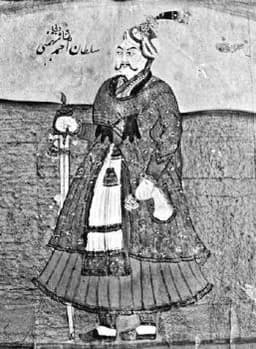
Ahmad Shah I Wali
Emperor · Medieval
51.7Total
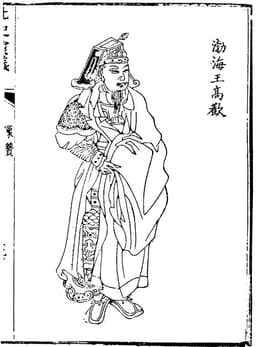
Gao Wei
Emperor · Medieval
40.6Total
Basic Information
Born
1422
557
Died
1436
577
Era
Medieval
Medieval
Nationality
India
China
Occupation
Emperor
Emperor
Civilization
Indian
Eastern
Score Comparison
Military (10%)
40.0
50.0
Political (20%)
48.0
26.4
Influence (20%)
51.0
45.5
Legacy (20%)
42.5
35.8
Leadership (15%)
74.0
49.9
Strategy (15%)
60.0
38.6
TOTAL
51.7
40.6
Ahmad Shah I Wali — Complete Timeline
1424 AD
Relocation of the Bahmani capital to BidarPolitical Action
Ahmad Shah I Wali moved the Bahmani capital from Gulbarga to Bidar, a more defensible location. He constructed a new fort and palace complex in Bidar, which became the political center of the sultanate.
Capital MoveUrban Development
Impact: regionalconstructive
1425 AD
War against the Vijayanagara EmpireWar◆ Major
Ahmad Shah I Wali launched a successful campaign against the Vijayanagara Empire, capturing the fort of Mudgal. The victory expanded Bahmani territory in the Raichur Doab.
WarVijayanagaraTerritorial Expansion
Impact: regional
1428 AD
Construction of the Bidar FortCultural◆ Major
Ahmad Shah I Wali oversaw the construction of the Bidar Fort, a massive defensive structure with seven gates and extensive ramparts. The fort became the seat of Bahmani power for over a century.
ArchitectureFortification
Impact: regionalconstructive
1430 AD
Suppression of the rebellion of the Bahmani noblesPolitical Action
Ahmad Shah I Wali crushed a rebellion by powerful Bahmani nobles who opposed his centralization of authority. The rebels were defeated, and their leaders were executed or exiled.
RebellionInternal Conflict
Impact: nationaldestructive
Gao Wei — Complete Timeline
565 AD
Accession as Emperor of Northern QiPolitical Action◆ Major
Gao Wei ascended the throne as emperor of Northern Qi at age eight, with his mother Empress Dowager Hu and officials serving as regents. His reign was marked by incompetence, corruption, and neglect of state affairs, leading to the dynasty's decline.
Northern QiSuccessionDecline
Impact: national
577 AD
Defeat and capture by Northern ZhouWar
Northern Zhou forces under Emperor Wu conquered Northern Qi. Gao Wei was captured and later executed, ending the Northern Qi dynasty. His incompetence, including favoring eunuchs and neglecting defense, was a major cause of the defeat.
Northern QiConquestExecution
Impact: regionaltragic
This comparison has not been analyzed yet.
One-time AI generation (~1 minute). Scores and timeline are already available below.
Rankings
🥇
Ahmad Shah I WaliLeader
Mil: 40.0Pol: 48.0Inf: 51.0
51.7
🥈
Gao Wei
Mil: 50.0Pol: 26.4Inf: 45.5
40.6
+11.1 behind
How This Comparison Works
Algorithm
Each figure is scored on 6 dimensions (0—100 scale) based on structured historical data: Military (10%), Political (20%), Influence (20%), Legacy (20%), Leadership (15%), Strategy (15%). The weighted total produces the final ranking.
Data Sources
Scores are computed from structured sub-indicators in the database. Scale factors adjust for era (Ancient ×0.85, Modern ×1.0) and civilization size (Eastern ×1.05, Other ×0.80) to account for differences in population and military scale.
Maximum 3 Figures
Comparisons are limited to 2—3 figures to ensure readability and statistical meaningfulness.
Error Margins
±5 points per dimension — Sub-scores are derived from historical records with inherent uncertainty. Two figures within 5 points on a dimension should be considered roughly equivalent in that area.
Total Score Accuracy
±3 points overall — The weighted combination of 6 dimensions produces a total score with approximately ±3 points of uncertainty. Differences of less than 3 points are not statistically significant— the figures are effectively tied.
Known Limitations
- Historical records are incomplete and uneven across civilizations
- Figures from oral-tradition societies may be underrepresented
- Occupation labels can misclassify multi-role figures
- Scores measure capability and impact, not moral character
- Quantitative scoring is a comparison tool, not absolute truth
Capability Radar
Military (10%) — Battles & Warfare
Battles
45
5
Win Rate
50
5
Expansion
40
0
Political (20%) — Governance & Reform
Reform
50
0
Diplomacy
45
5
Economy
40
5
Influence (20%) — Cultural & Global Reach
Cultural
30
5
Global
15
5
Legacy (20%) — Historical Impact
Historical
35
10
Longevity
20
5
Leadership (15%) — Power & Stability
Tenure
55
10
Stability
50
5
Strategy (15%) — Tactics & Innovation
Strategy
45
5
Tactics
40
5
Reform
35
0
Similar Comparisons
Comments & Discussion
No comments yet. Be the first to share your thoughts!