Loading...
Ahmad Shah I Wali vs Vikramaditya II
Vikramaditya II leads by 5.3 pts · 2 figures compared
…
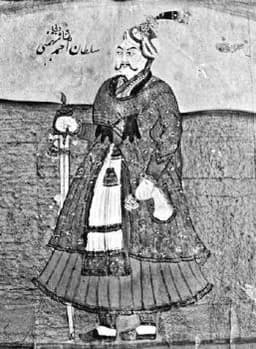
Ahmad Shah I Wali
Emperor · Medieval
51.7Total
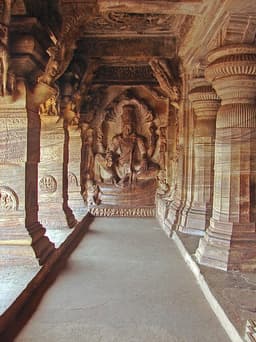
Vikramaditya II
Emperor · Medieval
57.0Total
Basic Information
Born
1422
710
Died
1436
747
Era
Medieval
Medieval
Nationality
India
India
Occupation
Emperor
Emperor
Civilization
Indian
Indian
Score Comparison
Military (10%)
40.0
72.5
Political (20%)
48.0
48.0
Influence (20%)
51.0
53.3
Legacy (20%)
42.5
45.8
Leadership (15%)
74.0
74.0
Strategy (15%)
60.0
66.3
TOTAL
51.7
57.0
Ahmad Shah I Wali — Complete Timeline
1424 AD
Relocation of the Bahmani capital to BidarPolitical Action
Ahmad Shah I Wali moved the Bahmani capital from Gulbarga to Bidar, a more defensible location. He constructed a new fort and palace complex in Bidar, which became the political center of the sultanate.
Capital MoveUrban Development
Impact: regionalconstructive
1425 AD
War against the Vijayanagara EmpireWar◆ Major
Ahmad Shah I Wali launched a successful campaign against the Vijayanagara Empire, capturing the fort of Mudgal. The victory expanded Bahmani territory in the Raichur Doab.
WarVijayanagaraTerritorial Expansion
Impact: regional
1428 AD
Construction of the Bidar FortCultural◆ Major
Ahmad Shah I Wali oversaw the construction of the Bidar Fort, a massive defensive structure with seven gates and extensive ramparts. The fort became the seat of Bahmani power for over a century.
ArchitectureFortification
Impact: regionalconstructive
1430 AD
Suppression of the rebellion of the Bahmani noblesPolitical Action
Ahmad Shah I Wali crushed a rebellion by powerful Bahmani nobles who opposed his centralization of authority. The rebels were defeated, and their leaders were executed or exiled.
RebellionInternal Conflict
Impact: nationaldestructive
Vikramaditya II — Complete Timeline
733 AD
Coronation as Chalukya EmperorPolitical Action
Vikramaditya II ascended the throne of the Chalukya dynasty after the death of his father, Vijayaditya. He inherited a kingdom that had been weakened by Pallava attacks and immediately began military campaigns to restore Chalukya power.
SuccessionChalukya Dynasty
Impact: national
738 AD
Defeat of the Arab InvasionWar◆ Major
Vikramaditya II repelled an Umayyad Arab invasion of Gujarat and the Deccan. His forces defeated the Arab army under Junayd ibn Abd al-Rahman al-Murri, halting the eastward expansion of the Caliphate into India. This preserved Hindu kingdoms in the region.
Arab InvasionDefense of IndiaUmayyad Campaign
Impact: regionalconstructive
740 AD
Sack of KanchipuramWar◆ Major
Vikramaditya II led a Chalukya campaign against the Pallava capital of Kanchipuram. He captured the city and plundered its wealth, but reportedly spared the temples and Brahmins. This victory ended Pallava dominance and established Chalukya supremacy in the Deccan.
Chalukya-Pallava WarMilitary CampaignDeccan Supremacy
Impact: regionaldestructive
Expert Analysis
Origins
Ahmad Shah I Wali (r. 1422–1436) was the ninth sultan of the Bahmani Sultanate, born in 1390 in Gulbarga. He was the son of Sultan Taj ud-Din Firuz Shah, and his early life was marked by courtly education and military training. His family, of Persian origin, had established the Bahmani dynasty in the Deccan in 1347. Ahmad Shah's formative experiences included witnessing the internal strife among nobles that plagued the sultanate.
Vikramaditya II (r. 733–744) was a Chalukya king of Badami, born in 710 in the Chalukya royal family. He was the son of King Vijayaditya and belonged to the Badami Chalukya dynasty, which had ruled parts of the Deccan since the 6th century. His early life involved learning statecraft and warfare, preparing him to defend the kingdom against external threats.
Rise to Power
Ahmad Shah I Wali ascended the throne in 1422 after the death of his father, Firuz Shah. His rise was contested by rival nobles, but he consolidated power by suppressing a rebellion of Bahmani nobles who opposed his centralization. In 1424, he relocated the capital from Gulbarga to Bidar, a strategic move that strengthened his control. The construction of Bidar Fort began in 1426, becoming a symbol of his authority.
Vikramaditya II became emperor in 733 after his father Vijayaditya's death. He inherited a kingdom weakened by conflicts with the Pallavas and the emerging Rashtrakutas. His early reign focused on restoring Chalukya power, and he launched a campaign against the Pallava capital Kanchipuram in 740. The successful sack of Kanchipuram established his reputation as a military leader.
Leadership & Governance
Ahmad Shah I Wali centralized the Bahmani administration, reducing the power of provincial nobles. He appointed loyalists to key positions and promoted Persian culture and architecture. The Bidar Fort, with its seven gates and extensive ramparts, reflected his emphasis on defense. He also maintained diplomatic relations with the Delhi Sultanate and other neighboring kingdoms. His leadership score of 74.0 indicates effective governance, though his political score of 48.0 suggests limited long-term institutional reforms.
Vikramaditya II led a decentralized Chalukya system, relying on feudal lords for military support. He is noted for his military prowess, scoring 72.5 in military, and a strategy score of 66.3. His campaign against the Umayyad Arab invasion in 738 was a significant achievement, protecting the Deccan from foreign conquest. He also patronized Hindu temples and literature, but his governance was less transformative than Ahmad Shah's capital shift.
Triumph & Tragedy
Ahmad Shah I Wali's greatest triumph was the relocation of the Bahmani capital to Bidar, which provided a secure base and spurred urban development. His victory over Vijayanagara at Mudgal in 1425 expanded Bahmani territory. However, his failure to fully integrate the noble factions led to ongoing internal strife after his death. The suppression of rebellion was a short-term success that did not resolve underlying tensions.
Vikramaditya II's sack of Kanchipuram (740) and defeat of the Arab invasion (738) were major military successes. He reportedly spared temples and the city, showing strategic restraint. However, his reign saw the rise of the Rashtrakutas, who would eventually overthrow the Chalukyas. His failure to curb this threat led to the dynasty's decline after his death.
Character & Destiny
Ahmad Shah I Wali was a decisive and ambitious ruler, as seen in his bold move of the capital. He was pragmatic, using both force and diplomacy to maintain power. Historical assessments note his architectural legacy but also his inability to secure stable succession. His character shaped a reign of consolidation but left the Bahmani Sultanate vulnerable to factionalism.
Vikramaditya II was a warrior-king, known for his military campaigns and religious tolerance. He is remembered as a protector of Hinduism against Islamic invasions, but his aggressive expansion strained resources. His character led to short-term victories but long-term vulnerability, as the Chalukya kingdom could not withstand the Rashtrakuta challenge.
Legacy
Ahmad Shah I Wali's legacy is the Bidar Fort and the shift of the Bahmani capital, which influenced Deccan architecture. His centralization efforts set a precedent for later Bahmani rulers, but the sultanate fragmented within decades. His influence score of 51.0 reflects moderate impact.
Vikramaditya II is remembered as a heroic defender of the Deccan, with his victory over Arabs celebrated in Indian history. However, his legacy score of 45.8 indicates limited lasting impact, as the Chalukya dynasty fell to the Rashtrakutas soon after. His military achievements are overshadowed by the eventual decline.
Conclusion
Based on the total scores, Vikramaditya II (57.0) outperforms Ahmad Shah I Wali (51.7) by 5.3 points. Vikramaditya's higher military and strategy scores reflect his successful campaigns, including repelling foreign invasion. While Ahmad Shah I Wali's capital relocation was a significant administrative move, his lower overall impact and legacy scores indicate a less enduring influence. Therefore, Vikramaditya II had greater impact in terms of military defense and immediate territorial control, though neither ruler achieved long-term dynastic stability.
Rankings
🥇
Vikramaditya IILeader
Mil: 72.5Pol: 48.0Inf: 53.3
57.0
🥈
Ahmad Shah I Wali
Mil: 40.0Pol: 48.0Inf: 51.0
51.7
+5.3 behind
How This Comparison Works
Algorithm
Each figure is scored on 6 dimensions (0—100 scale) based on structured historical data: Military (10%), Political (20%), Influence (20%), Legacy (20%), Leadership (15%), Strategy (15%). The weighted total produces the final ranking.
Data Sources
Scores are computed from structured sub-indicators in the database. Scale factors adjust for era (Ancient ×0.85, Modern ×1.0) and civilization size (Eastern ×1.05, Other ×0.80) to account for differences in population and military scale.
Maximum 3 Figures
Comparisons are limited to 2—3 figures to ensure readability and statistical meaningfulness.
Error Margins
±5 points per dimension — Sub-scores are derived from historical records with inherent uncertainty. Two figures within 5 points on a dimension should be considered roughly equivalent in that area.
Total Score Accuracy
±3 points overall — The weighted combination of 6 dimensions produces a total score with approximately ±3 points of uncertainty. Differences of less than 3 points are not statistically significant— the figures are effectively tied.
Known Limitations
- Historical records are incomplete and uneven across civilizations
- Figures from oral-tradition societies may be underrepresented
- Occupation labels can misclassify multi-role figures
- Scores measure capability and impact, not moral character
- Quantitative scoring is a comparison tool, not absolute truth
Capability Radar
Military (10%) — Battles & Warfare
Battles
45
60
Win Rate
50
65
Expansion
40
55
Political (20%) — Governance & Reform
Reform
50
40
Diplomacy
45
50
Economy
40
45
Influence (20%) — Cultural & Global Reach
Cultural
30
40
Global
15
20
Legacy (20%) — Historical Impact
Historical
35
45
Longevity
20
30
Leadership (15%) — Power & Stability
Tenure
55
55
Stability
50
50
Strategy (15%) — Tactics & Innovation
Strategy
45
65
Tactics
40
70
Reform
35
40
Similar Comparisons
Comments & Discussion
No comments yet. Be the first to share your thoughts!