Loading...
This comparison has not been analyzed yet.
One-time AI generation (~1 minute). Scores and timeline are already available below.
Ahmed Izzet Pasha vs Ii Naomasa
Ii Naomasa leads by 0.7 pts · 2 figures compared
…

Ahmed Izzet Pasha
General · Modern
53.2Total
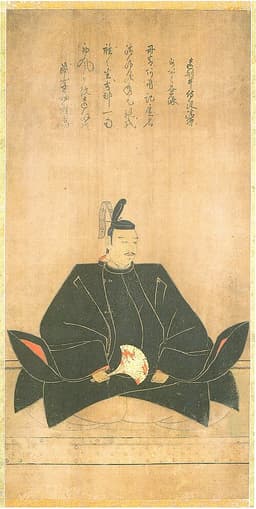
Ii Naomasa
General · Modern
53.9Total
Basic Information
Born
1864
1561
Died
1937
1602
Era
Modern
Modern
Nationality
Ottoman Empire
Japan
Occupation
General
General
Civilization
Middle Eastern
Eastern
Score Comparison
Military (10%)
46.7
70.0
Political (20%)
45.1
39.4
Influence (20%)
56.4
57.2
Legacy (20%)
45.8
50.0
Leadership (15%)
68.0
61.1
Strategy (15%)
60.0
50.0
TOTAL
53.2
53.9
Ahmed Izzet Pasha — Complete Timeline
1918 AD
Appointed Grand VizierPolitical Action◆ Major
Ahmed Izzet Pasha was appointed Grand Vizier by Sultan Mehmed VI in October 1918. He was tasked with negotiating an end to World War I after the collapse of the CUP government.
Grand VizierWorld War IArmistice
Impact: national
Signed the Armistice of MudrosPolitical Action
Ahmed Izzet Pasha authorized the signing of the Armistice of Mudros on October 30, 1918, ending Ottoman participation in World War I. The armistice imposed harsh terms including the occupation of the Straits and the right to occupy any territory in case of disorder.
ArmisticeWorld War IOccupation
Impact: globaltragic
Resigned as Grand VizierPolitical Action
Ahmed Izzet Pasha resigned as Grand Vizier after only a few weeks in office. His resignation was forced by the Sultan and the Allies who demanded a more compliant government to implement the armistice terms.
ResignationArmisticePolitics
Impact: national
1919 AD
Served as Minister of WarPolitical Action
Ahmed Izzet Pasha served as Minister of War in the government of Damat Ferid Pasha. He attempted to reform the Ottoman army but was hampered by Allied occupation and the rise of the Turkish National Movement.
Minister of WarReformOccupation
Impact: national
Ii Naomasa — Complete Timeline
1570 AD
Battle of AnegawaWar
Ii Naomasa fought under Tokugawa Ieyasu at the Battle of Anegawa. He led a unit of red-armored troops, earning the nickname 'Red Devil' for his fierce fighting against the Azai and Asakura forces.
Sengoku PeriodBattleTokugawa
Impact: regionalconstructive
1584 AD
Battle of Komaki and NagakuteWar◆ Major
Ii Naomasa fought at the Battle of Komaki and Nagakute against Toyotomi Hideyoshi's forces. He commanded a unit of red-armored troops and engaged in skirmishes, further building his reputation.
Sengoku PeriodBattleKomaki
Impact: regional
1590 AD
Siege of OdawaraWar
Ii Naomasa participated in the Siege of Odawara under Toyotomi Hideyoshi. He commanded a contingent of Tokugawa forces during the siege, which ended with the surrender of the Hojo clan.
Sengoku PeriodSiegeOdawara
Impact: regional
1600 AD
Battle of SekigaharaWar
Ii Naomasa led the vanguard of Tokugawa Ieyasu's forces at Sekigahara. His red-armored troops charged the Western Army, and he was wounded in the battle but survived, contributing to the victory.
Sengoku PeriodBattleSekigahara
Impact: nationalconstructive
This comparison has not been analyzed yet.
One-time AI generation (~1 minute). Scores and timeline are already available below.
Rankings
🥇
Ii NaomasaLeader
Mil: 70.0Pol: 39.4Inf: 57.2
53.9
🥈
Ahmed Izzet Pasha
Mil: 46.7Pol: 45.1Inf: 56.4
53.2
+0.7 behind
How This Comparison Works
Algorithm
Each figure is scored on 6 dimensions (0—100 scale) based on structured historical data: Military (10%), Political (20%), Influence (20%), Legacy (20%), Leadership (15%), Strategy (15%). The weighted total produces the final ranking.
Data Sources
Scores are computed from structured sub-indicators in the database. Scale factors adjust for era (Ancient ×0.85, Modern ×1.0) and civilization size (Eastern ×1.05, Other ×0.80) to account for differences in population and military scale.
Maximum 3 Figures
Comparisons are limited to 2—3 figures to ensure readability and statistical meaningfulness.
Error Margins
±5 points per dimension — Sub-scores are derived from historical records with inherent uncertainty. Two figures within 5 points on a dimension should be considered roughly equivalent in that area.
Total Score Accuracy
±3 points overall — The weighted combination of 6 dimensions produces a total score with approximately ±3 points of uncertainty. Differences of less than 3 points are not statistically significant— the figures are effectively tied.
Known Limitations
- Historical records are incomplete and uneven across civilizations
- Figures from oral-tradition societies may be underrepresented
- Occupation labels can misclassify multi-role figures
- Scores measure capability and impact, not moral character
- Quantitative scoring is a comparison tool, not absolute truth
Capability Radar
Military (10%) — Battles & Warfare
Battles
35
65
Win Rate
30
70
Expansion
20
40
Political (20%) — Governance & Reform
Reform
30
20
Diplomacy
40
30
Economy
25
25
Influence (20%) — Cultural & Global Reach
Cultural
20
45
Global
30
30
Legacy (20%) — Historical Impact
Historical
40
50
Longevity
25
40
Leadership (15%) — Power & Stability
Tenure
55
35
Stability
20
30
Strategy (15%) — Tactics & Innovation
Strategy
45
60
Tactics
40
75
Reform
30
30
Similar Comparisons
Comments & Discussion
No comments yet. Be the first to share your thoughts!