Loading...
Ii Naomasa vs Napoleon Bonaparte
Napoleon Bonaparte leads by 17.0 pts · 2 figures compared
…
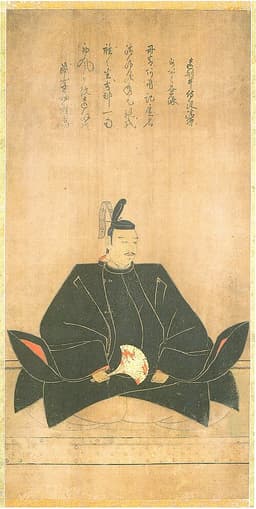
Ii Naomasa
General · Modern
53.9Total

Napoleon Bonaparte
General · Modern
70.9Total
Basic Information
Born
1561
1769
Died
1602
1821
Era
Modern
Modern
Nationality
Japan
France
Occupation
General
General
Civilization
Eastern
Western
Score Comparison
Military (10%)
70.0
94.0
Political (20%)
39.4
72.0
Influence (20%)
57.2
40.0
Legacy (20%)
50.0
80.0
Leadership (15%)
61.1
78.0
Strategy (15%)
50.0
90.0
TOTAL
53.9
70.9
Ii Naomasa — Complete Timeline
1570 AD
Battle of AnegawaWar
Ii Naomasa fought under Tokugawa Ieyasu at the Battle of Anegawa. He led a unit of red-armored troops, earning the nickname 'Red Devil' for his fierce fighting against the Azai and Asakura forces.
Sengoku PeriodBattleTokugawa
Impact: regionalconstructive
1584 AD
Battle of Komaki and NagakuteWar◆ Major
Ii Naomasa fought at the Battle of Komaki and Nagakute against Toyotomi Hideyoshi's forces. He commanded a unit of red-armored troops and engaged in skirmishes, further building his reputation.
Sengoku PeriodBattleKomaki
Impact: regional
1590 AD
Siege of OdawaraWar
Ii Naomasa participated in the Siege of Odawara under Toyotomi Hideyoshi. He commanded a contingent of Tokugawa forces during the siege, which ended with the surrender of the Hojo clan.
Sengoku PeriodSiegeOdawara
Impact: regional
1600 AD
Battle of SekigaharaWar
Ii Naomasa led the vanguard of Tokugawa Ieyasu's forces at Sekigahara. His red-armored troops charged the Western Army, and he was wounded in the battle but survived, contributing to the victory.
Sengoku PeriodBattleSekigahara
Impact: nationalconstructive
Napoleon Bonaparte — Complete Timeline
1799 AD
Coup of 18 BrumaireOther◆ Major
Napoleon Bonaparte, with support from his brother Lucien and key political figures, overthrew the Directory in a bloodless coup. He established the Consulate with himself as First Consul, effectively becoming the ruler of France. This event ended the French Revolution's most unstable period.
French RevolutionCoupRise to Power
Impact: regional
1804 AD
Promulgation of the Napoleonic CodeOther◆ Major
Napoleon enacted the Civil Code of the French, known as the Napoleonic Code, a comprehensive set of laws that replaced the fragmented feudal legal systems. The code established legal equality, protected property rights, and secularized law. It became the basis for legal systems in many European and world countries.
Legal ReformNapoleonic CodeCivil Law
Impact: globalconstructive
1805 AD
Battle of AusterlitzWar◆ Major
Napoleon's Grande Arm
Napoleonic WarsBattleDecisive Victory
Impact: global
1812 AD
Invasion of RussiaWar◆ Major
Napoleon led the Grande Arm
Napoleonic WarsInvasionDisaster
Impact: globaldestructive
1815 AD
Battle of WaterlooWar◆ Major
Napoleon's French army was defeated by the combined forces of the Duke of Wellington's Anglo-Allied army and Gebhard Leberecht von Bl
Napoleonic WarsBattleFinal Defeat
Impact: globaldestructive
Expert Analysis
ii-naomasa-vs-napoleon-bonaparte
### The Red Devil and the Eagle: Two Paths to Glory
On a misty October morning in 1600, a samurai in blood-red armor led a furious charge across a muddy Japanese valley. A century and a half later, on a scorching July afternoon in Egypt, a young Corsican artillery officer watched his cannonballs tear through Mamluk ranks near the Pyramids. Ii Naomasa and Napoleon Bonaparte both rose from turbulent times to become legendary commanders. Yet one built an empire that reshaped a continent, while the other remains a footnote in a single nation’s history. What drove such different outcomes? The answer lies not in their talent—both were formidable—but in the worlds they inhabited and the choices those worlds forced upon them.
### Origins
Ii Naomasa was born in 1561, a child of Japan’s Warring States period, the *Sengoku* era. His father was killed when he was a boy, and young Naomasa was raised in the household of Tokugawa Ieyasu, a shrewd daimyo clawing for survival. Naomasa’s Japan was a brutal chessboard of warlords, where loyalty meant life and betrayal meant death. There was no room for grand philosophies—only the sword, the spear, and the clan.
Napoleon Bonaparte was born in 1769 on Corsica, an island newly sold to France. Unlike Naomasa, he grew up amid the ferment of Enlightenment ideas—Rousseau, Voltaire, the rights of man. His father was a minor noble who sent him to French military schools, where the awkward Corsican boy devoured history and mathematics. His world was one of revolution, where old orders crumbled and a talented outsider could seize a crown. Naomasa’s era demanded obedience to a master; Napoleon’s era rewarded ambition.
### Rise to Power
Naomasa rose through the ranks of Tokugawa’s army. At the Battle of Anegawa in 1570, he led a unit of red-armored troops, earning the nickname “Red Devil.” His path was linear: serve well, gain land, prove loyalty. In 1584, at Komaki and Nagakute, he fought against Toyotomi Hideyoshi, the great unifier, and survived. By 1590, during the Siege of Odawara, he commanded Tokugawa contingents. His power came from his master’s favor—never from his own vision.
Napoleon’s rise was a rocket. In 1793, at age 24, he used artillery to crush a royalist uprising in Toulon, catching the attention of revolutionary leaders. By 1796, he commanded the Army of Italy, where his lightning campaigns humbled Austria. In 1799, he overthrew the French government in a coup, making himself First Consul. By 1804, he crowned himself Emperor. Naomasa climbed a ladder; Napoleon built his own.
### Leadership & Governance
As a leader, Naomasa was a weapon, not a statesman. His political score of 49.2 reflects a man who never governed a province or wrote a law. He was the perfect vanguard commander—fearless, intimidating, but utterly dependent on Tokugawa Ieyasu’s grand strategy. At Sekigahara in 1600, his red-armored troops charged the Western Army, breaking their lines. But afterward, he did not negotiate peace or forge alliances; he simply returned to his fief. His legacy is that of a brilliant executioner.
Napoleon, by contrast, was a political architect. His Napoleonic Code standardized French law, abolished feudal privileges, and inspired legal systems from Egypt to Brazil. He reformed education, built roads, and stabilized the currency. His military genius—scoring 94.0—was paired with a political skill of 75.0. He could be ruthless, but he also understood that conquest required administration. When he conquered Italy, he did not just pillage—he created the Cisalpine Republic, spreading revolutionary ideals.
### Triumph & Tragedy
Naomasa’s greatest moment was Sekigahara, where his charge helped seal Tokugawa’s victory. His tragedy was his early death in 1602, likely from a battle wound. He died at 41, just as the Tokugawa shogunate began its 250-year reign. He never saw the peace he helped create.
Napoleon’s triumph was Austerlitz in 1805, where he destroyed a combined Russian-Austrian army, cementing his empire. His tragedy was the 1812 invasion of Russia—a hubristic march that cost half a million men. He was exiled to Elba in 1814, returned for a Hundred Days, and met final defeat at Waterloo in 1815. He died on Saint Helena in 1821, a prisoner, at 51.
### Character & Destiny
Naomasa’s character was forged in the furnace of feudal loyalty. He was called the “Red Devil” for his ferocity, but also the “Red Knight” for his discipline. He never questioned his master’s orders; his destiny was to serve. Napoleon’s character was a storm of ambition. “Impossible is a word to be found only in the dictionary of fools,” he said. He believed he could shape history with will alone. That belief built an empire—and destroyed it.
### Legacy
Today, Ii Naomasa is a legend in Japan—a hero of samurai dramas and video games, but little known outside. His total score of 60.5 reflects a life that was fierce but circumscribed. Napoleon’s legacy is global. His influence score of 82.0 and legacy of 78.0 mean his name is known on every continent. Yet both men were products of their time: Naomasa, the perfect instrument of a feudal system; Napoleon, the embodiment of a revolutionary age.
### Conclusion
Standing on the battlefield of Sekigahara, you might feel the ghost of the Red Devil charging through the mist. Standing at Waterloo, you might hear the echo of Napoleon’s cannons. One man’s story ends with a shogunate, the other with a world reshaped. But both remind us that history is not a contest of scores—it is a story of what a person can achieve within the cage of their era. Naomasa could never have become emperor, because his world had no room for such a dream. Napoleon could never have been a loyal vassal, because his world had no use for such humility. Their differences are not just theirs; they are the differences of civilizations in collision with time.
Rankings
🥇
Napoleon BonaparteLeader
Mil: 94.0Pol: 72.0Inf: 40.0
70.9
🥈
Ii Naomasa
Mil: 70.0Pol: 39.4Inf: 57.2
53.9
+17.0 behind
How This Comparison Works
Algorithm
Each figure is scored on 6 dimensions (0—100 scale) based on structured historical data: Military (10%), Political (20%), Influence (20%), Legacy (20%), Leadership (15%), Strategy (15%). The weighted total produces the final ranking.
Data Sources
Scores are computed from structured sub-indicators in the database. Scale factors adjust for era (Ancient ×0.85, Modern ×1.0) and civilization size (Eastern ×1.05, Other ×0.80) to account for differences in population and military scale.
Maximum 3 Figures
Comparisons are limited to 2—3 figures to ensure readability and statistical meaningfulness.
Error Margins
±5 points per dimension — Sub-scores are derived from historical records with inherent uncertainty. Two figures within 5 points on a dimension should be considered roughly equivalent in that area.
Total Score Accuracy
±3 points overall — The weighted combination of 6 dimensions produces a total score with approximately ±3 points of uncertainty. Differences of less than 3 points are not statistically significant— the figures are effectively tied.
Known Limitations
- Historical records are incomplete and uneven across civilizations
- Figures from oral-tradition societies may be underrepresented
- Occupation labels can misclassify multi-role figures
- Scores measure capability and impact, not moral character
- Quantitative scoring is a comparison tool, not absolute truth
Capability Radar
Military (10%) — Battles & Warfare
Battles
65
95
Win Rate
70
90
Expansion
40
95
Political (20%) — Governance & Reform
Reform
20
95
Diplomacy
30
80
Economy
25
85
Influence (20%) — Cultural & Global Reach
Cultural
45
85
Global
30
90
Legacy (20%) — Historical Impact
Historical
50
95
Longevity
40
90
Leadership (15%) — Power & Stability
Tenure
35
85
Stability
30
70
Strategy (15%) — Tactics & Innovation
Strategy
60
95
Tactics
75
98
Reform
30
92
Similar Comparisons
Comments & Discussion
SAMURAI_REALIST6/17/2026
Naomasa wins on sheer grit. Napoleon had his "whiff of grapeshot" to climb the ranks, but Naomasa bled for every inch. At Sekigahara, his Ii clan took the brunt of Shimazu's charge—lost over 250 men in minutes—yet held long enough for Tokugawa to win. Bonaparte never faced that level of close-quarters chaos; his cannon kept enemies at a distance. One was a butcher, the other a duelist. Easy call.
帝国幻影6/17/2026
拿破仑是历史的宠儿,Naomasa是时代的造物。拿破仑能做到的事局限于欧洲的棋盘,而Naomasa的忠诚和胆识定义了德川幕府的根基。看看关原合战:Naomasa的红甲部队冲锋在最前面,成就了德川的霸权。拿破仑呢?滑铁卢被布吕歇尔夹击,输得像个赌徒。没有炮火支援,他还能剩下什么?一个是潮流的弄潮儿,一个是绝望中的砥柱。
DATA_DOUBTER6/17/2026
The analysis romanticizes both, but the numbers don't lie. Naomasa's "furious charge" at Sekigahara? He commanded maybe 3,600 men—roughly 3% of the total force. Napoleon at Austerlitz commanded 73,000 and crushed a larger army. Scale matters. A footnote in one nation's history? Naomasa's impact is localized to clan politics, while Napoleon rewired an entire continent's legal systems. If we're comparing military genius, the body count and territorial change are clear. Sorry, Edo fans.
血染忠义6/17/2026
这分析最大的毛病是忽略了忠诚的分量。Naomasa的护主之心不是拿破仑能比的。Napoleon今天投革命,明天抱贵族,后天当皇帝——意识形态是个变色龙。Naomasa从17岁就跟着德川家康,生死不离。在关原,他明知山来的铁炮火力凶猛,依然带头冲锋,身中三弹后还坚持不退。这不是战术问题,是义理问题。拿破仑的帝国靠的是野心,Naomasa的荣耀靠的是誓言。谁更值得敬仰?毫无疑问。