Loading...
Abe Nobuyuki vs Ii Naomasa
Ii Naomasa leads by 10.7 pts · 2 figures compared
…
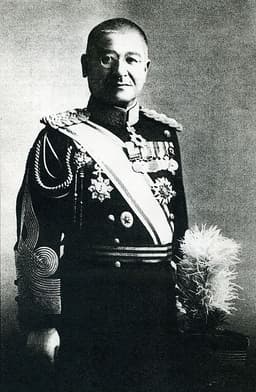
Abe Nobuyuki
General · Modern
43.2Total
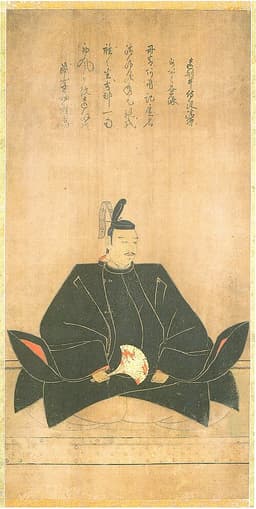
Ii Naomasa
General · Modern
53.9Total
Basic Information
Born
1875
1561
Died
1953
1602
Era
Modern
Modern
Nationality
Japan
Japan
Occupation
General
General
Civilization
Eastern
Eastern
Score Comparison
Military (10%)
50.0
70.0
Political (20%)
32.2
39.4
Influence (20%)
51.8
57.2
Legacy (20%)
39.2
50.0
Leadership (15%)
50.7
61.1
Strategy (15%)
30.3
50.0
TOTAL
43.2
53.9
Abe Nobuyuki — Complete Timeline
1939 AD
Service as Prime MinisterPolitical Action◆ Major
Abe Nobuyuki served as Prime Minister from August 1939 to January 1940. His cabinet was formed after the Nomonhan Incident and focused on resolving the conflict with the Soviet Union. He pursued a neutral foreign policy but was unable to control the military.
Prime MinisterNomonhan
Impact: national
1940 AD
Resignation Over Foreign PolicyPolitical Action
Abe resigned as Prime Minister in January 1940 after failing to resolve tensions with the United States over the abrogation of the U.S.-Japan Commercial Treaty. His resignation reflected the growing crisis in Japan's foreign relations.
ResignationU.S.-Japan Relations
Impact: nationaltragic
1944 AD
Governor-General of KoreaPolitical Action◆ Major
Abe served as Governor-General of Korea from 1944 to 1945, during the final years of World War II. He implemented harsh policies to mobilize Korean resources for the war effort, including forced labor and conscription.
Colonial RuleKoreaWar Mobilization
Impact: regionaldestructive
1946 AD
Post-War Purge and Political ComebackPolitical Action
After World War II, Abe was purged from public office by the Allied occupation authorities. However, he later returned to politics and was elected to the House of Representatives in 1952, serving until his death.
Post-WarPurgePolitical Comeback
Impact: national
Ii Naomasa — Complete Timeline
1570 AD
Battle of AnegawaWar
Ii Naomasa fought under Tokugawa Ieyasu at the Battle of Anegawa. He led a unit of red-armored troops, earning the nickname 'Red Devil' for his fierce fighting against the Azai and Asakura forces.
Sengoku PeriodBattleTokugawa
Impact: regionalconstructive
1584 AD
Battle of Komaki and NagakuteWar◆ Major
Ii Naomasa fought at the Battle of Komaki and Nagakute against Toyotomi Hideyoshi's forces. He commanded a unit of red-armored troops and engaged in skirmishes, further building his reputation.
Sengoku PeriodBattleKomaki
Impact: regional
1590 AD
Siege of OdawaraWar
Ii Naomasa participated in the Siege of Odawara under Toyotomi Hideyoshi. He commanded a contingent of Tokugawa forces during the siege, which ended with the surrender of the Hojo clan.
Sengoku PeriodSiegeOdawara
Impact: regional
1600 AD
Battle of SekigaharaWar
Ii Naomasa led the vanguard of Tokugawa Ieyasu's forces at Sekigahara. His red-armored troops charged the Western Army, and he was wounded in the battle but survived, contributing to the victory.
Sengoku PeriodBattleSekigahara
Impact: nationalconstructive
Expert Analysis
Origins
Abe Nobuyuki was born in 1875 into a samurai family in Kanazawa, Ishikawa Prefecture. He graduated from the Imperial Japanese Army Academy in 1897 and later from the Army War College. His early career included service in the Russo-Japanese War (1904-1905), where he commanded a battalion. Abe's background was rooted in the modernizing Japanese military establishment, shaped by the Meiji Restoration's emphasis on Western-style military organization.
Ii Naomasa was born in 1561 in Totomi Province (present-day Shizuoka Prefecture) into a samurai family. His father was killed in battle when Naomasa was young, and he was raised by relatives. He entered the service of Tokugawa Ieyasu as a page and quickly rose through the ranks due to his martial prowess. Naomasa's formative years were spent in the crucible of the Sengoku period, where constant warfare defined the path to power.
Rise to Power
Abe Nobuyuki's rise was gradual and bureaucratic. He served as a military attaché in Vienna and Berlin, gaining diplomatic experience. He became Chief of the Military Affairs Bureau in 1922 and Vice Minister of War in 1927. His key turning point came in 1939 when he was appointed Prime Minister after the resignation of Kiichiro Hiranuma. Abe's cabinet was formed in the wake of the Nomonhan Incident, where Japanese forces suffered a significant defeat by the Soviet Union. He focused on resolving the incident diplomatically, signing a ceasefire in September 1939. However, his tenure lasted only five months, ending in January 1940 after failing to manage relations with the United States over the abrogation of the U.S.-Japan Commercial Treaty.
Ii Naomasa rose through military distinction. He first gained notice at the Battle of Anegawa (1570), fighting under Tokugawa Ieyasu against the Azai and Asakura clans. His red-armored troops earned him the nickname 'Red Devil.' He played a key role in the Battle of Komaki and Nagakute (1584) against Toyotomi Hideyoshi's forces. His greatest moment came at the Battle of Sekigahara (1600), where he led the vanguard of Tokugawa Ieyasu's army. His charge against the Western Army was pivotal, though he was wounded by a bullet. After the battle, he was rewarded with the domain of Hikone (200,000 koku).
Leadership & Governance
Abe Nobuyuki's leadership was cautious and diplomatic. As Prime Minister, he prioritized ending the Nomonhan Incident and avoiding escalation with the Soviet Union. He signed a ceasefire agreement that saved face for Japan but did not resolve underlying tensions. As Governor-General of Korea from 1944 to 1945, he implemented harsh policies to mobilize Korean resources for the war effort, including forced labor and conscription. His governance was authoritarian, reflecting the militaristic turn of Japan in the 1930s-40s. His political score of 32.2 reflects his brief and ineffective premiership.
Ii Naomasa was a field commander, not a governor. His leadership was aggressive and direct. At Sekigahara, he commanded the vanguard with 3,600 men, all wearing red-lacquered armor to intimidate the enemy. He was known for his personal bravery, often leading charges from the front. His military score of 70.0 reflects his effectiveness in battle. However, his political score of 39.4 indicates limited governance experience. After Sekigahara, he helped consolidate Tokugawa control in the Kantō region.
Triumph & Tragedy
Abe Nobuyuki's greatest success was negotiating a ceasefire at Nomonhan, ending a costly conflict. He also served as Governor-General, though with mixed results. His greatest failure was his inability to steer Japan away from confrontation with the United States, leading to his resignation. After the war, he was purged from public office by the Allied occupation, but later returned to politics, being elected to the House of Representatives. His legacy score of 39.2 reflects limited lasting impact.
Ii Naomasa's triumph was his role at Sekigahara, where his charge helped secure victory for Tokugawa. He was also successful at Anegawa and Komaki. His tragedy came from his wounds: he never fully recovered from the bullet wound at Sekigahara and died in 1602 at age 41. His early death limited his further contributions. His legacy score of 50.0 reflects his status as a iconic samurai general.
Character & Destiny
Abe Nobuyuki was a cautious bureaucrat, more comfortable with diplomacy than bold action. His character led him to avoid confrontation, which ultimately undermined his premiership. He lacked the decisiveness needed to navigate Japan's aggressive expansionism. His post-war comeback shows resilience, but his impact was minimal.
Ii Naomasa was a fierce warrior, embodying the samurai ethos. His nickname 'Red Devil' reflects his intimidating presence. His aggressive style brought him success but also led to his wounding and death. His character was shaped by the Sengoku period, where personal valor was paramount.
Legacy
Abe Nobuyuki is remembered as a minor figure in Japanese history, notable for his brief premiership and role in Korea. His policies in Korea are viewed negatively in modern context. He scored 51.8 in influence but 39.2 in legacy, indicating limited enduring impact.
Ii Naomasa is remembered as one of Tokugawa's top generals, the 'Red Devil' of Sekigahara. His red-armored troops became legendary. He is a subject of books, games, and dramas. His legacy is tied to the unification of Japan under Tokugawa. He scored 57.2 in influence and 50.0 in legacy.
Conclusion
Ii Naomasa had greater impact than Abe Nobuyuki. His military achievements at Sekigahara directly contributed to the Tokugawa shogunate that ruled Japan for 250 years. Abe's actions were reactive and ultimately failed to alter Japan's trajectory. Naomasa's total score of 53.9 exceeds Abe's 43.2, with significant advantages in military (70.0 vs 50.0), leadership (61.1 vs 50.7), and strategy (50.0 vs 30.3). While Abe operated in a more complex modern context, his legacy is overshadowed by his limited effectiveness. Naomasa's role as a 'Red Devil' general cements his place in Japanese history as a key contributor to the Tokugawa peace.
Rankings
🥇
Ii NaomasaLeader
Mil: 70.0Pol: 39.4Inf: 57.2
53.9
🥈
Abe Nobuyuki
Mil: 50.0Pol: 32.2Inf: 51.8
43.2
+10.7 behind
How This Comparison Works
Algorithm
Each figure is scored on 6 dimensions (0—100 scale) based on structured historical data: Military (10%), Political (20%), Influence (20%), Legacy (20%), Leadership (15%), Strategy (15%). The weighted total produces the final ranking.
Data Sources
Scores are computed from structured sub-indicators in the database. Scale factors adjust for era (Ancient ×0.85, Modern ×1.0) and civilization size (Eastern ×1.05, Other ×0.80) to account for differences in population and military scale.
Maximum 3 Figures
Comparisons are limited to 2—3 figures to ensure readability and statistical meaningfulness.
Error Margins
±5 points per dimension — Sub-scores are derived from historical records with inherent uncertainty. Two figures within 5 points on a dimension should be considered roughly equivalent in that area.
Total Score Accuracy
±3 points overall — The weighted combination of 6 dimensions produces a total score with approximately ±3 points of uncertainty. Differences of less than 3 points are not statistically significant— the figures are effectively tied.
Known Limitations
- Historical records are incomplete and uneven across civilizations
- Figures from oral-tradition societies may be underrepresented
- Occupation labels can misclassify multi-role figures
- Scores measure capability and impact, not moral character
- Quantitative scoring is a comparison tool, not absolute truth
Capability Radar
Military (10%) — Battles & Warfare
Battles
20
65
Win Rate
20
70
Expansion
10
40
Political (20%) — Governance & Reform
Reform
15
20
Diplomacy
20
30
Economy
15
25
Influence (20%) — Cultural & Global Reach
Cultural
10
45
Global
10
30
Legacy (20%) — Historical Impact
Historical
15
50
Longevity
10
40
Leadership (15%) — Power & Stability
Tenure
30
35
Stability
20
30
Strategy (15%) — Tactics & Innovation
Strategy
15
60
Tactics
15
75
Reform
10
30
Similar Comparisons
Comments & Discussion
No comments yet. Be the first to share your thoughts!