Loading...
This comparison has not been analyzed yet.
One-time AI generation (~1 minute). Scores and timeline are already available below.
Ahmed Qurei vs Halil Hamid Pasha
Ahmed Qurei leads by 2.7 pts · 2 figures compared
…

Ahmed Qurei
Politician · Modern
52.7Total
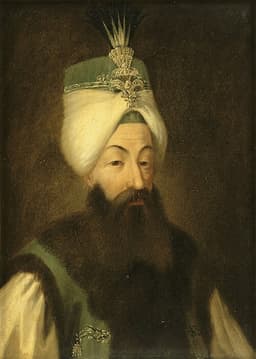
Halil Hamid Pasha
Politician · Modern
50.0Total
Basic Information
Born
1937
1736
Died
—
1785
Era
Modern
Modern
Nationality
Palestine
Ottoman Empire
Occupation
Politician
Politician
Civilization
Middle Eastern
Middle Eastern
Score Comparison
Military (10%)
46.1
40.8
Political (20%)
61.3
62.7
Influence (20%)
52.5
48.6
Legacy (20%)
45.0
43.3
Leadership (15%)
67.0
64.5
Strategy (15%)
44.3
38.6
TOTAL
52.7
50.0
Ahmed Qurei — Complete Timeline
1993 AD
Led Oslo NegotiationsPolitical Action
Qurei headed the Palestinian delegation in secret talks with Israel in Oslo, Norway. The negotiations produced the Oslo Accords, which established the Palestinian Authority and set a framework for peace, though implementation faltered.
Oslo AccordsPeace processNegotiations
Impact: globalconstructive
2003 AD
Appointed Prime Minister of Palestinian AuthorityPolitical Action◆ Major
Qurei was appointed Prime Minister by Yasser Arafat during the Second Intifada. He faced challenges of Israeli military operations, internal Palestinian unrest, and the failure of the peace process.
Palestinian AuthorityPrime MinisterSecond Intifada
Impact: national
2006 AD
Resigned as Prime MinisterPolitical Action◆ Major
Qurei resigned after Hamas won the 2006 Palestinian legislative elections. His resignation reflected the political shift and the beginning of the Fatah-Hamas split that would lead to the Gaza takeover.
ResignationHamas victoryPalestinian Authority
Impact: national
Halil Hamid Pasha — Complete Timeline
1782 AD
Military ReformsReform◆ Major
As grand vizier, Halil Hamid Pasha initiated reforms to modernize the Ottoman military, including the establishment of a new artillery corps and the recruitment of European advisors. These reforms were precursors to later Tanzimat changes.
ReformMilitaryModernization
Impact: nationalconstructive
Grand Vizier AppointmentPolitical Action
Halil Hamid Pasha was appointed grand vizier by Sultan Abdul Hamid I. His appointment was part of a wave of reformist officials, but his tenure was cut short by conservative opposition and his eventual execution.
AppointmentReformAdministration
Impact: nationalconstructive
1785 AD
Execution on SuspicionOther◆ Major
Halil Hamid Pasha was executed by order of Sultan Abdul Hamid I on suspicion of plotting against the throne. His death ended his reformist tenure, which had included military and administrative changes, and highlighted the dangers of court politics.
ExecutionOttoman PoliticsReform
Impact: nationaltragic
This comparison has not been analyzed yet.
One-time AI generation (~1 minute). Scores and timeline are already available below.
Rankings
🥇
Ahmed QureiLeader
Mil: 46.1Pol: 61.3Inf: 52.5
52.7
🥈
Halil Hamid Pasha
Mil: 40.8Pol: 62.7Inf: 48.6
50.0
+2.7 behind
How This Comparison Works
Algorithm
Each figure is scored on 6 dimensions (0—100 scale) based on structured historical data: Military (10%), Political (20%), Influence (20%), Legacy (20%), Leadership (15%), Strategy (15%). The weighted total produces the final ranking.
Data Sources
Scores are computed from structured sub-indicators in the database. Scale factors adjust for era (Ancient ×0.85, Modern ×1.0) and civilization size (Eastern ×1.05, Other ×0.80) to account for differences in population and military scale.
Maximum 3 Figures
Comparisons are limited to 2—3 figures to ensure readability and statistical meaningfulness.
Error Margins
±5 points per dimension — Sub-scores are derived from historical records with inherent uncertainty. Two figures within 5 points on a dimension should be considered roughly equivalent in that area.
Total Score Accuracy
±3 points overall — The weighted combination of 6 dimensions produces a total score with approximately ±3 points of uncertainty. Differences of less than 3 points are not statistically significant— the figures are effectively tied.
Known Limitations
- Historical records are incomplete and uneven across civilizations
- Figures from oral-tradition societies may be underrepresented
- Occupation labels can misclassify multi-role figures
- Scores measure capability and impact, not moral character
- Quantitative scoring is a comparison tool, not absolute truth
Capability Radar
Military (10%) — Battles & Warfare
Battles
22
22
Win Rate
22
25
Expansion
30
26
Political (20%) — Governance & Reform
Reform
40
70
Diplomacy
60
40
Economy
30
30
Influence (20%) — Cultural & Global Reach
Cultural
20
20
Global
35
10
Legacy (20%) — Historical Impact
Historical
40
40
Longevity
30
20
Leadership (15%) — Power & Stability
Tenure
45
30
Stability
25
20
Strategy (15%) — Tactics & Innovation
Strategy
31
31
Tactics
35
36
Reform
34
38
Similar Comparisons
Comments & Discussion
No comments yet. Be the first to share your thoughts!