Loading...
Ahmose I vs Kanishka I
Kanishka I leads by 1.3 pts · 2 figures compared
…
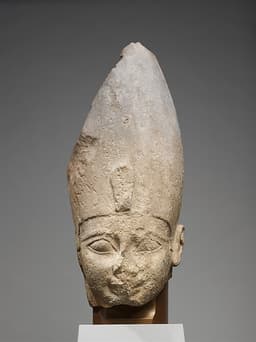
Ahmose I
Emperor · Ancient
62.2Total
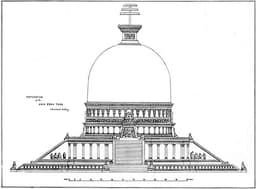
Kanishka I
Emperor · Ancient
63.5Total
Basic Information
Born
-1550
127
Died
-1525
150
Era
Ancient
Ancient
Nationality
Egypt
Kushan Empire
Occupation
Emperor
Emperor
Civilization
Middle Eastern
Indian
Score Comparison
Military (10%)
76.0
78.0
Political (20%)
78.0
60.0
Influence (20%)
56.7
72.0
Legacy (20%)
40.0
52.0
Leadership (15%)
78.0
66.0
Strategy (15%)
70.0
58.0
TOTAL
62.2
63.5
Ahmose I — Complete Timeline
1550 BC
Expulsion of the HyksosWar
Ahmose I, a Theban king, captured the Hyksos capital of Avaris after a siege, expelling the Hyksos from Egypt. This victory ended the Second Intermediate Period and marked the beginning of the New Kingdom, Egypt's most powerful era.
HyksosExpulsionNew Kingdom
Impact: regionalconstructive
Reunification of EgyptPolitical Action◆ Major
After expelling the Hyksos, Ahmose I reunified Egypt under Theban rule, ending the division of the Second Intermediate Period. He reestablished central authority and initiated a period of stability, prosperity, and imperial expansion.
UnificationThebesStability
Impact: nationalconstructive
1549 BC
Siege of SharuhenWar◆ Major
Ahmose I pursued the defeated Hyksos into southern Canaan and besieged the fortress of Sharuhen. After a three-year siege, the city fell, eliminating the Hyksos threat and extending Egyptian influence into the Levant.
SiegeCanaanMilitary
Impact: regional
Kanishka I — Complete Timeline
130 AD
Conquest of the Indus and Ganges RegionsWar◆ Major
Kanishka I expanded the Kushan Empire to its greatest extent, conquering the Indus Valley, the Ganges Basin, and parts of Central Asia. His empire stretched from Bactria to Mathura, becoming a major power.
ConquestExpansionKushan Empire
Impact: regional
135 AD
Issuance of Gold Coins with DeitiesCultural
Kanishka I issued gold coins depicting Greek, Persian, Indian, and Buddhist deities, including Buddha, Shiva, and Mithra. This reflected the religious diversity of his empire and promoted syncretism.
CoinageReligionSyncretism
Impact: regionalconstructive
140 AD
Patronage of the Fourth Buddhist CouncilCultural◆ Major
Kanishka I convened the Fourth Buddhist Council in Kashmir, which standardized Buddhist scriptures and promoted the Sarvastivada school. This council was a major event in Buddhist history and led to the spread of Buddhism in Central Asia.
BuddhismCouncilScriptures
Impact: regionalconstructive
Construction of the Kanishka StupaCultural
Kanishka I built a large stupa at Peshawar, known as the Kanishka Stupa, which was one of the tallest structures in the ancient world. It served as a major Buddhist pilgrimage site and symbol of his patronage.
ArchitectureBuddhismStupa
Impact: regionalconstructive
Expert Analysis
Origins
Ahmose I was born around 1560 BCE into the Theban royal family of the 17th Dynasty, a time when Egypt was divided under Hyksos rule. His father, Seqenenre Tao, died in battle against the Hyksos, and his brother, Kamose, continued the fight. Ahmose ascended the throne as a child, likely around 1550 BCE, with his mother Ahhotep serving as regent. He was educated in military and administrative traditions, preparing him to complete the liberation of Egypt.
Kanishka I's origins are less certain. He was likely a member of the Yuezhi confederation, which had established the Kushan Empire in Bactria around 30 CE. He ascended the throne around 127 CE, possibly after a period of internal strife. His early life remains obscure, but he inherited a multi-ethnic empire that blended Greek, Persian, Indian, and Central Asian influences. He was probably trained in military and administrative skills, given his later conquests.
Rise to Power
Ahmose I's rise was defined by his campaign to expel the Hyksos. After becoming pharaoh, he continued the war his father and brother had started. He captured the Hyksos capital Avaris after a siege, around 1550 BCE. He then pursued the Hyksos to Sharuhen in southern Canaan, besieging it for three years until it fell. This campaign eliminated Hyksos power and secured Egypt's borders. His military success allowed him to reunify Egypt under Theban rule, ending the Second Intermediate Period.
Kanishka I's rise came through military expansion. He inherited a kingdom that included Bactria and parts of the Indus Valley. He launched campaigns southward into the Indian subcontinent, conquering the Indus Valley and the Ganges Basin, and eastward into Central Asia. His empire stretched from modern-day Uzbekistan to northern India. He also secured trade routes along the Silk Road, enhancing Kushan wealth and influence. His conquests were swift and decisive, establishing him as the most powerful Kushan emperor.
Leadership & Governance
Ahmose I's leadership focused on restoring Egyptian central authority. He reestablished the bureaucracy, rebuilt temples, and revived trade. He appointed loyal officials and military commanders, many from his own family, to ensure control. He also launched campaigns into Nubia to secure Egypt's southern borders. His governance was traditional, emphasizing Ma'at (cosmic order) and the Pharaoh's divine role. He scored 78.0 in leadership, reflecting his effective reunification.
Kanishka I's governance was more cosmopolitan. He ruled a multi-ethnic empire through a combination of direct administration and local vassals. He issued coins with Greek, Persian, Indian, and Buddhist deities, indicating religious tolerance and syncretism. He patronized Buddhism, convening the Fourth Buddhist Council in Kashmir around 150 CE, which standardized scriptures. He also built the Kanishka Stupa in Peshawar, a massive structure that became a pilgrimage site. His political score of 60.0 suggests less centralized control compared to Ahmose.
Triumph & Tragedy
Ahmose I's greatest triumph was expelling the Hyksos and reunifying Egypt, founding the 18th Dynasty and the New Kingdom. This era became Egypt's most prosperous and powerful. His failures include limited expansion beyond traditional borders; he did not create a lasting empire like later pharaohs. His military score of 76.0 reflects his success but also his narrower scope.
Kanishka I's triumphs include his vast conquests, making the Kushan Empire a major power linking East and West. He promoted Buddhism, which spread across Asia. His tragedies include the empire's decline after his death; the Kushan state fragmented within a century. His influence score of 72.0 is high, but his legacy score of 52.0 indicates that his empire did not endure.
Character & Destiny
Ahmose I was determined and focused, completing his family's mission. He was a traditionalist, restoring Egyptian culture after Hyksos rule. His destiny was to be a national liberator, remembered as the founder of a golden age.
Kanishka I was ambitious and cosmopolitan, embracing diverse cultures. He was a patron of Buddhism but also tolerated other religions. His destiny was to create a short-lived but culturally significant empire that facilitated cross-cultural exchange.
Legacy
Ahmose I's legacy is the New Kingdom, which lasted for 500 years and produced famous pharaohs like Hatshepsut and Ramesses II. He is remembered as a unifier and liberator, though his individual reputation is overshadowed by later figures. His legacy score of 40.0 reflects this.
Kanishka I's legacy is more tangible: the Kanishka Stupa and the Fourth Buddhist Council. He is a key figure in Buddhist history and in the history of Central Asia. His coins and inscriptions provide valuable historical data. His legacy score of 52.0 is higher, reflecting his cultural impact.
Conclusion
While Ahmose I (total score 62.2) was crucial for Egypt's restoration, Kanishka I (total score 63.5) had a broader impact across Asia. Kanishka's empire connected civilizations, promoted Buddhism, and left a lasting cultural legacy. Ahmose's achievements, though significant, were more contained. Therefore, Kanishka I had greater historical impact.
Rankings
🥇
Kanishka ILeader
Mil: 78.0Pol: 60.0Inf: 72.0
63.5
🥈
Ahmose I
Mil: 76.0Pol: 78.0Inf: 56.7
62.2
+1.3 behind
How This Comparison Works
Algorithm
Each figure is scored on 6 dimensions (0—100 scale) based on structured historical data: Military (10%), Political (20%), Influence (20%), Legacy (20%), Leadership (15%), Strategy (15%). The weighted total produces the final ranking.
Data Sources
Scores are computed from structured sub-indicators in the database. Scale factors adjust for era (Ancient ×0.85, Modern ×1.0) and civilization size (Eastern ×1.05, Other ×0.80) to account for differences in population and military scale.
Maximum 3 Figures
Comparisons are limited to 2—3 figures to ensure readability and statistical meaningfulness.
Error Margins
±5 points per dimension — Sub-scores are derived from historical records with inherent uncertainty. Two figures within 5 points on a dimension should be considered roughly equivalent in that area.
Total Score Accuracy
±3 points overall — The weighted combination of 6 dimensions produces a total score with approximately ±3 points of uncertainty. Differences of less than 3 points are not statistically significant— the figures are effectively tied.
Known Limitations
- Historical records are incomplete and uneven across civilizations
- Figures from oral-tradition societies may be underrepresented
- Occupation labels can misclassify multi-role figures
- Scores measure capability and impact, not moral character
- Quantitative scoring is a comparison tool, not absolute truth
Capability Radar
Military (10%) — Battles & Warfare
Battles
75
75
Win Rate
80
70
Expansion
75
80
Political (20%) — Governance & Reform
Reform
85
65
Diplomacy
75
75
Economy
70
70
Influence (20%) — Cultural & Global Reach
Cultural
70
85
Global
75
70
Legacy (20%) — Historical Impact
Historical
85
80
Longevity
80
75
Leadership (15%) — Power & Stability
Tenure
70
70
Stability
75
65
Strategy (15%) — Tactics & Innovation
Strategy
85
70
Tactics
70
65
Reform
80
60
Similar Comparisons
Comments & Discussion
No comments yet. Be the first to share your thoughts!