Loading...
Kanishka I vs Napoleon Bonaparte
Napoleon Bonaparte leads by 7.4 pts · 2 figures compared
…
Kanishka I
Emperor · Ancient
63.5Total

Napoleon Bonaparte
General · Modern
70.9Total
Basic Information
Born
127
1769
Died
150
1821
Era
Ancient
Modern
Nationality
Kushan Empire
France
Occupation
Emperor
General
Civilization
Indian
Western
Score Comparison
Military (10%)
78.0
94.0
Political (20%)
60.0
72.0
Influence (20%)
72.0
40.0
Legacy (20%)
52.0
80.0
Leadership (15%)
66.0
78.0
Strategy (15%)
58.0
90.0
TOTAL
63.5
70.9
Kanishka I — Complete Timeline
130 AD
Conquest of the Indus and Ganges RegionsWar◆ Major
Kanishka I expanded the Kushan Empire to its greatest extent, conquering the Indus Valley, the Ganges Basin, and parts of Central Asia. His empire stretched from Bactria to Mathura, becoming a major power.
ConquestExpansionKushan Empire
Impact: regional
135 AD
Issuance of Gold Coins with DeitiesCultural
Kanishka I issued gold coins depicting Greek, Persian, Indian, and Buddhist deities, including Buddha, Shiva, and Mithra. This reflected the religious diversity of his empire and promoted syncretism.
CoinageReligionSyncretism
Impact: regionalconstructive
140 AD
Patronage of the Fourth Buddhist CouncilCultural◆ Major
Kanishka I convened the Fourth Buddhist Council in Kashmir, which standardized Buddhist scriptures and promoted the Sarvastivada school. This council was a major event in Buddhist history and led to the spread of Buddhism in Central Asia.
BuddhismCouncilScriptures
Impact: regionalconstructive
Construction of the Kanishka StupaCultural
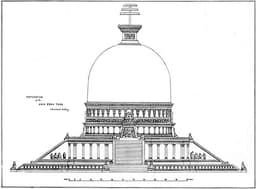
Kanishka I built a large stupa at Peshawar, known as the Kanishka Stupa, which was one of the tallest structures in the ancient world. It served as a major Buddhist pilgrimage site and symbol of his patronage.
ArchitectureBuddhismStupa
Impact: regionalconstructive
Napoleon Bonaparte — Complete Timeline
1799 AD
Coup of 18 BrumaireOther◆ Major
Napoleon Bonaparte, with support from his brother Lucien and key political figures, overthrew the Directory in a bloodless coup. He established the Consulate with himself as First Consul, effectively becoming the ruler of France. This event ended the French Revolution's most unstable period.
French RevolutionCoupRise to Power
Impact: regional
1804 AD
Promulgation of the Napoleonic CodeOther◆ Major
Napoleon enacted the Civil Code of the French, known as the Napoleonic Code, a comprehensive set of laws that replaced the fragmented feudal legal systems. The code established legal equality, protected property rights, and secularized law. It became the basis for legal systems in many European and world countries.
Legal ReformNapoleonic CodeCivil Law
Impact: globalconstructive
1805 AD
Battle of AusterlitzWar◆ Major
Napoleon's Grande Arm
Napoleonic WarsBattleDecisive Victory
Impact: global
1812 AD
Invasion of RussiaWar◆ Major
Napoleon led the Grande Arm
Napoleonic WarsInvasionDisaster
Impact: globaldestructive
1815 AD
Battle of WaterlooWar◆ Major
Napoleon's French army was defeated by the combined forces of the Duke of Wellington's Anglo-Allied army and Gebhard Leberecht von Bl
Napoleonic WarsBattleFinal Defeat
Impact: globaldestructive
Expert Analysis
kanishka-i-vs-napoleon-bonaparte
# The Emperor and the Conqueror: Two Roads to Immortality
On a June morning in 1815, Napoleon Bonaparte watched his Imperial Guard march into the maw of British cannons at Waterloo, their blue coats a last defiant splash of color against the muddy Belgian fields. Nearly seventeen centuries earlier, another ruler—Kanishka I—stood on the banks of the Indus, watching his armies cross into the heart of India, his gold coins bearing the serene face of Buddha alongside the gods of Greece and Persia. One ended in exile on a remote Atlantic island, the other in a stupa that touched the sky. What drove these two men—both empire-builders, both reformers, both seekers of something beyond mere conquest—to such different fates?
Origins
Napoleon Bonaparte was born in 1769 on Corsica, an island that had just passed from Genoese to French control. He grew up speaking Italian, not French, and his family was minor nobility—poor enough to feel the sting of social climbing, proud enough to resent it. The French Revolution, which erupted when he was twenty, shattered the old order and opened every door to talent. It was a world made for a man who believed, as he later wrote, that "impossible is a word to be found only in the dictionary of fools."
Kanishka I, by contrast, emerged from the mists of Central Asia. He was a Kushan, a descendant of nomadic warriors who had swept down from the steppes into what is now Afghanistan, Pakistan, and northern India. We know frustratingly little of his early life—no birth certificate, no memoirs. What we do know is that he inherited a throne in 127 CE that sat at the crossroads of civilizations: Greek, Persian, Indian, and Chinese influences all collided in the Kushan Empire. His challenge was not to tear down an old world, but to hold together a new one.
Rise to Power
Napoleon's ascent was rocket-like. In 1793, at age twenty-four, he drove the British out of Toulon and was made a brigadier general. By 1796 he commanded the Army of Italy, and in a series of lightning campaigns—Lodi, Arcole, Rivoli—he smashed Austria and carved out a reputation as Europe's most brilliant commander. His 1798 Egyptian campaign, though ultimately a strategic failure, burnished his legend. By 1799 he was back in Paris, staging a coup that made him First Consul. In 1804, he crowned himself Emperor in Notre Dame, taking the crown from the Pope's hands and placing it on his own head.
Kanishka's path was slower, more deliberate. He came to power around 127 CE, likely after a succession struggle. His early reign focused on consolidating control over the Kushan heartland—modern-day Afghanistan and Central Asia. Then, around 130 CE, he launched his great campaigns. His armies pushed south into the Indus Valley and east into the Ganges Basin, conquering major cities like Pataliputra. Unlike Napoleon, who fought to destroy enemies, Kanishka fought to absorb them. His empire became a mosaic of cultures, not a French-dominated monolith.
Leadership & Governance
Napoleon governed through sheer force of will. He centralized the French state, created the Bank of France, and—most enduringly—instituted the Napoleonic Code, which standardized laws across his empire. He appointed prefects, built roads, and reformed education. But his governance had a fatal flaw: it depended entirely on him. "I am the state," he might have said, and he meant it. His brothers and marshals, placed on thrones across Europe, were puppets who could not sustain his system.
Kanishka ruled through patronage and symbolism. He convened the Fourth Buddhist Council in Kashmir around 140 CE, which standardized Buddhist scriptures and promoted the Sarvastivada school. He built the Kanishka Stupa at Peshawar—one of the tallest structures in the ancient world, a tower of stone and wood that pilgrims could see from miles away. His gold coins, issued in 135 CE, depicted Greek gods, Persian fire altars, Indian deities, and Buddha himself. Where Napoleon imposed French law, Kanishka minted tolerance.
Militarily, Napoleon was a genius—his 94.0 Military score and 93.0 Strategy score reflect his mastery of maneuver, artillery, and decisive battle. Austerlitz in 1805 was his masterpiece, where he lured the Austro-Russian army into a trap and destroyed it. Kanishka, with a 68.5 Military score and 59.6 Strategy score, was a competent commander but no Napoleon. His conquests came more from steady pressure than dazzling strokes.
Triumph & Tragedy
Napoleon's greatest moment was Austerlitz; his greatest failure was the 1812 invasion of Russia. He marched 600,000 men into the vastness of the Russian winter and returned with fewer than 100,000. The disaster shattered his aura of invincibility. He was exiled to Elba in 1814, escaped in 1815, raised another army, and was finally crushed at Waterloo. He died in 1821 on Saint Helena, a prisoner of the British, dictating memoirs that would reshape his legend.
Kanishka's triumph was the Fourth Buddhist Council, which cemented Buddhism's spread into Central Asia and China. His tragedy is less dramatic: we do not know exactly how he died. Some sources suggest he was assassinated, others that he died naturally. But his empire did not long outlast him. The Kushan realm fragmented after his death in 150 CE, falling to the Sassanians from the west and the Guptas from the east. Yet his stupa stood for centuries, a beacon of his faith.
Character & Destiny
Napoleon was restless, ambitious, and utterly convinced of his own destiny. "I am not a man, but a thing," he once said. "I am the Revolution." His personality drove him to conquer but also to overreach. He could not stop. Every victory demanded another, every throne needed a relative, every border required expansion. His downfall was not external—it was internal, a hunger that could never be satisfied.
Kanishka was a pragmatist. He understood that an empire of diverse peoples could not be held by force alone. His patronage of Buddhism was not mere piety; it was statecraft. By sponsoring a religion that crossed ethnic lines, he gave his subjects a shared identity. He was, in a sense, the opposite of Napoleon: where Napoleon tried to make everyone French, Kanishka tried to make everyone Kushan by embracing what they already were.
Legacy
Napoleon's legacy is a paradox. He is remembered as a tyrant who caused millions of deaths, yet the Napoleonic Code influences civil law across Europe and the Americas. He is a symbol of ambition and downfall, of the man who rose from nothing and fell from everything. His 82.4 Total score reflects a figure of immense impact, but also of immense controversy.
Kanishka's legacy is quieter but perhaps deeper. His patronage of Buddhism helped transform a regional Indian sect into a world religion. The Fourth Buddhist Council's decisions shaped the Buddhism that traveled to China, Korea, and Japan. His coins, with their multicultural deities, are a testament to a forgotten age of tolerance. His 67.2 Total score understates his influence on the spiritual map of Asia.
Conclusion
Standing at the end of their stories, we see two men who built empires on very different foundations. Napoleon built on will, on the force of a single, extraordinary personality. Kanishka built on wisdom, on the patient weaving of diverse threads into a single tapestry. One ended in exile, the other in a stupa. Both, in their own ways, sought immortality. Napoleon found it in law and legend; Kanishka found it in faith and stone. Perhaps the real question is not which path was better, but which path we, as inheritors of their worlds, choose to follow.
Rankings
🥇
Napoleon BonaparteLeader
Mil: 94.0Pol: 72.0Inf: 40.0
70.9
🥈
Kanishka I
Mil: 78.0Pol: 60.0Inf: 72.0
63.5
+7.4 behind
How This Comparison Works
Algorithm
Each figure is scored on 6 dimensions (0—100 scale) based on structured historical data: Military (10%), Political (20%), Influence (20%), Legacy (20%), Leadership (15%), Strategy (15%). The weighted total produces the final ranking.
Data Sources
Scores are computed from structured sub-indicators in the database. Scale factors adjust for era (Ancient ×0.85, Modern ×1.0) and civilization size (Eastern ×1.05, Other ×0.80) to account for differences in population and military scale.
Maximum 3 Figures
Comparisons are limited to 2—3 figures to ensure readability and statistical meaningfulness.
Error Margins
±5 points per dimension — Sub-scores are derived from historical records with inherent uncertainty. Two figures within 5 points on a dimension should be considered roughly equivalent in that area.
Total Score Accuracy
±3 points overall — The weighted combination of 6 dimensions produces a total score with approximately ±3 points of uncertainty. Differences of less than 3 points are not statistically significant— the figures are effectively tied.
Known Limitations
- Historical records are incomplete and uneven across civilizations
- Figures from oral-tradition societies may be underrepresented
- Occupation labels can misclassify multi-role figures
- Scores measure capability and impact, not moral character
- Quantitative scoring is a comparison tool, not absolute truth
Capability Radar
Military (10%) — Battles & Warfare
Battles
75
95
Win Rate
70
90
Expansion
80
95
Political (20%) — Governance & Reform
Reform
65
95
Diplomacy
75
80
Economy
70
85
Influence (20%) — Cultural & Global Reach
Cultural
85
85
Global
70
90
Legacy (20%) — Historical Impact
Historical
80
95
Longevity
75
90
Leadership (15%) — Power & Stability
Tenure
70
85
Stability
65
70
Strategy (15%) — Tactics & Innovation
Strategy
70
95
Tactics
65
98
Reform
60
92
Similar Comparisons
Comments & Discussion
青铜驼铃6/17/2026
别拿滑铁卢的泥巴跟北印度的风沙比。拿破仑死在圣赫勒拿岛,病历上写着胃癌;迦腻色伽的结局至今是个谜——可能被匈奴人暗杀,也可能在塔克西拉的宫殿里安然老去。你查查《后汉书·西域传》:贵霜帝国控制着丝绸之路中段,年税收折算成白银足够喂饱三个拿破仑的战争机器。军事统帅分两种:一种赌野外会战,一种赌物流命脉。塔拉巴特尔|en|I call BS on the 'reformer' tag for both. Napoleon restored slavery in 1802—sorry, that's not Enlightenment, that's pragmatism with blood on it. Kanishka? The 'Great' Kushan persecuted Jain monks to juice his Buddhist brand. Their 'spiritual revolutions' were just rebranded power grabs. Don't romanticize imperial PR. The only honest differ
Chronicler63486/17/2026
Kanishka trumps Napoleon on the truly hard metric: cultural fusion. Yes, the Frenchman was a tactical genius—Austerlitz was a masterpiece of maneuver. But the Great Kushan actually *synthesized* Han Chinese, Persian, Greek, and Buddhist iconography on his coins. That's not conquest, that's civilization-building. Napoleon's Civil Code was a big deal, sure, but Kanishka's Fourth Buddhist Council literally inscribed canon that shaped East Asia for millennia. One built a legal system; the other engi