Loading...
Ajit Singh of Marwar vs Charles XV of Sweden
Ajit Singh of Marwar leads by 8.0 pts · 2 figures compared
…
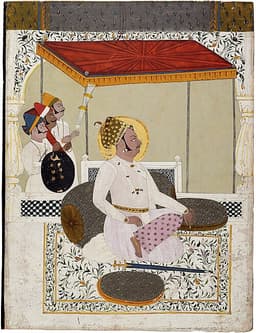
Ajit Singh of Marwar
Emperor · Modern
51.0Total
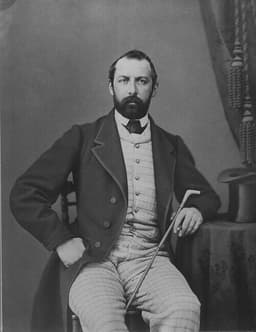
Charles XV of Sweden
Emperor · Modern
43.0Total
Basic Information
Born
1679
1826
Died
1724
1872
Era
Modern
Modern
Nationality
India
Sweden
Occupation
Emperor
Emperor
Civilization
Indian
Western
Score Comparison
Military (10%)
40.0
48.3
Political (20%)
54.7
30.8
Influence (20%)
51.0
49.4
Legacy (20%)
41.7
35.8
Leadership (15%)
74.0
43.6
Strategy (15%)
45.0
57.0
TOTAL
51.0
43.0
Ajit Singh of Marwar — Complete Timeline
1707 AD
Restored to the Throne of JodhpurPolitical Action◆ Major
After Aurangzeb's death, Ajit Singh was restored to the throne of Jodhpur by the Rathore nobles. He had been exiled as a child after his father Jaswant Singh's death and the Mughal annexation of Marwar.
RestorationMarwarRathore
Impact: regionalconstructive
1708 AD
Conflict with the MughalsWar◆ Major
Ajit Singh led a rebellion against the Mughals under Bahadur Shah I. He recaptured Jodhpur and other territories, asserting Marwar's independence after decades of Mughal control.
RebellionMughal EmpireMarwar
Impact: regional
Alliance with the Rajput ConfederacyPolitical Action◆ Major
Ajit Singh joined a confederation of Rajput states, including Mewar and Amber, to resist Mughal expansion. This alliance temporarily weakened Mughal authority in Rajasthan.
AllianceRajputMughal Empire
Impact: regionalconstructive
1724 AD
AssassinationPolitical Action◆ Major
Ajit Singh was assassinated by his own son, Bakht Singh, in a power struggle. This event plunged Marwar into a succession war and weakened the Rathore dynasty.
AssassinationSuccession CrisisMarwar
Impact: regionaltragic
Charles XV of Sweden — Complete Timeline
1859 AD
Accession to the thronePolitical Action◆ Major
Charles XV became King of Sweden and Norway upon the death of his father, Oscar I. His reign began during a period of political reform and growing Scandinavian nationalism.
SuccessionMonarchy
Impact: national
1860 AD
Artistic patronage and paintingCultural
Charles XV was an accomplished painter and patron of the arts. He produced several landscape paintings and supported artists, contributing to the cultural life of Sweden during his reign.
ArtPatronageCulture
Impact: nationalconstructive
1866 AD
Parliamentary reform of 1866Reform◆ Major
Charles XV supported the reform that replaced the four-estate Riksdag with a bicameral parliament. This modernized Sweden's political system, increasing the influence of the middle class and reducing aristocratic power.
Political ReformParliamentModernization
Impact: nationalprogressive
Expert Analysis
Origins
Ajit Singh of Marwar was born around 1679 into the Rathore dynasty, the son of Maharaja Jaswant Singh. After his father's death in 1678, the Mughal emperor Aurangzeb annexed Marwar, and the infant Ajit was smuggled to safety. He grew up in exile among the Rathore nobles, instilled with a resolve to reclaim his kingdom. Charles XV of Sweden was born on May 3, 1826, in Stockholm, the eldest son of King Oscar I and Queen Josephine. He received a thorough education, including military training, and developed a passion for the arts, particularly painting. Unlike Ajit, Charles was raised in a stable monarchy with a tradition of parliamentary governance.
Rise to Power
Ajit Singh's rise was forged in rebellion. After Aurangzeb's death in 1707, the Mughal Empire weakened. Ajit, supported by Rathore nobles, recaptured Jodhpur in 1708 and expelled Mughal garrisons. He allied with other Rajput states—Mewar and Amber—forming a confederacy to resist Mughal authority. By 1710, he had secured Marwar's independence, a significant achievement given Mughal dominance. Charles XV ascended the throne on July 8, 1859, upon his father's death. His rise was peaceful and constitutional, reflecting Sweden's stable monarchy. He was already popular as crown prince for his liberal views and artistic talents.
Leadership & Governance
Ajit Singh ruled as a traditional Rajput king, focusing on military defense and consolidation. He strengthened Marwar's fortifications and maintained independence through alliances. However, his governance was marked by internal strife; his assassination by his son Bakht Singh in 1724 plunged Marwar into civil war. In contrast, Charles XV was a constitutional monarch who supported parliamentary reform. He signed the 1866 reform that replaced the four-estate Riksdag with a bicameral parliament, modernizing Sweden's political system. He also promoted infrastructure and culture, but his political influence was limited by the constitution. His leadership score of 43.6 reflects his constrained role, while Ajit's score of 74.0 indicates stronger personal authority.
Triumph & Tragedy
Ajit Singh's greatest triumph was restoring Rathore rule to Jodhpur and resisting Mughal expansion. He successfully led a rebellion that recaptured lost territories and formed a Rajput confederacy that temporarily weakened Mughal power. His tragedy was his assassination by his own son, a betrayal that shattered Marwar's stability and led to a succession war. Charles XV's triumph was the 1866 parliamentary reform, which laid the foundation for modern Swedish democracy. He also fostered cultural growth through his patronage of the arts. His tragedy was his inability to prevent the rise of Prussian power in the Schleswig-Holstein crisis (1863-64), where Sweden-Norway remained neutral, diminishing Scandinavian influence. His military score of 48.3 reflects this failure, while Ajit's 40.0 reflects his limited military scope.
Character & Destiny
Ajit Singh was determined and resilient, shaped by exile and conflict. His decision-making was driven by a desire for independence, but his willingness to trust his son proved fatal. Historical assessments note his courage but also his inability to secure a stable succession. Charles XV was charismatic and artistic, earning the nickname "the Painter King." His liberal sympathies made him popular, but he lacked the strategic ruthlessness to assert Sweden's power in European affairs. His character led to a peaceful reign but limited geopolitical impact. Ajit's total score of 51.0 surpasses Charles's 43.0, reflecting greater influence in his region.
Legacy
Ajit Singh's legacy is mixed: he restored Rathore pride and independence, but his assassination weakened Marwar, which eventually fell under British influence. He is remembered as a symbol of Rajput resistance. Charles XV's legacy is more institutional: the 1866 parliament reform endured, and his artistic contributions enriched Swedish culture. However, his reign is often seen as a prelude to the more impactful rule of his successor, Oscar II. In terms of long-term impact, Charles's political reforms have a broader legacy, but Ajit's immediate effect on Marwar's history was more profound.
Conclusion
While Charles XV scored higher in strategy and military (57.0 vs 45.0 and 48.3 vs 40.0), Ajit Singh's total score of 51.0 versus 43.0 indicates greater overall impact. Ajit's restoration of Marwar's independence against a major empire like the Mughals was a significant achievement that shaped Rajput history. Charles's reforms were important but within a stable, constitutional framework. Therefore, Ajit Singh of Marwar had a greater impact in his context, despite the tragic end to his reign.
Rankings
🥇
Ajit Singh of MarwarLeader
Mil: 40.0Pol: 54.7Inf: 51.0
51.0
🥈
Charles XV of Sweden
Mil: 48.3Pol: 30.8Inf: 49.4
43.0
+8.0 behind
How This Comparison Works
Algorithm
Each figure is scored on 6 dimensions (0—100 scale) based on structured historical data: Military (10%), Political (20%), Influence (20%), Legacy (20%), Leadership (15%), Strategy (15%). The weighted total produces the final ranking.
Data Sources
Scores are computed from structured sub-indicators in the database. Scale factors adjust for era (Ancient ×0.85, Modern ×1.0) and civilization size (Eastern ×1.05, Other ×0.80) to account for differences in population and military scale.
Maximum 3 Figures
Comparisons are limited to 2—3 figures to ensure readability and statistical meaningfulness.
Error Margins
±5 points per dimension — Sub-scores are derived from historical records with inherent uncertainty. Two figures within 5 points on a dimension should be considered roughly equivalent in that area.
Total Score Accuracy
±3 points overall — The weighted combination of 6 dimensions produces a total score with approximately ±3 points of uncertainty. Differences of less than 3 points are not statistically significant— the figures are effectively tied.
Known Limitations
- Historical records are incomplete and uneven across civilizations
- Figures from oral-tradition societies may be underrepresented
- Occupation labels can misclassify multi-role figures
- Scores measure capability and impact, not moral character
- Quantitative scoring is a comparison tool, not absolute truth
Capability Radar
Military (10%) — Battles & Warfare
Battles
45
22
Win Rate
40
28
Expansion
25
29
Political (20%) — Governance & Reform
Reform
30
25
Diplomacy
45
20
Economy
35
15
Influence (20%) — Cultural & Global Reach
Cultural
30
30
Global
15
5
Legacy (20%) — Historical Impact
Historical
35
15
Longevity
25
10
Leadership (15%) — Power & Stability
Tenure
50
13
Stability
40
20
Strategy (15%) — Tactics & Innovation
Strategy
30
32
Tactics
35
38
Reform
20
41
Similar Comparisons
Comments & Discussion
No comments yet. Be the first to share your thoughts!