Loading...
Charles XV of Sweden vs Napoleon Bonaparte
Napoleon Bonaparte leads by 27.9 pts · 2 figures compared
…
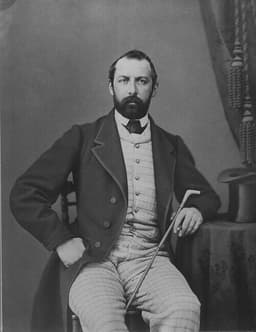
Charles XV of Sweden
Emperor · Modern
43.0Total

Napoleon Bonaparte
General · Modern
70.9Total
Basic Information
Born
1826
1769
Died
1872
1821
Era
Modern
Modern
Nationality
Sweden
France
Occupation
Emperor
General
Civilization
Western
Western
Score Comparison
Military (10%)
48.3
94.0
Political (20%)
30.8
72.0
Influence (20%)
49.4
40.0
Legacy (20%)
35.8
80.0
Leadership (15%)
43.6
78.0
Strategy (15%)
57.0
90.0
TOTAL
43.0
70.9
Charles XV of Sweden — Complete Timeline
1859 AD
Accession to the thronePolitical Action◆ Major
Charles XV became King of Sweden and Norway upon the death of his father, Oscar I. His reign began during a period of political reform and growing Scandinavian nationalism.
SuccessionMonarchy
Impact: national
1860 AD
Artistic patronage and paintingCultural
Charles XV was an accomplished painter and patron of the arts. He produced several landscape paintings and supported artists, contributing to the cultural life of Sweden during his reign.
ArtPatronageCulture
Impact: nationalconstructive
1866 AD
Parliamentary reform of 1866Reform◆ Major
Charles XV supported the reform that replaced the four-estate Riksdag with a bicameral parliament. This modernized Sweden's political system, increasing the influence of the middle class and reducing aristocratic power.
Political ReformParliamentModernization
Impact: nationalprogressive
Napoleon Bonaparte — Complete Timeline
1799 AD
Coup of 18 BrumaireOther◆ Major
Napoleon Bonaparte, with support from his brother Lucien and key political figures, overthrew the Directory in a bloodless coup. He established the Consulate with himself as First Consul, effectively becoming the ruler of France. This event ended the French Revolution's most unstable period.
French RevolutionCoupRise to Power
Impact: regional
1804 AD
Promulgation of the Napoleonic CodeOther◆ Major
Napoleon enacted the Civil Code of the French, known as the Napoleonic Code, a comprehensive set of laws that replaced the fragmented feudal legal systems. The code established legal equality, protected property rights, and secularized law. It became the basis for legal systems in many European and world countries.
Legal ReformNapoleonic CodeCivil Law
Impact: globalconstructive
1805 AD
Battle of AusterlitzWar◆ Major
Napoleon's Grande Arm
Napoleonic WarsBattleDecisive Victory
Impact: global
1812 AD
Invasion of RussiaWar◆ Major
Napoleon led the Grande Arm
Napoleonic WarsInvasionDisaster
Impact: globaldestructive
1815 AD
Battle of WaterlooWar◆ Major
Napoleon's French army was defeated by the combined forces of the Duke of Wellington's Anglo-Allied army and Gebhard Leberecht von Bl
Napoleonic WarsBattleFinal Defeat
Impact: globaldestructive
Expert Analysis
charles-xv-of-sweden-vs-napoleon-bonaparte
# The Emperor and the Artist: Why Napoleon Conquered Continents While Charles XV Painted Landscapes
On a June morning in 1815, Napoleon Bonaparte stood on the muddy fields of Waterloo, watching his Imperial Guard crumble before the Duke of Wellington’s red-coated infantry. Forty-six years later, in a Stockholm palace, King Charles XV of Sweden picked up his paintbrush to capture the soft light of a Scandinavian summer. One man had reshaped the map of Europe with cannon and code; the other had reshaped his kingdom with canvas and parliamentary reform. They were both monarchs, both Europeans of the 19th century, yet their lives could not have diverged more dramatically. The question is not merely what they did, but why.
Origins
Napoleon was born in 1769 on the island of Corsica, a place that had become French only the year before. His family was minor nobility, but impoverished. This bred in him a fierce ambition and a permanent sense of being an outsider—a Corsican who would conquer France itself. He was educated at military academies in Brienne and Paris, where classmates mocked his accent and his poverty. The French Revolution, which erupted when he was twenty, shattered the old order and opened paths that had been closed to men of his birth. For a young artillery officer with genius and hunger, it was the perfect storm.
Charles XV, born in 1826, was the grandson of a French marshal who had become king of Sweden. Jean-Baptiste Bernadotte, Napoleon’s own marshal, had founded the dynasty. Charles grew up in a palace, not a provincial garrison. He was heir to a throne, not a conqueror of one. Sweden was already a constitutional monarchy, a nation that had not fought a major war since 1814. His world was one of stability, not revolution. Where Napoleon had to fight for everything, Charles inherited everything—and that made all the difference.
Rise to Power
Napoleon’s ascent was meteoric and violent. In 1793, at age twenty-four, he drove the British out of Toulon and was promoted to brigadier general. In 1795, he saved the revolutionary government from a royalist uprising with a “whiff of grapeshot.” By 1796, he commanded the Army of Italy, where he astonished Europe with a campaign of breathtaking speed and brilliance—defeating Austrian armies in a matter of weeks. He was thirty when he seized power in the coup of 18 Brumaire (November 1799), and thirty-five when he crowned himself Emperor of the French in Notre Dame in 1804. His rise was a story of will, not birth.
Charles XV’s rise was quiet by comparison. He became king in 1859 upon his father’s death, as European monarchies usually do. There was no coup, no battlefield. His accession was a ceremony, not a conquest. Yet this does not mean he was passive. In 1866, he supported the parliamentary reform that replaced Sweden’s archaic four-estate Riksdag with a modern bicameral legislature—a move that modernized Swedish governance without a single shot fired. His power came from law, not from the sword.
Leadership and Governance
Napoleon governed as he conquered: with overwhelming force and relentless energy. He centralized the French state, created the Bank of France, and most durably, established the Napoleonic Code—a legal framework that influenced civil law across Europe and beyond. But he also placed his brothers on thrones, waged endless war, and bled France dry. By 1812, when he invaded Russia with 600,000 men, his political judgment had been corrupted by military hubris. He could win battles—Austerlitz in 1805, Jena in 1806, Wagram in 1809—but he could not win peace.
Charles XV governed as a constitutional monarch in a small, neutral kingdom. His political score of 47.8 reflects a reign of modest reform, not revolution. He was popular because he did not overreach. He supported the arts, painted landscapes, and wrote poetry. His military score of 32.5 is telling: Sweden had no appetite for war, and neither did he. Where Napoleon saw every border as an insult, Charles saw every canvas as an invitation.
Triumph and Tragedy
Napoleon’s greatest triumph was Austerlitz, December 2, 1805, where he destroyed the combined armies of Russia and Austria. It was his masterpiece: deception, speed, and devastating artillery. His greatest tragedy was the Russian campaign of 1812, where he lost his Grand Army to cold, hunger, and the scorched earth. He returned to France with barely 40,000 men. Exiled to Elba in 1814, he escaped in 1815, only to be defeated at Waterloo and exiled again to Saint Helena, where he died in 1821 at age fifty-one.
Charles XV’s triumphs were quieter. His parliamentary reform of 1866 was a lasting achievement, modernizing Sweden’s political system. His patronage of the arts enriched Swedish culture. His tragedy was that he died young, in 1872 at age forty-six, before he could accomplish more. He left no military glory, but also no catastrophic defeat. His reign was a gentle arc, not a flaming parabola.
Character and Destiny
Napoleon’s character was forged in fire: restless, brilliant, ruthless, and insatiable. He once said, “I live only for posterity.” He could not stop. His ambition was a kind of madness, and it drove him to conquer Europe—and to lose it. His personality shaped his destiny: the outsider who became emperor, the genius who could not govern his own pride.
Charles XV’s character was shaped by peace and privilege. He was an artist-king, not a warrior-king. He said, “I would rather be a good painter than a mediocre king.” His destiny was to reign, not to conquer. He could afford to be gentle because his kingdom was already safe.
Legacy
Napoleon’s legacy is carved into the stone of modern Europe: the Napoleonic Code, the metric system, the redrawing of national borders, the myth of the self-made man. His influence score of 82.0 reflects a figure who changed the world. But his legacy score of 78.0 is tempered by the cost: millions dead, a continent scarred.
Charles XV’s legacy is quieter. He is remembered as a popular king and a patron of the arts. His parliamentary reform helped set Sweden on the path to the stable democracy it enjoys today. His legacy score of 48.9 is modest, but it is the legacy of a man who did not destroy what he built.
Conclusion
Standing at the end of their lives, Napoleon on a remote Atlantic island, Charles in his Stockholm studio, one wonders: Which was the better path? Napoleon conquered the world and lost everything. Charles painted his kingdom and kept it. The difference between them is not just talent or ambition—it is circumstance and choice. Napoleon was born into revolution; Charles into stability. Napoleon chose war; Charles chose art. History remembers the conqueror, but perhaps it should remember the painter who made his people free without making them bleed.
Rankings
🥇
Napoleon BonaparteLeader
Mil: 94.0Pol: 72.0Inf: 40.0
70.9
🥈
Charles XV of Sweden
Mil: 48.3Pol: 30.8Inf: 49.4
43.0
+27.9 behind
How This Comparison Works
Algorithm
Each figure is scored on 6 dimensions (0—100 scale) based on structured historical data: Military (10%), Political (20%), Influence (20%), Legacy (20%), Leadership (15%), Strategy (15%). The weighted total produces the final ranking.
Data Sources
Scores are computed from structured sub-indicators in the database. Scale factors adjust for era (Ancient ×0.85, Modern ×1.0) and civilization size (Eastern ×1.05, Other ×0.80) to account for differences in population and military scale.
Maximum 3 Figures
Comparisons are limited to 2—3 figures to ensure readability and statistical meaningfulness.
Error Margins
±5 points per dimension — Sub-scores are derived from historical records with inherent uncertainty. Two figures within 5 points on a dimension should be considered roughly equivalent in that area.
Total Score Accuracy
±3 points overall — The weighted combination of 6 dimensions produces a total score with approximately ±3 points of uncertainty. Differences of less than 3 points are not statistically significant— the figures are effectively tied.
Known Limitations
- Historical records are incomplete and uneven across civilizations
- Figures from oral-tradition societies may be underrepresented
- Occupation labels can misclassify multi-role figures
- Scores measure capability and impact, not moral character
- Quantitative scoring is a comparison tool, not absolute truth
Capability Radar
Military (10%) — Battles & Warfare
Battles
22
95
Win Rate
28
90
Expansion
29
95
Political (20%) — Governance & Reform
Reform
25
95
Diplomacy
20
80
Economy
15
85
Influence (20%) — Cultural & Global Reach
Cultural
30
85
Global
5
90
Legacy (20%) — Historical Impact
Historical
15
95
Longevity
10
90
Leadership (15%) — Power & Stability
Tenure
13
85
Stability
20
70
Strategy (15%) — Tactics & Innovation
Strategy
32
95
Tactics
38
98
Reform
41
92
Similar Comparisons
Comments & Discussion
WaterlooPainter6/17/2026
As a military historian, I gotta say: comparing Napoleon to Charles XV is like comparing a lion to a housecat. Napoleon reshaped Europe with his Grand Army, winning 60 battles and codifying modern law. Charles painted landscapes and let Parliament run things. One conquered continents; the other conquered a canvas. Let's not pretend these are even in the same league—Napoleon literally changed warfare forever.
画剑争锋6/17/2026
军事史家角度:拿破仑的“大陆封锁体系”差点搞垮英国经济,而查理十五世在干啥?用画笔记录瑞典田园风光。拿破仑打了超60场大战,查理连一场正经仗都没打过。一个是铁血皇帝,一个是文艺国王,差距比波罗的海还大。
StatsSkeptic996/17/2026
Data guy here: the comparison is flawed from the start. Napoleon commanded over 600,000 soldiers at his peak; Charles XV never led an army. Napoleon’s conquests added 44 million subjects; Charles’s reign saw zero territorial gains. The only stat they share? Both died in their 50s. Let's not romanticize: one was a global disruptor, the other a Scandinavian footnote.
古典学者Alpha6/17/2026
从经典统治标准看,拿破仑是柏拉图哲学王的反面:以战争和法典治国,但忽略道德约束。查理十五效仿启蒙君主,推动宪法改革、限制王权,更像亚里士多德的中庸之道。拿破仑成就大,但代价也大;查理政绩小,但更耐心。哪个更符合“好国王”?见仁见智。
RevisionistEye6/17/2026
Revisionist hot take: Charles XV was more effective for Sweden than Napoleon was for France. Napoleon bankrupted France with wars, lost 500,000 men in Russia alone, and ended up exiled. Charles passed liberal reforms, abolished the death penalty in peacetime, and sponsored the arts. Sure, he wasn't flashy, but his legacy lasted longer in Swedish law. Sometimes the painter wins the long game.
双刃剑评6/17/2026
历史爱好者看:拿破仑的《拿破仑法典》至今影响欧洲法律,查理十五的油画在斯德哥尔摩博物馆吃灰。但别忘了——拿破仑把法国拖入二十年战争,人口损失超150万;查理让瑞典和平发展了二十年。一个创造巅峰,一个避免深渊。谁更聪明?看你用哪个计算器了。