Loading...
Baron Waqa vs Harry S. Truman
Harry S. Truman leads by 24.6 pts · 2 figures compared
…

Baron Waqa
Politician · Modern
39.1Total
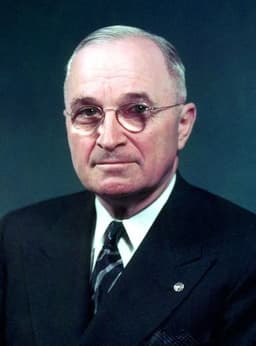
Harry S. Truman
Politician · Modern
63.7Total
Basic Information
Born
1959
1884
Died
—
1972
Era
Modern
Modern
Nationality
Nauru
United States
Occupation
Politician
Politician
Civilization
Other
Western
Score Comparison
Military (10%)
16.7
30.0
Political (20%)
30.8
55.0
Influence (20%)
47.9
68.0
Legacy (20%)
36.7
72.0
Leadership (15%)
48.4
79.8
Strategy (15%)
43.5
55.0
TOTAL
39.1
63.7
Baron Waqa — Complete Timeline
2013 AD
Elected President of NauruPolitical Action◆ Major
Baron Waqa was elected President of Nauru, succeeding Sprent Dabwido. His election marked the beginning of a period of political stability.
ElectionPresidency
Impact: national
Expanded Australian Offshore Processing CenterPolitical Action◆ Major
Waqa's government agreed to expand the Australian offshore immigration detention center on Nauru. This decision was part of Australia's Pacific Solution policy and brought significant foreign aid to Nauru.
ImmigrationAustraliaHuman Rights
Impact: regional
2016 AD
Re-elected in 2016 General ElectionPolitical Action
Waqa was re-elected as President following the 2016 general election. His government continued its close relationship with Australia and maintained the detention center.
Re-electionContinuity
Impact: national
2019 AD
Defeated in 2019 General ElectionPolitical Action◆ Major
Waqa was defeated in the 2019 general election, losing his parliamentary seat. He was succeeded as President by Lionel Aingimea.
Election DefeatPolitical Transition
Impact: national
Harry S. Truman — Complete Timeline
1945 AD
Ordered atomic bombings of Hiroshima and NagasakiWar
Truman authorized the use of atomic bombs against Japan. Hiroshima was bombed on August 6, Nagasaki on August 9. Japan surrendered on August 15, ending World War II. The bombings caused massive civilian casualties and initiated the nuclear age.
World War IINuclear WeaponsJapan
Impact: globaldestructive
1947 AD
Announced the Truman DoctrinePolitical Action◆ Major
Truman declared that the United States would provide political, military, and economic assistance to all democratic nations under threat from authoritarian forces. This policy was first applied to Greece and Turkey, marking the start of the Cold War containment strategy.
Cold WarContainmentForeign Policy
Impact: globalconstructive
1948 AD
Desegregated the U.S. armed forcesReform◆ Major
Truman issued Executive Order 9981, mandating equality of treatment and opportunity for all persons in the armed services regardless of race. This order began the process of racial integration in the U.S. military, a major step in the civil rights movement.
Civil RightsMilitaryDesegregation
Impact: nationalprogressive
Signed the Marshall Plan into lawPolitical Action◆ Major
Truman signed the Economic Cooperation Act, implementing the Marshall Plan. This program provided over $12 billion in economic aid to rebuild Western European economies after World War II, stabilizing the region and countering Soviet influence.
Cold WarEconomic AidEurope
Impact: globalconstructive
1950 AD
Ordered U.S. intervention in the Korean WarWar◆ Major
After North Korea invaded South Korea, Truman committed U.S. forces under a United Nations mandate. The war lasted until 1953, ended in an armistice, and solidified the division of Korea. It also led to the militarization of the Cold War.
Korean WarCold WarMilitary Intervention
Impact: global
Expert Analysis
Origins
Baron Waqa was born in 1959 in Nauru, a small Pacific island nation. He was educated at Nauru College and later studied at the University of the South Pacific. Before entering politics, Waqa was a musician, playing in a band. His background in music and community engagement provided a foundation for his later political career. Harry S. Truman was born in 1884 in Lamar, Missouri, USA. He grew up on a farm, attended local schools, and worked various jobs before serving in World War I as an artillery officer. After the war, he entered politics with support from the Pendergast machine. His humble origins shaped his pragmatic and decisive leadership style.
Rise to Power
Baron Waqa entered Nauruan politics in 2003 as a member of parliament. He served as Minister of Education and later as Minister of Home Affairs. In 2013, he was elected President of Nauru, succeeding Sprent Dabwido. His rise was marked by stability in a tumultuous political landscape. Harry Truman's rise began with his election as a county judge in 1922. He became a U.S. Senator in 1934 and gained national attention through his leadership of the Truman Committee, which exposed waste in wartime production. In 1944, he was selected as Franklin D. Roosevelt's running mate. Upon Roosevelt's death in April 1945, Truman became the 33rd President of the United States.
Leadership & Governance
Baron Waqa's leadership focused on maintaining close ties with Australia. His most significant policy was expanding the Australian offshore immigration detention center on Nauru, part of Australia's Pacific Solution. Waqa's governance was characterized by political stability, but critics noted a lack of transparency and suppression of dissent. He scored 48.4 in leadership and 30.8 in political effectiveness. Harry Truman's leadership was defined by decisive actions: ordering atomic bombings, implementing the Truman Doctrine, and signing the Marshall Plan. He desegregated the armed forces and committed U.S. forces to the Korean War. Truman scored 79.8 in leadership and 55.0 in political effectiveness, reflecting his hands-on approach and willingness to make tough decisions.
Triumph & Tragedy
Baron Waqa's triumphs include maintaining political stability in Nauru and securing economic aid from Australia. However, his expansion of the detention center drew international criticism for human rights abuses. He was defeated in the 2019 general election, losing his parliamentary seat. His legacy is mixed, with a total score of 39.1. Harry Truman's triumphs include ending World War II with atomic bombs, though this remains controversial. He successfully rebuilt Europe via the Marshall Plan and established U.S. containment policy. His tragedy includes the Korean War stalemate and accusations of overstepping executive power. Truman's total score is 63.7, reflecting his significant impact despite controversies.
Character & Destiny
Baron Waqa was known as a pragmatic leader who valued stability and loyalty to allies. His background as a musician gave him a calm demeanor, but he faced criticism for authoritarian tendencies. His character led to a stable but controversial presidency. Harry Truman was known for his blunt honesty and decisiveness. His famous "The buck stops here" motto reflected his accountability. His character shaped his destiny as a leader who made monumental decisions, including the atomic bombings, which defined his presidency and the Cold War era.
Legacy
Baron Waqa's legacy is tied to Nauru's role in Australian immigration policy. He is remembered as a leader who strengthened ties with Australia but at the cost of human rights criticism. His influence score is 47.9, and legacy score is 36.7. Harry Truman's legacy is immense: he set the foundation for American Cold War policy, civil rights progress, and the use of nuclear weapons. His influence score is 68.0, and legacy score is 72.0. The Truman Doctrine and Marshall Plan shaped global alliances for decades.
Conclusion
Harry Truman had a greater impact than Baron Waqa. Truman's decisions affected global politics, ending World War II and shaping the Cold War. His leadership score of 79.8 dwarfs Waqa's 48.4. While Waqa's influence on Nauru is notable, Truman's legacy is global and enduring. The data supports Truman as the more consequential leader, with a total score of 63.7 versus Waqa's 39.1.
Rankings
🥇
Harry S. TrumanLeader
Mil: 30.0Pol: 55.0Inf: 68.0
63.7
🥈
Baron Waqa
Mil: 16.7Pol: 30.8Inf: 47.9
39.1
+24.6 behind
How This Comparison Works
Algorithm
Each figure is scored on 6 dimensions (0—100 scale) based on structured historical data: Military (10%), Political (20%), Influence (20%), Legacy (20%), Leadership (15%), Strategy (15%). The weighted total produces the final ranking.
Data Sources
Scores are computed from structured sub-indicators in the database. Scale factors adjust for era (Ancient ×0.85, Modern ×1.0) and civilization size (Eastern ×1.05, Other ×0.80) to account for differences in population and military scale.
Maximum 3 Figures
Comparisons are limited to 2—3 figures to ensure readability and statistical meaningfulness.
Error Margins
±5 points per dimension — Sub-scores are derived from historical records with inherent uncertainty. Two figures within 5 points on a dimension should be considered roughly equivalent in that area.
Total Score Accuracy
±3 points overall — The weighted combination of 6 dimensions produces a total score with approximately ±3 points of uncertainty. Differences of less than 3 points are not statistically significant— the figures are effectively tied.
Known Limitations
- Historical records are incomplete and uneven across civilizations
- Figures from oral-tradition societies may be underrepresented
- Occupation labels can misclassify multi-role figures
- Scores measure capability and impact, not moral character
- Quantitative scoring is a comparison tool, not absolute truth
Capability Radar
Military (10%) — Battles & Warfare
Battles
19
0
Win Rate
24
0
Expansion
25
0
Political (20%) — Governance & Reform
Reform
20
65
Diplomacy
25
75
Economy
15
60
Influence (20%) — Cultural & Global Reach
Cultural
15
55
Global
10
80
Legacy (20%) — Historical Impact
Historical
10
80
Longevity
10
70
Leadership (15%) — Power & Stability
Tenure
30
70
Stability
10
60
Strategy (15%) — Tactics & Innovation
Strategy
31
70
Tactics
31
0
Reform
35
60
Similar Comparisons
Comments & Discussion
No comments yet. Be the first to share your thoughts!