Loading...
Akhtar Mengal vs Zhang Tingyu
Zhang Tingyu leads by 5.5 pts · 2 figures compared
…

Akhtar Mengal
Politician · Modern
47.5Total
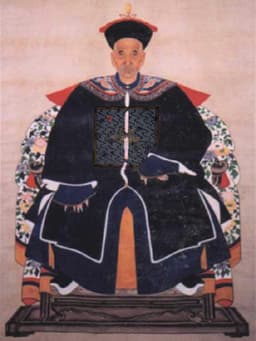
Zhang Tingyu
Politician · Modern
53.0Total
Basic Information
Born
1962
1672
Died
—
1755
Era
Modern
Modern
Nationality
Pakistan
China
Occupation
Politician
Politician
Civilization
Indian
Eastern
Score Comparison
Military (10%)
46.6
11.2
Political (20%)
33.6
59.3
Influence (20%)
51.0
58.0
Legacy (20%)
40.8
54.0
Leadership (15%)
58.8
75.0
Strategy (15%)
60.0
37.4
TOTAL
47.5
53.0
Akhtar Mengal — Complete Timeline
1997 AD
Founded Balochistan National Party (Mengal)Political Action◆ Major
Akhtar Mengal established the Balochistan National Party (Mengal) as a political vehicle for Baloch nationalist aspirations. The party advocated for provincial autonomy and the rights of the Baloch people within Pakistan.
Baloch NationalismPolitical PartyProvincial Autonomy
Impact: regionalconstructive
Elected Chief Minister of BalochistanPolitical Action◆ Major
Mengal became the Chief Minister of Balochistan after his party won the provincial elections. His tenure focused on Baloch rights and development, but he faced opposition from the federal government.
Chief MinisterBalochistanProvincial Government
Impact: regionalconstructive
1998 AD
Resigned as Chief MinisterPolitical Action◆ Major
Mengal resigned as Chief Minister of Balochistan in protest against the federal government's policies, particularly the handling of the Kohlu incident and military operations in the province. His resignation highlighted tensions between Baloch nationalists and the central government.
ResignationProtestFederal Tensions
Impact: regionaldestructive
2006 AD
Arrested and ImprisonedPolitical Action◆ Major
Mengal was arrested by Pakistani authorities on charges of sedition and inciting violence. He was imprisoned for several years, becoming a symbol of Baloch nationalist resistance against state repression.
ArrestImprisonmentBaloch Resistance
Impact: regionaltragic
2008 AD
Released from PrisonPolitical Action
Mengal was released from prison after the new PPP-led government dropped charges against him. His release was part of a broader effort to reconcile with Baloch nationalists, though tensions remained.
ReleaseReconciliationBalochistan
Impact: regionalconstructive
Zhang Tingyu — Complete Timeline
1725 AD
Appointed Grand SecretaryPolitical Action◆ Major
Zhang Tingyu was appointed Grand Secretary of the Qing Empire, serving under the Yongzheng Emperor. He became a central figure in the administration, overseeing state affairs and drafting imperial edicts.
AppointmentGovernmentYongzheng Era
Impact: national
1735 AD
Served as Regent for the Qianlong EmperorPolitical Action◆ Major
Upon the death of the Yongzheng Emperor, Zhang Tingyu was appointed as one of the regents for the young Qianlong Emperor. He helped manage the transition of power and continued to advise the new emperor during the early years of his reign.
RegencySuccessionQianlong Era
Impact: national
1739 AD
Compiled the 'History of Ming'Cultural◆ Major
Zhang Tingyu oversaw the compilation of the official 'History of Ming' (Mingshi), a comprehensive dynastic history of the Ming Dynasty. The work was completed in 1739 and became the standard historical reference for the Ming period.
HistoriographyScholarshipMing Dynasty
Impact: nationalconstructive
1749 AD
Retired from OfficePolitical Action
Zhang Tingyu retired from his official positions after serving three emperors (Kangxi, Yongzheng, Qianlong). His retirement marked the end of a long and influential career in the Qing bureaucracy.
RetirementGovernmentLongevity
Impact: national
Expert Analysis
Origins
**Akhtar Mengal** was born in 1962 in Wadh, Khuzdar District, Balochistan, into a prominent political family. His father, Ataullah Mengal, was the first Chief Minister of Balochistan after the 1970 elections. Growing up amid the tensions of Baloch insurgencies, Mengal was immersed in Baloch nationalist politics from an early age. He studied at the University of Balochistan, where he became involved in student politics, but his formal education was cut short by his entry into full-time political activism.
**Zhang Tingyu** was born in 1672 in Tongcheng, Anhui, during the early Qing dynasty. He came from a scholarly family; his father Zhang Ying was a high-ranking official. Zhang Tingyu passed the imperial examinations in 1700, earning the jinshi degree, which launched his career in the Qing bureaucracy. His early assignments included posts in the Hanlin Academy, where he honed his skills in historiography and administration.
Rise to Power
Akhtar Mengal's rise began with the formation of the Balochistan National Party (Mengal) in 1997, which he founded after splitting from the original Balochistan National Party. The party quickly gained traction among Baloch voters, capitalizing on grievances against the federal government. In the 1997 provincial elections, BNP-Mengal won 12 seats, and Mengal became Chief Minister of Balochistan at age 35. His tenure, however, was short-lived. In 1998, he resigned in protest over the Kohlu incident, where Pakistani forces allegedly killed civilians, and he accused the central government of undermining provincial autonomy.
Zhang Tingyu's rise was more gradual and institutional. After passing the exams, he served in various posts, catching the attention of the Kangxi Emperor. His big break came under the Yongzheng Emperor, who appointed him Grand Secretary in 1726. Zhang became a trusted advisor, helping to implement reforms in taxation and bureaucracy. His loyalty and competence led to his appointment as one of the regents for the young Qianlong Emperor in 1735, placing him at the pinnacle of Qing power.
Leadership & Governance
Mengal's leadership style was confrontational and populist. As Chief Minister, he focused on Baloch rights, pushing for greater provincial autonomy and a larger share of natural resource revenues. He clashed with the federal government over military operations in Balochistan, leading to his resignation. His governance was marked by symbolic acts of defiance, such as boycotting national events. However, his tenure was too short to implement lasting reforms. His political score of 33.6 reflects limited effectiveness in governance.
Zhang Tingyu was a consummate bureaucrat, skilled in navigating court politics. He oversaw the compilation of the 'History of Ming', a monumental work that set the standard for official dynastic histories. As regent, he ensured a smooth transition for Qianlong, maintaining stability. His leadership score of 75.0 indicates high competence in administration. He was known for his integrity and frugality, but also for suppressing dissent, as seen in his role in the literary inquisition.
Triumph & Tragedy
Mengal's greatest triumph was becoming Chief Minister, symbolizing Baloch political empowerment. His resignation and subsequent imprisonment (2006-2008) turned him into a martyred figure for Baloch nationalists. However, his failure to achieve lasting autonomy or address internal party divisions weakened his movement. His influence score of 51.0 reflects his regional significance but limited national impact.
Zhang Tingyu's triumphs include compiling the 'History of Ming', a work still used by historians, and successfully managing the transition to Qianlong's rule. His tragedy came in retirement: he was accused of corruption and his property was confiscated posthumously. Despite his service, the Qianlong Emperor later turned against him, tarnishing his legacy. His legacy score of 54.0 indicates mixed remembrance.
Character & Destiny
Mengal's character was defined by stubbornness and idealism. He refused to compromise on core principles, leading to his downfall. His destiny was shaped by the larger conflict between Baloch nationalism and the Pakistani state. He scored 60.0 in strategy, but his tactical rigidity limited his options.
Zhang Tingyu was cautious and pragmatic. He survived three emperors by adapting to their preferences. His destiny was tied to the Qing system; his fall came when he outlived his usefulness. His strategy score of 37.4 reflects a lack of long-term vision beyond bureaucratic survival.
Legacy
Mengal's legacy is contested. Baloch nationalists view him as a hero; the state sees him as a separatist. His party remains a force in Balochistan, but his vision of autonomy remains unfulfilled. His total score of 47.5 reflects a limited, regional impact.
Zhang Tingyu's legacy is more enduring. The 'History of Ming' remains a standard reference. His administrative reforms influenced Qing governance. However, his association with the literary inquisition casts a shadow. His total score of 53.0 indicates a broader, more systematic impact.
Conclusion
Zhang Tingyu had greater impact. His administrative work shaped a vast empire for generations, while Mengal's influence is confined to a region and a movement. Zhang's total score of 53.0 vs. Mengal's 47.5 reflects this. Zhang's governance and legacy scores (75.0 and 54.0) far exceed Mengal's (58.8 and 40.8). While Mengal's struggle for Baloch rights is significant, it lacks the institutional permanence of Zhang's contributions. The Qing grand secretary's work in historiography and statecraft outlasts the political career of the Baloch nationalist.
Rankings
🥇
Zhang TingyuLeader
Mil: 11.2Pol: 59.3Inf: 58.0
53.0
🥈
Akhtar Mengal
Mil: 46.6Pol: 33.6Inf: 51.0
47.5
+5.5 behind
How This Comparison Works
Algorithm
Each figure is scored on 6 dimensions (0—100 scale) based on structured historical data: Military (10%), Political (20%), Influence (20%), Legacy (20%), Leadership (15%), Strategy (15%). The weighted total produces the final ranking.
Data Sources
Scores are computed from structured sub-indicators in the database. Scale factors adjust for era (Ancient ×0.85, Modern ×1.0) and civilization size (Eastern ×1.05, Other ×0.80) to account for differences in population and military scale.
Maximum 3 Figures
Comparisons are limited to 2—3 figures to ensure readability and statistical meaningfulness.
Error Margins
±5 points per dimension — Sub-scores are derived from historical records with inherent uncertainty. Two figures within 5 points on a dimension should be considered roughly equivalent in that area.
Total Score Accuracy
±3 points overall — The weighted combination of 6 dimensions produces a total score with approximately ±3 points of uncertainty. Differences of less than 3 points are not statistically significant— the figures are effectively tied.
Known Limitations
- Historical records are incomplete and uneven across civilizations
- Figures from oral-tradition societies may be underrepresented
- Occupation labels can misclassify multi-role figures
- Scores measure capability and impact, not moral character
- Quantitative scoring is a comparison tool, not absolute truth
Capability Radar
Military (10%) — Battles & Warfare
Battles
46
14
Win Rate
44
17
Expansion
48
23
Political (20%) — Governance & Reform
Reform
25
75
Diplomacy
30
70
Economy
15
65
Influence (20%) — Cultural & Global Reach
Cultural
30
50
Global
15
40
Legacy (20%) — Historical Impact
Historical
25
60
Longevity
20
55
Leadership (15%) — Power & Stability
Tenure
35
85
Stability
20
80
Strategy (15%) — Tactics & Innovation
Strategy
55
21
Tactics
53
25
Reform
57
28
Similar Comparisons
Comments & Discussion
No comments yet. Be the first to share your thoughts!