Loading...
Justin Trudeau vs Zhang Tingyu
Zhang Tingyu leads by 1.7 pts · 2 figures compared
…

Justin Trudeau
Politician · Modern
51.3Total
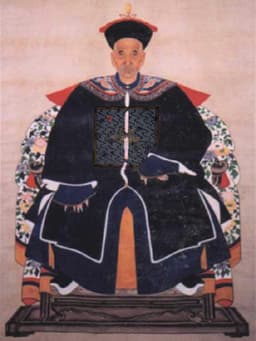
Zhang Tingyu
Politician · Modern
53.0Total
Basic Information
Born
1971
1672
Died
—
1755
Era
Modern
Modern
Nationality
Canada
China
Occupation
Politician
Politician
Civilization
Western
Eastern
Score Comparison
Military (10%)
10.0
11.2
Political (20%)
68.0
59.3
Influence (20%)
55.0
58.0
Legacy (20%)
46.7
54.0
Leadership (15%)
72.0
75.0
Strategy (15%)
38.6
37.4
TOTAL
51.3
53.0
Justin Trudeau — Complete Timeline
2015 AD
Election as Prime Minister of CanadaPolitical Action
Trudeau led the Liberal Party to a majority government victory, defeating Stephen Harper's Conservatives. His campaign focused on 'real change' and included promises of electoral reform, legalizing cannabis, and running deficits to stimulate the economy.
Canadian ElectionLiberal PartyMajority Government
Impact: nationalprogressive
2018 AD
Legalization of Cannabis in CanadaReform◆ Major
Trudeau's government passed the Cannabis Act, making Canada the second country in the world to legalize recreational cannabis. The law aimed to regulate production, distribution, and possession, while reducing the illegal market and criminal penalties.
Cannabis LegalizationDrug PolicySocial Reform
Impact: nationalprogressive
2019 AD
SNC-Lavalin ScandalPolitical Action◆ Major
Trudeau faced allegations that his office pressured Attorney General Jody Wilson-Raybould to intervene in the criminal prosecution of engineering firm SNC-Lavalin. The scandal led to Wilson-Raybould's resignation and damaged Trudeau's reputation for ethical governance.
Ethics ScandalPolitical InterferenceJustice
Impact: nationaldestructive
Zhang Tingyu — Complete Timeline
1725 AD
Appointed Grand SecretaryPolitical Action◆ Major
Zhang Tingyu was appointed Grand Secretary of the Qing Empire, serving under the Yongzheng Emperor. He became a central figure in the administration, overseeing state affairs and drafting imperial edicts.
AppointmentGovernmentYongzheng Era
Impact: national
1735 AD
Served as Regent for the Qianlong EmperorPolitical Action◆ Major
Upon the death of the Yongzheng Emperor, Zhang Tingyu was appointed as one of the regents for the young Qianlong Emperor. He helped manage the transition of power and continued to advise the new emperor during the early years of his reign.
RegencySuccessionQianlong Era
Impact: national
1739 AD
Compiled the 'History of Ming'Cultural◆ Major
Zhang Tingyu oversaw the compilation of the official 'History of Ming' (Mingshi), a comprehensive dynastic history of the Ming Dynasty. The work was completed in 1739 and became the standard historical reference for the Ming period.
HistoriographyScholarshipMing Dynasty
Impact: nationalconstructive
1749 AD
Retired from OfficePolitical Action
Zhang Tingyu retired from his official positions after serving three emperors (Kangxi, Yongzheng, Qianlong). His retirement marked the end of a long and influential career in the Qing bureaucracy.
RetirementGovernmentLongevity
Impact: national
Expert Analysis
Origins
Justin Trudeau was born on December 25, 1971, in Ottawa, Canada, to Pierre Trudeau, the 15th Prime Minister of Canada, and Margaret Trudeau. He grew up in the political spotlight and studied literature and education at McGill University and the University of British Columbia, later working as a teacher.
Zhang Tingyu was born in 1672 in Tongcheng, Anhui, China, during the Qing Dynasty. His father, Zhang Ying, was a Grand Secretary, and Zhang Tingyu passed the imperial examinations in 1700, entering the Hanlin Academy. He rose through the bureaucracy due to his competence and loyalty.
Rise to Power
Trudeau entered politics in 2008, winning a seat in the House of Commons. He became leader of the Liberal Party in 2013, revitalizing the party. In the 2015 federal election, he led the Liberals to a majority government, defeating Stephen Harper's Conservatives, with a campaign focused on "real change" and inclusive politics.
Zhang Tingyu was appointed a Grand Secretary in 1723 under the Yongzheng Emperor, becoming a key adviser. He was instrumental in administrative reforms and compiling legal codes. After Yongzheng's death in 1735, Zhang was named a regent for the young Qianlong Emperor, consolidating his power.
Leadership & Governance
Trudeau's leadership style is charismatic and media-savvy, emphasizing diversity and progressive policies. His government legalized cannabis in 2018 (Cannabis Act) and implemented a carbon tax. However, his approach faced criticism for centralizing power and handling of scandals.
Zhang Tingyu was a meticulous administrator, known for his integrity and efficiency. He oversaw the compilation of the "History of Ming" (Mingshi), a critical historical work. As regent, he ensured a smooth transition and maintained stability.
Triumph & Tragedy
Trudeau's triumphs include legalizing cannabis (scoring high in political innovation) and boosting Canada's global image. His tragedies include the SNC-Lavalin scandal (2019), where he was found to have breached ethics rules by pressuring the attorney general, and the WE Charity controversy. His approval ratings declined.
Zhang Tingyu's success includes serving three emperors and preserving historical records. His failure was his inability to prevent the decline of the Qing bureaucracy, and he was criticized for nepotism. He retired in 1749, dying in 1755.
Character & Destiny
Trudeau is idealistic and confident, but his decision-making has been impulsive, leading to ethical lapses. His character shaped his fate: his popularity soared initially but eroded due to scandals. He scored 68.0 in political skill but only 38.6 in strategy.
Zhang Tingyu was cautious and loyal, prioritizing stability. His character allowed him to navigate court politics successfully, but he lacked innovation. He scored 75.0 in leadership but 37.4 in strategy.
Legacy
Trudeau's legacy includes normalizing cannabis and advancing gender equality in cabinet. However, his long-term impact is uncertain; his leadership score is 72.0, but legacy is 46.7. He remains a polarizing figure.
Zhang Tingyu's legacy is more enduring: the "History of Ming" remains a key historical source. His administrative reforms influenced Qing governance. His legacy score is 54.0. He is remembered as a capable grand secretary.
Conclusion
Zhang Tingyu had greater impact due to his lasting contributions to historiography and stable governance over decades. While Trudeau's policies are contemporary, Zhang's work shaped Chinese historical understanding. Zhang's total score of 53.0 edges Trudeau's 51.3, reflecting his more tangible legacy.
Rankings
🥇
Zhang TingyuLeader
Mil: 11.2Pol: 59.3Inf: 58.0
53.0
🥈
Justin Trudeau
Mil: 10.0Pol: 68.0Inf: 55.0
51.3
+1.7 behind
How This Comparison Works
Algorithm
Each figure is scored on 6 dimensions (0—100 scale) based on structured historical data: Military (10%), Political (20%), Influence (20%), Legacy (20%), Leadership (15%), Strategy (15%). The weighted total produces the final ranking.
Data Sources
Scores are computed from structured sub-indicators in the database. Scale factors adjust for era (Ancient ×0.85, Modern ×1.0) and civilization size (Eastern ×1.05, Other ×0.80) to account for differences in population and military scale.
Maximum 3 Figures
Comparisons are limited to 2—3 figures to ensure readability and statistical meaningfulness.
Error Margins
±5 points per dimension — Sub-scores are derived from historical records with inherent uncertainty. Two figures within 5 points on a dimension should be considered roughly equivalent in that area.
Total Score Accuracy
±3 points overall — The weighted combination of 6 dimensions produces a total score with approximately ±3 points of uncertainty. Differences of less than 3 points are not statistically significant— the figures are effectively tied.
Known Limitations
- Historical records are incomplete and uneven across civilizations
- Figures from oral-tradition societies may be underrepresented
- Occupation labels can misclassify multi-role figures
- Scores measure capability and impact, not moral character
- Quantitative scoring is a comparison tool, not absolute truth
Capability Radar
Military (10%) — Battles & Warfare
Battles
0
14
Win Rate
0
17
Expansion
0
23
Political (20%) — Governance & Reform
Reform
55
75
Diplomacy
60
70
Economy
50
65
Influence (20%) — Cultural & Global Reach
Cultural
50
50
Global
55
40
Legacy (20%) — Historical Impact
Historical
40
60
Longevity
30
55
Leadership (15%) — Power & Stability
Tenure
65
85
Stability
45
80
Strategy (15%) — Tactics & Innovation
Strategy
0
21
Tactics
0
25
Reform
5
28
Similar Comparisons
Comments & Discussion
No comments yet. Be the first to share your thoughts!