Loading...
Al-Ashraf Khalil vs Alexander III of Scotland
Alexander III of Scotland leads by 6.3 pts · 2 figures compared
…
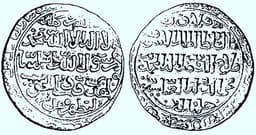
Al-Ashraf Khalil
Emperor · Medieval
49.1Total
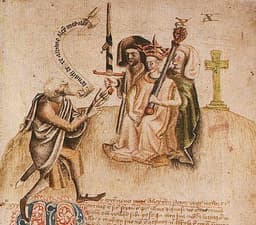
Alexander III of Scotland
Emperor · Medieval
55.4Total
Basic Information
Born
1260
1241
Died
1293
1286
Era
Medieval
Medieval
Nationality
Egypt
Scotland
Occupation
Emperor
Emperor
Civilization
Middle Eastern
Western
Score Comparison
Military (10%)
67.5
50.0
Political (20%)
32.2
68.0
Influence (20%)
55.7
54.1
Legacy (20%)
48.3
49.2
Leadership (15%)
41.5
72.0
Strategy (15%)
52.5
35.7
TOTAL
49.1
55.4
Al-Ashraf Khalil — Complete Timeline
1290 AD
Accession as Sultan (1290)Political Action◆ Major
Al-Ashraf Khalil succeeded his father Qalawun as Sultan of Egypt. He was the second ruler of the Qalawunid dynasty. His accession was contested by some Mamluk factions, but he quickly consolidated power.
SuccessionMamluk SultanateQalawunid Dynasty
Impact: regional
1291 AD
Siege and Capture of Acre (1291)War
Al-Ashraf Khalil led the Mamluk siege of Acre, the last major Crusader stronghold in the Levant. After a six-week siege, the city fell on May 18, 1291. The capture of Acre ended the Crusader presence in the Holy Land.
Crusader WarsSiegeEnd of Crusader States
Impact: globaldestructive
Conquest of Tyre, Sidon, and Beirut (1291)War◆ Major
Following the fall of Acre, Al-Ashraf Khalil's forces captured the remaining Crusader coastal cities of Tyre, Sidon, and Beirut without significant resistance. These conquests completed the Mamluk reconquest of the Levant and eliminated all Crusader footholds.
Crusader WarsConquestMamluk Expansion
Impact: regionaldestructive
1293 AD
Assassination of Al-Ashraf Khalil (1293)Other◆ Major
Al-Ashraf Khalil was assassinated by a group of Mamluk emirs while hunting near Cairo. His death was likely due to internal power struggles. He was succeeded by his young brother An-Nasir Muhammad, beginning a period of instability.
AssassinationSuccessionMamluk Sultanate
Impact: regionaltragic
Alexander III of Scotland — Complete Timeline
1251 AD
Marriage to Margaret of EnglandPolitical Action
Alexander III married Margaret, daughter of Henry III of England, at York Minster. The marriage was intended to secure peace between Scotland and England, but it also gave English kings a claim to interfere in Scottish affairs.
MarriageDiplomacyAnglo-Scottish Relations
Impact: national
1263 AD
Battle of LargsWar◆ Major
Alexander III's forces repelled a Norwegian invasion led by King Haakon IV at Largs in Ayrshire. The battle was indecisive but marked the end of Norwegian attempts to control the Hebrides and the Isle of Man.
BattleNorwegian InvasionHebrides
Impact: regionalconstructive
1266 AD
Treaty of PerthPolitical Action
Alexander III signed the Treaty of Perth with Norway, purchasing the Hebrides and the Isle of Man for 4,000 marks plus an annual payment of 100 marks. This extended Scottish sovereignty over the Western Isles.
TreatyTerritorial ExpansionHebrides
Impact: regionalconstructive
1286 AD
Death of Alexander IIIOther
Alexander III died after falling from his horse while riding from Edinburgh to Kinghorn in Fife during a storm. His death left no surviving legitimate children, triggering a succession crisis that led to the Wars of Scottish Independence.
DeathSuccession CrisisWars of Independence
Impact: nationaltragic
Expert Analysis
Origins
Al-Ashraf Khalil (born c. 1262) was the son of Sultan Qalawun, a powerful Mamluk ruler of Egypt. He was raised in the Mamluk court, a militaristic society where succession was often contested. His father had already begun preparations to besiege Acre but died in 1290, leaving Khalil to assume the throne amid internal rivalries. Alexander III of Scotland (born 1241) was the son of King Alexander II and Marie de Coucy. He became king at age eight, with his minority overseen by regents. His early life was shaped by the need to assert royal authority and manage relations with England and Norway.
Rise to Power
Al-Ashraf Khalil's accession in 1290 was challenged by some emirs who favored his brother. He quickly consolidated power by eliminating rivals and continuing his father's military campaigns. His major turning point was the capture of Acre in 1291, a goal his father had pursued. Alexander III's rise was smoother: he was crowned at Scone in 1249 and took personal control at age 21. He faced a Norwegian threat from King Haakon IV, culminating in the Battle of Largs (1263), where Scottish forces repelled the invasion, leading to the Treaty of Perth in 1266, which secured the Hebrides and Isle of Man for Scotland.
Leadership & Governance
Al-Ashraf Khalil ruled as a military leader, prioritizing expansion and consolidation of Mamluk territory. His governance score of 41.5 reflects a short reign focused on conquest rather than administration. After Acre, he captured Tyre, Sidon, and Beirut, effectively ending Crusader states. However, his reliance on emirs led to internal instability. Alexander III, with a leadership score of 72.0, was a diplomatic and administrative ruler. He maintained peace with England through his marriage to Margaret of England and secured Scotland's borders. His reign saw economic growth and legal reforms, strengthening royal authority.
Triumph & Tragedy
Al-Ashraf Khalil's greatest triumph was the capture of Acre on May 18, 1291, after a six-week siege. This ended 200 years of Crusader presence in the Levant. His tragedy was his assassination in 1293 while hunting, likely by emirs fearing his power. He died young, leaving no lasting dynasty. Alexander III's triumph was the Treaty of Perth, which expanded Scotland's territory without war. His tragedy was his accidental death in 1286, falling from a horse during a storm. This left no surviving heir, triggering a succession crisis that led to the Wars of Scottish Independence.
Character & Destiny
Al-Ashraf Khalil was ambitious and ruthless, but his political score of 32.2 indicates poor management of internal rivalries. His destiny was cut short by assassination, a common end for Mamluk sultans. Alexander III was prudent and diplomatic, with a political score of 68.0. His character fostered stability, yet his sudden death—symbolic of medieval unpredictability—plunged Scotland into chaos. Historians note that his leadership prevented conflict, but his lack of a direct heir undid his achievements.
Legacy
Al-Ashraf Khalil's legacy is tied to the fall of Acre, a pivotal event in Crusader history. His military score of 67.5 reflects his success, but his influence score of 55.7 is limited by his short reign. He is remembered as the conqueror of the Crusaders, but his assassination prevented long-term impact. Alexander III's legacy is more durable: he left Scotland with expanded borders and a period of peace. His leadership score of 72.0 and political acumen are credited with preserving Scottish independence. However, his death inadvertently led to the turmoil that produced figures like William Wallace and Robert the Bruce.
Conclusion
While Al-Ashraf Khalil achieved a spectacular military victory in capturing Acre, his overall impact is outweighed by Alexander III's sustained governance and territorial gains. Alexander's total score of 55.4 versus Khalil's 49.1 reflects this. Khalil's military success was immediate but fleeting; his assassination prevented any lasting political or institutional legacy. Alexander III, despite his tragic end, secured Scotland's borders and maintained peace for two decades. His reign set the stage for a stable kingdom, even if his death unraveled it temporarily. Therefore, Alexander III of Scotland had a greater long-term impact due to his diplomatic achievements and state-building.
Rankings
🥇
Alexander III of ScotlandLeader
Mil: 50.0Pol: 68.0Inf: 54.1
55.4
🥈
Al-Ashraf Khalil
Mil: 67.5Pol: 32.2Inf: 55.7
49.1
+6.3 behind
How This Comparison Works
Algorithm
Each figure is scored on 6 dimensions (0—100 scale) based on structured historical data: Military (10%), Political (20%), Influence (20%), Legacy (20%), Leadership (15%), Strategy (15%). The weighted total produces the final ranking.
Data Sources
Scores are computed from structured sub-indicators in the database. Scale factors adjust for era (Ancient ×0.85, Modern ×1.0) and civilization size (Eastern ×1.05, Other ×0.80) to account for differences in population and military scale.
Maximum 3 Figures
Comparisons are limited to 2—3 figures to ensure readability and statistical meaningfulness.
Error Margins
±5 points per dimension — Sub-scores are derived from historical records with inherent uncertainty. Two figures within 5 points on a dimension should be considered roughly equivalent in that area.
Total Score Accuracy
±3 points overall — The weighted combination of 6 dimensions produces a total score with approximately ±3 points of uncertainty. Differences of less than 3 points are not statistically significant— the figures are effectively tied.
Known Limitations
- Historical records are incomplete and uneven across civilizations
- Figures from oral-tradition societies may be underrepresented
- Occupation labels can misclassify multi-role figures
- Scores measure capability and impact, not moral character
- Quantitative scoring is a comparison tool, not absolute truth
Capability Radar
Military (10%) — Battles & Warfare
Battles
65
20
Win Rate
70
25
Expansion
55
15
Political (20%) — Governance & Reform
Reform
20
55
Diplomacy
35
65
Economy
25
60
Influence (20%) — Cultural & Global Reach
Cultural
30
30
Global
45
25
Legacy (20%) — Historical Impact
Historical
50
55
Longevity
40
40
Leadership (15%) — Power & Stability
Tenure
30
60
Stability
20
70
Strategy (15%) — Tactics & Innovation
Strategy
65
20
Tactics
60
15
Reform
30
10
Similar Comparisons
Comments & Discussion
No comments yet. Be the first to share your thoughts!