Loading...
Muhammad bin Tughluq vs Peter I of Cyprus
Muhammad bin Tughluq leads by 2.7 pts · 2 figures compared
…
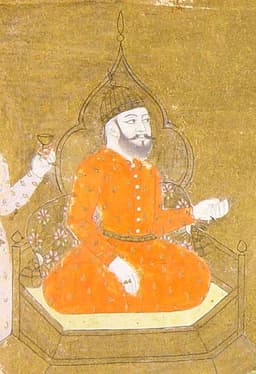
Muhammad bin Tughluq
Emperor · Medieval
48.4Total
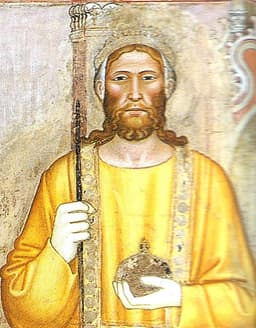
Peter I of Cyprus
Emperor · Medieval
45.7Total
Basic Information
Born
1290
1328
Died
1351
1369
Era
Medieval
Medieval
Nationality
India
Cyprus
Occupation
Emperor
Emperor
Civilization
Indian
Western
Score Comparison
Military (10%)
20.0
20.0
Political (20%)
40.8
40.8
Influence (20%)
57.2
52.5
Legacy (20%)
47.5
42.5
Leadership (15%)
65.0
51.9
Strategy (15%)
43.3
60.0
TOTAL
48.4
45.7
Muhammad bin Tughluq — Complete Timeline
1325 AD
Accession to the Delhi SultanatePolitical Action
Muhammad bin Tughluq succeeded his father Ghiyas-ud-din Tughluq as sultan of Delhi. He inherited a vast empire but soon embarked on ambitious and often controversial policies that would define his reign.
Delhi SultanateTughluqSuccession
Impact: regional
1327 AD
Transfer of Capital to DaulatabadPolitical Action◆ Major
Muhammad bin Tughluq ordered the transfer of the capital from Delhi to Daulatabad in the Deccan, forcing the entire population and administration to move. The plan failed due to water scarcity and logistical issues, and the capital was later moved back to Delhi.
Capital TransferDaulatabadFailed Reform
Impact: regionaldestructive
1329 AD
Introduction of Token CurrencyReform◆ Major
Muhammad bin Tughluq introduced a token currency made of copper and brass, intended to replace silver coins. The government failed to prevent counterfeiting, leading to economic chaos and the eventual withdrawal of the currency at great loss.
Token CurrencyEconomic ReformFailure
Impact: regionaldestructive
1330 AD
Campaign in the Deccan and South IndiaWar◆ Major
Muhammad bin Tughluq led military campaigns into the Deccan and southern India, attempting to consolidate control over the region. He faced rebellions from local rulers, including the Hoysala and Kakatiya, and the campaigns drained the treasury.
DeccanSouthern IndiaRebellion
Impact: regional
1335 AD
Revolt of the Nobility and Provincial GovernorsPolitical Action◆ Major
Muhammad bin Tughluq faced multiple revolts from nobles and provincial governors, including in Bengal, Gujarat, and the Deccan. These rebellions weakened the central authority and led to the fragmentation of the Delhi Sultanate, with the rise of independent states like the Bahmani Sultanate.
RevoltNobilityFragmentation
Impact: regionaldestructive
1340 AD
Famine in Northern IndiaOther◆ Major
A severe famine struck northern India during Muhammad bin Tughluq's reign, exacerbated by his failed economic policies and military campaigns. The famine caused widespread suffering and depopulation, further destabilizing the empire.
FamineEconomic CrisisDepopulation
Impact: regionaltragic
Peter I of Cyprus — Complete Timeline
1361 AD
Capture of AdaliaWar
Peter I captured the city of Adalia (Antalya) on the Anatolian coast from the Hamidid Turks. This victory gave Cyprus a foothold in Asia Minor and boosted Peter's reputation as a crusader king.
CrusadesConquestAnatolia
Impact: regional
1362 AD
Crusade of Peter IPolitical Action◆ Major
Peter I traveled across Europe to promote a new crusade, visiting Avignon, Paris, and London. He secured promises of support from Pope Urban V and various monarchs, though the actual military response was limited.
CrusadesDiplomacyEurope
Impact: regionalconstructive
1365 AD
Sack of AlexandriaWar◆ Major
Peter I led a Crusader fleet to Egypt and sacked the city of Alexandria. The attack was a brutal raid that resulted in massive destruction and loss of life, but failed to hold the city or achieve lasting strategic gains.
CrusadesSackAlexandriaEgypt
Impact: regionaldestructive
1369 AD
AssassinationPolitical Action◆ Major
Peter I was assassinated in his bed in Nicosia by a group of Cypriot nobles. The murder was motivated by his heavy taxation, autocratic rule, and the financial strain of his crusading campaigns.
CyprusAssassinationNobility
Impact: regionaltragic
Expert Analysis
Origins
Muhammad bin Tughluq (born 1290) was the son of Ghiyas-ud-din Tughluq, the founder of the Tughluq dynasty in India. He received a broad education in Islamic theology, philosophy, and military tactics, and accompanied his father on campaigns. His early exposure to administration came as a prince, governing the Deccan region for his father. In contrast, Peter I of Cyprus (born 1328) was the son of King Hugh IV of the Lusignan dynasty. He grew up in the crusader kingdom of Cyprus, a feudal state with a mixed Greek and Latin population. Peter was deeply influenced by the crusading ethos and the desire to reclaim the Holy Land, receiving military training and exposure to European chivalric culture.
Rise to Power
Muhammad bin Tughluq ascended the throne in 1325 after his father's death, which some sources claim he orchestrated. He quickly consolidated power by executing potential rivals and suppressing a rebellion by his nephew. His early reign was marked by ambitious plans to expand the Delhi Sultanate. Peter I became king in 1358 after his father's abdication. His rise was smoother, but he was determined to revive the crusading spirit. In 1362-1365, he traveled across Europe to rally support for a new crusade, meeting Pope Urban V and kings of France and England, securing promises of men and money but little concrete action.
Leadership & Governance
Muhammad bin Tughluq's governance was characterized by radical, often impractical reforms. He attempted to move the entire population of Delhi to Daulatabad in 1327, causing immense suffering and failure. He introduced a token currency backed by copper and brass in 1329, which collapsed due to counterfeiting. His tax policies in the Doab region exacerbated famines. He was known for harsh punishments and arbitrary justice. Peter I ruled Cyprus autocratically, imposing heavy taxes to fund his crusading ambitions. He centralized power, reducing the influence of the nobility. His sack of Alexandria in 1365 was a brutal raid that yielded massive booty but alienated potential allies. Both rulers alienated their elites: Tughluq faced numerous revolts, while Peter was assassinated by nobles.
Triumph & Tragedy
Muhammad bin Tughluq's greatest success was maintaining the Delhi Sultanate's territorial integrity despite rebellions. He repelled Mongol invasions and expanded into the Deccan. However, his failures overshadow his achievements: the failed capital transfer, disastrous currency, and brutal suppression of revolts led to economic decline and loss of life. He died in 1351 while campaigning against rebels in Sindh. Peter I's triumph was the sack of Alexandria in 1365, a stunning military achievement that briefly disrupted Mamluk trade. He also captured Adalia in 1361, giving Cyprus a foothold in Asia Minor. His tragedy was his inability to sustain crusader momentum; the sack was a one-off raid, not a lasting conquest. He was assassinated in 1369 by nobles tired of his taxes and autocracy.
Character & Destiny
Muhammad bin Tughluq was intellectually brilliant but impractical. His decisions often lacked feasibility, and he reacted harshly to dissent. His character combined idealism with cruelty, leading to a legacy of failure. Peter I was a passionate crusader, charismatic but impulsive. He overestimated support for crusading and mismanaged finances. Both were autocrats who faced fatal opposition from their nobility. Tughluq's reign ended in chaos but he died naturally; Peter's ended by assassination.
Legacy
Muhammad bin Tughluq's legacy is one of failed experiments. He is often cited as an example of overambition. His reign weakened the Delhi Sultanate, leading to its fragmentation after his death. However, his attempts at centralization and expansion influenced later rulers. Peter I of Cyprus is remembered as a crusader king who briefly revived the crusading spirit. The sack of Alexandria became a symbol of Christian aggression. However, his assassination and the decline of Cyprus after his death limited his long-term impact. In terms of lasting influence, Muhammad bin Tughluq's total score of 48.4 slightly edges Peter's 45.7, reflecting broader regional impact.
Conclusion
While both rulers failed in their grand ambitions, Muhammad bin Tughluq had a greater impact on Indian history, as his policies shaped the trajectory of the Delhi Sultanate. His failures led to decentralization, while Peter's actions did not alter Mediterranean geopolitics. Thus, Muhammad bin Tughluq holds a slight edge in influence and legacy, supported by his higher total score of 48.4 against Peter's 45.7.
Rankings
🥇
Muhammad bin TughluqLeader
Mil: 20.0Pol: 40.8Inf: 57.2
48.4
🥈
Peter I of Cyprus
Mil: 20.0Pol: 40.8Inf: 52.5
45.7
+2.7 behind
How This Comparison Works
Algorithm
Each figure is scored on 6 dimensions (0—100 scale) based on structured historical data: Military (10%), Political (20%), Influence (20%), Legacy (20%), Leadership (15%), Strategy (15%). The weighted total produces the final ranking.
Data Sources
Scores are computed from structured sub-indicators in the database. Scale factors adjust for era (Ancient ×0.85, Modern ×1.0) and civilization size (Eastern ×1.05, Other ×0.80) to account for differences in population and military scale.
Maximum 3 Figures
Comparisons are limited to 2—3 figures to ensure readability and statistical meaningfulness.
Error Margins
±5 points per dimension — Sub-scores are derived from historical records with inherent uncertainty. Two figures within 5 points on a dimension should be considered roughly equivalent in that area.
Total Score Accuracy
±3 points overall — The weighted combination of 6 dimensions produces a total score with approximately ±3 points of uncertainty. Differences of less than 3 points are not statistically significant— the figures are effectively tied.
Known Limitations
- Historical records are incomplete and uneven across civilizations
- Figures from oral-tradition societies may be underrepresented
- Occupation labels can misclassify multi-role figures
- Scores measure capability and impact, not moral character
- Quantitative scoring is a comparison tool, not absolute truth
Capability Radar
Military (10%) — Battles & Warfare
Battles
55
45
Win Rate
40
40
Expansion
50
40
Political (20%) — Governance & Reform
Reform
40
35
Diplomacy
35
45
Economy
20
30
Influence (20%) — Cultural & Global Reach
Cultural
30
30
Global
25
25
Legacy (20%) — Historical Impact
Historical
45
35
Longevity
30
20
Leadership (15%) — Power & Stability
Tenure
65
40
Stability
15
25
Strategy (15%) — Tactics & Innovation
Strategy
45
50
Tactics
60
55
Reform
30
30
Similar Comparisons
Comments & Discussion
No comments yet. Be the first to share your thoughts!