Loading...
Cyrus the Great vs Napoleon Bonaparte
Cyrus the Great leads by 13.0 pts · 2 figures compared
…
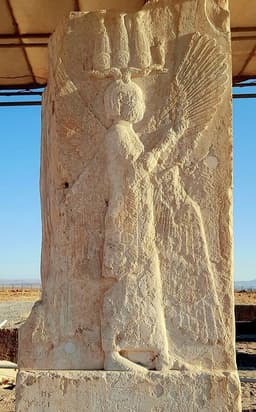
Cyrus the Great
Emperor · Ancient
83.9Total

Napoleon Bonaparte
General · Modern
70.9Total
Basic Information
Born
-600
1769
Died
-530
1821
Era
Ancient
Modern
Nationality
Persia
France
Occupation
Emperor
General
Civilization
Middle Eastern
Western
Score Comparison
Military (10%)
82.0
94.0
Political (20%)
85.0
72.0
Influence (20%)
85.0
40.0
Legacy (20%)
90.0
80.0
Leadership (15%)
78.0
78.0
Strategy (15%)
75.0
90.0
TOTAL
83.9
70.9
Cyrus the Great — Complete Timeline
550 BC
Founding of the Achaemenid EmpirePolitical Action
Cyrus led a rebellion against the Median Empire, defeating King Astyages and capturing Ecbatana. He then united the Persian and Median tribes, establishing the Achaemenid Empire, which became the largest empire the world had yet seen.
Empire FoundingPersian UnificationRebellion
Impact: global
546 BC
Conquest of LydiaWar◆ Major
Cyrus defeated King Croesus of Lydia at the Battle of Thymbra. The Lydian capital Sardis was captured, and Croesus was taken prisoner. This conquest brought Anatolia under Persian control and secured access to the Aegean coast.
Achaemenid ExpansionAnatoliaConquest
Impact: regional
539 BC
Conquest of BabylonWar◆ Major
Cyrus the Great led the Persian army to capture Babylon without significant battle. The city's gates were opened, and Cyrus entered peacefully. This conquest added Mesopotamia to the Achaemenid Empire and marked the end of the Neo-Babylonian Empire.
Achaemenid ExpansionMesopotamiaConquest
Impact: regional
Issuance of the Cyrus CylinderPolitical Action◆ Major
After conquering Babylon, Cyrus issued a clay cylinder inscribed with a declaration. It described his policy of restoring temples, repatriating displaced peoples, and allowing religious freedom. The cylinder is often cited as an early charter of human rights.
Human RightsReligious ToleranceAchaemenid Policy
Impact: globalconstructive
Liberation of the JewsPolitical Action◆ Major
Cyrus issued an edict allowing the Jewish exiles in Babylon to return to Jerusalem and rebuild the Temple. This event is recorded in the biblical Book of Ezra and is a key moment in Jewish history, ending the Babylonian captivity.
Jewish HistoryReligious FreedomReturn from Exile
Impact: regionalconstructive
Napoleon Bonaparte — Complete Timeline
1799 AD
Coup of 18 BrumaireOther◆ Major
Napoleon Bonaparte, with support from his brother Lucien and key political figures, overthrew the Directory in a bloodless coup. He established the Consulate with himself as First Consul, effectively becoming the ruler of France. This event ended the French Revolution's most unstable period.
French RevolutionCoupRise to Power
Impact: regional
1804 AD
Promulgation of the Napoleonic CodeOther◆ Major
Napoleon enacted the Civil Code of the French, known as the Napoleonic Code, a comprehensive set of laws that replaced the fragmented feudal legal systems. The code established legal equality, protected property rights, and secularized law. It became the basis for legal systems in many European and world countries.
Legal ReformNapoleonic CodeCivil Law
Impact: globalconstructive
1805 AD
Battle of AusterlitzWar◆ Major
Napoleon's Grande Arm
Napoleonic WarsBattleDecisive Victory
Impact: global
1812 AD
Invasion of RussiaWar◆ Major
Napoleon led the Grande Arm
Napoleonic WarsInvasionDisaster
Impact: globaldestructive
1815 AD
Battle of WaterlooWar◆ Major
Napoleon's French army was defeated by the combined forces of the Duke of Wellington's Anglo-Allied army and Gebhard Leberecht von Bl
Napoleonic WarsBattleFinal Defeat
Impact: globaldestructive
Expert Analysis
Napoleon Bonaparte vs Cyrus the Great: Historical Comparison
Napoleon Bonaparte, a modern French general and emperor, and Cyrus the Great, an ancient Persian emperor, represent two titans of military and political history separated by over two millennia. While Napoleon excelled in tactical brilliance and rapid conquest, Cyrus prevailed in sustainable statecraft and enduring legacy.
Dimension Analysis
**Military: Napoleon Bonaparte 94 / Cyrus the Great 82**
Napoleon revolutionized warfare with mass conscription, rapid maneuver, and artillery tactics, winning iconic battles like Austerlitz and Jena. Cyrus, though a capable commander, relied more on diplomatic assimilation and siegecraft, with his greatest military achievement being the bloodless conquest of Babylon.
**Political: Napoleon Bonaparte 75 / Cyrus the Great 85**
Napoleon imposed the Napoleonic Code and centralized bureaucracy across Europe but ultimately alienated conquered peoples, leading to his downfall. Cyrus established the first known charter of human rights (the Cyrus Cylinder), granting autonomy to diverse cultures within the Persian Empire—a model of multicultural governance.
**Influence: Napoleon Bonaparte 82 / Cyrus the Great 78**
Napoleon reshaped modern Europe through legal systems, nationalism, and military doctrine, influencing Clausewitz and modern state-building. Cyrus’s influence is subtler but profound: his policies of religious tolerance and local self-rule inspired later empires and even the U.S. Founding Fathers.
**Legacy: Napoleon Bonaparte 78 / Cyrus the Great 80**
Napoleon’s legacy is mixed: he is revered as a military genius but condemned for imperial overreach and millions of war dead. Cyrus is remembered as a benevolent conqueror, with his reputation enduring in Jewish, Persian, and Western traditions as a model of enlightened rule.
**Leadership: Napoleon Bonaparte 80 / Cyrus the Great 80**
Both were charismatic visionaries who inspired fierce loyalty. Napoleon led from the front with personal bravery, while Cyrus led through persuasion and respect for local customs. Their leadership styles were equally effective in their contexts, making this a true tie.
Verdict
Cyrus the Great narrowly leads due to his superior political foresight and more sustainable legacy, despite Napoleon’s unmatched military innovation.
FAQ
Q: Who ranks higher? A: Cyrus the Great slightly edges out Napoleon Bonaparte, winning on political acumen and enduring legacy, while Napoleon dominates in military strategy alone.
Rankings
🥇
Cyrus the GreatLeader
Mil: 82.0Pol: 85.0Inf: 85.0
83.9
🥈
Napoleon Bonaparte
Mil: 94.0Pol: 72.0Inf: 40.0
70.9
+13.0 behind
How This Comparison Works
Algorithm
Each figure is scored on 6 dimensions (0—100 scale) based on structured historical data: Military (10%), Political (20%), Influence (20%), Legacy (20%), Leadership (15%), Strategy (15%). The weighted total produces the final ranking.
Data Sources
Scores are computed from structured sub-indicators in the database. Scale factors adjust for era (Ancient ×0.85, Modern ×1.0) and civilization size (Eastern ×1.05, Other ×0.80) to account for differences in population and military scale.
Maximum 3 Figures
Comparisons are limited to 2—3 figures to ensure readability and statistical meaningfulness.
Error Margins
±5 points per dimension — Sub-scores are derived from historical records with inherent uncertainty. Two figures within 5 points on a dimension should be considered roughly equivalent in that area.
Total Score Accuracy
±3 points overall — The weighted combination of 6 dimensions produces a total score with approximately ±3 points of uncertainty. Differences of less than 3 points are not statistically significant— the figures are effectively tied.
Known Limitations
- Historical records are incomplete and uneven across civilizations
- Figures from oral-tradition societies may be underrepresented
- Occupation labels can misclassify multi-role figures
- Scores measure capability and impact, not moral character
- Quantitative scoring is a comparison tool, not absolute truth
Capability Radar
Military (10%) — Battles & Warfare
Battles
85
95
Win Rate
90
90
Expansion
92
95
Political (20%) — Governance & Reform
Reform
90
95
Diplomacy
95
80
Economy
80
85
Influence (20%) — Cultural & Global Reach
Cultural
90
85
Global
90
90
Legacy (20%) — Historical Impact
Historical
95
95
Longevity
95
90
Leadership (15%) — Power & Stability
Tenure
70
85
Stability
85
70
Strategy (15%) — Tactics & Innovation
Strategy
88
95
Tactics
80
98
Reform
75
92
Similar Comparisons
Comments & Discussion
BattlefieldScholar6/16/2026
Napoleon’s 94 vs Cyrus’s 82 in military scoring is fair but needs context. Napoleon’s Grande Armée tactics—corps system, rapid flanking, and artillery concentration—were revolutionary. At Austerlitz (1805), he defeated a larger Russo-Austrian force through deception and terrain mastery. But let’s look at logistics: Napoleon’s 1812 invasion of Russia failed because he couldn’t secure supply lines, losing 400,000 men. Cyrus’s campaign to capture Babylon in 539 BCE used a simple but effective siege tactic—diverting the Euphrates—and took the city with minimal casualties. That’s efficient, not flashy. Politically, Napoleon alienated Spain (Peninsular War guerrilla losses: 200,000 French casualties) and Russia, while Cyrus built a multicultural empire that lasted 200 years. The 75 political score for Napoleon is generous—his overreach caused his downfall. Give me Cyrus’s sustainable approach over Napoleon’s brilliant but brittle victories any day.
CyrusFan4Life6/16/2026
Are you kidding me? Napoleon’s legacy is a bloody mess! Sure, he won some battles, but his empire collapsed in a decade—meanwhile, Cyrus created the Persian Empire that ruled for two centuries and was actually admired by the people he conquered! The Jewish people called him a messiah for freeing them from Babylon! Napoleon got a 78 legacy score? That’s a joke! He left behind a continent in ruins, millions dead, and a legacy of megalomania. Cyrus’s cylinder is literally considered the first human rights charter—talk about influence. The fact that Napoleon’s military score is 12 points higher than Cyrus’s shows this ranking is obsessed with flashy tactics over real statecraft. Give me a leader who could conquer Babylon without a fight and then let everyone worship their gods—that’s a 10/10 leader, not a guy who needed five coalitions to finally be stopped.
DeepScribe816/16/2026
拿破仑94的军事分和居鲁士82的差距,放在中国史背景下看就很有意思。拿破仑的战术革新确实厉害,但战线一拉长,后勤和民族问题就暴露无遗——这不就是汉武帝晚年的翻版吗?居鲁士的巴比伦征服,靠的不是刀兵而是政治手腕,跟唐太宗收服西域诸国异曲同工。西方评分往往重战术轻治理,居鲁士的'人类第一部人权宪章'(居鲁士圆柱)在政治维度上本该更高,85分还是低估了他为波斯帝国打下的制度根基。拿破仑的拿破仑法典固然影响深远,但居鲁士的多民族自治模式,放在今天看更显前瞻。两人都是开天辟地的人物,但论统治的可持续性,我站居鲁士。
OldScholar226/16/2026
这个打分体系有几点值得商榷。拿破仑军事94 vs 居鲁士82——差了12分,但居鲁士的巴比伦战役(公元前539年)零伤亡夺取城市,利用幼发拉底河改道战术,这放在任何时代都是教科书级操作。拿破仑的奥斯特里茨(1805年)三方兵力对比:法军7.3万对俄奥联军8.6万,歼敌1.5万;居鲁士的吕底亚战役(前546年)用骆驼阵击溃克洛伊索斯骑兵,以少胜多。若按'战果与成本比'算,居鲁士的效率不输拿破仑。政治分85 vs 75合理,但影响力分82 vs 78——居鲁士的治理模式直接影响了马其顿帝国、罗马帝国甚至美国建国者的分权思想,拿破仑的军事革命更多是战术层面。建议引入'制度传承度'指标来修正偏差。