Loading...
Al-Mamun vs Harald Bluetooth
Harald Bluetooth leads by 2.7 pts · 2 figures compared
…
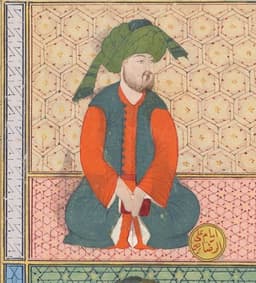
Al-Mamun
Emperor · Medieval
56.6Total
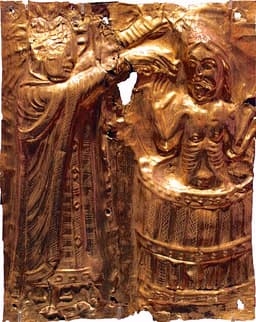
Harald Bluetooth
Emperor · Medieval
59.3Total
Basic Information
Born
786
911
Died
833
985
Era
Medieval
Medieval
Nationality
Abbasid Caliphate
Denmark
Occupation
Emperor
Emperor
Civilization
Middle Eastern
Western
Score Comparison
Military (10%)
30.0
40.0
Political (20%)
70.3
72.0
Influence (20%)
40.0
62.0
Legacy (20%)
65.0
56.0
Leadership (15%)
77.2
70.0
Strategy (15%)
52.5
45.0
TOTAL
56.6
59.3
Al-Mamun — Complete Timeline
813 AD
Victory in the Abbasid Civil WarWar◆ Major
Al-Mamun defeated his brother Al-Amin in a civil war over succession, culminating in the siege of Baghdad. Al-Amin was killed, and Al-Mamun became the sole caliph, but the conflict devastated the city and weakened the caliphate's authority.
Civil WarSuccessionBaghdad
Impact: regionaldestructive
830 AD
Military Campaigns Against the Byzantine EmpireWar
Al-Mamun led multiple campaigns into Byzantine territory, capturing several fortresses including Loulon. These campaigns, though not decisive, secured the eastern frontier and demonstrated Abbasid military capability.
Byzantine WarsMilitary CampaignFrontier
Impact: regional
Foundation of the House of WisdomCultural
Al-Mamun established the Bayt al-Hikma (House of Wisdom) in Baghdad as an academy and library. It became the leading center for translation, research, and scholarship, attracting scholars from diverse backgrounds and advancing mathematics, astronomy, and medicine.
House of WisdomScienceTranslation
Impact: globalconstructive
Astronomical Observations at ShammasiyyaInvention◆ Major
Al-Mamun ordered the construction of an observatory in the Shammasiyya district of Baghdad. Astronomers there made precise measurements of the solar year and planetary movements, improving the accuracy of astronomical tables and influencing later Islamic and European science.
AstronomyObservatoryScience
Impact: globalconstructive
833 AD
Introduction of the Mihna (Inquisition)Political Action◆ Major
Al-Mamun instituted the Mihna, a religious inquisition that required scholars to affirm the doctrine of the createdness of the Quran. This policy persecuted traditionalist scholars like Ahmad ibn Hanbal and created deep divisions within Islamic society.
MihnaReligious PersecutionTheology
Impact: regionaldestructive
Harald Bluetooth — Complete Timeline
958 AD
Unified DenmarkPolitical Action◆ Major
Harald Bluetooth unified the Danish tribes into a single kingdom, consolidating power over Jutland, Zealand, and surrounding islands. This unification laid the foundation for the medieval Danish state and established the Gorm dynasty's rule.
UnificationDenmarkMedieval Kingdom
Impact: regionalconstructive
965 AD
Introduced Christianity to DenmarkCultural◆ Major
Harald Bluetooth converted to Christianity and mandated the conversion of Denmark. He erected the larger Jelling rune stone, which proclaims that he 'made the Danes Christian'. This event marked Denmark's entry into Christian Europe and aligned it with Latin Christendom.
ChristianizationReligionJelling Stones
Impact: regionalconstructive
Built the Jelling monumentsCultural◆ Major
Harald Bluetooth commissioned the Jelling rune stones and burial mounds in memory of his parents. The larger stone, often called 'Denmark's birth certificate', features a depiction of Christ and a runic inscription celebrating his unification of Denmark and Norway.
Jelling StonesMonumentsCultural Heritage
Impact: regionalconstructive
970 AD
Conquered NorwayWar◆ Major
Harald Bluetooth conquered Norway after defeating Earl Hakon Sigurdsson, bringing Norway under Danish rule. This expansion created a short-lived North Sea empire and demonstrated Danish military power in Scandinavia.
ConquestNorwayDanish Empire
Impact: regional
985 AD
Rebelled against by his son Sweyn ForkbeardPolitical Action◆ Major
Harald Bluetooth faced a rebellion led by his son Sweyn Forkbeard, who opposed his father's rule and Christianization policies. The rebellion forced Harald into exile, where he died shortly after, ending his reign and leading to Sweyn's ascension.
RebellionDynastic ConflictExile
Impact: regionaldestructive
Expert Analysis
Origins
Al-Mamun was born in 786 CE in Baghdad, the son of the Abbasid Caliph Harun al-Rashid and a Persian concubine. He received a comprehensive education in Islamic sciences, philosophy, and Greek thought, which shaped his intellectual interests. In contrast, Harald Bluetooth was born around 935 CE in Denmark, the son of King Gorm the Old and Thyra. He grew up in a pagan Viking society, learning the ways of war and leadership. While Al-Mamun was immersed in the multicultural and scholarly environment of the Abbasid court, Harald was raised in a tribal society where power was based on military strength and lineage.
Rise to Power
Al-Mamun's rise was marked by the Abbasid Civil War (811-813 CE) against his brother Al-Amin. After Harun al-Rashid's death, the empire was divided between the two brothers. Al-Mamun, based in Khorasan, defeated Al-Amin's forces and besieged Baghdad, leading to Al-Amin's death in 813 CE. Al-Mamun became caliph but faced resistance from the Baghdad establishment. Harald Bluetooth ascended to the throne around 958 CE after his father Gorm the Old. He consolidated power by unifying the Danish tribes, a process that involved subduing local chieftains and expanding his control over Jutland, Zealand, and the islands. His major turning point was his conversion to Christianity, which he used to align with the Holy Roman Empire and legitimize his rule.
Leadership & Governance
Al-Mamun's leadership was characterized by patronage of learning and religious centralization. He founded the House of Wisdom in Baghdad, which became a leading center for translation and research, attracting scholars from diverse backgrounds. His administration promoted rational theology (Mutazilism) and he instituted the Mihna (inquisition) from 833 CE to enforce the doctrine of the createdness of the Quran. This alienated many traditionalist scholars. Harald Bluetooth's governance focused on unification and Christianization. He built fortifications like the Trelleborg ring castles to control his territory and introduced Christianity as a unifying force. He erected the Jelling rune stones, proclaiming Denmark's conversion. His leadership style was more pragmatic, using religion to consolidate power, whereas Al-Mamun's intellectual pursuits sometimes clashed with religious orthodoxy.
Triumph & Tragedy
Al-Mamun's greatest success was the establishment of the House of Wisdom, which preserved and expanded knowledge, influencing later European Renaissance. He also ordered astronomical observations at Shammasiyya, improving the accuracy of the solar year. His military campaigns against the Byzantine Empire captured fortresses like Loulon but were not decisive. His greatest failure was the Mihna, which created deep divisions in Islamic society and was eventually abandoned by his successors. Harald Bluetooth's triumph was the unification of Denmark and the introduction of Christianity, which brought Denmark into the European fold. The Jelling monuments stand as symbols of his legacy. However, his conquest of Norway was short-lived, and he faced a rebellion from his son Sweyn Forkbeard, who opposed his policies. Harald was forced into exile and died in 986 CE.
Character & Destiny
Al-Mamun was intellectually curious and open to Greek philosophy, but his insistence on the Mihna revealed a dogmatic streak. His character combined a love for knowledge with a desire for control, leading to both innovation and conflict. He scored 77.2 in leadership and 52.5 in strategy. Harald Bluetooth was a pragmatic ruler who used religion as a tool for unification. His willingness to convert and adopt new ideas showed adaptability, but his inability to manage succession led to his downfall. He scored 70.0 in leadership and 45.0 in strategy. Both rulers shaped their destinies through their decisions: Al-Mamun's legacy is intellectual, while Harald's is political and religious.
Legacy
Al-Mamun's House of Wisdom laid the groundwork for the Islamic Golden Age, preserving Greek texts that later fueled the European Renaissance. His support for astronomy and translation had lasting impact. However, the Mihna tarnished his reputation among traditionalists. Harald Bluetooth's legacy is more tangible: the unification of Denmark and the Christianization of Scandinavia. The Bluetooth technology is named after him, symbolizing unification. His Jelling rune stone is considered Denmark's birth certificate. In terms of direct impact, Harald's political unification and religious conversion shaped the future of Scandinavia, while Al-Mamun's intellectual contributions had a broader but more diffuse influence across civilizations.
Conclusion
While Harald Bluetooth scores higher overall (59.3 vs 56.6), Al-Mamun's influence on global knowledge is arguably more profound. However, in terms of concrete political and social transformation, Harald Bluetooth's unification and Christianization of Denmark created a lasting national identity. Taking a stance, Harald Bluetooth had greater impact on his region's long-term development, as his actions directly led to the formation of a unified Danish kingdom and its integration into Christian Europe. Al-Mamun's contributions, though significant, were built upon existing foundations and faced backlash. Therefore, Harald Bluetooth's legacy is more enduring and transformative for his people.
Rankings
🥇
Harald BluetoothLeader
Mil: 40.0Pol: 72.0Inf: 62.0
59.3
🥈
Al-Mamun
Mil: 30.0Pol: 70.3Inf: 40.0
56.6
+2.7 behind
How This Comparison Works
Algorithm
Each figure is scored on 6 dimensions (0—100 scale) based on structured historical data: Military (10%), Political (20%), Influence (20%), Legacy (20%), Leadership (15%), Strategy (15%). The weighted total produces the final ranking.
Data Sources
Scores are computed from structured sub-indicators in the database. Scale factors adjust for era (Ancient ×0.85, Modern ×1.0) and civilization size (Eastern ×1.05, Other ×0.80) to account for differences in population and military scale.
Maximum 3 Figures
Comparisons are limited to 2—3 figures to ensure readability and statistical meaningfulness.
Error Margins
±5 points per dimension — Sub-scores are derived from historical records with inherent uncertainty. Two figures within 5 points on a dimension should be considered roughly equivalent in that area.
Total Score Accuracy
±3 points overall — The weighted combination of 6 dimensions produces a total score with approximately ±3 points of uncertainty. Differences of less than 3 points are not statistically significant— the figures are effectively tied.
Known Limitations
- Historical records are incomplete and uneven across civilizations
- Figures from oral-tradition societies may be underrepresented
- Occupation labels can misclassify multi-role figures
- Scores measure capability and impact, not moral character
- Quantitative scoring is a comparison tool, not absolute truth
Capability Radar
Military (10%) — Battles & Warfare
Battles
45
30
Win Rate
50
35
Expansion
35
45
Political (20%) — Governance & Reform
Reform
85
70
Diplomacy
75
65
Economy
80
50
Influence (20%) — Cultural & Global Reach
Cultural
90
60
Global
75
50
Legacy (20%) — Historical Impact
Historical
85
65
Longevity
80
55
Leadership (15%) — Power & Stability
Tenure
70
60
Stability
65
55
Strategy (15%) — Tactics & Innovation
Strategy
60
40
Tactics
55
25
Reform
40
20
Similar Comparisons
Comments & Discussion
No comments yet. Be the first to share your thoughts!