Loading...
Al-Mansur vs Napoleon Bonaparte
Napoleon Bonaparte leads by 6.2 pts · 2 figures compared
…
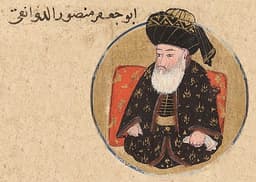
Al-Mansur
Emperor · Medieval
64.7Total

Napoleon Bonaparte
General · Modern
70.9Total
Basic Information
Born
714
1769
Died
775
1821
Era
Medieval
Modern
Nationality
Abbasid Caliphate
France
Occupation
Emperor
General
Civilization
Middle Eastern
Western
Score Comparison
Military (10%)
65.0
94.0
Political (20%)
62.7
72.0
Influence (20%)
65.0
40.0
Legacy (20%)
65.0
80.0
Leadership (15%)
72.0
78.0
Strategy (15%)
55.0
90.0
TOTAL
64.7
70.9
Al-Mansur — Complete Timeline
750 AD
Administrative ReformsReform◆ Major
Al-Mansur established a centralized bureaucracy modeled on Sassanid practices, creating the office of the vizier and a postal service (barid). These reforms improved tax collection, communication, and governance across the vast Abbasid Empire.
BureaucracyGovernanceAdministration
Impact: regionalconstructive
Patronage of Translation MovementCultural◆ Major
Al-Mansur sponsored the translation of Greek, Persian, and Indian scientific and philosophical works into Arabic. This initiative laid the foundation for the Abbasid translation movement, which later flourished under the House of Wisdom and preserved classical knowledge.
TranslationScienceCulture
Impact: globalconstructive
754 AD
Consolidation of Abbasid PowerPolitical Action◆ Major
After the death of his brother As-Saffah, Al-Mansur became the second Abbasid caliph. He systematically eliminated rivals, including the powerful Barmakid family and other potential claimants, to secure his rule and establish the Abbasid dynasty as the sole ruling house.
Dynastic ConsolidationPurgePower Struggle
Impact: regionaldestructive
762 AD
Suppression of the Alid RevoltWar◆ Major
Al-Mansur faced a major rebellion led by Muhammad al-Nafs al-Zakiyya, a descendant of Ali, who claimed the caliphate. The revolt was crushed by Abbasid forces, and Muhammad was killed, solidifying Abbasid control against Alid claimants.
RebellionAlid RevoltCivil War
Impact: regionaldestructive
Foundation of BaghdadPolitical Action◆ Major
Al-Mansur ordered the construction of the new capital city, Baghdad, on the west bank of the Tigris River. The city was designed as a circular 'Round City' and became the administrative and cultural center of the Abbasid Caliphate, replacing the previous capital at Al-Hashimiya.
Urban PlanningCapital CityAbbasid Caliphate
Impact: globalconstructive
Napoleon Bonaparte — Complete Timeline
1799 AD
Coup of 18 BrumaireOther◆ Major
Napoleon Bonaparte, with support from his brother Lucien and key political figures, overthrew the Directory in a bloodless coup. He established the Consulate with himself as First Consul, effectively becoming the ruler of France. This event ended the French Revolution's most unstable period.
French RevolutionCoupRise to Power
Impact: regional
1804 AD
Promulgation of the Napoleonic CodeOther◆ Major
Napoleon enacted the Civil Code of the French, known as the Napoleonic Code, a comprehensive set of laws that replaced the fragmented feudal legal systems. The code established legal equality, protected property rights, and secularized law. It became the basis for legal systems in many European and world countries.
Legal ReformNapoleonic CodeCivil Law
Impact: globalconstructive
1805 AD
Battle of AusterlitzWar◆ Major
Napoleon's Grande Arm
Napoleonic WarsBattleDecisive Victory
Impact: global
1812 AD
Invasion of RussiaWar◆ Major
Napoleon led the Grande Arm
Napoleonic WarsInvasionDisaster
Impact: globaldestructive
1815 AD
Battle of WaterlooWar◆ Major
Napoleon's French army was defeated by the combined forces of the Duke of Wellington's Anglo-Allied army and Gebhard Leberecht von Bl
Napoleonic WarsBattleFinal Defeat
Impact: globaldestructive
Expert Analysis
al-mansur-vs-napoleon-bonaparte
# The Emperor and the Builder: Napoleon and Al-Mansur
On a winter morning in 1805, Napoleon Bonaparte stood before his Grande Armée at Austerlitz, about to crush the combined forces of Austria and Russia in a battle that would seal his reputation as history’s greatest military genius. A thousand years earlier, in the heat of an Iraqi summer, another ruler—Al-Mansur—stood on the west bank of the Tigris River, watching workers lay the first bricks of a city he called Madinat al-Salam, the City of Peace. Both men sought to reshape the world. One did it with cannon and cavalry, the other with calipers and clay. Why did one end in exile on a remote Atlantic island, while the other left behind a dynasty that would last five centuries?
Origins
Napoleon was born in 1769 on the island of Corsica, a land only recently annexed by France. His family was minor nobility, proud and impoverished. He spoke Italian before French, and his childhood was marked by resentment of French domination—a resentment that would later fuel his ambition to dominate Europe. He attended military school on scholarship, where he was mocked for his accent and small stature. This outsider’s fury became the engine of his rise.
Al-Mansur, born in 714, came from a very different world. He was a member of the Abbasid clan, descendants of the Prophet Muhammad’s uncle. His family had spent decades plotting against the Umayyad caliphate, and he was raised in the shadow of conspiracy and calculation. Where Napoleon learned to command soldiers, Al-Mansur learned to read men—their loyalties, their fears, their price. His education was not in artillery manuals but in the subtle arts of patronage, genealogy, and statecraft.
Rise to Power
Napoleon’s ascent was meteoric. In 1793, at age twenty-four, he drove the British out of Toulon with a brilliant artillery plan. By 1796, he commanded the Army of Italy, where he turned a starving, ragged force into a conquering machine. Each victory—Lodi, Arcola, Rivoli—fed his legend. He understood that in revolutionary France, where the old nobility had been swept away, a man could rise on talent alone. He seized that opportunity with both hands.
Al-Mansur’s path was slower, more patient. He did not storm into power; he inherited it. In 754, after the death of his brother As-Saffah, the first Abbasid caliph, Al-Mansur became ruler. But the throne was a cage of threats. He spent the next two decades systematically eliminating rivals—poisoning generals, blinding cousins, crushing rebellions. Where Napoleon fought foreign armies, Al-Mansur fought family, faction, and faith. His rise was not a sprint but a siege.
Leadership & Governance
Napoleon governed through charisma and control. He reformed French law with the Napoleonic Code, standardizing justice and abolishing feudal privileges. He built schools, roads, and a centralized bureaucracy. But his genius was military. At Austerlitz in 1805, with a score of 94.0 in military prowess, he outmaneuvered a larger army by feigning weakness, then striking at the enemy’s center. He led from the front, inspiring men to die for him. Yet his political score of 75.0 reflects a flaw: he could conquer but not consolidate.
Al-Mansur governed through structure. His political score of 72.2 and leadership score of 80.2 show a different kind of ruler. He established the office of the vizier—a prime minister—modeled on Sassanid Persian bureaucracy. He sponsored the translation of Greek, Persian, and Indian works into Arabic, sparking the Translation Movement that would preserve ancient knowledge for centuries. And in 762, he founded Baghdad, a circular city designed as a perfect symbol of order: the caliph’s palace at the center, markets and mosques radiating outward. It became the intellectual capital of the world. Al-Mansur’s military score of 60.4 is modest, but he understood that true power lay not in winning battles but in building systems.
Triumph & Tragedy
Napoleon’s greatest triumph was Austerlitz; his greatest tragedy was Russia. In 1812, he marched six hundred thousand men into the snow, and fewer than a hundred thousand returned. He had underestimated winter, distance, and the Russian refusal to fight a decisive battle. His empire crumbled. In 1815, at Waterloo, his last gamble failed. He died in 1821 on Saint Helena, a prisoner.
Al-Mansur’s tragedy was quieter but no less real. He crushed the Alid revolt in 762, led by Muhammad al-Nafs al-Zakiyya, a descendant of Ali. The rebellion was brutally suppressed—thousands died. But the Alid cause did not die; it simmered, eventually splitting Islam into Sunni and Shia. Al-Mansur built a dynasty, but he also planted the seeds of a schism that lasts to this day.
Character & Destiny
Napoleon was driven by restless ambition. “I am not a man,” he once said, “but a thing.” He saw himself as an instrument of fate, a force of nature. This made him brilliant but brittle—unable to compromise, unable to stop. Al-Mansur was driven by paranoia and piety. He trusted no one, not even his own son. His nickname, al-Mansur, means “the victorious,” but he earned it through vigilance, not valor. One man burned bright and fast; the other burned slow and steady.
Legacy
Napoleon’s legacy is a paradox. He is remembered as a tyrant and a reformer, a conqueror and a codifier. The Napoleonic Code influenced legal systems across Europe and the Americas. His wars killed millions, but they also spread nationalism and modern governance. Today, his score of 78.0 in legacy reflects a man who changed the world but left it in ruins.
Al-Mansur’s legacy is Baghdad. The city he built became the center of the Islamic Golden Age, a place where algebra was invented, where medicine advanced, where scholars from three continents exchanged ideas. His dynasty lasted until 1258, when the Mongols sacked Baghdad. But the knowledge preserved and created under his patronage survived—and eventually helped spark the European Renaissance. His legacy score of 74.8 is lower than Napoleon’s, but perhaps it should be higher. After all, Napoleon’s empire lasted a decade; Al-Mansur’s lasted five hundred years.
Conclusion
One man conquered the world; the other built one. Napoleon believed in the power of the individual—the great man who bends history to his will. Al-Mansur believed in the power of institutions—the city, the bureaucracy, the library. Both were right, and both were wrong. Napoleon’s empire crumbled because it depended on him alone. Al-Mansur’s endured because it outlived him. In the end, the builder may have been wiser than the soldier. For while glory fades, foundations remain.
Rankings
🥇
Napoleon BonaparteLeader
Mil: 94.0Pol: 72.0Inf: 40.0
70.9
🥈
Al-Mansur
Mil: 65.0Pol: 62.7Inf: 65.0
64.7
+6.2 behind
How This Comparison Works
Algorithm
Each figure is scored on 6 dimensions (0—100 scale) based on structured historical data: Military (10%), Political (20%), Influence (20%), Legacy (20%), Leadership (15%), Strategy (15%). The weighted total produces the final ranking.
Data Sources
Scores are computed from structured sub-indicators in the database. Scale factors adjust for era (Ancient ×0.85, Modern ×1.0) and civilization size (Eastern ×1.05, Other ×0.80) to account for differences in population and military scale.
Maximum 3 Figures
Comparisons are limited to 2—3 figures to ensure readability and statistical meaningfulness.
Error Margins
±5 points per dimension — Sub-scores are derived from historical records with inherent uncertainty. Two figures within 5 points on a dimension should be considered roughly equivalent in that area.
Total Score Accuracy
±3 points overall — The weighted combination of 6 dimensions produces a total score with approximately ±3 points of uncertainty. Differences of less than 3 points are not statistically significant— the figures are effectively tied.
Known Limitations
- Historical records are incomplete and uneven across civilizations
- Figures from oral-tradition societies may be underrepresented
- Occupation labels can misclassify multi-role figures
- Scores measure capability and impact, not moral character
- Quantitative scoring is a comparison tool, not absolute truth
Capability Radar
Military (10%) — Battles & Warfare
Battles
60
95
Win Rate
65
90
Expansion
70
95
Political (20%) — Governance & Reform
Reform
85
95
Diplomacy
80
80
Economy
85
85
Influence (20%) — Cultural & Global Reach
Cultural
75
85
Global
75
90
Legacy (20%) — Historical Impact
Historical
80
95
Longevity
85
90
Leadership (15%) — Power & Stability
Tenure
75
85
Stability
70
70
Strategy (15%) — Tactics & Innovation
Strategy
70
95
Tactics
55
98
Reform
75
92
Similar Comparisons
Comments & Discussion
No comments yet. Be the first to share your thoughts!