Loading...
Al-Mansur vs Baldwin I of Jerusalem
Al-Mansur leads by 8.6 pts · 2 figures compared
…
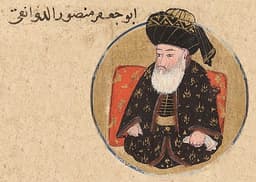
Al-Mansur
Emperor · Medieval
64.7Total
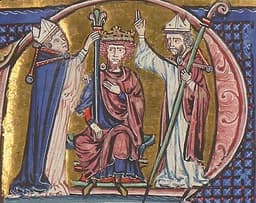
Baldwin I of Jerusalem
Emperor · Medieval
56.1Total
Basic Information
Born
714
1058
Died
775
1118
Era
Medieval
Medieval
Nationality
Abbasid Caliphate
Jerusalem
Occupation
Emperor
Emperor
Civilization
Middle Eastern
Western
Score Comparison
Military (10%)
65.0
72.5
Political (20%)
62.7
46.6
Influence (20%)
65.0
57.2
Legacy (20%)
65.0
50.0
Leadership (15%)
72.0
62.2
Strategy (15%)
55.0
57.5
TOTAL
64.7
56.1
Al-Mansur — Complete Timeline
750 AD
Administrative ReformsReform◆ Major
Al-Mansur established a centralized bureaucracy modeled on Sassanid practices, creating the office of the vizier and a postal service (barid). These reforms improved tax collection, communication, and governance across the vast Abbasid Empire.
BureaucracyGovernanceAdministration
Impact: regionalconstructive
Patronage of Translation MovementCultural◆ Major
Al-Mansur sponsored the translation of Greek, Persian, and Indian scientific and philosophical works into Arabic. This initiative laid the foundation for the Abbasid translation movement, which later flourished under the House of Wisdom and preserved classical knowledge.
TranslationScienceCulture
Impact: globalconstructive
754 AD
Consolidation of Abbasid PowerPolitical Action◆ Major
After the death of his brother As-Saffah, Al-Mansur became the second Abbasid caliph. He systematically eliminated rivals, including the powerful Barmakid family and other potential claimants, to secure his rule and establish the Abbasid dynasty as the sole ruling house.
Dynastic ConsolidationPurgePower Struggle
Impact: regionaldestructive
762 AD
Suppression of the Alid RevoltWar◆ Major
Al-Mansur faced a major rebellion led by Muhammad al-Nafs al-Zakiyya, a descendant of Ali, who claimed the caliphate. The revolt was crushed by Abbasid forces, and Muhammad was killed, solidifying Abbasid control against Alid claimants.
RebellionAlid RevoltCivil War
Impact: regionaldestructive
Foundation of BaghdadPolitical Action◆ Major
Al-Mansur ordered the construction of the new capital city, Baghdad, on the west bank of the Tigris River. The city was designed as a circular 'Round City' and became the administrative and cultural center of the Abbasid Caliphate, replacing the previous capital at Al-Hashimiya.
Urban PlanningCapital CityAbbasid Caliphate
Impact: globalconstructive
Baldwin I of Jerusalem — Complete Timeline
1100 AD
Coronation as First King of JerusalemPolitical Action
Baldwin I was crowned as the first king of Jerusalem on Christmas Day 1100, after the death of his brother Godfrey. He transformed the Crusader state from a lordship into a monarchy, centralizing power and expanding its territory.
CoronationCrusader KingdomJerusalem
Impact: regionalconstructive
1101 AD
Capture of Arsuf and CaesareaWar◆ Major
Baldwin I captured the coastal cities of Arsuf and Caesarea with the help of Genoese and Pisan fleets. These victories secured Crusader control over the Palestinian coast and provided access to Mediterranean trade routes.
ConquestCrusader KingdomCoastal Cities
Impact: regional
1104 AD
Siege of AcreWar◆ Major
Baldwin I besieged and captured the port city of Acre after a four-year blockade, with support from a Genoese fleet. Acre became the most important Crusader port and a major commercial center in the Levant.
SiegeCrusader KingdomAcre
Impact: regional
1105 AD
Defense of the Kingdom against Seljuk AttacksWar◆ Major
Baldwin I defeated a Seljuk Turkish army at the Battle of Ramla in 1105, securing the kingdom's eastern frontier. This victory prevented the Seljuks from recapturing Jerusalem and stabilized Crusader rule.
BattleSeljuksCrusader Kingdom
Impact: regional
1118 AD
Invasion of EgyptWar
Baldwin I led a campaign into Fatimid Egypt, reaching the Nile Delta. He died during the campaign near Al-Arish, possibly from illness. The invasion failed to conquer territory but demonstrated Crusader ambitions beyond the Levant.
InvasionEgyptCrusader Kingdom
Impact: regional
Expert Analysis
Origins
Al-Mansur, born in 714 AD near Mecca, was a member of the Abbasid clan, descending from the Prophet Muhammad's uncle. His early life was shaped by the Abbasid Revolution against the Umayyad Caliphate. He gained administrative experience under his brother As-Saffah, the first Abbasid caliph. Baldwin I, born around 1058 in France, was a son of Count Eustace II of Boulogne. He participated in the First Crusade, initially as a knight seeking fortune. Unlike his brother Godfrey of Bouillon, Baldwin was pragmatic and ambitious, carving out a county in Edessa before becoming king.
Rise to Power
Al-Mansur became caliph in 754 after his brother's death. He immediately faced challenges from rivals, including his uncle Abdullah ibn Ali. He secured power by neutralizing threats through a combination of military force and political maneuvering. His most significant move was founding Baghdad in 762, which centralized Abbasid authority. Baldwin I rose by securing the County of Edessa in 1098 after the death of its ruler. When Godfrey died in 1100, Baldwin rushed to Jerusalem and was crowned king on Christmas Day, transforming the crusader state from a theocratic lordship into a secular monarchy.
Leadership & Governance
Al-Mansur established a centralized bureaucracy inspired by Sassanid practices. He created the office of vizier and a postal service (barid) to monitor provincial governors. He sponsored the translation movement, bringing Greek and Persian knowledge to the Islamic world. His governance was ruthless—he eliminated the Barmakids when they became too powerful. Baldwin I focused on territorial expansion and consolidation. He built alliances with Italian city-states, granting them trade privileges in exchange for naval support. He captured coastal cities like Arsuf (1101) and Caesarea (1101), and after a four-year blockade, Acre in 1104. His governance was militaristic, relying on a feudal system with Latin settlers.
Triumph & Tragedy
Al-Mansur's greatest triumph was founding Baghdad, which became a global center of learning and commerce for centuries. He suppressed the Alid revolt of Muhammad al-Nafs al-Zakiyya in 762, securing Abbasid legitimacy. His administrative reforms created a stable state. However, his paranoia led to the execution of former allies, weakening the caliphate's moral authority. Baldwin I's triumphs include capturing Acre and defeating the Seljuks at Ramla in 1105. He expanded the Kingdom of Jerusalem to its greatest extent. His tragedy was his failed invasion of Egypt in 1118; he died near Al-Arish, possibly from illness, leaving an unfinished campaign.
Character & Destiny
Al-Mansur was cautious, calculating, and ruthless. He trusted few and eliminated potential rivals without hesitation. His decision to build Baghdad reflected strategic vision but also a desire for control. His character ensured the Abbasid dynasty's survival but at the cost of internal discord. Baldwin I was ambitious, energetic, and pragmatic. He prioritized expansion over piety, often clashing with the clergy. His death during the Egyptian campaign highlighted his overreach. Historians note his military skill (score 72.5) but lower political acumen (46.6), as he struggled to maintain unity among crusader factions.
Legacy
Al-Mansur's legacy is immense: Baghdad became the intellectual hub of the Golden Age. His administrative innovations influenced Islamic governance for centuries. The translation movement he sponsored preserved classical knowledge and later spurred European Renaissance. He scored 65.0 in Legacy. Baldwin I's legacy is more limited: he established a viable crusader kingdom that lasted nearly 200 years. His conquests gave the Crusaders a foothold in the Levant. However, his kingdom remained dependent on European support. His Legacy score of 50.0 reflects the eventual collapse of the crusader states.
Conclusion
Al-Mansur had a greater impact than Baldwin I. His total score of 64.7 versus 56.1 reflects his broader influence. While Baldwin I was a competent military leader, his achievements were regional and temporary. Al-Mansur's founding of Baghdad and patronage of learning shaped world history for centuries. His administrative reforms created a model for Islamic governance. Baldwin I's kingdom, though significant, was ultimately unsustainable. Al-Mansur's legacy endures in the cultural and intellectual heritage of the Islamic world, whereas Baldwin's impact faded with the fall of Acre in 1291.
Rankings
🥇
Al-MansurLeader
Mil: 65.0Pol: 62.7Inf: 65.0
64.7
🥈
Baldwin I of Jerusalem
Mil: 72.5Pol: 46.6Inf: 57.2
56.1
+8.6 behind
How This Comparison Works
Algorithm
Each figure is scored on 6 dimensions (0—100 scale) based on structured historical data: Military (10%), Political (20%), Influence (20%), Legacy (20%), Leadership (15%), Strategy (15%). The weighted total produces the final ranking.
Data Sources
Scores are computed from structured sub-indicators in the database. Scale factors adjust for era (Ancient ×0.85, Modern ×1.0) and civilization size (Eastern ×1.05, Other ×0.80) to account for differences in population and military scale.
Maximum 3 Figures
Comparisons are limited to 2—3 figures to ensure readability and statistical meaningfulness.
Error Margins
±5 points per dimension — Sub-scores are derived from historical records with inherent uncertainty. Two figures within 5 points on a dimension should be considered roughly equivalent in that area.
Total Score Accuracy
±3 points overall — The weighted combination of 6 dimensions produces a total score with approximately ±3 points of uncertainty. Differences of less than 3 points are not statistically significant— the figures are effectively tied.
Known Limitations
- Historical records are incomplete and uneven across civilizations
- Figures from oral-tradition societies may be underrepresented
- Occupation labels can misclassify multi-role figures
- Scores measure capability and impact, not moral character
- Quantitative scoring is a comparison tool, not absolute truth
Capability Radar
Military (10%) — Battles & Warfare
Battles
60
55
Win Rate
65
60
Expansion
70
65
Political (20%) — Governance & Reform
Reform
85
40
Diplomacy
80
55
Economy
85
35
Influence (20%) — Cultural & Global Reach
Cultural
75
45
Global
75
40
Legacy (20%) — Historical Impact
Historical
80
55
Longevity
85
45
Leadership (15%) — Power & Stability
Tenure
75
50
Stability
70
30
Strategy (15%) — Tactics & Innovation
Strategy
70
60
Tactics
55
55
Reform
75
30
Similar Comparisons
Comments & Discussion
No comments yet. Be the first to share your thoughts!