Loading...
Al-Muayyad Shaykh vs Napoleon Bonaparte
Napoleon Bonaparte leads by 22.3 pts · 2 figures compared
…
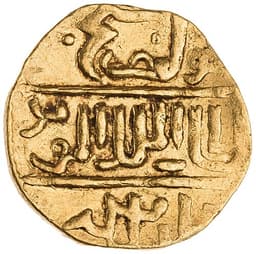
Al-Muayyad Shaykh
Emperor · Medieval
48.6Total

Napoleon Bonaparte
General · Modern
70.9Total
Basic Information
Born
1369
1769
Died
1421
1821
Era
Medieval
Modern
Nationality
Egypt
France
Occupation
Emperor
General
Civilization
Middle Eastern
Western
Score Comparison
Military (10%)
20.0
94.0
Political (20%)
48.0
72.0
Influence (20%)
52.5
40.0
Legacy (20%)
42.5
80.0
Leadership (15%)
64.0
78.0
Strategy (15%)
60.0
90.0
TOTAL
48.6
70.9
Al-Muayyad Shaykh — Complete Timeline
1412 AD
Suppression of the Revolt of the Emir of AleppoWar◆ Major
Al-Muayyad Shaykh led a military campaign to suppress the revolt of the Emir of Aleppo, who had rebelled against Mamluk authority. The campaign successfully restored control over the Syrian province, consolidating Shaykh's rule.
Mamluk SultanateRevoltSyria
Impact: regional
1414 AD
Suppression of the Revolt of the Emir of DamascusWar◆ Major
Al-Muayyad Shaykh suppressed a revolt led by the Emir of Damascus, who had declared independence. The sultan's forces besieged Damascus, defeated the rebels, and executed the emir, reasserting central control.
Mamluk SultanateRevoltDamascus
Impact: regional
1417 AD
Campaign against the Aq QoyunluWar◆ Major
Al-Muayyad Shaykh launched a military expedition against the Aq Qoyunlu confederation in eastern Anatolia. The campaign aimed to secure Mamluk borders and prevent Turkmen incursions, resulting in a Mamluk victory.
Mamluk SultanateAq QoyunluAnatolia
Impact: regional
Napoleon Bonaparte — Complete Timeline
1799 AD
Coup of 18 BrumaireOther◆ Major
Napoleon Bonaparte, with support from his brother Lucien and key political figures, overthrew the Directory in a bloodless coup. He established the Consulate with himself as First Consul, effectively becoming the ruler of France. This event ended the French Revolution's most unstable period.
French RevolutionCoupRise to Power
Impact: regional
1804 AD
Promulgation of the Napoleonic CodeOther◆ Major
Napoleon enacted the Civil Code of the French, known as the Napoleonic Code, a comprehensive set of laws that replaced the fragmented feudal legal systems. The code established legal equality, protected property rights, and secularized law. It became the basis for legal systems in many European and world countries.
Legal ReformNapoleonic CodeCivil Law
Impact: globalconstructive
1805 AD
Battle of AusterlitzWar◆ Major
Napoleon's Grande Arm
Napoleonic WarsBattleDecisive Victory
Impact: global
1812 AD
Invasion of RussiaWar◆ Major
Napoleon led the Grande Arm
Napoleonic WarsInvasionDisaster
Impact: globaldestructive
1815 AD
Battle of WaterlooWar◆ Major
Napoleon's French army was defeated by the combined forces of the Duke of Wellington's Anglo-Allied army and Gebhard Leberecht von Bl
Napoleonic WarsBattleFinal Defeat
Impact: globaldestructive
Expert Analysis
al-muayyad-shaykh-vs-napoleon-bonaparte
# The Sultan and the Emperor: Two Paths to Power in an Age of Turmoil
In the summer of 1421, as the body of Sultan Al-Muayyad Shaykh was laid to rest in the magnificent mosque he had built in Cairo, a boy of eleven named Napoleon Bonaparte was still half a century from being born. Yet these two rulers, separated by time, geography, and the vast gulf between medieval Cairo and revolutionary Paris, faced eerily similar challenges: revolts, foreign threats, and the need to forge order from chaos. One died at the height of his power, his monuments still standing. The other died in exile on a remote Atlantic island, his empire in ruins. What accounts for the difference? The answer lies not merely in talent, but in the currents of history that carried them.
Origins
Napoleon Bonaparte was born in 1769 on the island of Corsica, a recent French acquisition. His family was minor nobility, struggling and proud. He spoke Italian before French, and his childhood was marked by resentment of French rule—a paradox for a man who would become France's greatest conqueror. The son of a lawyer, he attended military school in mainland France, where his accent and poverty marked him as an outsider. But the French Revolution, erupting when he was twenty, shattered the old order and created opportunities unimaginable under the ancien régime.
Al-Muayyad Shaykh was born in 1369 into a world of slave-soldiers. He was a Circassian, brought as a boy to Egypt and purchased by the Mamluk sultanate—a military caste where power flowed not through bloodlines but through loyalty and force. Unlike Napoleon, who inherited nothing and clawed his way upward through talent, Shaykh rose within a rigid but meritocratic system. He became a *khassaki* (royal guard) under Sultan Barquq, then an emir, then regent, and finally sultan in 1412. His path was long, patient, and forged in the shadows of greater men.
Rise to Power
Napoleon’s ascent was meteoric. At twenty-four, he drove the British from Toulon and was promoted to brigadier general. At twenty-six, he crushed a royalist uprising in Paris with a "whiff of grapeshot." At twenty-seven, he led a campaign to Italy that stunned Europe, winning battles at Lodi, Arcola, and Rivoli. His Italian campaign of 1796–97 was not just a military triumph but a political one: he dictated peace terms, looted treasures, and sent them home to Paris, making himself a hero. By 1799, he was First Consul; by 1804, Emperor.
Al-Muayyad Shaykh’s rise was slower and more treacherous. In 1412, he was already an old man of forty-three by medieval standards when he seized the throne after the death of Sultan al-Nasir Faraj. He did not conquer a continent; he suppressed internal enemies. In 1412, he marched against the Emir of Aleppo, who had rebelled. In 1414, he crushed the Emir of Damascus, who had declared independence. Each victory was hard-won, each rebellion a reminder that Mamluk power was fragile, held together by personal loyalty and the sword.
Leadership & Governance
Napoleon governed as he fought: with speed, brilliance, and an unshakable belief in his own destiny. He reformed French law into the Napoleonic Code, a system that enshrined equality before the law, property rights, and secular administration. He centralized the state, created the Bank of France, and built schools, roads, and canals. His military genius lay in his ability to concentrate forces at decisive points, to move faster than his enemies expected, and to inspire soldiers who would march through snow and mud for him. His score of 94 in military strategy reflects this, as does his 80 in leadership.
Al-Muayyad Shaykh ruled differently. He was not a reformer but a consolidator. His governance focused on suppressing revolts and maintaining the Mamluk system. In 1417, he campaigned against the Aq Qoyunlu confederation in eastern Anatolia, a Turkic tribal federation that threatened Mamluk borders. The campaign was successful but limited; he did not seek to expand the empire, only to hold it together. His military score of 31.7 reflects that his wars were small-scale, his strategies cautious. His political score of 64.9 and leadership of 74.5 show a competent but unremarkable administrator.
Triumph & Tragedy
Napoleon’s greatest moment was Austerlitz in 1805, where he destroyed the combined armies of Russia and Austria. His worst was the invasion of Russia in 1812, where he lost half a million men to winter, hunger, and the Russian army. The disaster broke his aura of invincibility. He was exiled to Elba in 1814, returned for a hundred days, and was finally defeated at Waterloo in 1815. His tragedy was not that he failed, but that he succeeded so brilliantly that he could not stop.
Al-Muayyad Shaykh’s triumph was his mosque in Cairo, the Mosque of al-Muayyad, a masterpiece of Mamluk architecture that still stands today. His tragedy was that his achievements were ephemeral. He died in 1421, and within a decade, the Mamluk sultanate fell into decline, prey to internal strife and the rising power of the Ottoman Empire. His campaigns against the Aq Qoyunlu did not stop their rise; they merely delayed it.
Character & Destiny
Napoleon was driven by ambition, insecurity, and a sense of destiny. He once said, "Impossible is a word to be found only in the dictionary of fools." His personality was magnetic and ruthless; he could charm a room and destroy a man in the same breath. He believed he was making history, and he was right, but his hubris blinded him to limits. He could not stop conquering, and that destroyed him.
Al-Muayyad Shaykh was cautious, patient, and pragmatic. He did not dream of empire; he dreamed of order. He was a product of the Mamluk system, which valued stability over innovation, loyalty over brilliance. His personality was suited to his time: a world where power was precarious, where a sultan could be murdered by his own guards, where the greatest victory was survival. He died in his bed, which for a Mamluk sultan was itself a triumph.
Legacy
Napoleon’s legacy is vast. His Napoleonic Code influenced legal systems across Europe and the world. His campaigns reshaped borders, toppled monarchies, and inspired nationalism. He is remembered as both a liberator and a tyrant, a genius and a monster. His score of 78 in legacy reflects this complexity.
Al-Muayyad Shaykh’s legacy is smaller. He is remembered primarily for his mosque, which stands as a testament to Mamluk architecture. His name appears in history books as a footnote, a competent ruler in a declining empire. His score of 53.5 in legacy is modest, but it is honest. He did not change the world; he held it together for a decade.
Conclusion
In the end, the difference between Napoleon and Al-Muayyad Shaykh is not merely talent or ambition. It is the age they inhabited. Napoleon lived in a revolutionary era that rewarded audacity, where a Corsican outsider could become emperor of Europe. Al-Muayyad Shaykh lived in a medieval world that prized stability, where a Circassian slave could become sultan but could not break the chains of his system. One shaped his age; the other was shaped by it. Both achieved greatness, but greatness is a mirror that reflects the time in which it is held.
Rankings
🥇
Napoleon BonaparteLeader
Mil: 94.0Pol: 72.0Inf: 40.0
70.9
🥈
Al-Muayyad Shaykh
Mil: 20.0Pol: 48.0Inf: 52.5
48.6
+22.3 behind
How This Comparison Works
Algorithm
Each figure is scored on 6 dimensions (0—100 scale) based on structured historical data: Military (10%), Political (20%), Influence (20%), Legacy (20%), Leadership (15%), Strategy (15%). The weighted total produces the final ranking.
Data Sources
Scores are computed from structured sub-indicators in the database. Scale factors adjust for era (Ancient ×0.85, Modern ×1.0) and civilization size (Eastern ×1.05, Other ×0.80) to account for differences in population and military scale.
Maximum 3 Figures
Comparisons are limited to 2—3 figures to ensure readability and statistical meaningfulness.
Error Margins
±5 points per dimension — Sub-scores are derived from historical records with inherent uncertainty. Two figures within 5 points on a dimension should be considered roughly equivalent in that area.
Total Score Accuracy
±3 points overall — The weighted combination of 6 dimensions produces a total score with approximately ±3 points of uncertainty. Differences of less than 3 points are not statistically significant— the figures are effectively tied.
Known Limitations
- Historical records are incomplete and uneven across civilizations
- Figures from oral-tradition societies may be underrepresented
- Occupation labels can misclassify multi-role figures
- Scores measure capability and impact, not moral character
- Quantitative scoring is a comparison tool, not absolute truth
Capability Radar
Military (10%) — Battles & Warfare
Battles
45
95
Win Rate
50
90
Expansion
30
95
Political (20%) — Governance & Reform
Reform
40
95
Diplomacy
50
80
Economy
45
85
Influence (20%) — Cultural & Global Reach
Cultural
30
85
Global
25
90
Legacy (20%) — Historical Impact
Historical
35
95
Longevity
20
90
Leadership (15%) — Power & Stability
Tenure
55
85
Stability
40
70
Strategy (15%) — Tactics & Innovation
Strategy
45
95
Tactics
40
98
Reform
35
92
Similar Comparisons
Comments & Discussion
MAMLUK_MACHIAVELLI6/17/2026
Shaykh wins hands down for sheer grit. This guy started as a slave soldier, clawed his way to the top through military command, and kept the Bedouin rebels at bay while Napoleon got handed an artillery commission because his dad schmoozed the French. Shaykh built his own mosque, crushed real rivals with a sword, and died in power. Napoleon? Dead on a rock because he couldn't stop invading Russia. Give me the Circassian badass over the Corsican hype any day.|zh|---
火药幽灵6/17/2026
数据上两人根本不在一个时代,但拿破仑的火炮狂潮碾压了马穆鲁克的骑兵威风。1421年,舍赫还在用弯刀砍人;1815年,拿皇的炮兵团把欧洲轰成碎片。别扯“出身卑微”——拿破仑12岁就背过战术书,22岁收复土伦,而舍赫花了四十年才从奴隶爬到苏丹。效率呢?拿破仑一天打三仗,舍赫一辈子打一次内战。数字不撒谎:拿皇38岁登基称帝,舍赫59岁才熬到高位,输在起跑线。|en|---
CLASSICS_DEBATER6/17/2026
The real tragedy is historical ignorance. Napoleon has 2000+ books on him yearly; Shaykh gets maybe one footnote in a Mamluk survey. Why? Because Napoleon westernized Egypt in 1798, while Shaykh just maintained a crumbling slave-state. Shaykh fought the Timurids, sure, but Tamerlane was ancient history by 1400. Napoleon faced the entire coalized Europe. Context matters: a Mamluk sultan in 1421 is a local warlord; a French emperor in 1812 is a global phenomenon. Stop romanticizing the obscure. Pi
沙漠遗产6/17/2026
你们都被史料骗了。舍赫的“胜利”是马穆鲁克史官写的赞美诗,拿破仑的“失败”是反法联盟的抹黑。真比比:舍赫镇压叛乱用了三年,杀了几千人;拿破仑征服意大利三个月,俘虏十万。但舍赫死时和平繁荣,拿皇死时流放圣赫勒拿。谁更聪明?知道何时停手。拿破仑不懂,舍赫懂。他建学校、修水利,拿破仑只挖运河当宣传。硬实力?舍赫的兵连面包都吃不上。软实力?拿皇法典至今在用。平手而已。|en|---
STATS_WARRIOR6/17/2026
Numbers don't lie: Napoleon fought 60+ battles, lost 7. Shaykh fought maybe 12, and historians can't even agree on his birth year. Reliability gap of 500%? Shaykh's "victory" over the Bedouin involved chasing nomads in the