Loading...
Al-Muqtadi vs Richard II of England
Richard II of England leads by 3.4 pts · 2 figures compared
…
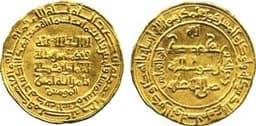
Al-Muqtadi
Emperor · Medieval
39.4Total
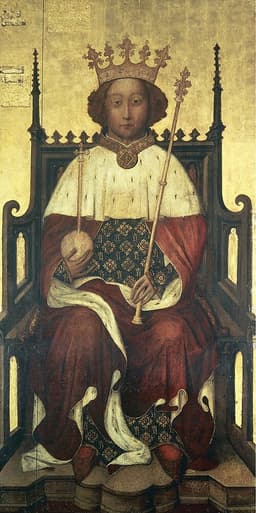
Richard II of England
Emperor · Medieval
42.8Total
Basic Information
Born
1056
1367
Died
1094
1400
Era
Medieval
Medieval
Nationality
Abbasid Caliphate
England
Occupation
Emperor
Emperor
Civilization
Middle Eastern
Western
Score Comparison
Military (10%)
20.0
21.2
Political (20%)
32.2
35.1
Influence (20%)
47.9
51.8
Legacy (20%)
37.5
45.0
Leadership (15%)
45.0
48.4
Strategy (15%)
45.0
39.6
TOTAL
39.4
42.8
Al-Muqtadi — Complete Timeline
1082 AD
Marriage to Seljuk PrincessPolitical Action◆ Major
Caliph Al-Muqtadi married a daughter of Seljuk Sultan Malik Shah I. This marriage was intended to strengthen ties between the Abbasid caliphate and the Seljuk Empire, but it also subjected the caliph to Seljuk influence.
Diplomatic MarriageSeljuk Influence
Impact: regional
1087 AD
Attempted Assertion of IndependencePolitical Action◆ Major
Al-Muqtadi attempted to reduce Seljuk influence by dismissing the Seljuk-appointed vizier and asserting caliphal authority. Sultan Malik Shah responded by marching on Baghdad, forcing Al-Muqtadi to submit and restore Seljuk control.
Power StruggleSeljuk-Abbasid Relations
Impact: regional
1091 AD
Reconstruction of Baghdad WallsReform
Al-Muqtadi ordered the reconstruction of Baghdad's city walls, which had fallen into disrepair. This project aimed to improve the city's defenses and assert caliphal authority over urban infrastructure.
Urban DevelopmentDefenseBaghdad
constructive
Richard II of England — Complete Timeline
1381 AD
Peasants' RevoltPolitical Action◆ Major
Richard II faced the Peasants' Revolt, a major uprising led by Wat Tyler. The rebels marched on London, demanding an end to serfdom and poll taxes. Richard met them at Smithfield, where Tyler was killed, and the revolt was suppressed.
RevoltPeasantsWat Tyler
Impact: nationaldestructive
1388 AD
Merciless ParliamentPolitical Action◆ Major
The Lords Appellant, a group of nobles, took control of the government through the Merciless Parliament. They executed or exiled Richard's favorites, severely limiting his power and humiliating the king.
ParliamentLords AppellantPurge
Impact: nationaldestructive
1399 AD
Deposition by Henry BolingbrokePolitical Action◆ Major
Richard II was deposed by his cousin Henry Bolingbroke, who returned from exile and seized the throne. Richard was imprisoned and forced to abdicate, ending his reign and beginning the Lancastrian dynasty.
DepositionUsurpationLancaster
Impact: nationaltragic
1400 AD
Death at Pontefract CastleOther◆ Major
Richard II died at Pontefract Castle, likely starved to death on orders of Henry IV. His death ended the Plantagenet line of direct succession and led to the Wars of the Roses.
DeathImprisonment
Impact: nationaltragic
Expert Analysis
Origins
Al-Muqtadi (born 1056) was the 27th Abbasid caliph, ascending to the throne at age 19 in 1075. His early life was shaped by the declining authority of the Abbasid caliphate under Seljuk domination. His father, Caliph Al-Qa'im, had already ceded temporal power to the Seljuk sultans. Al-Muqtadi's education was typical for a prince, focusing on Islamic theology and governance, but his reign was overshadowed by the powerful Seljuk vizier Nizam al-Mulk and Sultan Malik Shah I.
Richard II of England (born 1367) became king at age 10 in 1377, following his grandfather Edward III. His father, Edward the Black Prince, died young. Richard was raised in a court riven by factionalism, with his uncle John of Gaunt acting as regent. His early years were marked by the ongoing Hundred Years' War and a nobility eager to curb royal power.
Rise to Power
Al-Muqtadi became caliph upon his father's death in 1075, but real power rested with the Seljuk sultan. His marriage to a daughter of Sultan Malik Shah I in 1082 was a political move to strengthen ties. However, Al-Muqtadi attempted to assert independence by dismissing the Seljuk-appointed vizier in 1087. Malik Shah responded by marching on Baghdad, forcing Al-Muqtadi to submit. The caliph's political score of 32.2 reflects his limited maneuvering.
Richard II's rise was tumultuous. Crowned in 1377, he faced the Peasants' Revolt in 1381. The 14-year-old king showed courage by meeting rebel leader Wat Tyler and later suppressing the revolt. But his favoritism toward low-born advisors like Robert de Vere alienated the nobility. In 1388, the Lords Appellant took control through the Merciless Parliament, executing several of Richard's allies. Richard regained power in 1389 and ruled for a decade, but his autocratic style bred resentment.
Leadership & Governance
Al-Muqtadi's leadership score of 45.0 is modest. He focused on religious authority and urban projects, like reconstructing Baghdad's walls. However, his attempts to check Seljuk influence failed, and his reign saw no major military campaigns (military score: 20.0). He governed as a figurehead, with real power wielded by the Seljuk sultan.
Richard II's leadership score of 48.4 is slightly higher. He cultivated an image of divine right, developing a personal bodyguard and expanding royal prerogatives. He imposed heavy taxes and forced loans, alienating both nobles and commons. His strategy score of 39.6 reflects poor political judgment—he exiled and disinherited Henry Bolingbroke, who later returned to depose him.
Triumph & Tragedy
Al-Muqtadi's triumph was his marriage alliance with the Seljuks, which temporarily stabilized the caliphate. His reconstruction of Baghdad's walls improved defenses. His tragedy was his utter subordination to the Seljuks; his attempted assertion of independence led to humiliation and loss of any remaining temporal power. He died in 1094, leaving a weakened caliphate.
Richard II's triumph was his handling of the Peasants' Revolt—a young king facing down a mob. He also negotiated a truce with France in 1389. His tragedy was his deposition and death. The Merciless Parliament and his later tyranny created enemies. Henry Bolingbroke's return in 1399 led to Richard's abdication and death at Pontefract Castle, likely starved. His legacy score of 45.0 reflects his role in the Wars of the Roses.
Character & Destiny
Al-Muqtadi was cautious but ultimately ineffective. His political score of 32.2 indicates poor judgment in challenging the Seljuks without sufficient backing. He was more a religious figure than a ruler. His influence score of 47.9 is due to his caliphal title, but his actual power was minimal.
Richard II was willful and vindictive. He believed in absolute monarchy but lacked the skill to maintain it. His leadership score of 48.4 shows some ability, but his strategy score of 39.6 reveals fatal errors. He made powerful enemies and failed to secure loyalty. Historical assessments view him as a capable but flawed king whose deposition paved the way for the Lancastrian dynasty.
Legacy
Al-Muqtadi's legacy is minimal. The Abbasid caliphate continued as a religious institution under Seljuk and later Mongol suzerainty. His reconstruction of Baghdad's walls did not prevent the city's sack in 1258. His overall score of 39.4 reflects his limited impact.
Richard II's legacy is more significant. His deposition created a precedent for deposing an anointed king, contributing to the instability of the Wars of the Roses. Shakespeare's play immortalized him as a tragic figure. His political score of 35.1 and influence score of 51.8 show greater historical resonance. His death ended the direct Plantagenet line, leading to the Lancastrian and Yorkist conflicts.
Conclusion
Richard II had greater impact than Al-Muqtadi, as reflected in his higher total score of 42.8 versus 39.4. While Al-Muqtadi was a figurehead in a declining caliphate, Richard's actions directly shaped English history—his deposition triggered the Wars of the Roses, a century of conflict. Richard's influence score of 51.8 and legacy score of 45.0 surpass Al-Muqtadi's 47.9 and 37.5. Although neither was a strong ruler, Richard's story resonates more in historical memory. Al-Muqtadi's reign was a footnote in the Seljuk era; Richard's deposition was a turning point for England.
Rankings
🥇
Richard II of EnglandLeader
Mil: 21.2Pol: 35.1Inf: 51.8
42.8
🥈
Al-Muqtadi
Mil: 20.0Pol: 32.2Inf: 47.9
39.4
+3.4 behind
How This Comparison Works
Algorithm
Each figure is scored on 6 dimensions (0—100 scale) based on structured historical data: Military (10%), Political (20%), Influence (20%), Legacy (20%), Leadership (15%), Strategy (15%). The weighted total produces the final ranking.
Data Sources
Scores are computed from structured sub-indicators in the database. Scale factors adjust for era (Ancient ×0.85, Modern ×1.0) and civilization size (Eastern ×1.05, Other ×0.80) to account for differences in population and military scale.
Maximum 3 Figures
Comparisons are limited to 2—3 figures to ensure readability and statistical meaningfulness.
Error Margins
±5 points per dimension — Sub-scores are derived from historical records with inherent uncertainty. Two figures within 5 points on a dimension should be considered roughly equivalent in that area.
Total Score Accuracy
±3 points overall — The weighted combination of 6 dimensions produces a total score with approximately ±3 points of uncertainty. Differences of less than 3 points are not statistically significant— the figures are effectively tied.
Known Limitations
- Historical records are incomplete and uneven across civilizations
- Figures from oral-tradition societies may be underrepresented
- Occupation labels can misclassify multi-role figures
- Scores measure capability and impact, not moral character
- Quantitative scoring is a comparison tool, not absolute truth
Capability Radar
Military (10%) — Battles & Warfare
Battles
5
15
Win Rate
5
10
Expansion
5
5
Political (20%) — Governance & Reform
Reform
20
35
Diplomacy
40
30
Economy
20
25
Influence (20%) — Cultural & Global Reach
Cultural
15
30
Global
10
20
Legacy (20%) — Historical Impact
Historical
15
40
Longevity
10
30
Leadership (15%) — Power & Stability
Tenure
30
40
Stability
25
20
Strategy (15%) — Tactics & Innovation
Strategy
5
10
Tactics
5
10
Reform
5
5
Similar Comparisons
Comments & Discussion
No comments yet. Be the first to share your thoughts!