Loading...
Al-Muqtadi vs Yejong of Goryeo
Yejong of Goryeo leads by 8.2 pts · 2 figures compared
…
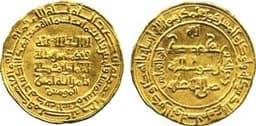
Al-Muqtadi
Emperor · Medieval
39.4Total

Yejong of Goryeo
Emperor · Medieval
47.6Total
Basic Information
Born
1056
1079
Died
1094
1122
Era
Medieval
Medieval
Nationality
Abbasid Caliphate
Korea
Occupation
Emperor
Emperor
Civilization
Middle Eastern
Eastern
Score Comparison
Military (10%)
20.0
53.8
Political (20%)
32.2
39.4
Influence (20%)
47.9
54.1
Legacy (20%)
37.5
44.2
Leadership (15%)
45.0
45.0
Strategy (15%)
45.0
50.0
TOTAL
39.4
47.6
Al-Muqtadi — Complete Timeline
1082 AD
Marriage to Seljuk PrincessPolitical Action◆ Major
Caliph Al-Muqtadi married a daughter of Seljuk Sultan Malik Shah I. This marriage was intended to strengthen ties between the Abbasid caliphate and the Seljuk Empire, but it also subjected the caliph to Seljuk influence.
Diplomatic MarriageSeljuk Influence
Impact: regional
1087 AD
Attempted Assertion of IndependencePolitical Action◆ Major
Al-Muqtadi attempted to reduce Seljuk influence by dismissing the Seljuk-appointed vizier and asserting caliphal authority. Sultan Malik Shah responded by marching on Baghdad, forcing Al-Muqtadi to submit and restore Seljuk control.
Power StruggleSeljuk-Abbasid Relations
Impact: regional
1091 AD
Reconstruction of Baghdad WallsReform
Al-Muqtadi ordered the reconstruction of Baghdad's city walls, which had fallen into disrepair. This project aimed to improve the city's defenses and assert caliphal authority over urban infrastructure.
Urban DevelopmentDefenseBaghdad
constructive
Yejong of Goryeo — Complete Timeline
1105 AD
Promotion of Confucian educationCultural◆ Major
King Yejong expanded the Gukjagam (National Academy) and established the Seodang (village schools) to promote Confucian learning. He invited scholars from Song China and increased the number of civil service examination passers, strengthening the scholar-official class.
EducationConfucianismGoryeo
Impact: nationalconstructive
1106 AD
Diplomatic missions to Song ChinaPolitical Action
Yejong sent multiple diplomatic missions to the Song dynasty to import books, art, and technology. These exchanges introduced Neo-Confucian texts and Chinese musical instruments to Goryeo, influencing Korean culture for centuries.
DiplomacyCultural ExchangeSong China
Impact: regionalconstructive
Expert Analysis
Origins
Al-Muqtadi was born in 1056 in Baghdad, the son of Caliph Al-Qa'im and an Armenian slave concubine. He became caliph at age 19 in 1075, inheriting a realm under the de facto control of the Seljuk Turks. His upbringing in the Abbasid court exposed him to ceremonial and religious duties but little real power.
Yejong of Goryeo was born in 1079 in Kaesong, the son of King Sukjong. He ascended the throne in 1105 at age 26. Yejong received a thorough Confucian education, studying classical texts under renowned scholars. His early life was shaped by the need to balance aristocratic factions and maintain Goryeo's independence from neighboring Liao and Song dynasties.
Rise to Power
Al-Muqtadi's rise was immediate upon his father's death in 1075, but his authority was circumscribed by Seljuk Sultan Malik Shah I. A key turning point came in 1082 when Al-Muqtadi married Malik Shah's daughter, an alliance meant to stabilize relations. However, the marriage failed to secure independence; the Seljuks continued to dominate the caliphate.
Yejong's path to power involved navigating the complex Goryeo court. He was appointed crown prince in 1100 and succeeded his father without major conflict. His early reign focused on consolidating support among scholar-officials, granting him a base for cultural reforms. Diplomatic missions to Song China in 1106 and 1110 secured valuable texts and technology, bolstering his reputation.
Leadership & Governance
Al-Muqtadi attempted to assert caliphal authority by dismissing the Seljuk-appointed vizier in 1085. Malik Shah responded by marching on Baghdad, forcing Al-Muqtadi to restore the vizier and pay tribute. His governance remained largely ceremonial; he had a political score of 32.2, reflecting his limited influence. He did order the reconstruction of Baghdad's walls in 1087, but this was a defensive measure rather than a sign of strength.
Yejong's leadership focused on cultural and educational advancement. He expanded the Gukjagam (National Academy) and established village schools (Seodang) to promote Confucian learning. He also commissioned the compilation of the Samguk Sagi (History of the Three Kingdoms), completed after his death. His political score of 39.4 shows moderate effectiveness, but his cultural initiatives had lasting impact.
Triumph & Tragedy
Al-Muqtadi's greatest success was maintaining the Abbasid caliphate's religious prestige despite Seljuk dominance. His marriage to a Seljuk princess temporarily eased tensions. However, his attempt to assert independence backfired, leading to humiliation and reduced autonomy. He died in 1094 at age 38, possibly poisoned, with no significant achievements.
Yejong's triumphs include the promotion of Confucian education and the patronage of historiography. The Samguk Sagi remains a cornerstone of Korean historical scholarship. His diplomatic missions brought advanced Song culture to Goryeo. However, his reign saw continued factional strife, and his military score of 53.8 reflects limited success in defending against Jurchen raids. He died in 1122 at age 43, with many reforms incomplete.
Character & Destiny
Al-Muqtadi was ambitious but lacked the power to realize his goals. His decision to confront the Seljuks was courageous but poorly timed, given the military disparity. His character—prideful but politically naive—led to his downfall. Historians view him as a weak ruler who failed to leverage even the symbolic authority of the caliphate.
Yejong was a scholarly king, more interested in culture than conquest. His patronage of education and history reflected a long-term vision, but he struggled with practical governance. His reliance on scholar-officials alienated military factions, leading to instability. His character—idealistic but detached—shaped a reign of cultural brilliance but political mediocrity.
Legacy
Al-Muqtadi's legacy is minimal. He scored 37.5 in legacy, with his reign remembered as a low point of Abbasid power. The walls of Baghdad he repaired were destroyed by the Mongols in 1258. His marriage alliance had no lasting impact.
Yejong's legacy is more substantial, with a legacy score of 44.2. The Gukjagam continued as the premier educational institution, and the Samguk Sagi influenced Korean historiography for centuries. His promotion of Confucianism shaped Goryeo's identity and later Joseon Korea. He is remembered as a cultural patron, though not a strong leader.
Conclusion
Yejong of Goryeo had a greater impact than Al-Muqtadi. Despite a lower political score (39.4 vs 32.2), Yejong's cultural achievements—education and historiography—endured for centuries, while Al-Muqtadi's reign produced no lasting legacy. Yejong's total score of 47.6 versus Al-Muqtadi's 39.4 reflects this disparity. The scholar king's investments in knowledge outlasted the caliph's failed assertion of power.
Rankings
🥇
Yejong of GoryeoLeader
Mil: 53.8Pol: 39.4Inf: 54.1
47.6
🥈
Al-Muqtadi
Mil: 20.0Pol: 32.2Inf: 47.9
39.4
+8.2 behind
How This Comparison Works
Algorithm
Each figure is scored on 6 dimensions (0—100 scale) based on structured historical data: Military (10%), Political (20%), Influence (20%), Legacy (20%), Leadership (15%), Strategy (15%). The weighted total produces the final ranking.
Data Sources
Scores are computed from structured sub-indicators in the database. Scale factors adjust for era (Ancient ×0.85, Modern ×1.0) and civilization size (Eastern ×1.05, Other ×0.80) to account for differences in population and military scale.
Maximum 3 Figures
Comparisons are limited to 2—3 figures to ensure readability and statistical meaningfulness.
Error Margins
±5 points per dimension — Sub-scores are derived from historical records with inherent uncertainty. Two figures within 5 points on a dimension should be considered roughly equivalent in that area.
Total Score Accuracy
±3 points overall — The weighted combination of 6 dimensions produces a total score with approximately ±3 points of uncertainty. Differences of less than 3 points are not statistically significant— the figures are effectively tied.
Known Limitations
- Historical records are incomplete and uneven across civilizations
- Figures from oral-tradition societies may be underrepresented
- Occupation labels can misclassify multi-role figures
- Scores measure capability and impact, not moral character
- Quantitative scoring is a comparison tool, not absolute truth
Capability Radar
Military (10%) — Battles & Warfare
Battles
5
48
Win Rate
5
46
Expansion
5
52
Political (20%) — Governance & Reform
Reform
20
40
Diplomacy
40
35
Economy
20
30
Influence (20%) — Cultural & Global Reach
Cultural
15
45
Global
10
10
Legacy (20%) — Historical Impact
Historical
15
35
Longevity
10
30
Leadership (15%) — Power & Stability
Tenure
30
30
Stability
25
25
Strategy (15%) — Tactics & Innovation
Strategy
5
54
Tactics
5
56
Reform
5
59
Similar Comparisons
Comments & Discussion
No comments yet. Be the first to share your thoughts!