Loading...
Al-Muktafi vs Nikephoros I
Nikephoros I leads by 10.1 pts · 2 figures compared
…
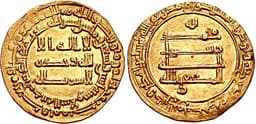
Al-Muktafi
Emperor · Medieval
44.4Total
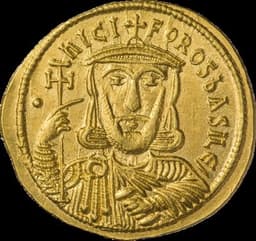
Nikephoros I
Emperor · Medieval
54.5Total
Basic Information
Born
877
750
Died
908
811
Era
Medieval
Medieval
Nationality
Abbasid Caliphate
Byzantine Empire
Occupation
Emperor
Emperor
Civilization
Middle Eastern
Western
Score Comparison
Military (10%)
45.0
45.0
Political (20%)
36.5
62.7
Influence (20%)
49.4
51.8
Legacy (20%)
40.0
45.0
Leadership (15%)
51.9
74.0
Strategy (15%)
43.3
52.5
TOTAL
44.4
54.5
Al-Muktafi — Complete Timeline
907 AD
Victory over the QarmatiansWar◆ Major
Al-Muktafi's forces defeated a Qarmatian army near Kufa, temporarily halting their raids into Iraq. This victory was one of the last significant military successes of the Abbasid caliphate before its decline.
QarmatiansBattleVictory
Impact: regionalconstructive
908 AD
Return of the Caliphate to BaghdadPolitical Action◆ Major
Al-Muktafi moved the Abbasid court from Samarra back to Baghdad. This ended the period of Samarra as the capital, which had lasted since 836, and marked a symbolic return to the traditional seat of the caliphate.
Capital MoveBaghdadSamarra
Impact: nationalconstructive
Death of Al-MuktafiPolitical Action◆ Major
Al-Muktafi died after a short reign of about six years. His death marked the end of the last effective Abbasid caliph from the Samarra period, as his successors were weaker and more dependent on military factions.
DeathSuccessionDecline
Impact: nationaltragic
Nikephoros I — Complete Timeline
802 AD
Financial Reforms (802-811)Reform◆ Major
Nikephoros I implemented fiscal reforms to replenish the treasury depleted by Irene. He increased taxes, reorganized the tax system, and imposed new levies on the church and monasteries. These measures strengthened the state finances but caused resentment.
TaxationFiscal PolicyAdministration
Impact: regional
Accession as Emperor (802)Political Action◆ Major
Nikephoros I overthrew Empress Irene in a palace coup. As a former logothete (finance minister), he was experienced in administration. His accession marked a shift from the iconoclast policies of previous emperors.
CoupAccession
Impact: regional
811 AD
Campaign against the Bulgars (811)War◆ Major
Nikephoros I led a large expedition against the Bulgarian Khan Krum. Initially successful, he captured the Bulgarian capital Pliska and plundered it. However, the campaign ended in disaster when the Byzantine army was ambushed in a mountain pass.
Byzantine-Bulgarian WarsMilitary Campaign
Impact: regionaltragic
Death at the Battle of Pliska (811)War
Nikephoros I was killed in the Battle of Pliska, where the Byzantine army was annihilated by the Bulgars. His skull was reportedly made into a drinking cup by Khan Krum. This was one of the worst Byzantine military defeats.
BattleDeathDefeat
Impact: regionaltragic
Expert Analysis
Origins
Al-Muktafi (born 877) was the son of Caliph al-Mu'tadid, growing up in the turbulent Abbasid court at Samarra. His family background was steeped in the politics of the caliphate, which had moved to Samarra in 836 to escape Baghdad's unrest. He received a traditional princely education, but his reign was short and largely shaped by the declining power of the central government.
Nikephoros I (born c. 750) was a Byzantine Greek from a prominent family in Seleucia. He served as logothete (finance minister) under Empress Irene, demonstrating administrative skill. His early career was in fiscal management, not military command, which distinguished him from many previous emperors. He was well-educated in law and finance, but lacked military experience before becoming emperor.
Rise to Power
Al-Muktafi succeeded his father al-Mu'tadid in 902 at age 25. His rise was smooth due to his father's preparation, but he faced immediate challenges from rebellious factions and the Qarmatian threat. His key turning point was the victory over the Qarmatians near Kufa in 903, which temporarily secured Iraq. However, his power remained limited by the growing autonomy of provincial governors and the declining authority of the caliphate.
Nikephoros I rose to power through a palace coup in 802, overthrowing Empress Irene. As logothete, he had access to state finances and built a network of supporters. His coup was bloodless, capitalizing on Irene's unpopularity after her failed wars and fiscal mismanagement. He was crowned emperor on October 31, 802, marking the end of the Isaurian dynasty. His rise was a bureaucratic takeover rather than a military one.
Leadership & Governance
Al-Muktafi's leadership was reactive. He moved the capital back to Baghdad in 903, ending the Samarra period, a decision that centralized power but also exposed the caliphate to Baghdad's instability. He relied on Turkish military commanders and failed to assert control over the provinces. His governance scored 36.5 in political skill, reflecting his inability to stem the caliphate's decline. He did not implement lasting reforms.
Nikephoros I was a hands-on administrator. He implemented financial reforms (802-811) to replenish the treasury, increasing taxes on the poor and imposing levies on church properties. He reorganized the tax system, creating new fiscal districts. His leadership score of 74.0 reflects his decisive, if unpopular, governance. He also resettled populations in the Balkans to strengthen borders. However, his fiscal policies caused resentment among the populace and the church.
Triumph & Tragedy
Al-Muktafi's greatest success was the return of the caliphate to Baghdad in 903, which restored the traditional capital and symbolized continuity. His victory over the Qarmatians in 903 was a military success, scoring 45.0 in military. However, his reign was cut short by his death in 908 at age 31, likely from illness. His failure was the inability to reverse the Abbasid decline; after his death, the caliphate became a puppet of the Buyids. His legacy score of 40.0 reflects this.
Nikephoros I's triumph was his financial recovery of the Byzantine state. He left a surplus in the treasury despite expensive wars. His military campaign against the Bulgars in 811 initially succeeded, capturing Pliska. However, his tragedy was the Battle of Pliska (July 26, 811), where his army was ambushed and annihilated. He was killed, and his skull was made into a drinking cup by Khan Krum. This defeat undid his gains and exposed Byzantine weakness. His military score of 45.0 reflects this mixed record.
Character & Destiny
Al-Muktafi was a product of the court environment, more a figurehead than a decisive leader. His decision to return to Baghdad was popular but strategically questionable, as it removed the caliph from the military stronghold of Samarra. He lacked the ruthlessness to centralize power, and his early death prevented any long-term impact. Historians view him as the last effective caliph of the Samarra period, but his effectiveness was limited.
Nikephoros I was a meticulous administrator who overreached militarily. His character was frugal and authoritarian, leading to unpopularity. His fiscal reforms alienated the church and aristocracy, while his military ambition led to disaster. He ignored advice from his generals during the Bulgarian campaign, a fatal overconfidence. His destiny was shaped by his combination of fiscal skill and strategic blindness, resulting in a death that shocked the empire.
Legacy
Al-Muktafi's legacy is the end of the Samarra period and the return to Baghdad. However, this move did not halt the caliphate's decline; within decades, the caliphs became puppets. His reign is a footnote in Abbasid history, with no lasting institutions or reforms. His influence score of 49.4 reflects his symbolic role but minimal lasting impact.
Nikephoros I's legacy is more substantial. His financial reforms stabilized the Byzantine economy for decades, funding later military successes. However, his defeat at Pliska emboldened the Bulgars and led to further invasions. He is remembered as a capable administrator but a disastrous general. His leadership score of 74.0 indicates his administrative impact, but his overall total of 54.5 reflects the mixed legacy.
Conclusion
Nikephoros I had greater impact than Al-Muktafi, as evidenced by his higher total score of 54.5 vs 44.4. His financial reforms shaped Byzantine governance for generations, while Al-Muktafi's reign was a brief interlude in the Abbasid decline. Nikephoros's defeat was catastrophic, but his administrative foundation enabled later Byzantine resurgence. Al-Muktafi's return to Baghdad was symbolic but ineffective. Thus, Nikephoros I, despite his tragic end, exerted more lasting influence on history.
Rankings
🥇
Nikephoros ILeader
Mil: 45.0Pol: 62.7Inf: 51.8
54.5
🥈
Al-Muktafi
Mil: 45.0Pol: 36.5Inf: 49.4
44.4
+10.1 behind
How This Comparison Works
Algorithm
Each figure is scored on 6 dimensions (0—100 scale) based on structured historical data: Military (10%), Political (20%), Influence (20%), Legacy (20%), Leadership (15%), Strategy (15%). The weighted total produces the final ranking.
Data Sources
Scores are computed from structured sub-indicators in the database. Scale factors adjust for era (Ancient ×0.85, Modern ×1.0) and civilization size (Eastern ×1.05, Other ×0.80) to account for differences in population and military scale.
Maximum 3 Figures
Comparisons are limited to 2—3 figures to ensure readability and statistical meaningfulness.
Error Margins
±5 points per dimension — Sub-scores are derived from historical records with inherent uncertainty. Two figures within 5 points on a dimension should be considered roughly equivalent in that area.
Total Score Accuracy
±3 points overall — The weighted combination of 6 dimensions produces a total score with approximately ±3 points of uncertainty. Differences of less than 3 points are not statistically significant— the figures are effectively tied.
Known Limitations
- Historical records are incomplete and uneven across civilizations
- Figures from oral-tradition societies may be underrepresented
- Occupation labels can misclassify multi-role figures
- Scores measure capability and impact, not moral character
- Quantitative scoring is a comparison tool, not absolute truth
Capability Radar
Military (10%) — Battles & Warfare
Battles
30
55
Win Rate
35
40
Expansion
20
55
Political (20%) — Governance & Reform
Reform
30
70
Diplomacy
35
50
Economy
30
65
Influence (20%) — Cultural & Global Reach
Cultural
20
30
Global
15
20
Legacy (20%) — Historical Impact
Historical
25
40
Longevity
15
30
Leadership (15%) — Power & Stability
Tenure
40
60
Stability
25
45
Strategy (15%) — Tactics & Innovation
Strategy
30
50
Tactics
30
45
Reform
20
60
Similar Comparisons
Comments & Discussion
No comments yet. Be the first to share your thoughts!