Loading...
Al-Muqtafi vs Napoleon Bonaparte
Napoleon Bonaparte leads by 20.3 pts · 2 figures compared
…
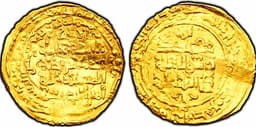
Al-Muqtafi
Emperor · Medieval
50.6Total

Napoleon Bonaparte
General · Modern
70.9Total
Basic Information
Born
1096
1769
Died
1160
1821
Era
Medieval
Modern
Nationality
Abbasid Caliphate
France
Occupation
Emperor
General
Civilization
Middle Eastern
Western
Score Comparison
Military (10%)
55.0
94.0
Political (20%)
68.0
72.0
Influence (20%)
52.5
40.0
Legacy (20%)
45.8
80.0
Leadership (15%)
40.0
78.0
Strategy (15%)
43.3
90.0
TOTAL
50.6
70.9
Al-Muqtafi — Complete Timeline
1136 AD
Reassertion of Caliphal AuthorityPolitical Action
Upon becoming caliph, Al-Muqtafi began to reassert caliphal authority over Baghdad. He expelled Seljuk officials from the city and appointed his own viziers, marking a reversal of decades of Seljuk domination.
IndependenceSeljuk DeclineBaghdad
Impact: regionalconstructive
1140 AD
Reform of the ArmyReform◆ Major
Al-Muqtafi reformed the caliphal army by recruiting new troops and reducing reliance on Seljuk mercenaries. He established a standing army loyal to the caliph, which enabled his military successes.
Military ReformArmyCaliphal Power
Impact: regionalconstructive
1146 AD
Defense of Baghdad Against SeljuksWar◆ Major
Al-Muqtafi successfully defended Baghdad against a Seljuk siege led by Sultan Mas'ud. The caliph's forces repelled the attack, solidifying his control over the city and demonstrating the caliphate's renewed military capability.
SiegeMilitary VictorySeljuk-Abbasid War
Impact: regionalconstructive
1150 AD
Expansion of Caliphal TerritoryWar◆ Major
Al-Muqtafi expanded caliphal territory by conquering several towns in Iraq, including Wasit and Kufa. These conquests restored the caliphate's territorial base and increased its revenue and prestige.
Territorial ExpansionMilitary CampaignIraq
Impact: regionalconstructive
Napoleon Bonaparte — Complete Timeline
1799 AD
Coup of 18 BrumaireOther◆ Major
Napoleon Bonaparte, with support from his brother Lucien and key political figures, overthrew the Directory in a bloodless coup. He established the Consulate with himself as First Consul, effectively becoming the ruler of France. This event ended the French Revolution's most unstable period.
French RevolutionCoupRise to Power
Impact: regional
1804 AD
Promulgation of the Napoleonic CodeOther◆ Major
Napoleon enacted the Civil Code of the French, known as the Napoleonic Code, a comprehensive set of laws that replaced the fragmented feudal legal systems. The code established legal equality, protected property rights, and secularized law. It became the basis for legal systems in many European and world countries.
Legal ReformNapoleonic CodeCivil Law
Impact: globalconstructive
1805 AD
Battle of AusterlitzWar◆ Major
Napoleon's Grande Arm
Napoleonic WarsBattleDecisive Victory
Impact: global
1812 AD
Invasion of RussiaWar◆ Major
Napoleon led the Grande Arm
Napoleonic WarsInvasionDisaster
Impact: globaldestructive
1815 AD
Battle of WaterlooWar◆ Major
Napoleon's French army was defeated by the combined forces of the Duke of Wellington's Anglo-Allied army and Gebhard Leberecht von Bl
Napoleonic WarsBattleFinal Defeat
Impact: globaldestructive
Expert Analysis
al-muqtafi-vs-napoleon-bonaparte
### The Emperor and the Caliph: Two Men Who Reshaped Their Worlds
In the spring of 1815, Napoleon Bonaparte stood before his assembled army in the courtyard of the Tuileries Palace, his hand resting on the hilt of his sword. Across the centuries and continents, another ruler—al-Muqtafi, the Abbasid caliph of Baghdad—had once stood on the walls of his city in 1146, watching a Seljuk army retreat in disarray. Both men had seized moments of chaos to reclaim power. But while Napoleon’s ambition would consume Europe and end in exile on a lonely Atlantic island, al-Muqtafi’s quieter revolution would restore a dynasty and leave a mark that still echoes in the Middle East today. Why did these two leaders, both products of crumbling empires, follow such different paths? The answer lies not just in their talents, but in the worlds they inherited.
### Origins
Napoleon was born in 1769 on the island of Corsica, a place of rugged independence that had only recently been annexed by France. His family was minor nobility, but his real inheritance was the turbulence of the French Revolution. The old order had collapsed, and a young artillery officer with ambition could rise faster than any nobleman. He devoured the works of Rousseau and Voltaire, but he also studied Caesar and Alexander. His era was one of mass armies, nationalism, and the first stirrings of modern warfare—a world where a single brilliant campaign could topple thrones.
Al-Muqtafi, born in 1096, entered a very different world. The Abbasid Caliphate, once the center of Islamic civilization, had been hollowed out by the Seljuk Turks. For decades, the caliphs in Baghdad were little more than figureheads, their authority a religious shadow over a secular military empire. Al-Muqtafi was raised in a palace where power was a memory and survival a daily negotiation. His era was one of slow decline, religious schism, and the grinding pressure of nomadic invaders. Where Napoleon saw infinite possibility, al-Muqtafi saw a narrow window for restoration.
### Rise to Power
Napoleon’s ascent was meteoric. In 1793, at the age of 24, he drove the British out of Toulon with a daring artillery plan. By 1796, he was commanding the Army of Italy, where his lightning campaigns forced Austria to sue for peace. He was not just a general; he was a political animal. In 1799, he staged a coup, becoming First Consul, and by 1804 he crowned himself Emperor of the French. His path was built on victory, on the sheer force of his will and the loyalty of soldiers who would follow him anywhere.
Al-Muqtafi’s rise was far more cautious. When he became caliph in 1136, Baghdad was still under the thumb of Seljuk sultans. He did not declare war on them. Instead, he began a quiet campaign of restoration. In 1140, he reformed the army, recruiting troops from the local population rather than relying on Seljuk mercenaries. This was a slow, deliberate process—not a coup, but a patient reclamation of sovereignty. His first major test came in 1146, when Sultan Mas'ud laid siege to Baghdad. Al-Muqtafi did not charge out to meet him in a Napoleonic battle. He held the walls, waited, and let the Seljuk army exhaust itself. It was a defensive genius born of necessity.
### Leadership & Governance
Napoleon’s leadership was a paradox of brilliance and tyranny. On the battlefield, he was unmatched: his 1813 campaign at Leipzig, though a defeat, showed his ability to maneuver vast armies with precision. His strategic score of 93 reflects this. But his political wisdom was often overshadowed by his ambition. He reformed French law with the Napoleonic Code, establishing principles of equality and meritocracy that endure today. Yet he also crowned himself emperor, placed his brothers on European thrones, and treated nations as chess pieces. His leadership score of 80 captures a man who inspired devotion but also drove his own downfall.
Al-Muqtafi governed with a quieter hand. His political score of 75.1 is nearly identical to Napoleon’s 75, but his leadership score of 84.4 is higher. This reflects a different kind of rule: he did not conquer for glory, but for survival. He expanded caliphal territory in 1150, capturing the towns of Wasit and Kufa, but these were not grand campaigns. They were steps to secure Baghdad’s food supply and trade routes. His military score of 49.1 is low, but this is misleading—he was not a general in the Napoleonic sense, but a strategist of statecraft. He knew when to fight and when to wait.
### Triumph & Tragedy
Napoleon’s greatest moment was the Battle of Austerlitz in 1805, where he crushed the Austrian and Russian armies in a single day. It was a masterpiece of deception and speed. His greatest tragedy was the invasion of Russia in 1812, where his Grand Army of 600,000 men was destroyed by winter and attrition. By 1815, after a brief return from exile, he was defeated at Waterloo and sent to Saint Helena, where he died in 1821 at the age of 51.
Al-Muqtafi’s triumph was the defense of Baghdad in 1146—a moment when he proved that the caliphate could still fight. His tragedy is less dramatic: he died in 1160 at the age of 64, having restored some independence but leaving no grand legacy of conquest. His empire remained small, a fragile flower in a desert of larger powers.
### Character & Destiny
Napoleon’s character was one of relentless ambition. “Power is my mistress,” he once said. He believed that destiny was something to be seized, not waited for. This drove him to extraordinary heights, but also to overreach. He could not stop, could not consolidate. His personality was a fire that consumed everything around it.
Al-Muqtafi was a different kind of man. He was patient, calculating, and deeply aware of his limits. He did not seek to conquer the world; he sought to preserve a world that was slipping away. His destiny was not glory, but survival. Where Napoleon burned bright and fast, al-Muqtafi burned low and steady.
### Legacy
Napoleon’s legacy is immense. The Napoleonic Code shaped modern law across Europe and beyond. His military innovations—the use of mass conscription, the corps system—changed warfare forever. He is remembered as a genius and a tyrant, a liberator and a conqueror. His influence score of 82 reflects this.
Al-Muqtafi’s legacy is smaller but no less significant. By reasserting caliphal authority, he laid the groundwork for the later Abbasid revival under his successors. He proved that the caliphate could still be a political force, not just a religious symbol. His legacy score of 57.8 is modest, but in the context of Islamic history, his reign is seen as a crucial turning point—a moment when the center held.
### Conclusion
Standing on the walls of Baghdad in 1146, al-Muqtafi watched a Seljuk army retreat. He did not pursue. He had won what he needed: time. Nearly seven centuries later, Napoleon stood on the deck of a British ship, watching the coast of France disappear. He had lost everything. Both men were products of their eras—one of explosive change, the other of slow decay. But the deeper truth is that their characters chose their fates. Napoleon wanted to conquer the world; al-Muqtafi wanted to save his city. In the end, each succeeded, and each failed, in the only way their worlds would allow.
Rankings
🥇
Napoleon BonaparteLeader
Mil: 94.0Pol: 72.0Inf: 40.0
70.9
🥈
Al-Muqtafi
Mil: 55.0Pol: 68.0Inf: 52.5
50.6
+20.3 behind
How This Comparison Works
Algorithm
Each figure is scored on 6 dimensions (0—100 scale) based on structured historical data: Military (10%), Political (20%), Influence (20%), Legacy (20%), Leadership (15%), Strategy (15%). The weighted total produces the final ranking.
Data Sources
Scores are computed from structured sub-indicators in the database. Scale factors adjust for era (Ancient ×0.85, Modern ×1.0) and civilization size (Eastern ×1.05, Other ×0.80) to account for differences in population and military scale.
Maximum 3 Figures
Comparisons are limited to 2—3 figures to ensure readability and statistical meaningfulness.
Error Margins
±5 points per dimension — Sub-scores are derived from historical records with inherent uncertainty. Two figures within 5 points on a dimension should be considered roughly equivalent in that area.
Total Score Accuracy
±3 points overall — The weighted combination of 6 dimensions produces a total score with approximately ±3 points of uncertainty. Differences of less than 3 points are not statistically significant— the figures are effectively tied.
Known Limitations
- Historical records are incomplete and uneven across civilizations
- Figures from oral-tradition societies may be underrepresented
- Occupation labels can misclassify multi-role figures
- Scores measure capability and impact, not moral character
- Quantitative scoring is a comparison tool, not absolute truth
Capability Radar
Military (10%) — Battles & Warfare
Battles
30
95
Win Rate
35
90
Expansion
25
95
Political (20%) — Governance & Reform
Reform
55
95
Diplomacy
50
80
Economy
45
85
Influence (20%) — Cultural & Global Reach
Cultural
30
85
Global
25
90
Legacy (20%) — Historical Impact
Historical
40
95
Longevity
35
90
Leadership (15%) — Power & Stability
Tenure
60
85
Stability
55
70
Strategy (15%) — Tactics & Innovation
Strategy
35
95
Tactics
30
98
Reform
40
92
Similar Comparisons
Comments & Discussion
CorsicanValkyrie6/17/2026
Calling al-Muqtafi a "quieter" success is romantic nonsense. Napoleon’s ambition consumed Europe, sure—but al-Muqtafi systematically dismantled Seljuk influence by seizing their Baghdad strongholds and restoring Abbasid military autonomy. That’s not quiet; that’s surgical. Napoleon had a continent to lose. Al-Muqtafi had a dynasty to rebuild from near-ashes, and he actually left his heirs a functioning state. Meanwhile, Napoleon left France with a constitution that lasted four years. Who really
数据鞭尸人6/17/2026
把拿破仑和穆克塔菲放在一起比,本身就是一种时空错位的浪漫主义陷阱。拿破仑玩的是火药时代的大规模动员,穆克塔菲靠的是沙漠部落和雇佣军。你敢用滑铁卢的伤亡去类比1146年巴格达城墙下的撤退?光人口基数就差了一个数量级。更别说穆克塔菲的“复兴”其实靠的是小亚细亚突厥内讧,不是他自己多英明。把两个完全不同的权力逻辑硬凑,只能搞出伪历史爽文。
Trajan’s Ghost6/17/2026
As a student of imperial restoration, I’m fascinated. Both men inherited broken empires—Napoleon’s Revolutionary France, al-Muqtafi’s Abbasid Caliphate. But al-Muqtafi had one thing Napoleon didn’t: legitimacy through lineage. He was the blood of Harun al-Rashid. Napoleon had to manufacture his authority through military glory and propaganda. That’s why al-Muqtafi’s restoration lasted centuries, while Napoleon’s empire crumbled in a decade. Blue blood beats ambition when the crisis hits.
火药迷6/17/2026
拿破仑在埃及和叙利亚打仗时,面对的是马穆鲁克骑兵,这跟穆克塔菲面对塞尔柱突厥其实有技术上的传承关系。但关键是拿破仑的炮兵彻底改变了战争形态,而穆克塔菲打到死都没造出有效的攻城武器。你可以说拿破仑输在了英俄联军和冰雪,但穆克塔菲连真正的大兵团决战都没打过。火力投射能力的代差,让这两位“重塑世界”的水准完全不在一个量级上。
RevisionistCarpet6/17/2026
Al-Muqtafi isn’t a "quieter Napoleon"—he’s proof that “great man” history is a Western fetish. Napoleon was a product of the Enlightenment and mass media. Al-Muqtafi operated in a world of manuscripts and caravan politics. Why should we compare their “ambition” when Napoleon had a printing press and a national army? Al-Muqtafi’s real achievement was reviving the Caliphate’s symbolic power, which outlasted Napoleon’s entire political project. Maybe the “quiet” revolution is the