Loading...
Al-Mustadi vs Mansa Wali Keita
Mansa Wali Keita leads by 9.5 pts · 2 figures compared
…
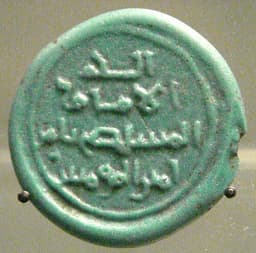
Al-Mustadi
Emperor · Medieval
41.9Total
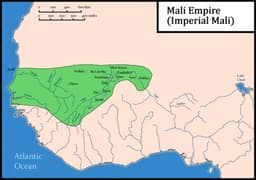
Mansa Wali Keita
Emperor · Medieval
51.4Total
Basic Information
Born
1142
1240
Died
1180
1270
Era
Medieval
Medieval
Nationality
Abbasid Caliphate
Mali Empire
Occupation
Emperor
Emperor
Civilization
Middle Eastern
Other
Score Comparison
Military (10%)
21.2
25.0
Political (20%)
35.1
68.0
Influence (20%)
50.2
53.3
Legacy (20%)
40.0
45.0
Leadership (15%)
55.3
65.0
Strategy (15%)
36.8
43.3
TOTAL
41.9
51.4
Al-Mustadi — Complete Timeline
1170 AD
Continued Assertion of Caliphal AuthorityPolitical Action◆ Major
Al-Mustadi continued his predecessor's policy of asserting caliphal authority over Baghdad and Iraq. He maintained the caliphal army and resisted Seljuk interference, preserving the gains made by Al-Muqtafi.
Caliphal PowerSeljuk RelationsContinuity
Impact: regionalconstructive
1175 AD
Diplomatic Relations with SaladinPolitical Action◆ Major
Al-Mustadi established diplomatic relations with Saladin, who had become sultan of Egypt. The caliph recognized Saladin's authority and received gifts, strengthening the caliphate's influence in the region.
DiplomacySaladinEgypt
Impact: regionalconstructive
1178 AD
Patronage of Sunni ScholarshipCultural
Al-Mustadi patronized Sunni scholars and built madrasas in Baghdad. This support strengthened Sunni orthodoxy and enhanced the caliphate's religious prestige.
PatronageSunni ScholarshipMadrasas
constructive
Mansa Wali Keita — Complete Timeline
1255 AD
Expanded Mali's territory and tradePolitical Action◆ Major
Mansa Wali expanded the Mali Empire's borders, securing control over key gold-producing regions and trade routes. His reign saw increased commerce with North Africa, bringing wealth and stability to the empire.
ExpansionTrade
Impact: regionalconstructive
Reign as Mansa of MaliPolitical Action◆ Major
Mansa Wali succeeded his father Sundiata Keita as mansa. His reign was relatively short but effective, maintaining the empire's unity and prosperity. He is remembered as a capable ruler who strengthened Mali's foundations.
SuccessionRule
Impact: regionalconstructive
1260 AD
Performed Hajj pilgrimage to MeccaCultural◆ Major
Mansa Wali Keita (also known as Uli) became the first Mali emperor to undertake the Hajj. His pilgrimage showcased Mali's wealth and Islamic devotion, establishing diplomatic relations with the Mamluk Sultanate and other Muslim states.
PilgrimageIslamDiplomacy
Impact: regionalconstructive
Expert Analysis
Origins
Al-Mustadi was born in 1142 CE into the Abbasid Caliphate, the son of Caliph Al-Mustanjid. His family had ruled the Islamic world since 750 CE, but by his time, the caliphate was a shadow of its former self, confined largely to Baghdad and central Iraq. Al-Mustadi was raised in the caliphal palace, receiving a traditional education in Islamic law, theology, and statecraft. His father's reign had seen a modest revival of caliphal power, which Al-Mustadi would inherit and attempt to continue.
Mansa Wali Keita (also known as Wali or Uli) was born around 1240 CE in the Mali Empire, the son of Sundiata Keita, the empire's legendary founder. Sundiata had united the Mandinka people and defeated the Sosso kingdom at the Battle of Kirina (c. 1235). Wali grew up in the imperial court of Niani, surrounded by the traditions of the Mande griots and the nascent structures of a growing empire. His upbringing prepared him for leadership, but his reign would be brief.
Rise to Power
Al-Mustadi ascended the Abbasid throne in 1170 CE after the death of his father, Al-Mustanjid. His rise was smooth, as he was the designated heir. However, the caliphate faced external threats from the Seljuk Turks, who controlled much of the caliphate's former territory, and internal challenges from rival factions in Baghdad. Al-Mustadi's key achievement was continuing his father's policy of asserting caliphal authority by maintaining a small professional army and resisting Seljuk encroachment. In 1174, he established diplomatic relations with Saladin, the Ayyubid sultan of Egypt, recognizing Saladin's rule over Egypt and Syria. This alliance strengthened the caliphate's religious prestige and provided a counterweight to the Seljuks.
Mansa Wali Keita became mansa (emperor) of Mali after his father Sundiata's death, likely around 1255 CE. Sundiata had laid the foundations of the empire, but Wali was the first to consolidate and expand them. His major turning point was his Hajj pilgrimage to Mecca, likely in the 1260s. This journey, the first by a Mali emperor, showcased Mali's immense wealth—particularly its gold—and established the empire as a major Islamic power. During the pilgrimage, he distributed gold generously, which reportedly depressed gold prices in Cairo for years. This act both demonstrated his piety and enhanced his prestige.
Leadership & Governance
Al-Mustadi governed as a traditional Abbasid caliph, focusing on religious legitimacy and maintaining control over Baghdad. He patronized Sunni scholarship, building madrasas and supporting Hanbali and Shafi'i jurists. His governance was reactive rather than expansionist, as he lacked the military resources to project power beyond Iraq. Politically, he scored 35.1, reflecting limited influence outside his core territory. He maintained the caliphal army, but it numbered only a few thousand, insufficient to challenge the Seljuks directly. His diplomatic recognition of Saladin was a shrewd move, gaining an ally without costly wars.
Mansa Wali Keita, by contrast, was an expansionist and administrative consolidator. He expanded Mali's borders, securing control over key gold-producing regions like Bambuk and Bure, and vital trade routes across the Sahara. His political score of 68.0 reflects his effectiveness in integrating conquered territories. He also implemented policies to encourage commerce, including standardizing weights and measures and protecting traders. His Hajj pilgrimage also served as a diplomatic mission, establishing ties with the Mamluk Sultanate and other Muslim states. His leadership score of 65.0 indicates a capable administrator who built on his father's foundations.
Triumph & Tragedy
Al-Mustadi's triumph was his successful assertion of caliphal authority in Baghdad, resisting Seljuk attempts to dominate the caliphate. He maintained the caliphal army and kept the city stable. His diplomatic recognition of Saladin was a masterstroke, linking the caliphate to the rising Ayyubid power. However, his tragedy was his limited impact: he died in 1180 CE, and within a decade, the caliphate would be eclipsed by Saladin's successors and later the Mongols. His total score of 41.9 reflects a figure who maintained the status quo but failed to reverse the caliphate's decline.
Mansa Wali Keita's triumph was the expansion of Mali's territory and the establishment of its reputation as a wealthy Islamic empire. His Hajj pilgrimage was a seminal event, putting Mali on the map of the Islamic world. His tragedy was his short reign; he died around 1270 CE, and his successors struggled to maintain his gains. His political score of 68.0 and leadership score of 65.0 indicate a successful ruler, but his military score of 25.0 suggests limited direct conquest. His legacy, however, endured through the empire's continued prosperity under later mans as like Musa I.
Character & Destiny
Al-Mustadi was a cautious, diplomatic ruler. He understood the limits of his power and chose to work within them, using religious authority and alliances rather than military force. His decision to ally with Saladin showed strategic foresight, but his passive approach meant he did not significantly alter the caliphate's trajectory. Historians describe him as a capable but unremarkable caliph, overshadowed by his more famous successors.
Mansa Wali Keita was ambitious and pious, as shown by his Hajj and expansionist policies. He sought to build on his father's legacy and project Mali's power abroad. His short reign suggests he may have been impetuous or that his death was untimely. He is remembered as a consolidator and a pioneer of Mali's international influence.
Legacy
Al-Mustadi's legacy is modest. He strengthened Sunni orthodoxy in Baghdad and maintained the caliphate's independence for another generation. His madrasas continued to produce scholars, and his diplomatic ties with Saladin set a precedent for future caliphal-Ayyubid relations. However, his reign is often overlooked, as the Abbasid Caliphate was destroyed by the Mongols in 1258, less than 80 years after his death. His total score of 41.9 reflects this limited long-term impact.
Mansa Wali Keita's legacy is more substantial. He established the tradition of Malian Hajj pilgrimages, which would culminate in Mansa Musa's famous journey in 1324. His territorial expansions secured the gold and salt trade that made Mali one of the wealthiest empires of the medieval world. The empire's political structures, which he helped consolidate, endured for centuries. His legacy score of 45.0 and influence score of 53.3 reflect a ruler who, despite a short reign, contributed to Mali's golden age.
Conclusion
Mansa Wali Keita had a greater impact than Al-Mustadi. His total score of 51.4 vs. Al-Mustadi's 41.9 reflects his more effective leadership and political acumen. While Al-Mustadi managed to preserve the Abbasid Caliphate's independence for a few decades, Wali Keita expanded Mali's territory, boosted its economy, and established its Islamic credentials. The Mali Empire under his guidance became a major power, whereas the Abbasid Caliphate under Al-Mustadi remained a minor player. Wali Keita's actions had consequences that rippled through African and Islamic history, while Al-Mustadi's were largely contained to Baghdad. Thus, Mansa Wali Keita emerges as the more impactful ruler.
Rankings
🥇
Mansa Wali KeitaLeader
Mil: 25.0Pol: 68.0Inf: 53.3
51.4
🥈
Al-Mustadi
Mil: 21.2Pol: 35.1Inf: 50.2
41.9
+9.5 behind
How This Comparison Works
Algorithm
Each figure is scored on 6 dimensions (0—100 scale) based on structured historical data: Military (10%), Political (20%), Influence (20%), Legacy (20%), Leadership (15%), Strategy (15%). The weighted total produces the final ranking.
Data Sources
Scores are computed from structured sub-indicators in the database. Scale factors adjust for era (Ancient ×0.85, Modern ×1.0) and civilization size (Eastern ×1.05, Other ×0.80) to account for differences in population and military scale.
Maximum 3 Figures
Comparisons are limited to 2—3 figures to ensure readability and statistical meaningfulness.
Error Margins
±5 points per dimension — Sub-scores are derived from historical records with inherent uncertainty. Two figures within 5 points on a dimension should be considered roughly equivalent in that area.
Total Score Accuracy
±3 points overall — The weighted combination of 6 dimensions produces a total score with approximately ±3 points of uncertainty. Differences of less than 3 points are not statistically significant— the figures are effectively tied.
Known Limitations
- Historical records are incomplete and uneven across civilizations
- Figures from oral-tradition societies may be underrepresented
- Occupation labels can misclassify multi-role figures
- Scores measure capability and impact, not moral character
- Quantitative scoring is a comparison tool, not absolute truth
Capability Radar
Military (10%) — Battles & Warfare
Battles
10
30
Win Rate
10
40
Expansion
10
45
Political (20%) — Governance & Reform
Reform
30
45
Diplomacy
30
50
Economy
30
55
Influence (20%) — Cultural & Global Reach
Cultural
20
35
Global
10
25
Legacy (20%) — Historical Impact
Historical
20
40
Longevity
20
30
Leadership (15%) — Power & Stability
Tenure
40
50
Stability
30
50
Strategy (15%) — Tactics & Innovation
Strategy
10
40
Tactics
10
35
Reform
10
30
Similar Comparisons
Comments & Discussion
No comments yet. Be the first to share your thoughts!