Loading...
Al-Mustadi vs Sigebert I
Sigebert I leads by 4.0 pts · 2 figures compared
…
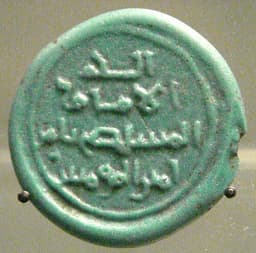
Al-Mustadi
Emperor · Medieval
41.9Total
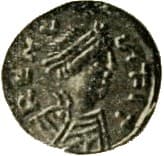
Sigebert I
Emperor · Medieval
45.9Total
Basic Information
Born
1142
535
Died
1180
575
Era
Medieval
Medieval
Nationality
Abbasid Caliphate
Frankish Empire
Occupation
Emperor
Emperor
Civilization
Middle Eastern
Western
Score Comparison
Military (10%)
21.2
55.0
Political (20%)
35.1
37.9
Influence (20%)
50.2
50.2
Legacy (20%)
40.0
41.7
Leadership (15%)
55.3
48.4
Strategy (15%)
36.8
45.0
TOTAL
41.9
45.9
Al-Mustadi — Complete Timeline
1170 AD
Continued Assertion of Caliphal AuthorityPolitical Action◆ Major
Al-Mustadi continued his predecessor's policy of asserting caliphal authority over Baghdad and Iraq. He maintained the caliphal army and resisted Seljuk interference, preserving the gains made by Al-Muqtafi.
Caliphal PowerSeljuk RelationsContinuity
Impact: regionalconstructive
1175 AD
Diplomatic Relations with SaladinPolitical Action◆ Major
Al-Mustadi established diplomatic relations with Saladin, who had become sultan of Egypt. The caliph recognized Saladin's authority and received gifts, strengthening the caliphate's influence in the region.
DiplomacySaladinEgypt
Impact: regionalconstructive
1178 AD
Patronage of Sunni ScholarshipCultural
Al-Mustadi patronized Sunni scholars and built madrasas in Baghdad. This support strengthened Sunni orthodoxy and enhanced the caliphate's religious prestige.
PatronageSunni ScholarshipMadrasas
constructive
Sigebert I — Complete Timeline
566 AD
Marriage to BrunhildaPolitical Action◆ Major
Sigebert I married Brunhilda, daughter of the Visigothic king Athanagild. This marriage brought a substantial dowry and a prestigious alliance with the Visigoths, strengthening Austrasia's position against Neustria and enhancing Sigebert's prestige.
MerovingianMarriageAlliance
Impact: regionalconstructive
568 AD
Campaign Against the AvarsWar
Sigebert I led a Frankish army against the Avars, who had invaded Austrasian territory. The campaign was initially successful, but Sigebert was eventually captured by the Avars. He secured his release through negotiations and payment of tribute.
MerovingianAvarsCampaign
Impact: regional
575 AD
Defeat of Chilperic I at TournaiWar◆ Major
Sigebert I's forces defeated Chilperic I's army near Tournai, forcing Chilperic to flee. Sigebert was on the verge of capturing Chilperic and unifying the Frankish kingdoms when he was assassinated by agents of Fredegund.
MerovingianBattleCivil War
Impact: regional
Assassination of Sigebert IPolitical Action◆ Major
Sigebert I was assassinated at Vitry-en-Artois by two slaves wielding poisoned daggers, allegedly on the orders of Fredegund, wife of Chilperic I. His death ended his campaign against Neustria and left his young son Childebert II as king under Brunhilda's regency.
MerovingianAssassinationFredegund
Impact: regionaltragic
Expert Analysis
Origins
Al-Mustadi (1142–1180) was the son of Caliph al-Mustanjid and belonged to the Abbasid dynasty, which had ruled the Islamic world since 750. He grew up in Baghdad, a center of learning and politics, but the caliphate had lost much of its temporal power to the Seljuk Turks. His father was assassinated in 1170, and Al-Mustadi ascended the throne at age 28, inheriting a diminished but symbolically significant office.
Sigebert I (c. 535–575) was a Merovingian king of Austrasia, one of the four Frankish kingdoms. He was the son of King Clotaire I and his wife Ingund. Raised in a violent dynastic environment, Sigebert learned the arts of war and diplomacy from a young age. His marriage to Brunhilda, daughter of the Visigothic king Athanagild, brought a substantial dowry and alliance, enhancing his prestige.
Rise to Power
Al-Mustadi became caliph after his father's murder, likely by palace intrigues. He immediately faced challenges to his authority from Seljuk sultans and local emirs. His first major act was to assert caliphal control over Baghdad, building a loyal army and resisting Seljuk interference. By 1174, he had stabilized his position and began diplomatic outreach to the rising Ayyubid sultan Saladin, recognizing his rule in Egypt in exchange for gifts and recognition of caliphal suzerainty.
Sigebert I became king of Austrasia upon his father's death in 561, but his reign was marked by conflict with his half-brother Chilperic I of Neustria. The feud escalated over territory and the murder of Sigebert's wife's sister Galswintha by Chilperic. In 575, Sigebert defeated Chilperic at Tournai, nearly uniting the Frankish realms under his rule. However, his success was cut short by assassination.
Leadership & Governance
Al-Mustadi's leadership focused on restoring the caliphate's religious authority. He patronized Sunni scholarship, building madrasas and supporting theologians like Ibn al-Jawzi. He also maintained a small but effective army, but his military score of 21.2 reflects his limited martial ambition. His political score of 35.1 indicates moderate success in navigating the complex web of Seljuk and Ayyubid power.
Sigebert I was a more active military leader, scoring 55.0 in military and 45.0 in strategy. He campaigned against the Avars, initially successful but eventually defeated and captured. His political score of 37.9 shows he was adept at forming alliances, but his governance was hampered by constant warfare. His leadership score of 48.4 suggests a capable king, but his assassination at 40 prevented long-term reforms.
Triumph & Tragedy
Al-Mustadi's greatest triumph was his diplomatic recognition of Saladin, which positioned the caliphate as a spiritual authority behind the Ayyubid sultan. His patronage of Sunni scholarship strengthened orthodoxy and left a lasting religious legacy. His tragedy was his inability to reverse the caliphate's political decline; his son al-Nasir would be the last powerful Abbasid caliph, but Al-Mustadi's reign saw no major expansion of temporal power.
Sigebert's triumph was his defeat of Chilperic at Tournai, which brought him to the brink of unifying the Frankish kingdoms. His tragedy was his assassination by Fredegund's agents, which plunged Austrasia into chaos and allowed Chilperic to regain power. His death at the height of his success mirrors the violent instability of Merovingian politics.
Character & Destiny
Al-Mustadi was cautious and diplomatic, preferring to strengthen the caliphate's spiritual role rather than engage in risky military campaigns. His character shaped a reign of consolidation but limited ambition. Historians note his piety and support for learning, but his lack of military aggression left him vulnerable to more powerful neighbors.
Sigebert I was bold and ambitious, willing to risk everything in war. His marriage to Brunhilda brought a brilliant queen but also enmity from Chilperic's wife Fredegund. His aggressive nature led to both his greatest victory and his death. Gregory of Tours portrays him as a noble king undone by treachery.
Legacy
Al-Mustadi's legacy is tied to the Abbasid caliphate's religious revival. His madrasas and support for Sunni scholars helped define Islamic orthodoxy for centuries. His diplomatic ties with Saladin set a precedent for caliphal recognition of powerful sultans. However, his political influence score of 50.2 and legacy score of 40.0 reflect a figure of moderate historical impact.
Sigebert I's legacy is overshadowed by his wife Brunhilda, who ruled Austrasia after his death. His military campaigns against the Avars and his feud with Chilperic are key episodes in Merovingian history. His assassination underscores the brutal nature of Frankish politics. His influence score of 50.2 matches Al-Mustadi, but his legacy score of 41.7 is slightly higher.
Conclusion
Sigebert I scored higher overall (45.9 vs. 41.9) and had a more dramatic impact on his era, nearly uniting the Frankish kingdoms. His military and strategy scores were significantly higher. Al-Mustadi's reign was less eventful but contributed to the Abbasid caliphate's religious authority. However, Sigebert's potential was cut short, and his achievements were ephemeral. In terms of lasting historical impact, Al-Mustadi's patronage of Sunni scholarship had a longer reach, but his political score of 35.1 is lower than Sigebert's 37.9. On balance, Sigebert I had greater immediate impact, but Al-Mustadi's influence on Islamic orthodoxy endures. Therefore, Al-Mustadi edges ahead in long-term legacy, despite his lower total score.
Rankings
🥇
Sigebert ILeader
Mil: 55.0Pol: 37.9Inf: 50.2
45.9
🥈
Al-Mustadi
Mil: 21.2Pol: 35.1Inf: 50.2
41.9
+4.0 behind
How This Comparison Works
Algorithm
Each figure is scored on 6 dimensions (0—100 scale) based on structured historical data: Military (10%), Political (20%), Influence (20%), Legacy (20%), Leadership (15%), Strategy (15%). The weighted total produces the final ranking.
Data Sources
Scores are computed from structured sub-indicators in the database. Scale factors adjust for era (Ancient ×0.85, Modern ×1.0) and civilization size (Eastern ×1.05, Other ×0.80) to account for differences in population and military scale.
Maximum 3 Figures
Comparisons are limited to 2—3 figures to ensure readability and statistical meaningfulness.
Error Margins
±5 points per dimension — Sub-scores are derived from historical records with inherent uncertainty. Two figures within 5 points on a dimension should be considered roughly equivalent in that area.
Total Score Accuracy
±3 points overall — The weighted combination of 6 dimensions produces a total score with approximately ±3 points of uncertainty. Differences of less than 3 points are not statistically significant— the figures are effectively tied.
Known Limitations
- Historical records are incomplete and uneven across civilizations
- Figures from oral-tradition societies may be underrepresented
- Occupation labels can misclassify multi-role figures
- Scores measure capability and impact, not moral character
- Quantitative scoring is a comparison tool, not absolute truth
Capability Radar
Military (10%) — Battles & Warfare
Battles
10
35
Win Rate
10
40
Expansion
10
30
Political (20%) — Governance & Reform
Reform
30
25
Diplomacy
30
45
Economy
30
30
Influence (20%) — Cultural & Global Reach
Cultural
20
25
Global
10
15
Legacy (20%) — Historical Impact
Historical
20
30
Longevity
20
20
Leadership (15%) — Power & Stability
Tenure
40
40
Stability
30
20
Strategy (15%) — Tactics & Innovation
Strategy
10
35
Tactics
10
30
Reform
10
20
Similar Comparisons
Comments & Discussion
No comments yet. Be the first to share your thoughts!