Loading...
Olaf II of Norway vs Sigebert I
Olaf II of Norway leads by 0.6 pts · 2 figures compared
…
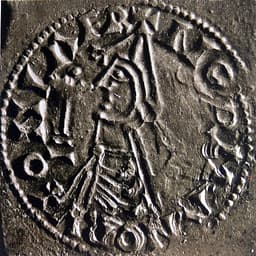
Olaf II of Norway
Emperor · Medieval
46.5Total
Sigebert I
Emperor · Medieval
45.9Total
Basic Information
Born
995
535
Died
1030
575
Era
Medieval
Medieval
Nationality
Norway
Frankish Empire
Occupation
Emperor
Emperor
Civilization
Western
Western
Score Comparison
Military (10%)
40.0
55.0
Political (20%)
45.1
37.9
Influence (20%)
56.7
50.2
Legacy (20%)
40.0
41.7
Leadership (15%)
48.4
48.4
Strategy (15%)
43.3
45.0
TOTAL
46.5
45.9
Olaf II of Norway — Complete Timeline
1015 AD
Became King of NorwayPolitical Action◆ Major
Olaf II became King of Norway after returning from Viking expeditions abroad. He claimed the throne with support from local chieftains and began consolidating power, aiming to unify Norway under a single monarchy and reduce the influence of regional lords.
CoronationNorwayUnification
Impact: regionalconstructive
Introduced Christianity to NorwayCultural◆ Major
Olaf II enforced the Christianization of Norway, using missionaries and laws to replace pagan practices. He built churches, appointed bishops, and suppressed resistance, making Christianity the official religion. This transformation aligned Norway with Christian Europe.
ChristianizationReligionNorway
Impact: regionalconstructive
1030 AD
Defeated at the Battle of StiklestadWar
Olaf II was killed at the Battle of Stiklestad while fighting against a coalition of Norwegian nobles and Danish forces led by Cnut the Great. His defeat was due to betrayal and superior enemy numbers, but his death soon led to his canonization as a saint.
BattleMartyrdomNorway
Impact: regionaltragic
1031 AD
Canonized as Saint OlafCultural◆ Major
Within a year of his death, Olaf II was declared a saint by Bishop Grimkell, with popular veneration spreading rapidly. His canonization was confirmed by the Pope in 1164. Saint Olaf became the patron saint of Norway and a symbol of Norwegian independence.
CanonizationSaintNorway
Impact: regionalconstructive
Sigebert I — Complete Timeline
566 AD
Marriage to BrunhildaPolitical Action◆ Major
Sigebert I married Brunhilda, daughter of the Visigothic king Athanagild. This marriage brought a substantial dowry and a prestigious alliance with the Visigoths, strengthening Austrasia's position against Neustria and enhancing Sigebert's prestige.
MerovingianMarriageAlliance
Impact: regionalconstructive
568 AD
Campaign Against the AvarsWar
Sigebert I led a Frankish army against the Avars, who had invaded Austrasian territory. The campaign was initially successful, but Sigebert was eventually captured by the Avars. He secured his release through negotiations and payment of tribute.
MerovingianAvarsCampaign
Impact: regional
575 AD
Defeat of Chilperic I at TournaiWar◆ Major
Sigebert I's forces defeated Chilperic I's army near Tournai, forcing Chilperic to flee. Sigebert was on the verge of capturing Chilperic and unifying the Frankish kingdoms when he was assassinated by agents of Fredegund.
MerovingianBattleCivil War
Impact: regional
Assassination of Sigebert IPolitical Action◆ Major
Sigebert I was assassinated at Vitry-en-Artois by two slaves wielding poisoned daggers, allegedly on the orders of Fredegund, wife of Chilperic I. His death ended his campaign against Neustria and left his young son Childebert II as king under Brunhilda's regency.
MerovingianAssassinationFredegund
Impact: regionaltragic
Expert Analysis
Origins
Olaf II of Norway was born around 995 AD, likely in Ringerike, Norway, to a minor noble family. His father was Harald Grenske, a petty king in Vestfold, but Olaf grew up without royal power after his father's death. He spent his youth as a Viking raider and mercenary in the Baltic and England, gaining military experience and wealth. In contrast, Sigebert I was born around 535 AD into the Merovingian dynasty, one of the four sons of King Chlothar I of the Franks. His mother was Ingund, and he inherited the northeastern kingdom of Austrasia upon his father's death in 561 AD. Sigebert received a royal education and was immersed in Frankish court politics from childhood.
Rise to Power
Olaf II seized the Norwegian throne in 1015 AD by returning from abroad with a fleet of 60 ships and gaining support from local chieftains opposed to Danish rule. He defeated Earl Sweyn Hakonsson at the Battle of Nesjar (1016), securing control over most of Norway. By 1020, he had consolidated power, but his reign was contested by Cnut the Great of Denmark. Sigebert I became king of Austrasia at age 26 upon his father's death. He quickly engaged in a civil war with his brother Chilperic I of Neustria, who had murdered Sigebert's wife's relatives. Sigebert secured alliances with neighboring tribes and eventually defeated Chilperic at Tournai in 575 AD, nearly unifying the Frankish realms.
Leadership & Governance
Olaf II ruled with a centralized approach, imposing Christianity through law and force. He introduced a code of laws that replaced pagan customs, built churches, and invited English missionaries like Bishop Grimkell. His governance scored 45.1 in political, reflecting his effective but harsh methods. He suppressed local chieftains and imposed taxes for church construction. Sigebert I, with a political score of 37.9, was less effective in governance. He focused on military expansion and dynastic feuds, marrying Brunhilda to forge an alliance with Visigoths. His rule was marked by constant warfare with his brothers, particularly Chilperic, and he failed to establish stable administrative structures.
Triumph & Tragedy
Olaf II's greatest triumph was the introduction of Christianity to Norway, a lasting legacy that transformed the nation. His military score of 40.0 reflects limited success; he was defeated at the Battle of Stiklestad in 1030 AD, where he was killed by a coalition of nobles and Danish forces. This defeat was his tragedy, but his death led to his canonization as a saint within a year, turning him into a symbol of Norwegian independence. Sigebert I's triumph was his victory over Chilperic at Tournai, which put him on the brink of unifying the Frankish kingdoms. His tragedy came in 575 AD when he was assassinated by two slaves wielding poisoned daggers, allegedly on orders of Chilperic's wife Fredegund. His death ended the campaign and plunged Austrasia into chaos.
Character & Destiny
Olaf II was a determined and religiously zealous ruler, willing to use violence to achieve his goals. His character was shaped by his Viking past and Christian conversion; he saw himself as a tool of God. This led to his martyrdom at Stiklestad, where he refused to compromise his faith. Historians describe him as a ruthless but principled king. Sigebert I, by contrast, was more politically calculating but prone to overreach. His marriage to Brunhilda strengthened his position, but his aggressive campaigns alienated nobles. His assassination was a result of underestimating his enemies' ruthlessness. Both rulers had leadership scores of 48.4, but their fates diverged: Olaf's death elevated him to sainthood, while Sigebert's death left his kingdom divided.
Legacy
Olaf II's legacy is immense: he is the patron saint of Norway, and his canonization in 1031 AD (confirmed later) made him a central figure in Norwegian Christianity. His influence score of 56.7 reflects his enduring religious impact. Churches across Scandinavia bear his name, and his feast day (July 29) is celebrated. He scored 40.0 in legacy, but his spiritual legacy far exceeds that. Sigebert I's legacy is more limited: he is remembered as a Merovingian king in a turbulent dynasty. His legacy score of 41.7 is slightly higher, but his impact is confined to historical records. His wife Brunhilda later became a powerful regent, but Sigebert himself is overshadowed by the more famous Merovingians.
Conclusion
Olaf II of Norway had a greater overall impact than Sigebert I, despite their similar total scores (46.5 vs 45.9). Olaf's Christianization of Norway shaped the nation's identity for centuries, while Sigebert's military victories did not lead to lasting political unification. Olaf's legacy as a saint and national symbol is more enduring than Sigebert's role in Merovingian feuds. The score gap of 0.6 points understates Olaf's influence; his military and political scores are lower, but his influence and legacy in religious terms are unmatched. Sigebert, though a capable military leader (55.0), failed to secure a lasting dynasty or cultural transformation. Thus, Olaf II's contributions to Norwegian history and Christendom give him the edge.
Rankings
🥇
Olaf II of NorwayLeader
Mil: 40.0Pol: 45.1Inf: 56.7
46.5
🥈
Sigebert I
Mil: 55.0Pol: 37.9Inf: 50.2
45.9
+0.6 behind
How This Comparison Works
Algorithm
Each figure is scored on 6 dimensions (0—100 scale) based on structured historical data: Military (10%), Political (20%), Influence (20%), Legacy (20%), Leadership (15%), Strategy (15%). The weighted total produces the final ranking.
Data Sources
Scores are computed from structured sub-indicators in the database. Scale factors adjust for era (Ancient ×0.85, Modern ×1.0) and civilization size (Eastern ×1.05, Other ×0.80) to account for differences in population and military scale.
Maximum 3 Figures
Comparisons are limited to 2—3 figures to ensure readability and statistical meaningfulness.
Error Margins
±5 points per dimension — Sub-scores are derived from historical records with inherent uncertainty. Two figures within 5 points on a dimension should be considered roughly equivalent in that area.
Total Score Accuracy
±3 points overall — The weighted combination of 6 dimensions produces a total score with approximately ±3 points of uncertainty. Differences of less than 3 points are not statistically significant— the figures are effectively tied.
Known Limitations
- Historical records are incomplete and uneven across civilizations
- Figures from oral-tradition societies may be underrepresented
- Occupation labels can misclassify multi-role figures
- Scores measure capability and impact, not moral character
- Quantitative scoring is a comparison tool, not absolute truth
Capability Radar
Military (10%) — Battles & Warfare
Battles
45
35
Win Rate
50
40
Expansion
40
30
Political (20%) — Governance & Reform
Reform
55
25
Diplomacy
40
45
Economy
30
30
Influence (20%) — Cultural & Global Reach
Cultural
70
25
Global
55
15
Legacy (20%) — Historical Impact
Historical
75
30
Longevity
80
20
Leadership (15%) — Power & Stability
Tenure
35
40
Stability
25
20
Strategy (15%) — Tactics & Innovation
Strategy
35
35
Tactics
40
30
Reform
30
20
Similar Comparisons
Comments & Discussion
No comments yet. Be the first to share your thoughts!