Loading...
Al-Mutadid vs Yemrehana Krestos
Al-Mutadid leads by 14.8 pts · 2 figures compared
…
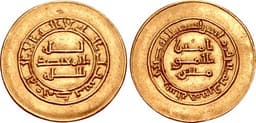
Al-Mutadid
Emperor · Medieval
57.9Total

Yemrehana Krestos
Emperor · Medieval
43.1Total
Basic Information
Born
857
1050
Died
902
1100
Era
Medieval
Medieval
Nationality
Abbasid Caliphate
Ethiopia
Occupation
Emperor
Emperor
Civilization
Middle Eastern
Other
Score Comparison
Military (10%)
52.5
10.2
Political (20%)
68.0
35.1
Influence (20%)
55.7
53.3
Legacy (20%)
47.5
45.0
Leadership (15%)
74.0
55.3
Strategy (15%)
55.0
39.6
TOTAL
57.9
43.1
Al-Mutadid — Complete Timeline
883 AD
Suppression of the Zanj RebellionWar◆ Major
Al-Mutadid, as regent and later caliph, led the final campaign that crushed the Zanj Rebellion. The rebel leader Ali ibn Muhammad was killed, and the revolt was brutally suppressed, restoring some order to southern Iraq.
Zanj RebellionMilitary CampaignRestoration
Impact: regionalconstructive
901 AD
Execution of the Qarmatian LeaderPolitical Action
Al-Mutadid ordered the execution of a captured Qarmatian leader, Yahya ibn Zikrawayh. This act was part of his efforts to suppress the Qarmatian movement, which threatened Abbasid rule in Syria and Iraq.
QarmatiansExecutionSuppression
Impact: regionaldestructive
Yemrehana Krestos — Complete Timeline
1070 AD
Built cave churches at Yemrehana KrestosCultural◆ Major
Yemrehana Krestos constructed a rock-hewn church complex in a cave near Lalibela. The churches, carved from solid rock, served as a pilgrimage site and demonstrated the Zagwe dynasty's commitment to Christian architecture and monasticism.
Rock-hewn churchesZagwe architectureChristian heritage
Impact: regionalconstructive
Expert Analysis
Origins
Al-Mutadid (born around 857 CE) was the son of the Abbasid caliph Al-Muwaffaq. He grew up in the turbulent atmosphere of the Abbasid court, where his father served as regent during the decline of caliphal authority. Al-Mutadid received military training and was groomed for leadership from an early age. His family background placed him at the center of the Islamic world's political struggles.
Yemrehana Krestos (reigned early 12th century) was a member of the Zagwe dynasty, which ruled Ethiopia after the decline of the Aksumite Empire. Little is known about his early life, but he likely came from a noble family in Lasta. He was a devout Christian, and his reign focused on religious construction rather than military expansion.
Rise to Power
Al-Mutadid rose to prominence as a military commander under his father, Al-Muwaffaq. His key turning point came in 883 CE when he led the suppression of the Zanj Rebellion, a massive slave revolt in southern Iraq. He killed the rebel leader Ali ibn Muhammad, securing his reputation as a capable general. In 892 CE, after his father's death, Al-Mutadid became caliph, inheriting a fractured empire.
Yemrehana Krestos became emperor of the Zagwe kingdom around 1100 CE. The Zagwe dynasty had seized power from the Aksumites, but their rule was contested. Yemrehana Krestos consolidated control through religious patronage rather than warfare. His reign is notable for the construction of rock-hewn churches, which served as both spiritual centers and symbols of royal authority.
Leadership & Governance
Al-Mutadid's leadership style was militaristic and centralizing. He personally led campaigns to restore Abbasid authority. In 905 CE, he reconquered Egypt from the Tulunid dynasty, ending their autonomous rule and reasserting direct control over the wealthy province. He also executed the Qarmatian leader Yahya ibn Zikrawayh in 901 CE, suppressing the Qarmatian movement in Syria. His political score of 68.0 reflects his ability to navigate court intrigues, but his military score of 52.5 indicates limited strategic innovation.
Yemrehana Krestos governed through religious authority. He commissioned the construction of a rock-hewn church complex in a cave near Lalibela, now known as the Yemrehana Krestos church. These churches were carved from solid rock, serving as pilgrimage sites and demonstrating the kingdom's Christian identity. His leadership score of 55.3 suggests moderate effectiveness, but his military score of 10.2 shows a lack of martial focus.
Triumph & Tragedy
Al-Mutadid's greatest success was the restoration of Abbasid authority in Egypt and the suppression of the Zanj Rebellion. These actions temporarily reversed the empire's fragmentation. However, his reign was too short (892-902 CE) to achieve lasting stability. After his death, the Abbasid caliphate continued its decline. His legacy score of 47.5 reflects this incomplete restoration.
Yemrehana Krestos's triumph was the construction of enduring religious monuments. The cave churches remain a UNESCO World Heritage site and a testament to Ethiopian Christian architecture. However, his reign lacked political or military achievements. The Zagwe dynasty was later overthrown by the Solomonic dynasty, and Yemrehana Krestos's influence remained confined to religious circles.
Character & Destiny
Al-Mutadid was determined and pragmatic. He understood the need for direct action to reclaim lost territories. His decision to execute the Qarmatian leader showed his ruthlessness. However, his early death prevented him from consolidating gains. Historical assessments note that he restored caliphal prestige temporarily but failed to address underlying weaknesses.
Yemrehana Krestos was pious and focused on spiritual legacy. His character was shaped by Ethiopian Orthodox traditions. While his religious devotion led to architectural marvels, it also meant he neglected military and political consolidation. The Zagwe kingdom remained vulnerable to internal and external threats.
Legacy
Al-Mutadid's legacy is tied to the Abbasid caliphate's brief resurgence. His reconquest of Egypt preserved caliphal influence in North Africa for a few more decades. His actions also weakened the Tulunid and Qarmatian movements. However, the caliphate continued to fragment after his death, and his impact was limited to the late 9th and early 10th centuries.
Yemrehana Krestos's legacy is architectural and religious. The cave churches he built are among the earliest surviving examples of rock-hewn architecture in Ethiopia. They influenced later structures, such as the churches of Lalibela. His reign also reinforced the Christian identity of the Ethiopian highlands, which persists to this day.
Conclusion
Al-Mutadid had greater impact than Yemrehana Krestos. His military campaigns temporarily restored Abbasid authority, affecting the political landscape of the Middle East. Yemrehana Krestos's contributions were primarily cultural and religious, with limited political or military significance. Al-Mutadid's total score of 57.9 compared to Yemrehana Krestos's 43.1 reflects this disparity. While both figures left marks on history, Al-Mutadid's actions had broader consequences for the Islamic world, whereas Yemrehana Krestos's influence remained regional and symbolic.
Rankings
🥇
Al-MutadidLeader
Mil: 52.5Pol: 68.0Inf: 55.7
57.9
🥈
Yemrehana Krestos
Mil: 10.2Pol: 35.1Inf: 53.3
43.1
+14.8 behind
How This Comparison Works
Algorithm
Each figure is scored on 6 dimensions (0—100 scale) based on structured historical data: Military (10%), Political (20%), Influence (20%), Legacy (20%), Leadership (15%), Strategy (15%). The weighted total produces the final ranking.
Data Sources
Scores are computed from structured sub-indicators in the database. Scale factors adjust for era (Ancient ×0.85, Modern ×1.0) and civilization size (Eastern ×1.05, Other ×0.80) to account for differences in population and military scale.
Maximum 3 Figures
Comparisons are limited to 2—3 figures to ensure readability and statistical meaningfulness.
Error Margins
±5 points per dimension — Sub-scores are derived from historical records with inherent uncertainty. Two figures within 5 points on a dimension should be considered roughly equivalent in that area.
Total Score Accuracy
±3 points overall — The weighted combination of 6 dimensions produces a total score with approximately ±3 points of uncertainty. Differences of less than 3 points are not statistically significant— the figures are effectively tied.
Known Limitations
- Historical records are incomplete and uneven across civilizations
- Figures from oral-tradition societies may be underrepresented
- Occupation labels can misclassify multi-role figures
- Scores measure capability and impact, not moral character
- Quantitative scoring is a comparison tool, not absolute truth
Capability Radar
Military (10%) — Battles & Warfare
Battles
55
10
Win Rate
60
10
Expansion
50
5
Political (20%) — Governance & Reform
Reform
55
30
Diplomacy
50
30
Economy
45
30
Influence (20%) — Cultural & Global Reach
Cultural
40
40
Global
35
20
Legacy (20%) — Historical Impact
Historical
45
40
Longevity
40
30
Leadership (15%) — Power & Stability
Tenure
60
40
Stability
50
30
Strategy (15%) — Tactics & Innovation
Strategy
55
10
Tactics
50
10
Reform
45
5
Similar Comparisons
Comments & Discussion
No comments yet. Be the first to share your thoughts!