Loading...
Al-Mutamid vs Manuel II Palaiologos
Manuel II Palaiologos leads by 0.8 pts · 2 figures compared
…
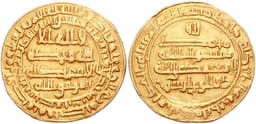
Al-Mutamid
Emperor · Medieval
39.2Total
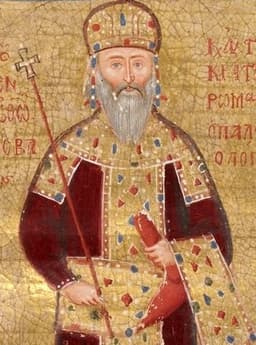
Manuel II Palaiologos
Emperor · Medieval
40.0Total
Basic Information
Born
844
1350
Died
892
1425
Era
Medieval
Medieval
Nationality
Abbasid Caliphate
Byzantine Empire
Occupation
Emperor
Emperor
Civilization
Middle Eastern
Western
Score Comparison
Military (10%)
21.2
10.2
Political (20%)
25.0
33.6
Influence (20%)
51.0
53.3
Legacy (20%)
41.7
43.3
Leadership (15%)
41.5
45.0
Strategy (15%)
39.6
30.3
TOTAL
39.2
40.0
Al-Mutamid — Complete Timeline
869 AD
Zanj RebellionWar◆ Major
A major slave revolt began in the marshlands of southern Iraq, led by Ali ibn Muhammad. Al-Mutamid's caliphate struggled to suppress the rebellion for over a decade, draining resources and weakening Abbasid authority.
Zanj RebellionSlave RevoltAbbasid Decline
Impact: regionaldestructive
871 AD
Battle of BasraWar◆ Major
Zanj rebels captured and sacked the city of Basra, massacring its inhabitants. This event demonstrated the inability of Al-Mutamid's forces to protect major urban centers, further eroding caliphal prestige.
Zanj RebellionBattleBasra
Impact: regionaltragic
892 AD
Death of Al-MutamidPolitical Action◆ Major
Al-Mutamid died, possibly poisoned by his brother and successor Al-Mutadid. His death ended a reign marked by the devastating Zanj Rebellion and the continued fragmentation of Abbasid power.
DeathSuccessionAbbasid
Impact: nationaltragic
Manuel II Palaiologos — Complete Timeline
1394 AD
Defense of Constantinople during the Ottoman siegeWar◆ Major
Manuel II oversaw the defense of Constantinople during a prolonged Ottoman blockade by Sultan Bayezid I. The city held out until the Ottoman defeat at the Battle of Ankara in 1402 temporarily relieved pressure.
SiegeOttoman WarsByzantine Empire
Impact: regional
1399 AD
Travel to Western Europe to seek aid against the Ottoman EmpirePolitical Action◆ Major
Manuel II Palaiologos traveled to the courts of Western Europe, including England, France, and the Holy Roman Empire, to request military assistance against the Ottoman siege of Constantinople. He met with King Henry IV of England and King Charles VI of France, but secured no substantial military aid.
DiplomacyOttoman WarsByzantine Empire
Impact: regional
1400 AD
Writing of religious dialogues and theological worksCultural
Manuel II composed several theological works, including dialogues on Christianity and Islam, and letters. His writings reflect his intellectual engagement with religious issues during the decline of the Byzantine Empire.
TheologyLiteratureByzantine Culture
Expert Analysis
Origins
Al-Mutamid was born in 842 CE into the Abbasid dynasty, the son of Caliph Al-Mutawakkil. He grew up in the opulent palace of Samarra, but his education was limited; he was known more for piety and poetry than statecraft. His half-brother Al-Muwaffaq, a capable military commander, dominated politics, leaving Al-Mutamid as a figurehead.
Manuel II Palaiologos was born in 1350 CE, the second son of Emperor John V Palaiologos. The Byzantine Empire was in terminal decline, reduced to a few territories. Manuel received a classical education, mastering rhetoric, theology, and philosophy. He served as a governor in Thessalonica before becoming emperor.
Rise to Power
Al-Mutamid became caliph in 870 CE after the murder of his cousin Al-Muhtadi. However, real power rested with his brother Al-Muwaffaq, who controlled the military and suppressed the Zanj Rebellion. Al-Mutamid's reign was marked by power struggles with his brother, culminating in Al-Mutamid's attempted escape to Egypt in 882, which failed, and he was brought back to Samarra.
Manuel II Palaiologos rose to power in 1391 CE upon his father's death. He had already co-emperor since 1373. His early reign faced the Ottoman sultan Bayezid I, who besieged Constantinople from 1394 to 1402. Manuel left the city in 1399 to travel to Western Europe, seeking aid. He visited Venice, Paris, and London, but received only promises. The siege was lifted only after the Ottoman defeat at the Battle of Ankara in 1402.
Leadership & Governance
Al-Mutamid's governance was weak. He delegated authority to Al-Muwaffaq, who effectively ruled. Al-Mutamid's main achievements were cultural: he patronized poets and scholars. He scored 25.0 in political leadership, reflecting his inability to assert control. The Zanj Rebellion (869-883) devastated southern Iraq, and Al-Mutamid's forces failed to protect Basra, which was sacked in 871.
Manuel II Palaiologos scored 33.6 in political skill. He governed a shrinking empire through diplomacy and intellectual engagement. He maintained Constantinople's autonomy by playing off Ottoman rivals. His travel to Europe was a diplomatic gamble that paid off only through external events. He also wrote theological works, including dialogues with a Muslim scholar, showing his intellectual approach.
Triumph & Tragedy
Al-Mutamid's triumph was the eventual suppression of the Zanj Rebellion in 883, but this was achieved by his brother, not him. His tragedy was the loss of Basra and the weakening of the caliphate. He died in 892, possibly poisoned by Al-Muwaffaq's son Al-Mutadid, who succeeded him. His reign is remembered for the Zanj Rebellion, which killed hundreds of thousands.
Manuel II's triumph was the survival of Constantinople during the Ottoman siege. His travel to Europe cemented diplomatic ties and demonstrated Byzantine resilience. His tragedy was the eventual fall of Constantinople in 1453, decades after his death. He failed to secure substantial military aid, and his empire remained dependent on Ottoman sufferance. His scores: military 10.2, strategy 30.3.
Character & Destiny
Al-Mutamid was pious and passive. He preferred poetry to politics. His character made him a pawn of his brother. His destiny was to be overshadowed by the rebellion that defined his reign. Historians view him as a weak ruler who lost control.
Manuel II was intellectual and diplomatic. He was a skilled negotiator but lacked military resources. His character shaped his policy of seeking Western aid. His destiny was to preside over the empire's twilight. He is seen as a cultured emperor who did his best in impossible circumstances.
Legacy
Al-Mutamid's legacy is minimal. The Zanj Rebellion is a major event in Islamic history, but Al-Mutamid is barely remembered as a caliph. His patronage of poetry had little lasting impact. He scored 41.7 in legacy.
Manuel II's legacy is more positive. He is remembered as a learned emperor who defended Christianity and wrote influential texts. His travel to Europe is a notable diplomatic effort. His legacy score is 43.3. He is seen as a symbol of Byzantine endurance.
Conclusion
Manuel II Palaiologos had a greater impact than Al-Mutamid. Despite a similar total score (40.0 vs 39.2), Manuel's defense of Constantinople and intellectual contributions outshine Al-Mutamid's passive reign. Al-Mutamid's caliphate was defined by a rebellion he failed to control, while Manuel's empire survived through his efforts. Manuel's influence on Byzantine diplomacy and theology endures, whereas Al-Mutamid's name is tied to disaster. Therefore, Manuel II Palaiologos is the more significant figure.
Rankings
🥇
Manuel II PalaiologosLeader
Mil: 10.2Pol: 33.6Inf: 53.3
40.0
🥈
Al-Mutamid
Mil: 21.2Pol: 25.0Inf: 51.0
39.2
+0.8 behind
How This Comparison Works
Algorithm
Each figure is scored on 6 dimensions (0—100 scale) based on structured historical data: Military (10%), Political (20%), Influence (20%), Legacy (20%), Leadership (15%), Strategy (15%). The weighted total produces the final ranking.
Data Sources
Scores are computed from structured sub-indicators in the database. Scale factors adjust for era (Ancient ×0.85, Modern ×1.0) and civilization size (Eastern ×1.05, Other ×0.80) to account for differences in population and military scale.
Maximum 3 Figures
Comparisons are limited to 2—3 figures to ensure readability and statistical meaningfulness.
Error Margins
±5 points per dimension — Sub-scores are derived from historical records with inherent uncertainty. Two figures within 5 points on a dimension should be considered roughly equivalent in that area.
Total Score Accuracy
±3 points overall — The weighted combination of 6 dimensions produces a total score with approximately ±3 points of uncertainty. Differences of less than 3 points are not statistically significant— the figures are effectively tied.
Known Limitations
- Historical records are incomplete and uneven across civilizations
- Figures from oral-tradition societies may be underrepresented
- Occupation labels can misclassify multi-role figures
- Scores measure capability and impact, not moral character
- Quantitative scoring is a comparison tool, not absolute truth
Capability Radar
Military (10%) — Battles & Warfare
Battles
15
10
Win Rate
10
10
Expansion
5
5
Political (20%) — Governance & Reform
Reform
20
15
Diplomacy
20
60
Economy
15
10
Influence (20%) — Cultural & Global Reach
Cultural
25
30
Global
20
20
Legacy (20%) — Historical Impact
Historical
30
35
Longevity
20
25
Leadership (15%) — Power & Stability
Tenure
40
40
Stability
10
15
Strategy (15%) — Tactics & Innovation
Strategy
10
20
Tactics
10
15
Reform
5
5
Similar Comparisons
Comments & Discussion
No comments yet. Be the first to share your thoughts!