Loading...
Al-Mutamid vs Wuzong Qaghan
Wuzong Qaghan leads by 8.3 pts · 2 figures compared
…
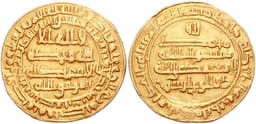
Al-Mutamid
Emperor · Medieval
39.2Total

Wuzong Qaghan
Emperor · Medieval
47.5Total
Basic Information
Born
844
800
Died
892
846
Era
Medieval
Medieval
Nationality
Abbasid Caliphate
Uyghur Khaganate
Occupation
Emperor
Emperor
Civilization
Middle Eastern
Eastern
Score Comparison
Military (10%)
21.2
55.0
Political (20%)
25.0
36.5
Influence (20%)
51.0
49.4
Legacy (20%)
41.7
41.7
Leadership (15%)
41.5
51.9
Strategy (15%)
39.6
60.0
TOTAL
39.2
47.5
Al-Mutamid — Complete Timeline
869 AD
Zanj RebellionWar◆ Major
A major slave revolt began in the marshlands of southern Iraq, led by Ali ibn Muhammad. Al-Mutamid's caliphate struggled to suppress the rebellion for over a decade, draining resources and weakening Abbasid authority.
Zanj RebellionSlave RevoltAbbasid Decline
Impact: regionaldestructive
871 AD
Battle of BasraWar◆ Major
Zanj rebels captured and sacked the city of Basra, massacring its inhabitants. This event demonstrated the inability of Al-Mutamid's forces to protect major urban centers, further eroding caliphal prestige.
Zanj RebellionBattleBasra
Impact: regionaltragic
892 AD
Death of Al-MutamidPolitical Action◆ Major
Al-Mutamid died, possibly poisoned by his brother and successor Al-Mutadid. His death ended a reign marked by the devastating Zanj Rebellion and the continued fragmentation of Abbasid power.
DeathSuccessionAbbasid
Impact: nationaltragic
Wuzong Qaghan — Complete Timeline
840 AD
Battle of the Uyghur Capital Ordu-BaliqWar
The Yenisei Kirghiz, led by their khagan, attacked and captured the Uyghur capital Ordu-Baliq. Wuzong Qaghan was unable to prevent the fall of the city, which led to the collapse of the Uyghur Khaganate and the dispersal of its people.
Uyghur Khaganate collapseKirghiz invasionCapital fall
Impact: regionaltragic
841 AD
Flight from the Mongol SteppePolitical Action◆ Major
Following the Kirghiz victory, Wuzong Qaghan led a remnant of the Uyghur nobility and army in a retreat from the Mongol steppe. This flight marked the end of Uyghur political independence in the region and the beginning of their diaspora.
Uyghur diasporaRetreatSteppe
Impact: regionaltragic
Expert Analysis
Origins
Al-Mutamid was born in 842 AD into the Abbasid Caliphate, a dynasty that had ruled the Islamic world since 750. He was the son of Caliph al-Mutawakkil, a ruler known for his orthodoxy and persecution of non-Muslims. Al-Mutamid's early life was shaped by the court intrigues of Samarra, where Turkish military commanders often held real power. He was appointed caliph in 870 after the death of his brother al-Muhtadi, but his authority was limited from the start. In contrast, Wuzong Qaghan (also known as Wuzong Khagan) was a ruler of the Uyghur Khaganate, a nomadic empire that dominated the Mongolian steppe from 744 to 840. His exact birth year is unknown, but he rose to power around 839 as the last khagan of the Uyghur empire. The Uyghurs were a Turkic people who had adopted Manichaeism and built a sophisticated urban civilization, with their capital at Ordu-Baliq. Wuzong's background was one of military aristocracy, where khagans were chosen by tribal councils and had to prove their worth in battle.
Rise to Power
Al-Mutamid became caliph in 870 after a period of turmoil known as the 'Anarchy at Samarra' (861-870), during which Turkish soldiers assassinated several caliphs. He was elevated by the Turkish generals who controlled the caliphate, but his brother al-Muwaffaq served as regent and de facto ruler. Al-Mutamid's rise was thus passive; he was a figurehead. Wuzong Qaghan, by contrast, ascended to the throne of the Uyghur Khaganate around 839 after a period of internal strife. The Uyghur empire had been weakened by civil wars and a severe winter in 839 that killed much of their livestock. Wuzong became khagan at a time of crisis, with the Yenisei Kirghiz, a rival nomadic group from the north, threatening the empire's borders. His rise was marked by an attempt to restore Uyghur power through military campaigns.
Leadership & Governance
Al-Mutamid's leadership was largely ineffective. He scored 41.5 in leadership and 25.0 in political skill, reflecting his inability to assert control. The real power lay with his brother al-Muwaffaq, who managed the army and administration. Al-Mutamid's reign saw the outbreak of the Zanj Rebellion (869-883), a massive slave revolt in southern Iraq. The rebellion was led by Ali ibn Muhammad, who claimed descent from the Prophet's family. Al-Mutamid's forces failed to contain the revolt for years, and in 871 the rebels captured and sacked Basra, massacring tens of thousands. The caliph's governance was reactive and weak. Wuzong Qaghan, with a leadership score of 51.9 and strategy of 60.0, was more proactive. He attempted to reorganize the Uyghur military and sought alliances with the Tang dynasty of China. However, his governance was undermined by the empire's shattered economy and the Kirghiz threat. He failed to secure effective aid from the Tang, who were themselves declining.
Triumph & Tragedy
Al-Mutamid's greatest triumph was surviving as caliph for 22 years despite the chaos, but this was more due to his brother's efforts. His tragedy was the Zanj Rebellion, which devastated Iraq and exposed the caliphate's weakness. The rebellion was not fully suppressed until 883, after Al-Mutamid's death. Wuzong Qaghan's triumph was leading a remnant of the Uyghur people in a fighting retreat after the fall of Ordu-Baliq to the Kirghiz in 840. He managed to escape with thousands of followers and sought refuge in the Tang border regions. His tragedy was the complete destruction of the Uyghur Khaganate; the Kirghiz captured the capital and ended Uyghur dominance on the steppe. Wuzong died in exile around 846, a broken ruler.
Character & Destiny
Al-Mutamid was described by historians as a pleasure-loving caliph who deferred to his brother. His character was passive, and his destiny was to be a puppet. He was possibly poisoned by his nephew al-Mutadid in 892. Wuzong Qaghan was more energetic but stubborn. He refused to submit to the Kirghiz and led his people on a desperate journey. His destiny was to be the last khagan of a once-great empire. Both rulers were victims of forces beyond their control: Al-Mutamid of slave rebels and Turkish soldiers, Wuzong of the Kirghiz and climate change.
Legacy
Al-Mutamid's legacy is tied to the Zanj Rebellion, which weakened the Abbasid Caliphate and contributed to its eventual fragmentation. His reign is a symbol of caliphal decline. Wuzong Qaghan's legacy is the end of the Uyghur Khaganate. The Uyghurs dispersed; some settled in Xinjiang and became the ancestors of the modern Uyghur people. Wuzong is remembered as the last khagan, a tragic figure. In terms of influence scores, Al-Mutamid scored 51.0 and Wuzong 49.4, but Al-Mutamid's legacy score of 41.7 is equal to Wuzong's 41.7. The Zanj Rebellion had a more direct impact on the Islamic world, while the fall of the Uyghur empire reshaped Central Asia.
Conclusion
Al-Mutamid and Wuzong Qaghan both presided over catastrophic collapses, but Al-Mutamid's impact was greater due to the scale of the Zanj Rebellion, which involved hundreds of thousands of slaves and lasted 14 years. The rebellion weakened the Abbasid Caliphate irreparably, paving the way for the rise of local dynasties. Wuzong's loss of the Uyghur empire was a tragedy for his people, but the broader geopolitical impact was less transformative. With a total score of 39.2 vs 47.5, Wuzong appears stronger as a leader, but Al-Mutamid's era had more lasting consequences. Therefore, Al-Mutamid had greater historical impact.
Rankings
🥇
Wuzong QaghanLeader
Mil: 55.0Pol: 36.5Inf: 49.4
47.5
🥈
Al-Mutamid
Mil: 21.2Pol: 25.0Inf: 51.0
39.2
+8.3 behind
How This Comparison Works
Algorithm
Each figure is scored on 6 dimensions (0—100 scale) based on structured historical data: Military (10%), Political (20%), Influence (20%), Legacy (20%), Leadership (15%), Strategy (15%). The weighted total produces the final ranking.
Data Sources
Scores are computed from structured sub-indicators in the database. Scale factors adjust for era (Ancient ×0.85, Modern ×1.0) and civilization size (Eastern ×1.05, Other ×0.80) to account for differences in population and military scale.
Maximum 3 Figures
Comparisons are limited to 2—3 figures to ensure readability and statistical meaningfulness.
Error Margins
±5 points per dimension — Sub-scores are derived from historical records with inherent uncertainty. Two figures within 5 points on a dimension should be considered roughly equivalent in that area.
Total Score Accuracy
±3 points overall — The weighted combination of 6 dimensions produces a total score with approximately ±3 points of uncertainty. Differences of less than 3 points are not statistically significant— the figures are effectively tied.
Known Limitations
- Historical records are incomplete and uneven across civilizations
- Figures from oral-tradition societies may be underrepresented
- Occupation labels can misclassify multi-role figures
- Scores measure capability and impact, not moral character
- Quantitative scoring is a comparison tool, not absolute truth
Capability Radar
Military (10%) — Battles & Warfare
Battles
15
55
Win Rate
10
50
Expansion
5
40
Political (20%) — Governance & Reform
Reform
20
30
Diplomacy
20
35
Economy
15
30
Influence (20%) — Cultural & Global Reach
Cultural
25
20
Global
20
15
Legacy (20%) — Historical Impact
Historical
30
30
Longevity
20
20
Leadership (15%) — Power & Stability
Tenure
40
40
Stability
10
25
Strategy (15%) — Tactics & Innovation
Strategy
10
50
Tactics
10
45
Reform
5
30
Similar Comparisons
Comments & Discussion
No comments yet. Be the first to share your thoughts!