Loading...
Henry II of Castile vs Wuzong Qaghan
Wuzong Qaghan leads by 0.2 pts · 2 figures compared
…
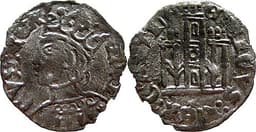
Henry II of Castile
Emperor · Medieval
47.3Total

Wuzong Qaghan
Emperor · Medieval
47.5Total
Basic Information
Born
1334
800
Died
1379
846
Era
Medieval
Medieval
Nationality
Castile
Uyghur Khaganate
Occupation
Emperor
Emperor
Civilization
Western
Eastern
Score Comparison
Military (10%)
25.0
55.0
Political (20%)
40.8
36.5
Influence (20%)
51.8
49.4
Legacy (20%)
45.8
41.7
Leadership (15%)
55.3
51.9
Strategy (15%)
60.0
60.0
TOTAL
47.3
47.5
Henry II of Castile — Complete Timeline
1369 AD
Battle of MontielWar◆ Major
Henry of Trastamara defeated the forces of Peter I at the Battle of Montiel. After the battle, Henry captured and killed Peter, ending the First Castilian Civil War and securing his claim to the throne.
BattleCivil WarCastile
Impact: nationaldestructive
Coronation as King of CastilePolitical Action◆ Major
Henry of Trastamara was crowned King of Castile after killing his half-brother Peter I. His coronation established the Trastamara dynasty, which would rule Castile and later Aragon for the next century.
CoronationTrastamaraCastile
Impact: national
Alliance with FrancePolitical Action◆ Major
Henry II formed a lasting alliance with France, supporting French interests in the Hundred Years' War against England. This alliance provided Castile with French military support and strengthened the Franco-Castilian axis.
AllianceFranceCastile
Impact: regionalconstructive
1370 AD
Reforms to the NobilityReform
Henry II redistributed lands and titles to his supporters, creating a new nobility loyal to the Trastamara dynasty. These reforms strengthened royal authority but also entrenched the power of the new noble class.
ReformNobilityCastile
Impact: nationalconstructive
Wuzong Qaghan — Complete Timeline
840 AD
Battle of the Uyghur Capital Ordu-BaliqWar
The Yenisei Kirghiz, led by their khagan, attacked and captured the Uyghur capital Ordu-Baliq. Wuzong Qaghan was unable to prevent the fall of the city, which led to the collapse of the Uyghur Khaganate and the dispersal of its people.
Uyghur Khaganate collapseKirghiz invasionCapital fall
Impact: regionaltragic
841 AD
Flight from the Mongol SteppePolitical Action◆ Major
Following the Kirghiz victory, Wuzong Qaghan led a remnant of the Uyghur nobility and army in a retreat from the Mongol steppe. This flight marked the end of Uyghur political independence in the region and the beginning of their diaspora.
Uyghur diasporaRetreatSteppe
Impact: regionaltragic
Expert Analysis
Origins
Henry II of Castile was born in 1334 as an illegitimate son of King Alfonso XI of Castile and Eleanor de Guzmán. His illegitimacy shaped his early life, as he was excluded from direct succession but received a noble upbringing. His half-brother, Peter I, became king in 1350, leading to decades of rivalry. Henry's early years were spent building support among the Castilian nobility and seeking alliances abroad, particularly with France.
Wuzong Qaghan, whose birth name is unknown, rose to lead the Uyghur Khaganate in the mid-9th century. The Uyghur Khaganate was a powerful steppe empire that had dominated Mongolia since 744 AD. Wuzong inherited a realm facing internal strife and external threats, particularly from the Yenisei Kirghiz to the north. His early life likely involved military training and court politics, but details are sparse due to limited historical records.
Rise to Power
Henry's path to power was marked by civil war. In 1356, he launched a rebellion against Peter I, initiating the First Castilian Civil War. With support from Aragon and France, Henry fought for a decade. The turning point came at the Battle of Montiel in 1369, where Henry's forces defeated Peter. Henry personally killed his half-brother, ending the war and securing the throne. He was crowned Henry II, establishing the Trastamara dynasty.
Wuzong Qaghan became khagan around 839 AD, during a period of declining Uyghur power. The Khaganate was weakened by internal divisions, economic troubles, and pressure from the Tang dynasty. Wuzong's rise was likely through inheritance or coup, but details are unclear. His primary challenge was the rising Yenisei Kirghiz, who had unified under their own khagan and sought to expand southward.
Leadership & Governance
Henry II focused on consolidating power through patronage. He redistributed lands and titles to his noble supporters, creating a new aristocracy loyal to him. This weakened the old nobility and strengthened royal authority. Henry also forged a lasting alliance with France, supporting French efforts in the Hundred Years' War against England. This alliance brought Castile into European power politics and secured French subsidies. However, his reign was marked by ongoing conflicts with Portugal and Aragon.
Wuzong Qaghan's leadership was tested by the Kirghiz threat. He attempted to reorganize the Uyghur military and secure alliances with the Tang dynasty, but these efforts failed. The Kirghiz launched a decisive attack on the Uyghur capital, Ordu-Baliq, in 840 AD. Wuzong was unable to defend the city, leading to its capture and destruction. This defeat forced Wuzong to flee with a remnant of his people, effectively ending the Uyghur Khaganate.
Triumph & Tragedy
Henry II's greatest triumph was his survival and victory in the civil war. He successfully killed his rival and founded a dynasty that ruled Castile for over a century. His alliance with France brought prestige and resources. However, his reign was plagued by instability. He faced rebellions from former allies and constant war with neighboring kingdoms. His reliance on French support also made Castile dependent on foreign aid.
Wuzong Qaghan's triumph was his ability to lead the Uyghur remnant to safety after the fall of Ordu-Baliq. He managed to preserve the Uyghur identity and leadership structure during the flight. However, his tragedy was the complete collapse of the Uyghur Khaganate. The Kirghiz victory was so total that the Uyghur empire never recovered. Wuzong's failure to defend the capital and his subsequent exile marked the end of Uyghur dominance in Mongolia.
Character & Destiny
Henry II was ruthless and pragmatic. His murder of his half-brother demonstrated a willingness to use violence to achieve power. He was also a skilled diplomat, securing French support and building a new nobility. His character was shaped by his illegitimate birth, which drove him to prove his worth. Historians note his political acumen but also his cruelty. His destiny was to create a dynasty that would shape Spanish history.
Wuzong Qaghan was a leader of a fading empire. He faced overwhelming odds and was unable to reverse the decline. His character is harder to assess due to limited sources, but he appears to have been a determined yet ultimately unsuccessful ruler. His destiny was to be the last khagan of a once-great empire, remembered for presiding over its destruction.
Legacy
Henry II's legacy is the Trastamara dynasty, which ruled Castile and later Aragon. His policies strengthened the monarchy and aligned Castile with France. This alliance influenced the Hundred Years' War and later European conflicts. However, his reign also sowed seeds of future civil wars. His scores reflect moderate impact: Military 25.0, Political 40.8, Influence 51.8, Legacy 45.8, Leadership 55.3, Strategy 60.0, Total 47.3.
Wuzong Qaghan's legacy is the end of the Uyghur Khaganate. His defeat allowed the Kirghiz to dominate the steppe and eventually led to the rise of the Mongol Empire. The Uyghur diaspora contributed to the spread of Manichaeism and other cultural influences. His scores: Military 55.0, Political 36.5, Influence 49.4, Legacy 41.7, Leadership 51.9, Strategy 60.0, Total 47.5.
Conclusion
Wuzong Qaghan scores slightly higher overall (47.5 vs 47.3), but Henry II had a greater long-term impact. Henry founded a dynasty that shaped Spain for centuries, while Wuzong presided over an empire's collapse. Henry's political and legacy scores are stronger, reflecting his enduring influence. Wuzong's military score is higher, but his failure to preserve his state limits his legacy. Therefore, Henry II of Castile had a greater impact on history.
Rankings
🥇
Wuzong QaghanLeader
Mil: 55.0Pol: 36.5Inf: 49.4
47.5
🥈
Henry II of Castile
Mil: 25.0Pol: 40.8Inf: 51.8
47.3
+0.2 behind
How This Comparison Works
Algorithm
Each figure is scored on 6 dimensions (0—100 scale) based on structured historical data: Military (10%), Political (20%), Influence (20%), Legacy (20%), Leadership (15%), Strategy (15%). The weighted total produces the final ranking.
Data Sources
Scores are computed from structured sub-indicators in the database. Scale factors adjust for era (Ancient ×0.85, Modern ×1.0) and civilization size (Eastern ×1.05, Other ×0.80) to account for differences in population and military scale.
Maximum 3 Figures
Comparisons are limited to 2—3 figures to ensure readability and statistical meaningfulness.
Error Margins
±5 points per dimension — Sub-scores are derived from historical records with inherent uncertainty. Two figures within 5 points on a dimension should be considered roughly equivalent in that area.
Total Score Accuracy
±3 points overall — The weighted combination of 6 dimensions produces a total score with approximately ±3 points of uncertainty. Differences of less than 3 points are not statistically significant— the figures are effectively tied.
Known Limitations
- Historical records are incomplete and uneven across civilizations
- Figures from oral-tradition societies may be underrepresented
- Occupation labels can misclassify multi-role figures
- Scores measure capability and impact, not moral character
- Quantitative scoring is a comparison tool, not absolute truth
Capability Radar
Military (10%) — Battles & Warfare
Battles
45
55
Win Rate
40
50
Expansion
30
40
Political (20%) — Governance & Reform
Reform
30
30
Diplomacy
55
35
Economy
25
30
Influence (20%) — Cultural & Global Reach
Cultural
30
20
Global
20
15
Legacy (20%) — Historical Impact
Historical
40
30
Longevity
35
20
Leadership (15%) — Power & Stability
Tenure
50
40
Stability
20
25
Strategy (15%) — Tactics & Innovation
Strategy
40
50
Tactics
35
45
Reform
20
30
Similar Comparisons
Comments & Discussion
No comments yet. Be the first to share your thoughts!