Loading...
Al-Mutazz vs Henry I of France
Henry I of France leads by 3.6 pts · 2 figures compared
…

Al-Mutazz
Emperor · Medieval
40.0Total
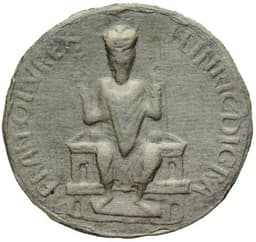
Henry I of France
Emperor · Medieval
43.6Total
Basic Information
Born
847
1008
Died
869
1060
Era
Medieval
Medieval
Nationality
Abbasid Caliphate
France
Occupation
Emperor
Emperor
Civilization
Middle Eastern
Western
Score Comparison
Military (10%)
20.0
50.0
Political (20%)
35.0
29.3
Influence (20%)
47.1
47.9
Legacy (20%)
35.8
39.2
Leadership (15%)
49.9
58.8
Strategy (15%)
45.0
35.7
TOTAL
40.0
43.6
Al-Mutazz — Complete Timeline
866 AD
Accession as CaliphPolitical Action◆ Major
Al-Mutazz became caliph after the abdication of al-Mustain, with the support of Turkish military factions. His reign was marked by continued Turkish dominance and financial crisis.
SuccessionTurkish Domination
Impact: national
869 AD
Conflict with Turkish GuardPolitical Action◆ Major
Al-Mutazz attempted to reduce the power of the Turkish guard by withholding their pay. This led to a revolt by the Turks, who besieged him in his palace and forced him to abdicate.
Power StruggleTurkish Revolt
Impact: nationaldestructive
Death by Turkish GuardPolitical Action◆ Major
After being forced to abdicate, al-Mutazz was killed by the Turkish guard. His death was a result of the ongoing struggle between the caliphs and the military, further weakening the Abbasid state.
AssassinationTurkish Guard
Impact: nationaltragic
Henry I of France — Complete Timeline
1031 AD
Reign as King of the FranksPolitical Action◆ Major
Henry I succeeded his father Robert II as King of the Franks. His reign was marked by constant conflicts with powerful nobles, including his brother Robert I, Duke of Burgundy, who challenged his authority.
KingshipCapetianReign
Impact: national
1032 AD
Rebellion of Robert I of BurgundyWar◆ Major
Henry I faced a rebellion led by his brother Robert I, Duke of Burgundy, who claimed the throne. The conflict lasted several years and was resolved through a compromise, with Robert retaining Burgundy but recognizing Henry as king.
RebellionCivil WarBurgundy
Impact: regional
1047 AD
Alliance with the Duke of NormandyPolitical Action
Henry I allied with William, Duke of Normandy (later William the Conqueror), to suppress a rebellion in Normandy. The alliance helped William secure his duchy, but later soured, leading to conflict between the two.
AllianceNormandyWilliam the Conqueror
Impact: regional
1050 AD
Conflict with the County of AnjouWar
Henry I fought a series of wars against the County of Anjou under Count Geoffrey Martel. The conflicts weakened royal authority and allowed Anjou to expand its territory at the expense of the crown.
WarAnjouTerritorial Loss
Impact: regional
Expert Analysis
Origins
Al-Mutazz (born 847 CE) was the son of Caliph al-Mutawakkil, who was assassinated in 861 CE. He grew up in the turbulent Abbasid court, where Turkish military factions increasingly held power. His education was typical for a prince, but he lacked practical experience in governance or military command. Henry I of France (born 1008 CE) was the son of King Robert II of the Capetian dynasty. As the second son, he was initially not expected to inherit the throne, but his older brother Hugh died young. Henry was raised in the royal domain around Paris, receiving training in kingship and warfare from his father.
Rise to Power
Al-Mutazz became caliph in 866 CE after his predecessor al-Mustain abdicated under pressure from Turkish military leaders. The Turks supported al-Mutazz because they believed he would be pliable. His reign began with a power-sharing arrangement with the Turkish commander Wasif al-Turki. Henry I inherited the throne in 1031 CE upon his father's death. Immediately, he faced a rebellion from his mother, Constance of Arles, who favored his younger brother Robert. Henry's rise was contested, and he had to fight to secure his crown against his own family.
Leadership & Governance
Al-Mutazz attempted to assert his authority by reducing the power of the Turkish guard. He withheld their pay, hoping to force them into submission. This direct confrontation was poorly planned; he had no loyal army to back him. In contrast, Henry I focused on diplomacy and strategic alliances. He allied with the Duke of Normandy, William (later the Conqueror), to suppress rebellions. Henry also used marriage alliances, marrying Anne of Kiev to secure Eastern support. His governance was characterized by constant negotiation with powerful nobles, as royal authority was limited outside the Île-de-France.
Triumph & Tragedy
Al-Mutazz's greatest success was briefly uniting the Abbasid court after his accession, but this was short-lived. His major failure was his inability to manage the Turkish guard. When the Turks revolted, he was besieged in his palace, forced to abdicate, and then killed in 869 CE. He scored 20.0 in military and 35.0 in political scores. Henry I's triumphs include surviving multiple rebellions and maintaining the Capetian dynasty. He successfully defended his throne against his brother Robert and Count Geoffrey Martel of Anjou. However, his wars with Anjou were often unsuccessful, and he failed to expand royal domain significantly. He scored 50.0 in military and 29.3 in political scores.
Character & Destiny
Al-Mutazz was impetuous and overestimated his authority. He attempted a risky move against the Turkish guard without securing alternatives. His death was a direct result of his miscalculation. Henry I was cautious and persistent, but his reign was marked by defensive actions rather than bold initiatives. He lacked the strategic vision to centralize power, scoring 35.7 in strategy. Both rulers were constrained by the circumstances of their times—the Abbasid Caliphate was already fragmenting, and Capetian France was a collection of semi-independent fiefs.
Legacy
Al-Mutazz's brief reign (866-869) is remembered as a low point of the Abbasid Caliphate, where caliphs became puppets of Turkish guards. His death symbolized the military's dominance over the caliphate, leading to further decline. Henry I's legacy is more nuanced: he preserved the Capetian line during a period of weak kingship. His son Philip I succeeded him, continuing the dynasty that would eventually become powerful. Henry's alliances with Normandy had lasting implications, as William the Conqueror later used Norman strength to invade England. Henry scored 39.2 in legacy, while Al-Mutazz scored 47.1 in influence, reflecting the broader impact of the caliphate's decline.
Conclusion
Henry I of France had a greater overall impact on history than Al-Mutazz. Henry's total score of 43.6 vs. Al-Mutazz's 40.0 reflects this. While Al-Mutazz's failure accelerated the Abbasid Caliphate's decay, Henry's survival ensured the Capetian dynasty's continuity, which eventually led to a strong French monarchy. Al-Mutazz's reign was a cautionary tale of weak leadership, but Henry I's persistence laid groundwork for future growth. Therefore, Henry I's impact, though modest, was more positive and enduring.
Rankings
🥇
Henry I of FranceLeader
Mil: 50.0Pol: 29.3Inf: 47.9
43.6
🥈
Al-Mutazz
Mil: 20.0Pol: 35.0Inf: 47.1
40.0
+3.6 behind
How This Comparison Works
Algorithm
Each figure is scored on 6 dimensions (0—100 scale) based on structured historical data: Military (10%), Political (20%), Influence (20%), Legacy (20%), Leadership (15%), Strategy (15%). The weighted total produces the final ranking.
Data Sources
Scores are computed from structured sub-indicators in the database. Scale factors adjust for era (Ancient ×0.85, Modern ×1.0) and civilization size (Eastern ×1.05, Other ×0.80) to account for differences in population and military scale.
Maximum 3 Figures
Comparisons are limited to 2—3 figures to ensure readability and statistical meaningfulness.
Error Margins
±5 points per dimension — Sub-scores are derived from historical records with inherent uncertainty. Two figures within 5 points on a dimension should be considered roughly equivalent in that area.
Total Score Accuracy
±3 points overall — The weighted combination of 6 dimensions produces a total score with approximately ±3 points of uncertainty. Differences of less than 3 points are not statistically significant— the figures are effectively tied.
Known Limitations
- Historical records are incomplete and uneven across civilizations
- Figures from oral-tradition societies may be underrepresented
- Occupation labels can misclassify multi-role figures
- Scores measure capability and impact, not moral character
- Quantitative scoring is a comparison tool, not absolute truth
Capability Radar
Military (10%) — Battles & Warfare
Battles
5
20
Win Rate
5
25
Expansion
5
10
Political (20%) — Governance & Reform
Reform
5
20
Diplomacy
5
30
Economy
5
20
Influence (20%) — Cultural & Global Reach
Cultural
5
15
Global
5
10
Legacy (20%) — Historical Impact
Historical
10
20
Longevity
5
15
Leadership (15%) — Power & Stability
Tenure
10
50
Stability
5
25
Strategy (15%) — Tactics & Innovation
Strategy
5
15
Tactics
5
20
Reform
5
10
Similar Comparisons
Comments & Discussion
No comments yet. Be the first to share your thoughts!