Loading...
Edward the Confessor vs Le Loi
Le Loi leads by 18.0 pts · 2 figures compared
…
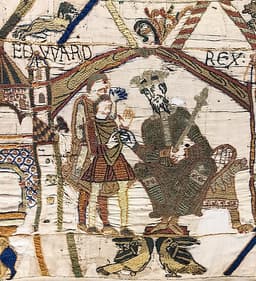
Edward the Confessor
Emperor · Medieval
50.2Total
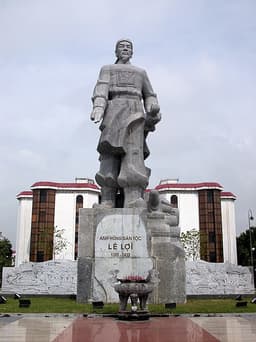
Le Loi
Emperor · Medieval
68.2Total
Basic Information
Born
1003
1385
Died
1066
1433
Era
Medieval
Medieval
Nationality
England
Vietnam
Occupation
Emperor
Emperor
Civilization
Western
Eastern
Score Comparison
Military (10%)
20.0
74.7
Political (20%)
45.1
60.0
Influence (20%)
57.2
68.0
Legacy (20%)
52.0
68.0
Leadership (15%)
64.0
72.0
Strategy (15%)
45.0
69.1
TOTAL
50.2
68.2
Edward the Confessor — Complete Timeline
1043 AD
Coronation of Edward the ConfessorPolitical Action◆ Major
Edward was crowned king of England at Winchester Cathedral on April 3, 1043. His reign marked the restoration of the Anglo-Saxon monarchy after 27 years of Danish rule.
CoronationRestorationAnglo-Saxon
Impact: nationalconstructive
1045 AD
Construction of Westminster AbbeyCultural◆ Major
Edward began rebuilding Westminster Abbey in the Norman Romanesque style. The abbey was consecrated in 1065, just before his death, and became the coronation church of English monarchs.
ArchitectureReligionLegacy
Impact: nationalconstructive
1051 AD
Conflict with Godwin of WessexPolitical Action◆ Major
Edward exiled Earl Godwin and his sons after a dispute over the treatment of Norman favorites. Godwin returned with a fleet in 1052, forcing Edward to restore their lands and power.
ExilePower StruggleGodwin
Impact: nationaldestructive
Promise of Throne to William of NormandyPolitical Action◆ Major
Edward allegedly promised the English throne to his cousin William, Duke of Normandy, during a visit by William to England. This promise later became the basis for William's claim to the throne.
SuccessionNorman ClaimPromise
Impact: regional
1066 AD
Death of Edward the ConfessorPolitical Action
Edward died on January 5, 1066, at Westminster. His death without a clear heir triggered a succession crisis, leading to the Norman Conquest of England later that year.
DeathSuccession CrisisNorman Conquest
Impact: globaltragic
Le Loi — Complete Timeline
1418 AD
Lam Son Uprising BeginsWar
Le Loi launched the Lam Son uprising against Ming Chinese occupation of Dai Viet. He gathered a small force in the Lam Son region of Thanh Hoa province, beginning a decade-long guerrilla war.
Ming OccupationVietnamese IndependenceGuerrilla War
Impact: national
1426 AD
Siege of Dong QuanWar◆ Major
Le Loi's forces besieged the Ming-held citadel of Dong Quan (Hanoi). The siege cut off Ming supply lines and forced the Chinese to negotiate, leading to the eventual withdrawal of Ming forces.
SiegeMing OccupationDai Viet
Impact: national
1427 AD
Battle of Chi Lang PassWar◆ Major
Le Loi's forces ambushed and defeated a large Ming relief army at Chi Lang Pass. This decisive victory forced the Ming court to recognize Dai Viet's independence and withdraw its remaining troops.
BattleMing OccupationIndependence
Impact: regional
1428 AD
Founding of the Later Le DynastyPolitical Action
Le Loi ascended the throne as Emperor Le Thai To, founding the Later Le dynasty. He established a new capital at Dong Kinh (Hanoi) and implemented policies to rebuild the war-torn country.
Later Le DynastyVietnamese HistoryReconstruction
Impact: regionalconstructive
Expert Analysis
Origins
Edward the Confessor was born around 1003 in Islip, England, the son of King Aethelred the Unready and Emma of Normandy. He spent much of his youth in exile in Normandy after the Danish conquest of England in 1013. His family background was fraught with political turbulence, and his Norman connections would later prove decisive. Edward's education was likely in monastic and courtly traditions, though he was known more for piety than learning.
Le Loi was born in 1385 in Lam Son, Thanh Hoa, Vietnam, into a wealthy landowning family. His family had a tradition of local leadership but held no central power. Le Loi was well-educated in Confucian classics and military strategy, and he was known for his charisma and organizational skills. The Ming Chinese occupation of Dai Viet (Vietnam) from 1407 shaped his formative years, fostering a deep resentment of foreign rule.
Rise to Power
Edward the Confessor rose to power in 1042 when he was invited back from Normandy to become king after the death of Harthacnut. He was crowned at Winchester Cathedral on April 3, 1043. His reign initially depended on the support of Earl Godwin of Wessex, the most powerful noble. Edward's early years were marked by attempts to balance Norman influence against native English nobles. A key turning point came in 1051 when Edward exiled Godwin after a dispute, but Godwin returned with a fleet in 1052, forcing Edward to restore his lands and influence.
Le Loi's rise began with the Lam Son uprising in 1418, when he gathered a small force in the Lam Son region against Ming occupation. He initially faced setbacks, including a siege of his base at Chi Linh. However, his strategic patience and ability to build a broad coalition of Vietnamese nobles and peasants turned the tide. In 1426, his forces besieged the Ming-held citadel of Dong Quan (Hanoi), cutting off supply lines. The decisive Battle of Chi Lang Pass in 1427 saw his forces ambush a Ming relief army, forcing the Ming court to negotiate. By 1428, Le Loi had expelled the Ming and founded the Later Le dynasty, taking the throne as Emperor Le Thai To.
Leadership & Governance
Edward the Confessor's leadership style was characterized by piety and a reliance on Norman advisors, which alienated English nobles. He focused on building Westminster Abbey in the Norman Romanesque style, consecrated in 1065. Politically, Edward was weak: he scored 45.1 in political ability, reflecting his inability to control the Godwin family. His governance was reactive, and he failed to establish a clear succession, leaving the kingdom vulnerable.
Le Loi's governance was pragmatic and inclusive. He adopted Confucian administrative systems, reorganized the bureaucracy, and enacted land reforms to reward supporters. He scored 60.0 in political ability. He moved the capital to Dong Kinh (Hanoi) and promoted education. His leadership score of 72.0 reflects his ability to inspire loyalty and maintain unity among diverse factions. Unlike Edward, Le Loi was a hands-on ruler who personally led campaigns and negotiated with Ming commanders.
Triumph & Tragedy
Edward the Confessor's greatest success was the construction of Westminster Abbey, which became the coronation church of English monarchs. He also restored the Anglo-Saxon monarchy after 27 years of Danish rule. However, his greatest failure was his indecision on the succession. His alleged promise of the throne to William of Normandy, combined with his childlessness, triggered the Norman Conquest. His military score of 20.0 underscores his lack of martial achievements.
Le Loi's triumph was the expulsion of the Ming Chinese after a decade-long war, a feat that restored Vietnamese independence. He founded the Later Le dynasty, which lasted over 350 years. However, his later years were marred by internal dissent and the execution of some loyal generals, possibly due to paranoia. He also faced challenges in rebuilding a war-torn country. His military score of 74.7 and strategy score of 69.1 highlight his effectiveness.
Character & Destiny
Edward the Confessor was deeply religious, earning the epithet 'Confessor' for his piety. He was indecisive and often withdrew from conflict, relying on others to make decisions. His character shaped his destiny: his piety led to church building but also to a passive governance that allowed factions to grow. Historians view him as a well-meaning but ineffective ruler.
Le Loi was determined, strategic, and charismatic. He was known for his patience and ability to win over enemies through mercy. His character was instrumental in uniting Vietnam against a stronger Ming force. He was also ruthless when necessary, executing rivals to secure his dynasty. His destiny was to become a national hero, revered as a liberator.
Legacy
Edward the Confessor's legacy is paradoxical. He is remembered as a saintly king, canonized in 1161, but his reign directly led to the Norman Conquest, which transformed English society. Westminster Abbey remains his physical monument. His legacy score of 52.0 reflects his impact on English history, though largely negative in terms of national sovereignty.
Le Loi's legacy is that of a national liberator and founder of a long-lasting dynasty. He is celebrated in Vietnam as a symbol of resistance and independence. His administrative reforms influenced later Vietnamese states. His legacy score of 68.0 is higher, reflecting his enduring positive impact on Vietnamese identity and governance.
Conclusion
Le Loi had greater impact than Edward the Confessor. With a total score of 68.2 versus Edward's 50.2, Le Loi's military, political, and leadership scores are consistently higher. Edward's death triggered a foreign conquest that reshaped England, but Le Loi actively expelled a foreign power and founded a dynasty that lasted centuries. While Edward's legacy is tied to a single building and a catastrophic succession, Le Loi's legacy is one of national liberation and enduring independence. The data supports Le Loi as the more effective and influential ruler.
Rankings
🥇
Le LoiLeader
Mil: 74.7Pol: 60.0Inf: 68.0
68.2
🥈
Edward the Confessor
Mil: 20.0Pol: 45.1Inf: 57.2
50.2
+18.0 behind
How This Comparison Works
Algorithm
Each figure is scored on 6 dimensions (0—100 scale) based on structured historical data: Military (10%), Political (20%), Influence (20%), Legacy (20%), Leadership (15%), Strategy (15%). The weighted total produces the final ranking.
Data Sources
Scores are computed from structured sub-indicators in the database. Scale factors adjust for era (Ancient ×0.85, Modern ×1.0) and civilization size (Eastern ×1.05, Other ×0.80) to account for differences in population and military scale.
Maximum 3 Figures
Comparisons are limited to 2—3 figures to ensure readability and statistical meaningfulness.
Error Margins
±5 points per dimension — Sub-scores are derived from historical records with inherent uncertainty. Two figures within 5 points on a dimension should be considered roughly equivalent in that area.
Total Score Accuracy
±3 points overall — The weighted combination of 6 dimensions produces a total score with approximately ±3 points of uncertainty. Differences of less than 3 points are not statistically significant— the figures are effectively tied.
Known Limitations
- Historical records are incomplete and uneven across civilizations
- Figures from oral-tradition societies may be underrepresented
- Occupation labels can misclassify multi-role figures
- Scores measure capability and impact, not moral character
- Quantitative scoring is a comparison tool, not absolute truth
Capability Radar
Military (10%) — Battles & Warfare
Battles
5
75
Win Rate
5
80
Expansion
5
65
Political (20%) — Governance & Reform
Reform
40
70
Diplomacy
45
75
Economy
40
65
Influence (20%) — Cultural & Global Reach
Cultural
30
80
Global
55
55
Legacy (20%) — Historical Impact
Historical
70
85
Longevity
60
75
Leadership (15%) — Power & Stability
Tenure
60
60
Stability
35
70
Strategy (15%) — Tactics & Innovation
Strategy
5
82
Tactics
5
78
Reform
5
70
Similar Comparisons
Comments & Discussion
No comments yet. Be the first to share your thoughts!