Loading...
Al-Qahir vs Napoleon Bonaparte
Napoleon Bonaparte leads by 14.4 pts · 2 figures compared
…
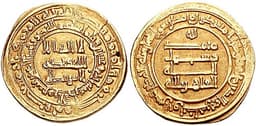
Al-Qahir
Emperor · Medieval
56.5Total

Napoleon Bonaparte
General · Modern
70.9Total
Basic Information
Born
899
1769
Died
950
1821
Era
Medieval
Modern
Nationality
Abbasid Caliphate
France
Occupation
Emperor
General
Civilization
Middle Eastern
Western
Score Comparison
Military (10%)
33.0
94.0
Political (20%)
64.5
72.0
Influence (20%)
55.6
40.0
Legacy (20%)
57.3
80.0
Leadership (15%)
62.2
78.0
Strategy (15%)
60.0
90.0
TOTAL
56.5
70.9
Al-Qahir — Complete Timeline
932 AD
Accession of Al-QahirPolitical Action◆ Major
Al-Qahir became caliph after the assassination of his brother Al-Muqtadir. His reign was brief and marked by tyranny and paranoia, as he executed many officials and family members to secure his position.
AccessionTyrannyPurge
Impact: nationaldestructive
934 AD
Deposition and Blinding of Al-QahirPolitical Action◆ Major
Al-Qahir was deposed by court officials and military commanders after only two years. He was blinded and imprisoned, later living as a beggar in Baghdad. This event highlighted the powerlessness of the caliph against the military.
DepositionBlindingFall
Impact: nationaltragic
Life as a BeggarOther
After his deposition and blinding, Al-Qahir was released from prison and lived as a beggar in the streets of Baghdad. He was occasionally recognized and given alms by former subjects, a stark contrast to his former status.
BeggarHumiliationPost-Caliph
tragic
Napoleon Bonaparte — Complete Timeline
1799 AD
Coup of 18 BrumaireOther◆ Major
Napoleon Bonaparte, with support from his brother Lucien and key political figures, overthrew the Directory in a bloodless coup. He established the Consulate with himself as First Consul, effectively becoming the ruler of France. This event ended the French Revolution's most unstable period.
French RevolutionCoupRise to Power
Impact: regional
1804 AD
Promulgation of the Napoleonic CodeOther◆ Major
Napoleon enacted the Civil Code of the French, known as the Napoleonic Code, a comprehensive set of laws that replaced the fragmented feudal legal systems. The code established legal equality, protected property rights, and secularized law. It became the basis for legal systems in many European and world countries.
Legal ReformNapoleonic CodeCivil Law
Impact: globalconstructive
1805 AD
Battle of AusterlitzWar◆ Major
Napoleon's Grande Arm
Napoleonic WarsBattleDecisive Victory
Impact: global
1812 AD
Invasion of RussiaWar◆ Major
Napoleon led the Grande Arm
Napoleonic WarsInvasionDisaster
Impact: globaldestructive
1815 AD
Battle of WaterlooWar◆ Major
Napoleon's French army was defeated by the combined forces of the Duke of Wellington's Anglo-Allied army and Gebhard Leberecht von Bl
Napoleonic WarsBattleFinal Defeat
Impact: globaldestructive
Expert Analysis
al-qahir-vs-napoleon-bonaparte
# The Emperor and the Beggar: Napoleon and Al-Qahir
On a June morning in 1815, Napoleon Bonaparte stood on a muddy field near Waterloo, watching his Imperial Guard march into cannon fire for the last time. Less than a millennium earlier, another ruler—blind and broken—begged for bread in the streets of Baghdad, a city he had once commanded. What separates a man who reshapes the world from one who vanishes into its shadows? The answer lies not merely in talent, but in the currents of history that lift some vessels and capsize others.
Origins
Napoleon was born in 1769 on the island of Corsica, a recent French acquisition. His family was minor nobility, but the boy was restless, ambitious, and fiercely intelligent. At nine, he entered a military academy in mainland France, where his thick accent and short stature marked him as an outsider. He devoured books on military strategy and Enlightenment philosophy—Caesar, Rousseau, the art of siegecraft. The French Revolution, erupting when he was twenty, shattered the old order and opened paths that had been sealed for centuries. A young artillery officer of modest birth could now dream of empire.
Al-Qahir, born in 899, entered a world already ancient. The Abbasid Caliphate, once the center of Islamic civilization, was crumbling. Provincial governors ruled as independent warlords; the caliph in Baghdad had become a puppet, installed and removed by court factions and Turkish slave soldiers. Al-Qahir was the son of Caliph al-Mu'tadid, but lineage meant little when power flowed from the sword. His era offered no revolution, no social upheaval—only the slow decay of a dynasty that had already passed its zenith.
Rise to Power
Napoleon’s ascent was meteoric. In 1793, at twenty-four, he recaptured the port of Toulon from British and royalist forces with a daring artillery plan. By 1796, he commanded the French army in Italy, where his lightning campaigns humiliated the Austrians and made him a national hero. He understood something his enemies did not: speed, mobility, and the morale of common soldiers could defeat larger, better-supplied armies. In 1799, he seized power in a coup, becoming First Consul. Five years later, he crowned himself Emperor of the French.
Al-Qahir’s path was shorter and crueler. In 932, his brother Caliph al-Muqtadir was assassinated during a military revolt. The court officials, needing a figurehead, raised Al-Qahir to the throne. He was not chosen for his ability, but for his availability. He accepted the caliphate not as a conqueror, but as a prisoner of circumstance.
Leadership & Governance
Napoleon ruled with an iron hand and a brilliant mind. He reformed French law into the Napoleonic Code, which enshrined equality before the law, protected property rights, and secularized the state. He built schools, roads, and a centralized bureaucracy. On the battlefield, he was unmatched: at Austerlitz in 1805, he destroyed a combined Russian-Austrian army with a feigned retreat that lured the enemy into a trap. His political genius lay in balancing ambition with pragmatism—he made peace with the Church, co-opted former nobles, and created a meritocracy where soldiers could rise from the ranks.
Al-Qahir’s governance was, by contrast, a study in failure. According to later chroniclers, he was tyrannical and suspicious, alienating the very officials and soldiers who had placed him on the throne. He executed rivals, hoarded treasure, and neglected the administration of a state already in collapse. In 934, after only two years, the same courtiers and military commanders who had elevated him stormed his palace, deposed him, and blinded him with a hot iron—a common punishment that disqualified him from ever ruling again.
Triumph & Tragedy
Napoleon’s greatest triumph was his empire, which stretched from Spain to Poland. His greatest tragedy was his inability to stop. He invaded Russia in 1812 with 600,000 men; only 100,000 returned. The disaster emboldened his enemies, and by 1814, he was forced to abdicate and exiled to Elba. He escaped, raised another army, and met his final defeat at Waterloo in 1815. Exiled to Saint Helena, he died in 1821, a prisoner of the British.
Al-Qahir’s tragedy was not a fall from greatness, but the absence of greatness entirely. After his blinding, he was imprisoned for years, then released. He wandered the streets of Baghdad, begging for food and shelter. The man who had been caliph—the successor of the Prophet, the Commander of the Faithful—became a nameless pauper. He died in 950, forgotten by all but a few chroniclers.
Character & Destiny
Napoleon’s character was a forge of contradictions: ruthless yet charismatic, megalomaniacal yet disciplined. He believed he was a man of destiny, and he shaped history to prove it. His decisions—from the sale of Louisiana to the invasion of Egypt—reshaped continents. He understood that power requires both vision and violence, and he wielded both without hesitation.
Al-Qahir’s character was shaped by weakness, not strength. He inherited a throne that was already hollow, and he tried to fill it with cruelty rather than competence. He lacked the military skill, the political acumen, and the sheer luck that Napoleon possessed. But more than that, he lacked an era that rewarded ambition. In a time of fragmentation and decay, no individual could have reversed the decline of the Abbasid Caliphate.
Legacy
Napoleon’s legacy is immense. The Napoleonic Code influenced legal systems across Europe, Latin America, and beyond. He redrew the map of Europe, inspired nationalist movements, and forever changed the art of war. He is remembered as both a liberator and a tyrant, a genius and a warmonger.
Al-Qahir’s legacy is almost invisible. He appears in historical records as a cautionary tale—a ruler who failed so completely that even his name is obscure. His story survives because it illustrates the fragility of power and the cruelty of fortune.
Conclusion
Standing on the muddy field at Waterloo, Napoleon could still see the arc of his own story: a Corsican boy who became emperor, who rewrote laws and redrew borders, who fell and rose and fell again. Al-Qahir, blind in the dust of Baghdad, could see nothing at all—not even the memory of his own brief reign. The difference between them is not just talent or ambition, but the age into which they were born. Napoleon arrived when the world was cracking open; Al-Qahir arrived when it was closing shut. One man rode the wave; the other drowned in the stillness.
Rankings
🥇
Napoleon BonaparteLeader
Mil: 94.0Pol: 72.0Inf: 40.0
70.9
🥈
Al-Qahir
Mil: 33.0Pol: 64.5Inf: 55.6
56.5
+14.4 behind
How This Comparison Works
Algorithm
Each figure is scored on 6 dimensions (0—100 scale) based on structured historical data: Military (10%), Political (20%), Influence (20%), Legacy (20%), Leadership (15%), Strategy (15%). The weighted total produces the final ranking.
Data Sources
Scores are computed from structured sub-indicators in the database. Scale factors adjust for era (Ancient ×0.85, Modern ×1.0) and civilization size (Eastern ×1.05, Other ×0.80) to account for differences in population and military scale.
Maximum 3 Figures
Comparisons are limited to 2—3 figures to ensure readability and statistical meaningfulness.
Error Margins
±5 points per dimension — Sub-scores are derived from historical records with inherent uncertainty. Two figures within 5 points on a dimension should be considered roughly equivalent in that area.
Total Score Accuracy
±3 points overall — The weighted combination of 6 dimensions produces a total score with approximately ±3 points of uncertainty. Differences of less than 3 points are not statistically significant— the figures are effectively tied.
Known Limitations
- Historical records are incomplete and uneven across civilizations
- Figures from oral-tradition societies may be underrepresented
- Occupation labels can misclassify multi-role figures
- Scores measure capability and impact, not moral character
- Quantitative scoring is a comparison tool, not absolute truth
Capability Radar
Military (10%) — Battles & Warfare
Battles
33
95
Win Rate
32
90
Expansion
38
95
Political (20%) — Governance & Reform
Reform
59
95
Diplomacy
62
80
Economy
63
85
Influence (20%) — Cultural & Global Reach
Cultural
67
85
Global
78
90
Legacy (20%) — Historical Impact
Historical
73
95
Longevity
77
90
Leadership (15%) — Power & Stability
Tenure
58
85
Stability
66
70
Strategy (15%) — Tactics & Innovation
Strategy
41
95
Tactics
42
98
Reform
48
92
Similar Comparisons
Comments & Discussion
Caliph Cataphract6/17/2026
The problem with Al-Qahir comparisons is they ignore battlefield reality. Napoleon personally directed over 60 battles—Austerlitz, Jena, Borodino. His system of corps maneuver shattered coalitions. Al-Qahir? He was thrown in a dungeon by his own Turkish guards before he could command a single real campaign. One is a military genius with an operational doctrine still studied at Sandhurst; the other is a placeholder who happened to be born into the caliphal line. These aren't parallel lives.
历史流沙6/17/2026
你们都在谈个人才能,却忽略了最关键的地缘政治土壤。拿破仑崛起于法国大革命撕碎的旧秩序,那个真空时代允许炮兵中尉变成皇帝。而阿勒-卡希尔接手的是已经腐烂百年的阿拔斯哈里发国——地方军阀各自为政,突厥奴隶兵控制宫廷。把拿破仑扔进899年的巴格达,他连十岁都活不过去,早被宫廷太监毒死了。历史不是个人能力的函数,是环境的囚笼。
Enlightenment Legionnaire6/17/2026
Data point worth adding: Napoleon's victories weren't just tactical—they were institutional. He created the Napoleonic Code, centralized French administration, and reformed education. Al-Qahir left zero lasting achievements. Not one law, not one building, not one military innovation. The analysis calls him "blind and broken" begging for bread, but that's misleading—he was deposed after only six years and his blinding was a political mutilation, not some metaphorical tragedy. These two men operat
铁锈宫相6/17/2026
我不同意数据至上。拿破仑晚年在圣赫勒拿岛写的回忆录里反复强调,他若生在亚洲会怎样?实际上阿拔斯王朝的哈里发没有任何真正的权力杠杆——税收集权失败,军队是突厥雇佣兵,地方总督世袭化。拿破仑发动雾月政变时,他有法国资产阶级和农民的支持。阿勒-卡希尔呢?他只有名分,没有军队、没有税收、没有官僚体系。这不是两个人能力的差距,是两种文明制度的鸿沟。